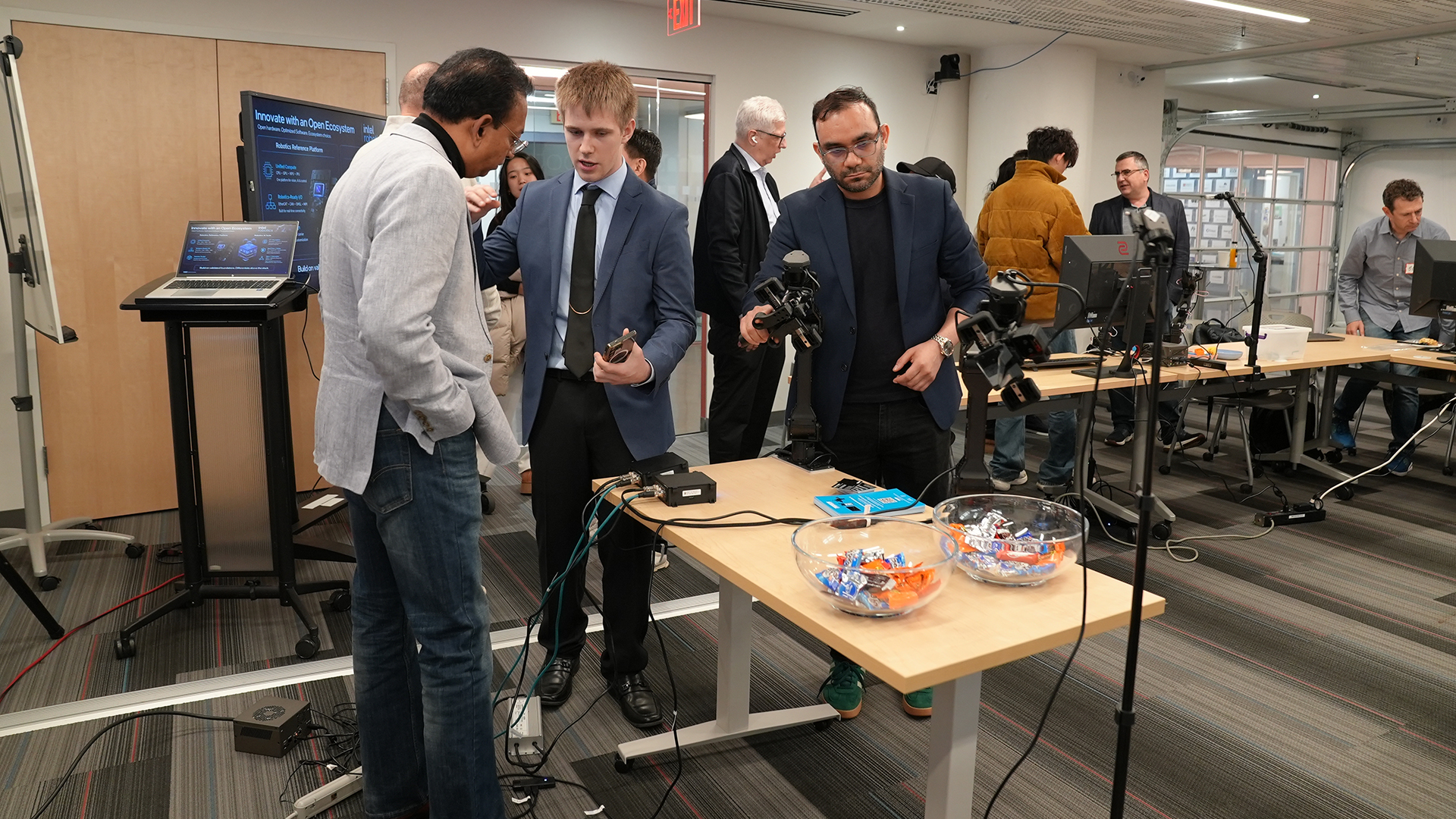
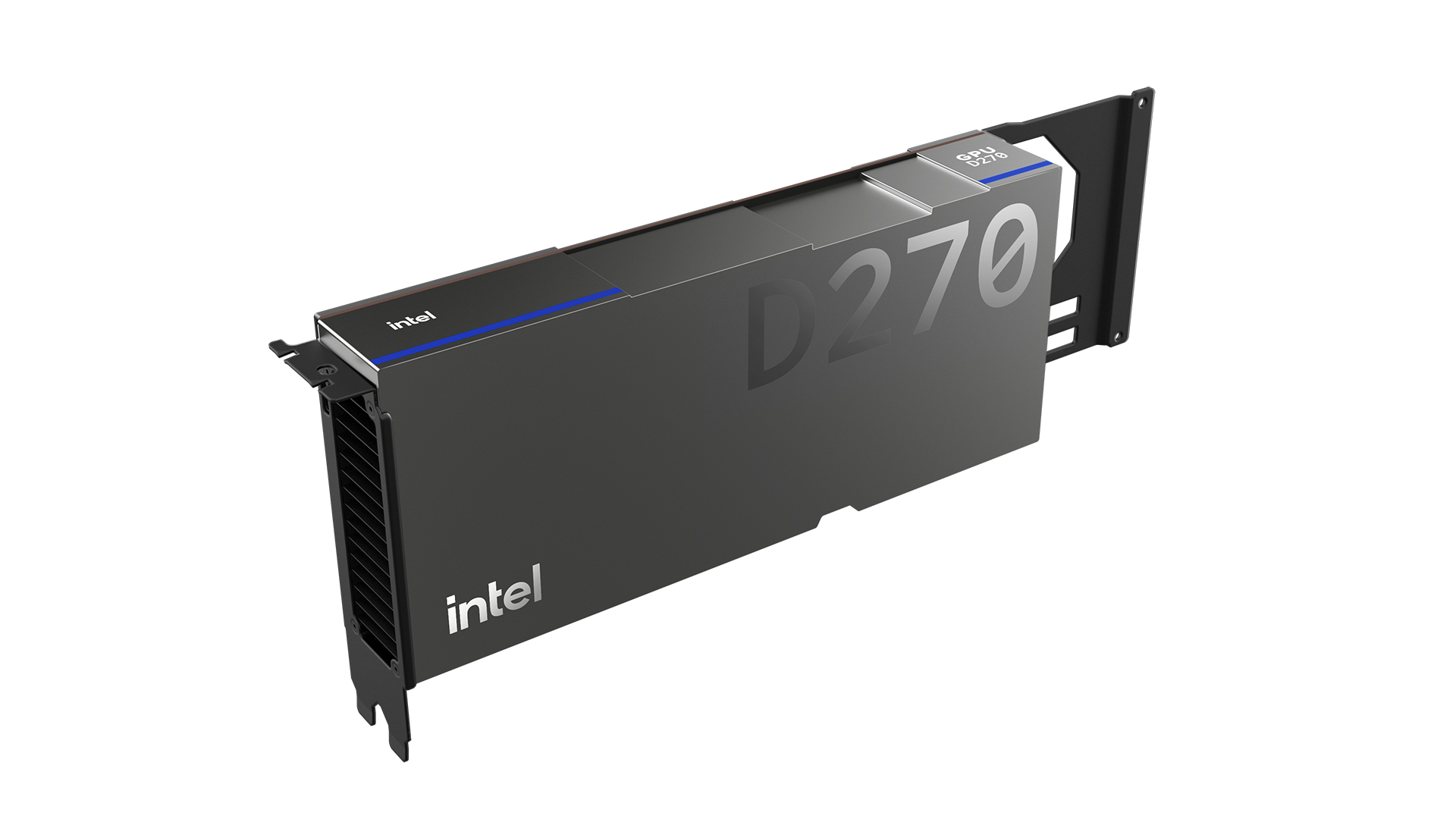
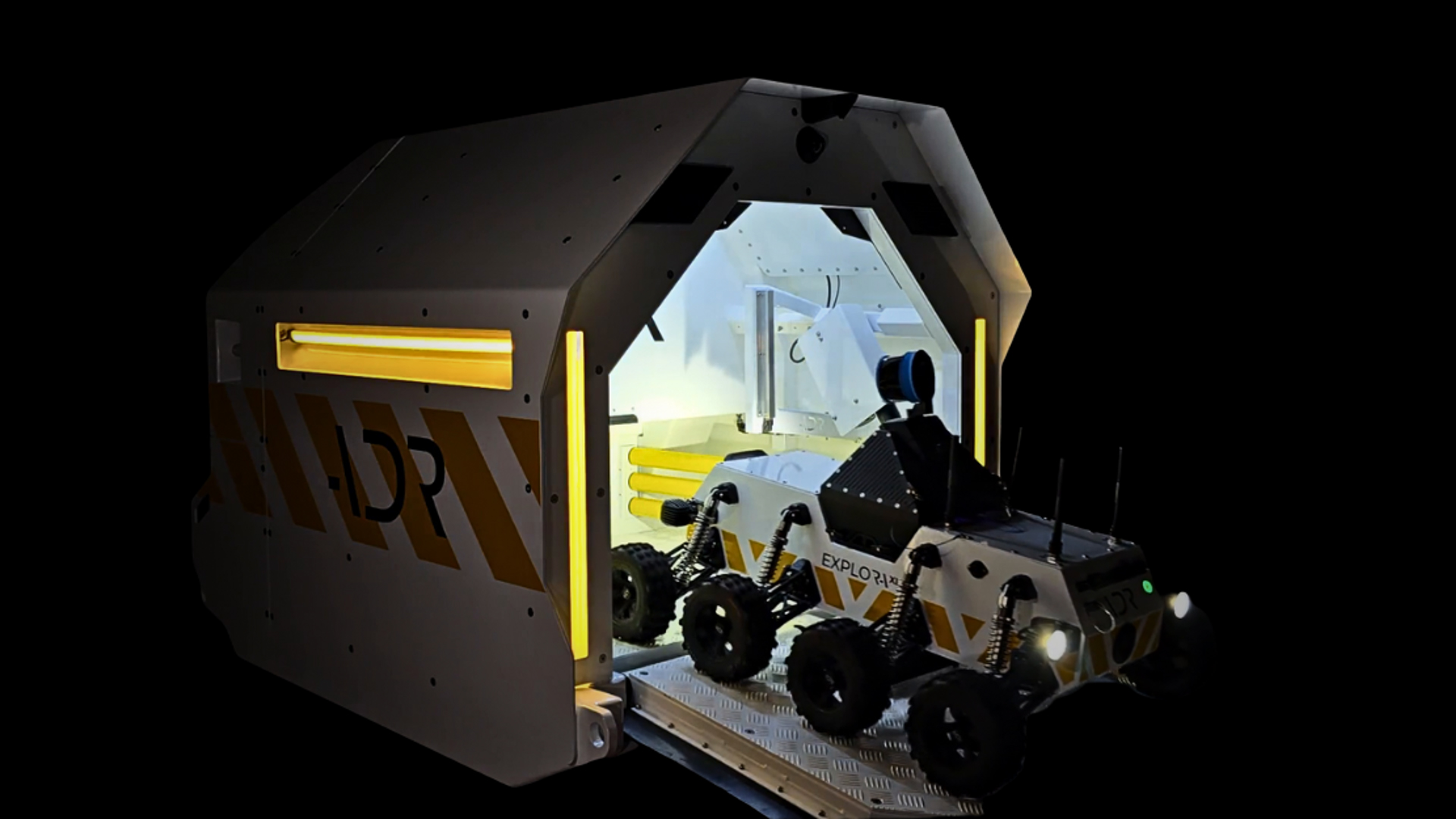
Intel Corporation is a semiconductor company that designs and manufactures microprocessors, accelerators, and related software for cloud, enterprise, edge, and client computing. The company operates through the Intel Foundry business, which provides chip design, manufacturing, and advanced packaging services, and the Intel Compute business, which develops processors and graphics products. Key product lines include the Xeon server processors, Arc graphics processors, and Core client processors. Intel serves markets in data centers, 5G networking, gaming, and personal computing, with a presence in the United States and Europe. The company maintains partnerships with Google Cloud for AI solutions and McLaren Racing for performance computing. Intel was founded in 1968.

Summarised from the company's own disclosures, fiscal year ended Oct 2026

Industry Semiconductors Homepage intel.com
Sector Technology IR page intel.com
Tags
microprocessors, semiconductor manufacturing, data center infrastructure, 5g networking, gaming hardware, client computing, ai accelerators, advanced packaging, edge computing, Intel Foundry, Intel Compute, Xeon, Arc, Core, Intel Inside
Press page thailand.intel.com/content/www/us/en/newsroom

Metrics

Valuation  
Market cap $ 343.723B
Market cap (USD) $ 343.723B
P/E -27.08
PEG —
P/BV 2.99
P/S 5.74
P/OCF 19.67
P/FCF 91.22
Dividend yield 0.59%
Turnover / mcap —
Returns  
ROE -0.25%
ROI -0.17%
ROIC -0.69%
Profit margin -0.51%
Growth  
Revenue growing No
Profits growing No
Revenue up 3y No
Revenue up 5y No
Earnings growth 3y (net profit CAGR) —
Quality  
Profitable No
Margin expanding No
Buying back stock No
Diluting (TTM) Yes
Debt/Equity 43.6%
Podcast bulls (TTM) Sign up
Podcast bears (TTM) Sign up
Podcast sentiment (TTM) Sign up
Podcast sentiment % (TTM) Sign up
News sentiment (TTM) 27
Quality score -57.9%
Insiders  
Buys, 1w Sign up
Buys, 1m Sign up
Buys, 1y Sign up
Sells, 1w Sign up
Sells, 1m Sign up
Sells, 1y Sign up

Sign up to see this company's insider trades

Figure FY 2025 FY 2024 FY 2023 FY 2022 FY 2021 FY 2020 FY 2019 FY 2018 FY 2017 FY 2016 FY 2015 FY 2014 FY 2013 FY 2012 FY 2011 FY 2010 FY 2009 FY 2008 FY 2007 FY 2006 FY 2005 FY 2004 FY 2003 FY 2002 FY 2001 FY 2000
Revenue 52.853B 53.101B 54.228B 63.054B 79.024B 77.867B 71.965B 70.848B 62.761B 59.387B 55.355B 55.87B 52.708B 53.341B 53.999B 43.623B 35.127B 37.586B 38.334B 35.382B 38.826B 34.209B 30.141B 26.764B 26.539B 33.726B
Net profit -267M -18.756B 1.689B 8.014B 19.868B 20.899B 21.048B 21.053B 9.601B 10.316B 11.42B 11.704B 9.62B 11.005B 12.942B 11.464B 4.369B 5.292B 6.976B 5.044B 8.664B 7.516B 5.641B 3.117B 1.291B 10.535B
Free cash flow -4.949B -15.656B -14.279B -9.411B 11.258B 21.125B 16.932B 14.251B 10.332B 12.183B 11.691B 10.313B 10.065B 7.857B 10.199B 11.485B 6.655B 5.729B 7.625B 4.841B 9.005B 9.276B 7.859B 4.426B 1.345B 6.153B

Figure FY 2025 FY 2024 FY 2023 FY 2022 FY 2021 FY 2020 FY 2019 FY 2018 FY 2017 FY 2016 FY 2015 FY 2014 FY 2013 FY 2012 FY 2011 FY 2010 FY 2009 FY 2008 FY 2007 FY 2006 FY 2005 FY 2004 FY 2003 FY 2002 FY 2001 FY 2000
Share price 36.9 20.05 50.25 26.43 51.5 49.82 59.85 46.93 46.16 36.27 34.45 36.29 25.96 20.62 24.25 21.03 20.4 14.66 27.21 21.3 27.45 — — — — —
Price performance 12m 0.84 -0.6 0.9 -0.49 0.03 -0.17 0.28 0.02 0.27 0.05 -0.05 0.4 0.26 -0.15 0.15 0.03 0.39 -0.46 0.28 -0.22 — — — — — —

Filed figures

Figure Dec 2016 Dec 2017 Dec 2018 Dec 2019 Dec 2020 Dec 2021 Dec 2022 Dec 2023 Dec 2024 Dec 2025
Balance sheet detail
Trade receivables (USD) 4.69B 5.61B 6.72B 7.66B 6.78B 9.46B 4.13B 3.4B 3.48B 3.84B
↳ YoY growth -2.0% +19.6% +19.9% +13.9% -11.5% +39.4% -56.3% -17.7% +2.2% +10.4%
↳ 5y CAGR +5.1% +7.9% +13.4% +11.6% +7.2% +15.1% -5.9% -12.7% -14.6% -10.8%
Borrowings, current (USD) 4.62B 1.74B 761M 3.7B 2.5B 4.59B 4.32B 2.29B 3.73B 2.5B
Borrowings, non-current (USD) 20.6B 25B 25.1B 25.3B 33.9B 33.5B 37.7B 47B 46.3B 44.1B
Lease liabilities (USD) — — — 549M 527M 1.46B — — — —
Cash and deposits (USD) 5.56B 3.43B 3.02B 4.19B 5.87B 4.83B 11.1B 7.08B 8.25B 14.3B
Intangible assets (USD) 9.49B 12.7B 11.8B 10.8B 9.03B 7.27B 6.02B 4.59B 3.69B 2.77B
Right-of-use assets (USD) — — — — — — 487M 505M 457M 421M
Net debt (borrowings + leases - cash) (USD) 19.7B 23.3B 22.8B 25.4B 31.1B 34.7B 30.9B 42.2B 41.8B 32.3B
Cash flow detail
Operating cash flow (USD) 21.8B 22.1B 29.4B 33.1B 35.4B 30B 15.4B 11.5B 8.29B 9.7B
Purchases of property, plant and equipment (USD) -9.63B -11.8B -15.2B -16.2B -14.3B -18.7B -24.8B -25.8B -23.9B -14.6B
Change in receivables (cash effect) (USD) 65M -781M -1.71B -935M 883M -2.67B 5.33B 731M -75M -449M
Change in inventories (cash effect) (USD) 119M -1.3B -214M -1.48B -687M -2.34B -2.44B 2.1B -1.11B -138M
Change in payables (cash effect) (USD) 182M 191M 211M 696M 412M 1.19B -29M -801M 634M 297M
Dividends paid (cash effect) (USD) -4.93B -5.07B -5.54B -5.58B -5.57B -5.64B -6B -3.09B -1.6B 0.00
Share buybacks (cash effect) (USD) -2.59B -3.62B -10.7B -13.6B -14.2B -2.42B 0.00 0.00 — —
Interest paid (cash effect) (USD) -682M -624M -448M -469M -594M -545M -459M -613M -987M -1.11B
Income taxes paid (cash effect) (USD) -877M -3.82B -3.81B -2.11B -2.44B -2.26B -4.28B -2.62B -2.2B -2.3B
Share-based compensation (USD) 1.44B 1.36B 1.55B 1.71B 1.9B 2.04B 3.13B 3.23B 3.41B 2.43B
Operating cash flow before change in receivables (USD) 21.7B 22.9B 31.1B 34.1B 34.5B 32.7B 10.1B 10.7B 8.36B 10.1B
Free cash flow (OCF - PPE - intangibles) (USD) 12.2B 10.3B 14.3B 16.9B 21.1B 11.3B -9.41B -14.3B -15.7B -4.95B
Income detail
Research and development expense (USD) 12.7B 13.1B 13.5B 13.4B 13.6B 15.2B 17.5B 16B 16.5B 13.8B
↳ 5y CAGR +8.8% +5.2% +5.0% +3.0% +2.3% +3.6% +6.0% +3.5% +4.4% +0.3%
Total comprehensive income (USD) 10.4B 10.4B 21B 20.7B 21.4B 19.7B 8.34B 2.02B -19.7B 850M
Comprehensive income to owners (USD) 10.4B 10.4B 21B 20.7B 21.4B 19.7B 8.33B 2.04B -19.3B 557M
Reported Feb 17, 2017 Feb 16, 2018 Feb 1, 2019 Jan 24, 2020 Jan 22, 2021 Jan 27, 2022 Jan 27, 2023 Jan 26, 2024 Jan 31, 2025 Jan 23, 2026

Operating KPIs — quarters

KPI Mar 21 Jun 21 Sep 21 Dec 21 Dec 22 Sep 23 Dec 23 Mar 24
Employees 111,300 113,700 117,200 121,100 131,900 120,300 124,800 130,700
↳ YoY growth -0.3% +2.6% +5.3% +9.5% +8.9% -8.5% -5.4% +4.1%
Reported Apr 22, 2021 Jul 22, 2021 Oct 21, 2021 Jan 26, 2022 Jan 26, 2023 Oct 26, 2023 Jan 25, 2024 Apr 25, 2024

Operating KPIs — years

KPI Dec 2019 Dec 2020 Dec 2021 Dec 2022 Dec 2023
Employees 110,800 110,600 121,100 131,900 124,800
↳ YoY growth -0.2% +9.5% +8.9% -5.4%
Reported Jan 21, 2021 Jan 21, 2021 Jan 26, 2022 Jan 26, 2023 Jan 25, 2024

Sign up to see institutional holdings

Sign Up

Podcast Mentions

Sign up to see podcast mentions and sentiment

Sign Up

Skip To Main Content

Toggle Navigation

  1. Products

    Products Home

    Processors

    Select Systems & Devices

    AI Accelerators

    Network to Edge

    Software

  2. Support

    Drivers & Downloads

    Support For

    Resources

  3. Solutions

    Industries

    Topics

    Resources

  4. Developers

    Developers Home

    Development Tools

    Topics & Technologies

    Resources & Documentation

  5. Partners

    Partner Hub

    Partner Enablement Resources

    Intel® Partner Showcase

  6. Foundry

    Intel Foundry

  7. More +

  8. My Intel Dashboard

    My Tools

    Sign Out

  9. Select Language

  10. Toggle Search Ask Intel

    Ask Intel Ask Intel

    Quick Links

    Recent

Tooltip content

What Is the Intel 14A PDK 0.9, and Why Does It Matter to Foundry Customers?

The Intel 14A process design kit (PDK) 0.9 gives foundry customers a more mature, silicon-validated environment for designing products on the Intel 14A process node. This milestone is an important step toward the Intel 14A PDK 1.0 and high-volume manufacturing readiness.

  • Print

  • Email

  • Copy Link

Silicon process technologies provide a range of transistors, interconnects and specialized features that chip designers leverage to build their products. For a foundry customer to use these features, they need a way to incorporate them into their designs.  

This is where the process design kit (PDK) comes in. A PDK serves as the interface between the process technology and the design tools engineers use to turn their ideas into silicon. If you think of a chip as a microscopic but vast city, a PDK is the digital building codes, approved building materials, and helpful resources that allow a designer to create a successful product. 

Intel Foundry recently announced the general availability of the PDK 0.9 for the Intel 14A process node, an important milestone that allows customers to use the technology in an environment closer to full scale production. We asked Ben Sell, who leads Intel 14A and advanced nodes development, and Ali Farhang, who oversees PDKs and design enablement, to talk about the importance of this release, PDKs in general, and what’s next for the Intel 14A node.

Let’s start with the basics. What exactly is a PDK, and why is it important when you develop a new process technology?

Ali: A Process Design Kit, or PDK, is essentially the ultimate reference guide for a chip designer to create a product on a specific manufacturing process. It brings together the models, design rules, and other supporting materials that electronic design automation (EDA) tools use to help a customer bring their product from concept to mass production.

Just as importantly, the PDK release lifecycle serves as the clock that orchestrates technology development. Each revision represents a milestone of technology maturity, synchronizing our internal research and development, EDA and IP ecosystem partners, and customer design teams on a single, shared schedule.

Can you tell us what it means for Intel Foundry to announce general availability of the Intel 14A PDK 0.9?

Ben: From a customer perspective, the PDK 0.9 gives customers the confidence to design products on Intel 14A, as the technology is reaching the industry-standard performance and yield maturity expected at this stage of development, supported by silicon-backed validation.

Process technologies take time to mature for production, but customers want early access to begin design evaluation to enable time-to-market. With PDK 0.9, customers can create designs that go into the fab for production around the time a process node is certified. As we approach PDK 1.0, it says that we are confident that this process technology is on track for high volume manufacturing. 

Ali: In the foundry business, trust is paramount. For fabless customers, selecting a foundry is one of the most consequential decisions they make. If a foundry does not deliver, the impact on a customer’s business can be profound. The general availability of Intel 14A PDK 0.9 is a critical milestone demonstrating that Intel Foundry can execute on its commitments.

How are things going so far with Intel 14A, and how does that translate into your confidence in the PDK releases?

Ben: We are pleased with the pace of progress on Intel 14A and encouraged by the feedback we are receiving from customers. That progress reflects both a strong technology foundation and the growing maturity of how we develop and deliver a foundry process.

Intel 14A builds on proven backside power delivery architecture with PowerDirect and gate-all-around transistor technology with RibbonFET 2, and with Turbo Cells added to give designers greater flexibility on optimizing performance and efficiency depending on their needs. The node incorporates extensive learning and manufacturing knowledge from Intel 18A, increased investment in inline detection, modeling and simulation to identify issues earlier, and several strategic initiatives to accelerate the pace of development.

Together, these capabilities are helping us improve Intel 14A performance, yield, variability and cycle time while staying aligned to our committed schedule that customers depend on to build their products.

That execution discipline is what gives us confidence in the PDK releases. Each release is grounded in silicon, so customers receive a progressively more accurate and complete representation of the technology. The PDK 0.9 is an important proof point that many customers use as a gate to start a design.

How is Intel Foundry working with the ecosystem around Intel 14A development?

Ali: Intel is partnering closely with leading EDA providers, including Synopsys, Cadence, Siemens, and Keysight, along with a broad ecosystem of IP partners, to deliver a comprehensive design platform for our foundry customers.

Earlier this year, Cadence, Keysight, Siemens and Synopsys announced design-tool certifications; in addition, Cadence and Intel launched a DTCO (Design Technology Co-Optimization) collaboration focused on optimizing Intel 14A for next-generation AI-driven design tools and IP. 

As we advance toward future PDK releases, we continue to deepen engagement with ecosystem partners to validate and optimize design tools, IP, and flows, ensuring readiness at every stage of technology development. This ongoing collaboration provides customers with a predictable path to adoption, supported by a trusted ecosystem of certified solutions that accelerates design productivity and time-to-market.

Ben: From a technology development perspective, we are bringing in the broader ecosystem to help us achieve our results. This has required evolving our collaboration model with equipment and material suppliers, and earlier engagement from our process experts with suppliers to drive improvements in process and equipment capabilities. We hold regular executive summits and engineering review meetings to accelerate progress against critical deliverables.

What are you looking forward to next?

Ben: I am excited to translate the progress we are making on Intel 14A to customer success. Our immediate focus is to continue to improve performance, yield, variability and cycle time as we move toward the PDK 1.0 and volume production ready milestones. I am also looking forward to seeing customer designs advancing on Intel technologies and giving them the confidence they need to build their products with Intel Foundry as a trusted partner.

Ali: I’m looking forward to sustaining this level of quality across future releases and continuing to earn our customers’ trust by delivering on our commitments with a customer-first mindset. Our next major milestone is the Intel 14A PDK 1.0, expected in the first quarter of 2027.

I’m equally excited about the roadmap of node enhancements and performance scaling steps that will follow as Intel 14A matures. Our goal is to provide a highly stable, continuously optimized platform so our customers have the long-term capabilities they need to create differentiated, successful products for the AI era.

Meet The Experts

Ben Sell is a corporate vice president and general manager leading the front-end technology development for Intel Foundry. Ben joined Intel in 2002 and has been involved in the development of multiple advanced process nodes dating back to 65nm including 32nm, 22nm, 14nm, Intel 4 and Intel 18A. He started his career at Infineon Technologies working in DRAM capacitor pathfinding.

Ali Farhang is Corporate Vice President and General Manager of the Foundry Design Technology Platform (DTP) organization at Intel Foundry. With over 35 years of semiconductor leadership, Ali oversees the co-optimization of technology and design (DTCO), PDK development, foundational IP, reference flows, and strategic ecosystem enablement. He spent 25 years at Intel in lead product and technology enablement leadership roles before rejoining the company in 2025, following executive tenures as Corporate VP of Central Engineering at Micron and in the IP startup ecosystem.

Frequently Asked Questions

What is a process design kit?

A process design kit, or PDK, is the reference guide chip designers use to create products on a specific manufacturing process. It brings together models, design rules and supporting materials used by electronic design automation tools.

What does the Intel 14A PDK 0.9 enable?

The Intel 14A PDK 0.9 gives customers a more mature, silicon-backed representation of the process technology for product design and production planning. It is an important milestone on the path toward the PDK 1.0 and high-volume manufacturing readiness.

What technologies are included in Intel 14A?

Intel 14A builds on the technologies in Intel 18A with RibbonFET 2 gate-all-around transistors, PowerDirect backside power delivery, and Turbo Cells, while incorporating manufacturing and development learning from Intel 18A.

What role does the ecosystem play in supporting Intel 14A development?

In addition to their use by customers, PDKs are also leveraged by electronic design automation (EDA) and IP providers to validate and certify their design tools and reusable IPs. Intel is working with a variety of ecosystem members to support the Intel 14A design platform.

What is the next Intel 14A PDK milestone?

The next major milestone is the Intel 14A PDK 1.0, expected in the first quarter of 2027.

Visit Intel.com to learn more about Intel Foundry’s process technologies.


Related News


Building America's Capacity to Innovate
---------------------------------------

Read More

Intel Advancing High-NA EUV Photoresist
---------------------------------------

Read More

Intel Foundry and ASML Accelerate High-NA EUV
---------------------------------------------

Read More

Intel's U.S. Advanced Packaging Enables Next-Generation AI Semiconductors
-------------------------------------------------------------------------

Read More

Get the latest in your inbox

Subscribe

Company Company

Quick links Quick links

Legal & Privacy Legal & Privacy

Support & Resources Support & Resources

© Intel Corporation

Intel technologies may require enabled hardware, software or service activation. No product or component can be absolutely secure. Your costs and results may vary. Performance varies by use, configuration, and other factors. Learn more at intel.com/performanceindex . See our complete legal Notices and Disclaimers . Intel is committed to respecting human rights and avoiding causing or contributing to adverse impacts on human rights. See Intel’s Global Human Rights Principles . Intel’s products and software are intended only to be used in applications that do not cause or contribute to adverse impacts on human rights.

Copied

Skip To Main Content

Toggle Navigation

  1. Products

    Products Home

    Processors

    Select Systems & Devices

    AI Accelerators

    Network to Edge

    Software

  2. Support

    Drivers & Downloads

    Support For

    Resources

  3. Solutions

    Industries

    Topics

    Resources

  4. Developers

    Developers Home

    Development Tools

    Topics & Technologies

    Resources & Documentation

  5. Partners

    Partner Hub

    Partner Enablement Resources

    Intel® Partner Showcase

  6. Foundry

    Intel Foundry

  7. More +

  8. My Intel Dashboard

    My Tools

    Sign Out

  9. Select Language

  10. Toggle Search Ask Intel

    Ask Intel Ask Intel

    Quick Links

    Recent

News

Cognitive Cities: How AI Can Help Cities Move From Seeing Conditions to Acting on Them

As artificial intelligence moves from insight to action, cities and the spaces within them have an opportunity to become more responsive, resilient and human-centered. 

  • Print

  • Email

  • Copy Link

Artificial Intelligence (AI)

By: Renu Navale, Intel Vice President and General Manager, Health and Cities Division

Picture 60,000 fans leaving a stadium. Cameras can see a crowd building at one exit, but seeing it does not clear it. Someone must decide whether to open another gate, redirect fans or shift staff, and do it in time. Intersections, hospitals and stores face the same challenge: people are moving, conditions constantly change, safety matters and operations cannot stop.

For years, a “smart” city or space was largely about connectivity. Sensors detected what was happening, cameras provided visibility and dashboards delivered more information. AI creates an opportunity to go further by helping places understand context, determine what should happen next and turn intelligence into action. That is the shift from a smart city to a cognitive city.

Cognitive systems connect insight to action  

I think about this evolution through a simple loop: Sense. Understand. Decide. Act. Learn.

A connected system can tell an operator that traffic is backing up. A cognitive system can put those conditions in context and help determine the appropriate response. The same principle applies when a utility responds to a pressure drop, a hospital coordinates resources or a stadium manages changing crowd flows.

Intel sees three complementary layers enabling this shift:

  • Edge AI processes data where it is created.

  • Agentic AI turns intelligence into decisions.

  • Physical AI carries those decisions into machines and infrastructure.

This is not about removing people from the equation. It is about helping people operate increasingly complex environments, with human oversight where it matters.

Cities are beginning the transition

Most places haven’t made that shift yet. According to ThoughtLab’s Building a People-First, AI-Powered City   study, only 17% of cities qualify as AI Leaders. The study reports that these Leaders score 64 on advanced AI capabilities, including agentic AI, physical AI and digital twins, compared with 37 for other cities.

The study also projects that AI Leaders’ use of agentic AI will rise from 42% to 84% in three years, while their use of physical AI will increase from 47% to 79%. Together, these findings point to a growing gap between cities beginning to connect intelligence with action and those still building foundational capabilities.

Where that intelligence runs also matters. In Sarasota, Florida, computer vision using existing traffic cameras was connected to the traffic-management system. Intel and Derq report a 33%  reduction in crashes, including a 90% reduction at one intersection. This is one deployment, not a guarantee of results elsewhere, but it illustrates the pattern: local detection connected to an existing system in time to support action, while the cloud continues to train models and analyze information across sites.

Build on the systems cities already have

The barriers to broader adoption are real. ThoughtLab reports that 84% of cities worry about unexpected costs, 82% lack AI skills, 81% cannot prove the return on investment and 76% are constrained by siloed data and overlapping point solutions.

Read that list as a product specification: lower total cost, solutions that integrate rather than create another silo, tools existing staff can use and a clear path to demonstrating return. Cities have already invested in cameras, sensors and operational systems. The next step should build on those investments, not automatically replace them.

Create a shared foundation, then innovate on top of it

Cities cannot treat every AI opportunity as a new technology stack. Mobility, safety, utilities, healthcare, sustainability and public services have different missions, but they increasingly require the same core capabilities: local intelligence, trusted data, security and governance, and infrastructure that connects with other systems. If every use case produces another technology island, AI risks making fragmentation worse.

That is the idea behind Intel’s Cognitive Cities approach: a common Edge AI foundation designed to be:

  • Open, to preserve choice.

  • Local, to support governance requirements.

  • Efficient, to manage power and cost.

  • Proven, with a path from pilots to deployment.

Intel provides a platform spanning silicon, systems and software, including Open Edge Platform and Metro Ai Suite that enables cities to layer edge AI, agentic AI and physical AI capabilities, while partners build services on top. Intel’s role is not to build the city. It is to provide a foundation on which others can build and differentiate. Intel’s expansive, open ecosystem approach gives cities a lot of vendor choice to quickly achieve their objective.

Keep people at the center

As AI becomes more consequential in the physical world, trust becomes more important, not less. ThoughtLab reports that 78% of cities cite over-surveillance and loss of privacy as a barrier. The study also finds that 79% of AI Leaders have formal transparency guidelines, compared with 34% of other cities. It reports that 68% of Leaders limit the data they collect and retain, compared with 49% of other cities.

These findings make guardrails product features, not add-ons. Cognitive systems need clear authority levels, audit trails, local control and a human in the loop when the stakes are high.

A cognitive city should not act simply because technology makes action possible. It should help people make better decisions, automate appropriate tasks and preserve human judgment where it matters most.

Start with one place and one meaningful problem

Cities do not need to wait for a fully autonomous future. Start with one space, one use case and one partner, and build on a foundation that allows the next use case to move forward without starting over.

The promise of a cognitive city is not a city that runs itself. It is a city that helps people see sooner, decide better and act when it matters.

To learn more visit intel.com/cognitivecities .


Related News


From Task to Fulfillment – Intel and SAP Demonstra
--------------------------------------------------

Read More

Alabama Football Uses Xeon to Boost Revenue
-------------------------------------------

Read More

Postcard from MassRobotics
--------------------------

Read More

Intel Offers Day-0 Support for Meta's Muse Spark
------------------------------------------------

Read More

Get the latest in your inbox

Subscribe

Company Company

Quick links Quick links

Legal & Privacy Legal & Privacy

Support & Resources Support & Resources

© Intel Corporation

Intel technologies may require enabled hardware, software or service activation. No product or component can be absolutely secure. Your costs and results may vary. Performance varies by use, configuration, and other factors. Learn more at intel.com/performanceindex . See our complete legal Notices and Disclaimers . Intel is committed to respecting human rights and avoiding causing or contributing to adverse impacts on human rights. See Intel’s Global Human Rights Principles . Intel’s products and software are intended only to be used in applications that do not cause or contribute to adverse impacts on human rights.

Copied
Company Logo

Manage Cookies Settings

Manage Cookies Settings

  • Information We Collect

  • Strictly Necessary Cookies

  • Analytics

  • Functional

  • Advertising

Information We Collect

Intel values your privacy. Our Sites use Cookies and Similar Technologies on this website to improve your online experience, to analyze site usage, and to show tailored advertising to you. This consent management tool will help you understand what information is being collected and give you control over how it is being used.

Information Our Partners Collect
Details of the vendors that we use to improve your overall web browsing experience are provided in the tool. They use Cookies and Similar Technologies to connect you with your social networks and tailor advertising to better match your interests.

Your Choices
You can manage your cookie settings by visiting the Analytics, Functional, and Ad Targeting tabs on the left.

Intel Privacy Notice

Intel Cookie Notice

Strictly Necessary Cookies

Always Active

These technologies are necessary for the Intel experience to function and cannot be switched off in our systems. The technology is usually only set in response to actions made by the device owner which amount to a request for services, such as setting privacy preferences, logging in, filling in forms, maintaining secure login areas, maintaining state across pages (remembering items in a shopping basket), and server load balancing. The device owner can set their preference to block or alert Intel about these technologies, but some parts of the Intel experience will not work. These technologies do not store any personally identifiable information.

Cookies Details

Analytics

Analytics Active

These technologies allow Intel to count device visits and traffic sources, so Intel can measure and improve the performance of our experiences. The technology helps Intel to know which experiences are the most and least popular and see how device owners interact with the experience. All information these technologies collect is aggregated. If the device owner does not allow these technologies, then Intel will not know when the device owner visited or how the device owner interacted with our experiences.

Cookies Details

Functional

Functional Active

These technologies enable the Intel experience to provide enhanced functionality and personalization. The technology may be set by Intel or by third-party providers whose services Intel have added to our experiences. If the device owner does not allow these technologies, then some or all of these services may not function properly for the device owner.

Cookies Details

Advertising

Advertising Active

These technologies may be set through our Intel experience or by our advertising partners. The technology may be used to build a profile of the device owner’s interests and show the device owner relevant advertisements on other experiences. The technology does not store directly personal information on the device, but the technology is based on uniquely identifying the device. If the device owner does not allow these technologies, then the device owner will experience less targeted advertising.

Cookies Details

Back Button

Cookie List

Filter Button

Consent Leg.Interest

checkbox label label

checkbox label label

checkbox label label

Clear

  • checkbox label label

Apply Cancel

Confirm My Choices

All Inactive All Active

Powered by Onetrust

The Best Employee Experiences Start with Technology that Works... Bull 1 Bear 0 Product/operations

Skip To Main Content

Toggle Navigation

  1. Products

    Products Home

    Processors

    Select Systems & Devices

    AI Accelerators

    Network to Edge

    Software

  2. Support

    Drivers & Downloads

    Support For

    Resources

  3. Solutions

    Industries

    Topics

    Resources

  4. Developers

    Developers Home

    Development Tools

    Topics & Technologies

    Resources & Documentation

  5. Partners

    Partner Hub

    Partner Enablement Resources

    Intel® Partner Showcase

  6. Foundry

    Intel Foundry

  7. More +

  8. My Intel Dashboard

    My Tools

    Sign Out

  9. Select Language

  10. Toggle Search Ask Intel

    Ask Intel Ask Intel

    Quick Links

    Recent

Tooltip content

Section

Section

Section

Jump to

The Best Employee Experiences Start with Technology that Works Together

Section

Section

Section

News

The Best Employee Experiences Start with Technology that Works Together

Behind every productive employee is an invisible workforce of software and connected peripherals. The question is: how hard are they making your PC work?

  • Print

  • Email

  • Copy Link

Client Computing

Caption text

Today's business PCs run a constant stream of background applications. Security agents, management tools, monitoring platforms, and compliance software. Individually, each is essential. Collectively, they can become one of the biggest drains on battery life, responsiveness, and overall device performance. Employees also rely on a growing ecosystem of connected accessories—from docks to displays and headsets—that are essential to getting work done.

It's a challenge every IT organization knows well. 

Employees complain their systems feel sluggish. Battery life falls short of expectations. Support tickets increase. IT teams investigate. Yet the culprit often isn't a single application. It's the cumulative impact of business-critical software and connected workplace technologies that employees depend on throughout the day.

Intel believes business software and connected experiences should work with the platform, not against it. 

That's why Intel launched the Intel vPro® Certified Program, bringing Intel engineers together with software and accessory partners to optimize the technologies businesses rely on every day. The goal is simple: ensure critical software and workplace accessories run efficiently and reliably on Intel vPro® systems, enhancing battery life, responsiveness, connectivity, and overall user experience. 

The New Badge That Means More Than Compatibility 

Certification isn't new. But Intel's approach goes beyond traditional compatibility testing.

The Intel vPro Certified Apps and Accessories Program evaluates and optimizes applications and accessories for power efficiency, responsiveness, and real-world behavior on Intel commercial PCs. Applications and accessories that meet the program's criteria earn Intel vPro Certified status, signaling to IT departments that they have been validated and optimized for enterprise deployments.  

Intel works directly with ISVs and device vendors using enterprise telemetry, diagnostics, engineering collaboration, and interoperability testing to identify inefficiencies, compatibility issues, and other factors that can negatively affect users. The result is measurable improvement, not just a certification logo. 

For IT leaders, that means greater confidence that business-critical software and peripherals are helping deliver the experience employees expect rather than quietly undermining it. 

Security Doesn't Have to Cost Performance

Security remains one of the most important workloads running on business devices, which makes optimization particularly impactful. 

ESET, a leader in providing modern endpoint security for businesses, joined Intel as part of the Intel vPro® Certifed Apps program to ensure that strong endpoint protection and great user experiences can coexist.

For security teams, this matters because cybersecurity effectiveness should never force a compromise in employee productivity. By aligning software with the underlying platform architecture, organizations can help ensure protection remains robust while minimizing unnecessary system overhead. 

“At ESET, we believe that world-class protection must never come at the cost of performance. Reaching Intel vPro Certified App status reflects our dedication to innovation by engineering highly efficient security solutions. Through our collaboration with Intel, we’ve been able to elevate the performance and energy efficiency of ESET PROTECT by leveraging the advanced features of Intel’s hardware technologies,” said Juraj Malcho, ESET’s Chief Technology Officer. 

Measuring What Employees Actually Feel 

If security is about protection, digital employee experience is about perception.

Employees rarely notice when software is working correctly. They notice when meetings stutter, applications lag, or batteries run out halfway through the day. 

That's where DEX platforms such as Nexthink play an important role.

The Nexthink Infinity Platform helps organizations understand how devices, applications, and infrastructure impact employee experiences. Through its participation in the Intel vPro® Certified Apps Program, Nexthink worked to further optimize how Nexthink Infinity Platform operates on Intel vPro platforms. 

Nicolo Raffaele, head of Nexthink’s ecosystem partnerships said, “the certification is another step toward delivering the digital experience every employee deserves. By combining Nexthink Infinity with the Intel vPro platform, our customers can turn rich endpoint data into proactive, cost-saving actions that keep every device performing at its best, enabling employees to get the most from today’s AI-enabled workplace.” 

 It's Not Just About Apps 

And software is only part of the equation. From docks and displays to headsets and other workplace accessories that employees rely on every day can have an equally significant impact on reliability, compatibility and the overall user experience. That's why Intel applies the same rigorous validation standards across both software and accessories through the Intel vPro® Certified program.

Accessories that earn Intel vPro Certified status must meet demanding performance, interoperability and manageability requirements, including capabilities such as fast Bluetooth pairing, sub-two-second audio switching and optimized Thunderbolt charging 

Add quote

Why IT Should Care

Every IT organization is under pressure to do more with less. 

Less downtime. Less complexity. Fewer support tickets. Better employee satisfaction.

The Intel vPro Certified Program addresses these challenges by bringing Intel and its ecosystem partners together around a shared objective: maximizing the performance and efficiency of business PCs. 

For IT professionals, certified apps and accessories can help deliver:

  • Better system responsiveness 

  • Improved battery life

  • Reduced background resource consumption 

  • More predictable fleet behavior

  • Better digital employee experiences 

  • Greater confidence in software deployments

  • More reliable peripheral experiences and connectivity 

In a world where enterprises may run dozens of managements, security, and productivity services simultaneously, those benefits compound quickly across thousands of devices. 

Building an Ecosystem IT Can Trust 

The modern workplace depends on an ecosystem.

When PCs, software, and accessories are optimized to work together, employees stay productive, IT teams stay efficient, and organizations get more value from every device they deploy. 

That's the promise behind Intel vPro® Certified Apps and Accessories.

More: intel.com/vpro, Intel vPro Certified ,  

[CTA: Visit Intel.com/vpro certified page]

[Check out Accessories video/are we earmarking this to live on certified page? Current DRAFT: www.acgmultimedia.com/clientarea/intel/6711cav/files/7-28-26/
) ]

Section title

Lorem ipsum dolor sit amet, consectetur adipiscing elit. Sed do eiusmod tempor incididunt ut labore et dolore magna aliqua. Ut enim ad minim veniam, quis nostrud exercitation ullamco laboris nisi ut.


Title 5 - Call to Action

#### Lorem ipsum dolor et si amet constructor

Lorem ipsum dolor et si amet constructor

Button

#### Lorem ipsum dolor et si amet constructor

Lorem ipsum dolor et si amet constructor

Button

#### Lorem ipsum dolor et si amet constructor

Lorem ipsum dolor et si amet constructor

Button

#### Lorem ipsum dolor et si amet constructor

Lorem ipsum dolor et si amet constructor

Button


Footnotes and Disclaimers Title

Get the latest in your inbox

Subscribe

Company Company

Quick links Quick links

Legal & Privacy Legal & Privacy

Support & Resources Support & Resources

© Intel Corporation

Intel technologies may require enabled hardware, software or service activation. No product or component can be absolutely secure. Your costs and results may vary. Performance varies by use, configuration, and other factors. Learn more at intel.com/performanceindex . See our complete legal Notices and Disclaimers . Intel is committed to respecting human rights and avoiding causing or contributing to adverse impacts on human rights. See Intel’s Global Human Rights Principles . Intel’s products and software are intended only to be used in applications that do not cause or contribute to adverse impacts on human rights.

Copied

Company Logo

Manage Cookies Settings

Manage Cookies Settings

  • Information We Collect

  • Strictly Necessary Cookies

  • Analytics

  • Functional

  • Advertising

Information We Collect

Intel values your privacy. Our Sites use Cookies and Similar Technologies on this website to improve your online experience, to analyze site usage, and to show tailored advertising to you. This consent management tool will help you understand what information is being collected and give you control over how it is being used.

Information Our Partners Collect
Details of the vendors that we use to improve your overall web browsing experience are provided in the tool. They use Cookies and Similar Technologies to connect you with your social networks and tailor advertising to better match your interests.

Your Choices
You can manage your cookie settings by visiting the Analytics, Functional, and Ad Targeting tabs on the left.

Intel Privacy Notice

Intel Cookie Notice

Strictly Necessary Cookies

Always Active

These technologies are necessary for the Intel experience to function and cannot be switched off in our systems. The technology is usually only set in response to actions made by the device owner which amount to a request for services, such as setting privacy preferences, logging in, filling in forms, maintaining secure login areas, maintaining state across pages (remembering items in a shopping basket), and server load balancing. The device owner can set their preference to block or alert Intel about these technologies, but some parts of the Intel experience will not work. These technologies do not store any personally identifiable information.

Cookies Details

Analytics

Analytics Active

These technologies allow Intel to count device visits and traffic sources, so Intel can measure and improve the performance of our experiences. The technology helps Intel to know which experiences are the most and least popular and see how device owners interact with the experience. All information these technologies collect is aggregated. If the device owner does not allow these technologies, then Intel will not know when the device owner visited or how the device owner interacted with our experiences.

Cookies Details

Functional

Functional Active

These technologies enable the Intel experience to provide enhanced functionality and personalization. The technology may be set by Intel or by third-party providers whose services Intel have added to our experiences. If the device owner does not allow these technologies, then some or all of these services may not function properly for the device owner.

Cookies Details

Advertising

Advertising Active

These technologies may be set through our Intel experience or by our advertising partners. The technology may be used to build a profile of the device owner’s interests and show the device owner relevant advertisements on other experiences. The technology does not store directly personal information on the device, but the technology is based on uniquely identifying the device. If the device owner does not allow these technologies, then the device owner will experience less targeted advertising.

Cookies Details

Back Button

Cookie List

Filter Button

Consent Leg.Interest

checkbox label label

checkbox label label

checkbox label label

Clear

  • checkbox label label

Apply Cancel

Confirm My Choices

All Inactive All Active

Powered by Onetrust

Prompts

Intel Corporation (ticker INTC), listed in United States.

Company History

Date Change Detail
Oct 22, 2015 Acquired Acquired Altera Corp (CIK 768251). Its filings from before the deal are on its own company page, not shown here.
Feb 28, 2011 Acquired Acquired Mcafee, Inc. (CIK 890801). Its filings from before the deal are on its own company page, not shown here.

ETFs Holding Intel Corporation

ETF Weight in ETF Shares Market value As of
KQQQ 5.51% 77,525 $ 6.939M Aug 31, 2026
ADPV 5.26% 104,093 $ 9.389M Jul 31, 2026
WUGI 4.98% 12,882 $ 1.799M Jun 30, 2026
BELT 4.65% 4,958 $ 447.212K Jul 31, 2026
FMCX 4.15% 55,316 $ 4.951M Aug 31, 2026
FMCE 4.14% 32,118 $ 2.875M Aug 31, 2026
FEPI 4.10% 294,341 $ 26.55M Jul 31, 2026
KYLD 4.07% 22,080 $ 1.976M Aug 31, 2026
RSMV 3.77% 6,652 $ 928.819K Jun 30, 2026
CNAV 3.49% 15,560 $ 2.173M Jun 30, 2026
CHPY 3.34% 665,714 $ 36.927M Nov 17, 2026
RULE 3.15% 3,877 $ 541.346K Jun 30, 2026
TTEQ 3.11% 261,001 $ 14.478M Nov 17, 2026
TUGN 3.10% 17,813 $ 2.487M Jun 30, 2026
EGGS 2.93% 25,318 $ 1.404M Nov 17, 2026
CGVV 2.67% 97,853 $ 5.428M Nov 16, 2026
AIPI 2.64% 130,273 $ 11.661M Aug 31, 2026
AMOM 2.59% 6,873 $ 619.945K Jul 31, 2026
SOXY 2.48% 24,682 $ 1.369M Nov 17, 2026
AIS 2.41% 311,264 $ 17.266M Nov 17, 2026
GOP 2.24% 35,206 $ 1.953M Nov 17, 2026
CPAI 2.13% 56,132 $ 7.838M Jun 30, 2026
FFLS 2.07% 10,000 $ 895.1K Aug 31, 2026
ITAN 2.05% 45,951 $ 2.535M Nov 17, 2026
HBTA 1.93% 53,381 $ 4.778M Aug 31, 2026
PY 1.91% 30,190 $ 4.215M Jun 30, 2026
BDGS 1.90% 14,334 $ 790K Nov 18, 2026
FELV 1.77% 406,358 $ 56.74M Jun 30, 2026
TEKY 1.77% 7,735 $ 1.08M Jun 30, 2026
LQAI 1.76% 642 $ 39.29K Nov 12, 2026
QDVO 1.74% 91,752 $ 12.811M Jun 30, 2026
GPTY 1.73% 35,966 $ 1.995M Nov 17, 2026
AIVL 1.67% 49,870 $ 6.963M Jun 30, 2026
RFFC 1.66% 6,040 $ 540.64K Aug 31, 2026
CSTK 1.66% 32,336 $ 2.917M Jul 31, 2026
JTEK 1.64% 1,176,093 $ 64.885M Nov 17, 2026
CHAT 1.64% 423,087 $ 23.469M Nov 17, 2026
BALQ 1.62% 12,336 $ 684.278K Nov 16, 2026
HYP 1.58% 7,799 $ 1.089M Jun 30, 2026
BRNY 1.51% 152,244 $ 8.4M Nov 18, 2026
HEQQ 1.46% 7,766 $ 428.45K Nov 17, 2026
TEK 1.41% 9,429 $ 523.027K Nov 16, 2026
YNOT 1.38% 30,066 $ 2.691M Aug 31, 2026
OEI 1.32% 6,802 $ 613.54K Jul 31, 2026
FFND 1.32% 14,515 $ 1.299M Aug 31, 2026
TUG 1.27% 3,125 $ 436.344K Jun 30, 2026
TRUT 1.22% 25,759 $ 3.097M Sep 30, 2026
BLCR 1.19% 2,072,881 $ 114.983M Nov 16, 2026
BKDV 1.06% 216,840 $ 19.559M Jul 31, 2026
BAI 1.06% 2,168,101 $ 120.265M Nov 16, 2026
FWD 1.06% 377,309 $ 33.773M Aug 31, 2026
NBCR 1.02% 97,288 $ 8.708M Aug 31, 2026
IETC 0.99% 104,906 $ 5.819M Nov 16, 2026
PHEQ 0.97% 9,689 $ 1.353M Jun 30, 2026
PEPS 0.93% 1,921 $ 268.229K Jun 30, 2026
BGRO 0.92% 1,447 $ 80.265K Nov 16, 2026
TGLB 0.90% 2,607 $ 235.151K Jul 31, 2026
DVAL 0.89% 4,616 $ 644.532K Jun 30, 2026
GQQQ 0.89% 26,493 $ 1.46M Nov 18, 2026
NTSD 0.87% 2,232 $ 311.654K Jun 30, 2026
NTSX 0.86% 84,309 $ 11.772M Jun 30, 2026
EVNT 0.86% 1,250 $ 111.888K Aug 31, 2026
LDRX 0.84% 23,914 $ 2.141M Aug 31, 2026
FELC 0.81% 457,959 $ 63.945M Jun 30, 2026
DFUV 0.81% 2,071,225 $ 126.759M Nov 12, 2026
DARP 0.78% 3,874 $ 214.891K Nov 17, 2026
MODL 0.78% 56,892 $ 7.944M Jun 30, 2026
CGGO 0.77% 1,630,188 $ 90.427M Nov 16, 2026
ACVF 0.77% 12,978 $ 1.171M Jul 31, 2026
TVAL 0.75% 154,081 $ 8.547M Nov 17, 2026
FYEE 0.75% 18,033 $ 1.627M Jul 31, 2026
FDG 0.72% 33,866 $ 3.031M Aug 31, 2026
JEPQ 0.72% 5,323,292 $ 293.686M Nov 17, 2026
LRGC 0.72% 107,470 $ 9.62M Aug 31, 2026
VFMO 0.71% 152,817 $ 13.679M Aug 31, 2026
BIGY 0.71% 3,583 $ 198.749K Nov 17, 2026
FHEQ 0.70% 71,856 $ 6.481M Jul 31, 2026
CGGR 0.69% 3,143,231 $ 174.355M Nov 16, 2026
ACIO 0.67% 174,400 $ 15.731M Jul 31, 2026
ADME 0.65% 21,108 $ 1.904M Jul 31, 2026
XMAG 0.64% 22,521 $ 1.378M Nov 13, 2026
THRO 0.63% 1,179,934 $ 65.451M Nov 16, 2026
AAAA 0.63% 33,599 $ 1.85M Nov 18, 2026
VOXP 0.63% 402 $ 36.26K Jul 31, 2026
BRES 0.62% 68,769 $ 3.79M Nov 18, 2026
GQI 0.62% 11,381 $ 1.589M Jun 30, 2026
TFPN 0.61% 16,869 $ 935.723K Nov 17, 2026
ACVU 0.59% 29,892 $ 0.00 Nov 18, 2026
FLCC 0.59% 8,807 $ 788.315K Aug 31, 2026
FTQI 0.59% 102,513 $ 5.686M Nov 16, 2026
LGDX 0.58% 14,440 $ 800.987K Nov 17, 2026
DFLV 0.57% 720,792 $ 44.112M Nov 12, 2026
BDYN 0.56% 302,440 $ 16.719M Nov 16, 2026
RAA 0.55% 23,467 $ 3.277M Jun 30, 2026
FLCV 0.54% 8,361 $ 748.393K Aug 31, 2026
GDE 0.53% 28,344 $ 2.537M Aug 31, 2026
HCMT 0.53% 32,872 $ 2.965M Jul 31, 2026
CGUS 0.51% 1,111,847 $ 61.674M Nov 16, 2026
CGGG 0.50% 6,202 $ 344.025K Nov 16, 2026
APUE 0.50% 138,037 $ 12.356M Aug 31, 2026

Securities

Ticker Type Class Market Exchange Last price Price date
INTC canonical Common share — US nasdaq 64.73 USD 2026-11-02
4335 Common share — HK hkex — —