Thursday, 5th November 2026 Introduction Sonya Ghobrial Head of Investor Relations, Diageo Welcome Good morning, everyone and welcome to Diageo's Fiscal 2027 Q1 Trading Statement Call. I'm Sonya Ghobrial, Head of Investor Relations and I'm joined…
Thursday, 5th November 2026
Introduction
Sonya Ghobrial
Head of Investor Relations, Diageo
Welcome
Good morning, everyone and welcome to Diageo's Fiscal 2027 Q1 Trading Statement Call.
I'm Sonya Ghobrial, Head of Investor Relations and I'm joined this morning by Sir Dave
Lewis, Chief Executive Officer and Nik Jhangiani, Chief Financial Officer.
Disclaimer
Just a quick reminder for those on the call that in the discussions today, the company may
make certain forward-looking statements, including those that refer to our estimates,
plans and expectations.
Please refer to this morning's release for our detail, including factors that could lead to
actual results to materially differ from those expressed in or implied by any such forwardlooking statements. Hopefully you've all seen this morning's press release, which can be
found on our website in the investor section. For those listening who would like to ask a
question, please use the dial-in details included in the release.
Also, if I could ask if you could limit to one or two questions per analyst, that way we can
hopefully get around everyone, particularly when it's a busy day ahead of our AGM. But
first, let me hand over to Dave for some brief opening remarks.
Opening Remarks
Sir Dave Lewis
CEO, Diageo
Sonya, thank you and good morning, everyone and thank you for joining us. As Sonya
says it's a busy day for Diageo, so let me get straight to it.
When we spoke in August, I think we were trying to be very clear about the opportunity
that we see for Diageo, but we were also equally clear that there was a lot of work ahead
of us and we had much to do to improve our performance.
Quarter one was in line with our expectations and given the amount of change that we've
been executing in the organisation in the last while, the results represent, I think, a small
step in the right direction.
North America remains our biggest challenge. The market remains soft and our focus
remains on making our offering more compelling and competitive.
There are clear actions underway as part of that turnaround plan. We shared those with
you at the Capital Markets Day in August and the focus of John, the team and everyone is
firmly on execution.
2
Diageo Fiscal27 Q1 Trading Statement
Thursday, 5th November 2026
I'd also like to highlight the fact that nothing has changed in our view about the confidence
we have in the long-term value creation of the Diageo business. We reiterated our
guidance for 27 and we remain completely focused on a consistent creating value for
shareholders. With that, let me hand to Nik and walk you through Q1, Nik.
Trading update
Nik Jhangiani
CFO, Diageo
Thanks, Dave, and good morning, everyone. I'll take you through our performance in the
first quarter before Dave and I take your questions. So let me start with a few of the key
highlights.
In the quarter, organic net sales, excluding EABL, grew 0.6% with a positive price mix of
0.7%. And if you included EABL, organic net sales increased 1.4%. In LAC and APAC, we
delivered mid-single-digit growth, while in India and EMEA, we grew low single digits. In
North America, organic net sales declined mid-single digit, reflecting continued market
softness, as Dave just referenced to. By category, we highlighted good momentum in
whisky, Guinness, and Smirnoff RTDs.
Our guidance for fiscal 27 remains unchanged from what we shared at the Capital Markets
Day. Now, if you look at reported net sales, those were up 1.2% to $4.9 billion, with
positive organic growth, partly offset by the negative impact of foreign exchange and
disposals. Organic net sales grew 0.6%, excluding the impact of EABL, with slightly
negative organic volume growth of 0.1% and positive price mix of 0.7%, as I referenced
to earlier.
Getting into some more detail on net sales across the regions, in North America, organic
net sales declined 3.6%, reflecting continued market softness. As Dave said, North
America remains our biggest challenge, but clear actions are underway. We remain
focused on making our offer more compelling, more competitive, and executing the
turnaround plan we shared in August.
In the U.S., net sales declined 3.7%, with a small phasing benefit and distributor stock
levels in line with Q1 last year. In spirits, weakness in Don Julio, Casamigos, and Crown
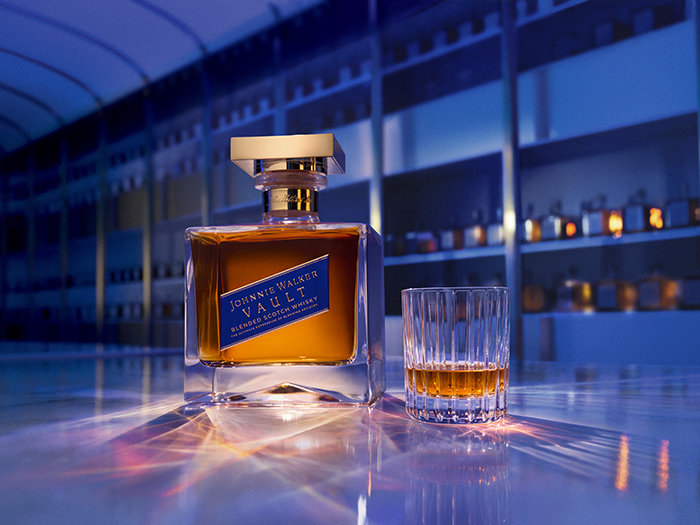
Royal was partly offset by growth, mainly in Johnnie Walker. Guinness and Smirnoff ICE
both delivered double-digit growth.
In EMEA, we grew 2.4%, led by Turkey, Africa, and the Middle East, more than offsetting
weakness in Italy and France. Growth was volume-led, with negative price/mix reflecting
targeted price repositioning. Spirits and RTDs were the key drivers of growth.
In beer, double-digit growth in Guinness, in Africa, and DACH offset a low single-digit
decline in Great Britain and Ireland. Asia-Pac grew 4.1%, with double-digit growth in global
travel and mid-single-digit growth in Southeast Asia and North Asia. Greater China
declined mid-single digits due to weakness in Taiwan, while in mainland China, both
Chinese white spirits and international premium spirits were relatively flat.
Guinness delivered strong double-digit growth, with particularly strong performance in
Southeast Asia and in Australia. LAC delivered 4.8% organic net sales growth, with doubledigit growth across CCAV, South LAC, and Colombia, partly offset by weakness in Mexico,
while Brazil was broadly flat. Scotch performed well, with high single-digit growth across
multiple markets, and RTDs grew double-digit, led by Smirnoff ICE.
3
Diageo Fiscal27 Q1 Trading Statement
Thursday, 5th November 2026
In India, we grew 3.4%, with Prestige & Above, the bulk of our business up 7.1% due to
double-digit growth in both vodka and scotch. This was partly offset by the Popular
segment, which continued to be impacted by regulatory, policy and excise changes in the
key states of Maharashtra and Karnataka. Finally, in Corporate, EABL delivered doubledigit growth across all three markets.
So, turning now to the outlook, as I mentioned earlier, our Fiscal 27 guidance remains
unchanged. We continue to expect broadly flat organic net sales growth and low to midsingle-digit organic operating profit growth. We still expect free cash flow for around $2
billion after exceptional costs and excluding EABL.
And finally, we expect to end Fiscal 27 at the mid-point of our target leverage range,
including the benefit from the completion of the EABL transaction and the sale of RCB by
USL. So, with that, let me hand back to the operator, and Dave and I will be happy to take
your questions. Thank you.
Operator: Thank you. If you would like to ask a question, you may do so by pressing star
followed by one on your telephone keypad now. If you change your mind, please press
star followed by two.
When preparing to ask your question, please ensure your device is unmuted locally. The
first question today comes from Simon Hales of Citi. Your line is now open. Please go
ahead.
Simon Hales (Citi): Thank you. Morning, Sonya, Dave and Nik.
My first question is just on North America, and I just wonder if you could perhaps share a
little bit more colour on the performance in the period, particularly for the US spirits
business. Now, you mentioned there, Nik, there was a small phasing impact on the quarter,
which is pretty typical at this time of year. Are you able to provide any quantification of
that or maybe talk about some of the underlying depletion trends that you've seen through
Q1?
And then maybe associated with that more broadly, and to some of Dave's comments, can
you talk about some of the actions that have gone into market since the CMD in August in
the US, where we are on the price repositioning journey now of Casamigos at retail, where
the broader category brand laddering process is at, some of the initiatives that John was
talking about around packaging implementation and changes on Smirnoff and Crown
Royal, etc.
Are those in market now? And are you starting to see any pickup from those actions in
some of the data that you're seeing?
Sir Dave Lewis: Okay, Simon, good morning. Let me start, and if Nik wants to add, he's
very, very welcome.
The first part of your question, now, the small phasing that Nik talked about is completely
normal, as you suggested.
Had a look at it very, very deliberately, just to make sure that we're all very comfortable.
And as Nik said, actually, the stockholding in trade in North America is at or ever so slightly
lower this year than it was last year. So it's just the normal phasing as you prepare for
OND.
In North America, we're seeing, we continue to see a mixed picture. We see very strong
growth for Guinness. We see a very strong growth for Johnnie Walker. But we do see still
4
Diageo Fiscal27 Q1 Trading Statement
Thursday, 5th November 2026
a challenge in our tequila brands and still in Crown Royal, exactly as we said to you in the
Capital Markets Day.
In terms of activity, I think I said, we said, John said at the Capital Markets Day, it was
going to take us a year, just the lead time from CapEx to be able to then have the things
that we wanted into North America. It's a 9 to 12 months.
So, what you see in the first quarter is really not a function of those packaging changes
that we talked about at the Capital Markets Day. Those are still to come. I think what is
true is there's a clearer focus in execution in North America. And where we have innovation
that was coming through the first quarter, the execution of that has been better. But look,
we still got a long, long way to go in North America. But most of the things that we talked
to you in the Capital Markets Day about really have a 12-month lead time before we're
going to see material benefit of those in the North American market. Nik, is there anything
you want to add?
Nik Jhangiani: Nope. All covered.
Sir Dave Lewis: Okay. Thank you, Simon.
Simon Hales (Citi): Thank you very much.
Operator: Thank you. The next question comes from Andrea Pistacchi of Bank of America.
Your line is now open. Please go ahead.
Andrea Pistacchi (Bank of America): Morning, Dave, Nik and Sonya. My first question
is on Guinness, please. You called out a low single digit decline for Guinness in GB and
Ireland, reflecting the unusually hot weather and competitive pressure. Can you give a bit
more colour, please, on this competitive pressure? And particularly, is it primarily within
stout? Are you seeing it more in the off-trade or the on-trade? And what are you doing in
response?
And then if I may go back to the US a second with a slightly broader industry question
there. The industry seems to have had a marginal improvement since the summer, at least
based on Nielsen data. The comparison base should be easier in calendar Q4 as we head
into the festive season. What are you expecting for the holiday season? Anything a little
bit better? Is it reasonable to expect some slight improvement in industry trends? I'm
obviously aware that you're reiterating the expectation of minus 3% industry for the year.
Sir Dave Lewis: Andrea, so, let's talk Guinness first, shall we? So, look, double digit
growth in the quarter. So, Guinness continues to be a powerhouse for Diageo. And we call
out a particular situation in the UK and Ireland. And you're right. If you look, if you track
over the last, I've only got to the last five years, there's a very strong correlation in terms
of, and we've had a very, very, very warm summer. So the stout market does have some
impact.
We need to do something about that. And there's been some interesting work about how
we might impact that going forward. But we didn't see that benefit in this year yet. And I
think that explains most of the issue. But we have had, look, I think success draws
competition. Guinness has been very successful. The competition is within stout. There is
a need to make sure that we stay competitive at every touch point. So I think there's
some work for us to do there.
Not rocket science, but we need to do it. There's a plan in place to do that. But we're really
very confident and comfortable with where Guinness sits in both of those two markets.
But we have to call out the impact of the weather and the idea that I think we need to be
a bit sharper in some of the executional touch points. And that's been particularly, it's
5
Diageo Fiscal27 Q1 Trading Statement
Thursday, 5th November 2026
actually in both off trade and on trade. I think when competition comes, it comes to you
in both of those channels.
And it's very important that we react and respond. Guinness is eminently capable of doing
that. But as we keep pushing the equity and the brand forward, we need to make sure
that we deal with some of that competitive pressure head on. And that's what the team
will do.
In terms of North American trend, look, we've guided what we anticipate for North America
for the year. I'm just going to stick with that at this point. I'm not going to try and forecast
Thanksgiving and Christmas in the States. Look, our focus has to be how compelling, how
competitive is our offering to North American consumers? That's what we're trying to do.
We're going to sharpen that as much as we possibly can as we go through OND.
But we know we've got other things that we want to do that don't come until the end of
the calendar, the fiscal year. But look, I'm not going to be able to forecast the holiday
trend for you, Andrea, I'm afraid.
Andrea Pistacchi (Bank of America): Thank you.
Operator: Thank you. The next question comes from Trevor Stirling of Bernstein. Your
line is now open. Please go ahead.
Trevor Stirling (Bernstein): Morning, Dave and Nik and Sonya. Just one question for
me, Dave.
You're coming up to your first anniversary at Diageo. You shared with us in August the
CMD, the plans underway. What are you pleased about? What do you think is working
better than you thought? And what maybe needs a bit more work doing?
Sir Dave Lewis: Trevor, Good morning. Thank you. Look, as I said in my introduction,
there's a lot of change happening in Diageo. We really have rewired how the organisation
is operating. So, there's a learning curve there. But I think the leading edge of that has
actually been in the marketing area in terms of building category strategies, building a
different way of thinking about brand and innovation and how it is we look to be bigger
and better and more impactful in the way that we innovate. So, if you ask me for a place
where I think we've made really good progress and I'm pleased and I feel the momentum
sort of taking hold itself is in those category strategies in the way that the brand
organisation is coming together.
There's real momentum in the changes that need to happen. We use the phrase back
office, which doesn't really cover the amount of transformational change that's happening
in, say, Nik's area in the technology space. A lot still to do, but we've got some progress.
I think everybody is learning, and I don't overstate this, Trevor, everybody's learning some
new roles. We're learning different ways of working and that's energising. I would say 80%
of what we're doing together is working, 20% of it, we're not getting it right first time and
having to regroup and do it again. The most important thing is the spirit inside the business
around that journey is really very positive, which given, as I say, given the amount of
changes is really very encouraging for me.
Trevor Stirling (Bernstein): Super. Thank you, Dave.
Sir Dave Lewis: Cheers.
6
Diageo Fiscal27 Q1 Trading Statement
Thursday, 5th November 2026
Operator: Thank you. The next question comes from Sanjeet Aujla of UBS. Your line is
now open. Please go ahead.
Sanjeet Aujla (UBS): Hi. Morning, Nik, Dave and Sonya.
Two for me, please. Firstly, coming back to NAM, but focussing more on the Guinness and
Smirnoff performance, momentum seems to be accelerating versus last year. Are there
any fading nuances there or is that fully reflective of underlying momentum on those
brands? That's my first question.
The second question is going into EMEA. I think you called out weakness in Italy and
France, and I recall those are markets where you've gone through some route to market
changes in recent times. How is that transition going? Is that on plan? Thanks.
Sir Dave Lewis: So, Sanjeet, the performance that you see in Guinness and Smirnoff in
North America is underlying performance improvement. Guinness is around expansion of
distribution, but also some really positive improvements in the velocity of sales of Guinness
in the outlets where it's stored. So, it's a really good quality of growth in North America.
Likewise, with Smirnoff, you saw some of the relaunch activity that was at the end of Q4
that's been working well for us in Q1, and we hope that signals a return to a more positive
growth trajectory. It's interesting that Smirnoff RTD globally grew at 15% in the quarter.
So there's something working well for us in that relaunch, not just in North America, but
elsewhere as well.
In terms of the organisation changes, I think in the Middle East, despite, let's be honest,
some very significant operational challenges, I'm really very pleased with the way that the
team are managing that situation. We're gaining share. We continue to grow even in a
market which clearly has had its challenges.
So in the Middle East, really very good. The changes in some of the European markets you
mentioned, perhaps more significant in terms of change of model, but I think we would
say so far so good, but it's too early to sort of make a definitive statement. There's new
teams, new people, that's very much further down the learning curve, but so far so good.
Sanjeet Aujla (UBS): Thank you.
Operator: Thank you. The next question comes from James Edwardes-Jones of RBC. Your
line is now open. Please go ahead.
James Edwardes-Jones (RBC): Thank you very much. You referred specifically to price
repositioning in Latin America and Europe. We obviously saw price repositioning in North
America last year. Is pricing now for the group broadly where you would want it to be?
And I guess by extension, have you discerned any meaningful competitive reaction?
Sir Dave Lewis: So it's, James, it's a good question. So we shared with you at Capital
Markets Day and I think at other times some of the work that we've done on repositioning.
We continue, look, one of the things I want Diageo to be more going forward than perhaps
we've been in the past is really quite agile to market situations. I think the category
strategies allow people to do that.
I reiterate, we're not talking about a dramatic repositioning here. We're talking about
precision, portfolio specific work, that twisting and tweaking carries on. There are lots of
local circumstances that need to be managed. So I anticipate that there'll be a low level
of that that is part of our business model as we go forward going on. But I reiterate, there's
no major fundamental repositioning of price in the Diageo portfolio in our plan. There
never was
7
Diageo Fiscal27 Q1 Trading Statement
Thursday, 5th November 2026
I do want to make sure that our category portfolio offering is always competitive across
all the different touch points.
And look, we're finding that that is working well for us. When I look underneath and when
Nik and I look underneath the category or the brand and you start looking at pack sizes
and all the detail of where this precision comes in, actually, I'm really quite pleased that
that sharpening is working for us.
But your final question, no, this is not the sort of thing that draws a competitive reaction.
This is about us tightening up our offering rather than a price repositioning in the
marketplace that draws a competitive reaction.
Nik Jhangiani: Yeah, and I would just add to Dave's point, it's not like you're done, you
do one and you go, you keep looking at your offering. We keep looking at our formats and
pack sizes. So that's always something that we need to have surgical precision with on an
ongoing basis.
Sir Dave Lewis: Thank you, James.
Operator: Thank you. The next question comes from Laurence Whyatt of Barclays. Your
line is now open. Please go ahead.
Laurence Whyatt (Barclays): Morning, Dave, Nik, Sonya. Thanks very much. A couple
of specific questions from me. Firstly, on Guinness, last couple of years across the UK,
there's been a few capacity constraints on Guinness. Just want to confirm that those have
all been solved with the sort of build-out of your capabilities on that brand. And so we
shouldn't expect any concerns in the Christmas trading, particularly in the UK.
And then secondly, on the Casamigos ready to drink canned products in the US, I
appreciate it's been off shelf for a few months now. Just wondering when you expect that
one to come back on shelf. Thank you.
Sir Dave Lewis: So very simple, Laurence, answers to your question. No capacity
constraints for Guinness in the UK or Ireland. So clear there. Casamigos, sadly, as we
said, at the Capital Markets Day, needed to regroup. And we go again, you'll see the going
again at the end of calendar Q1 into calendar Q2 is when I anticipate as being back in the
marketplace.
Laurence Whyatt (Barclays): Very clear. Thank you.
Operator: Thank you. The next question comes from Chris Pitcher of Rothschild & Co.
Redburn. Your line is now open. Please go ahead.
Chris Pitcher (Rothschild & Co. Redburn): Thank you. Good morning all. There are
two questions for me. Firstly, on scotch, can I confirm when you say in the statement that
the whisky category grew, that scotch grew? It certainly seems like that in the comments
in the US, Europe, Latam, India, etc. And is this in line or ahead of your expectations?
Because one of the things you said at the CMD was that you were actually expanding
maturing inventories, which came as a surprise to me, but it does look like it could be
vindicated by the performance.
And then just on India, there was a big step up in marketing at United Spirits, which
they're saying is the new normal. Is that a sort of trend that we should expect to see
across most of your divisions? I appreciate this isn't a profit call, but maybe not to that
quantum, but that's a good indication of how you're investing behind growth as well as
just price. Thanks.
8
Diageo Fiscal27 Q1 Trading Statement
Thursday, 5th November 2026
Sir Dave Lewis: Okay. So very quickly. So if you take whisk(e)y in total, I think market
growth year to date for our first fiscal is about 2.1% positive. So the total whisk(e)y market
is back in growth. Our scotch business grew by more than 5%. So the Scotch focus that
we talked about in Capital Markets Day is working. So there's good volume and good
growth in scotch. And as Nik said in his introduction, Johnnie Walker has been a big part
of that. So the new strategy on Johnnie Walker is bearing fruit. So all good.
In terms of India, look, I think India's had some challenges in the first quarter. I think the
USL board would recognise because of some of the regulatory and excise interventions.
The step up in support though is consistent with strategy. And the timing of that is there's
a very strong plan in India. We see very strong growth in India. The USL board are keen
to invest in that growth opportunity. And as a significant shareholder, we're keen to
support that strategy. So opportunity in India, but as always with India, it's never
completely straightforward. Nik's laughing. Nik's allowed to laugh. Thank you.
Operator: Thank you. The next question comes from Gen Cross of BNP Paribas. Your line
is now open. Please go ahead.
Gen Cross (BNP Paribas): Good morning, everyone. Thank you for the question. Just
one from me. It's back to the US Spirits business. You called out double-digit declines for
Don Julio, Casamigos and Crown Royal, which I think is roughly half your US Spirits sales.
So I guess by different performance, the rest of the portfolio is clearly much better than
that. Could you just share a bit more colour on which parts of the US Spirits business
were in healthy growth? And I'm kind of thinking beyond Johnnie Walker, which you're
supposed to be talking a lot about there. Thank you.
Sir Dave Lewis: I think you've highlighted what Nik said, which is tequila is the principal
concern, but we also have the challenges on Crown Royal, Smirnoff and Captain that we
talked about in the Capital Markets Day and John articulated and a lot of the improvements
that we have for those going forward won't land until the latter half. In fact, the very end
of our year. The strengths of performance really are in that scotch area, Johnnie Walker,
RTD, Smirnoff and indeed others and Guinness. So that's what's driving the circa 3.5
decline that Nik articulated in his introduction.
Gen Cross (BNP Paribas ): Thank you.
Sir Dave Lewis: Thank you.
Operator: The next question comes from Edward Mundy of Jefferies. Your line is now
open. Please go ahead.
Ed Mundy (Jefferies): Good morning, Dave, Nik and Sonya. My first question coming
back to the US is I know you gave very prescriptive guidance back at the CMD and that's
unchanged, but just theoretically, you highlighted at the CMD that immigration has
historically been a tailwind to growth, but currently the Hispanic consumer or the Hispanic
community is not socialising as much as they once were for the obvious reasons. So if
immigration headwinds do start to ease given recent development, what parts of the
portfolio do you think could see an uplift from that is my first question.
And then my second question is coming back to RTDs, really good performance in Smirnoff,
5.15% in the quarter. Does this give you more confidence that there's a lot more you can
do to broaden this RTD growth with other brands and new propositions? And where you've
seen Smirnoff RTDs grow, has there been a positive halo effect on the core Smirnoff brand?
Sir Dave Lewis: Very good. So, Ed, look, I take the point, obviously, too early to talk
about what might change within North America as a result of recent activity. But the
9
Diageo Fiscal27 Q1 Trading Statement
Thursday, 5th November 2026
Hispanic group we, you know, Hannah shared with you is definitely a headwind in terms
of consumption in North America.
Historically, that group has been, overtrades in our portfolio in two places, particularly
tequila and Buchanan's. They tend to be the two brands which are over indexed within
that group. So if there were to be a change in the behaviour of that group, we would
probably feel it in that part of the portfolio first. In terms of the RTD opportunity, we
continue to see one. We need to move from talking about the opportunity to realising the
opportunity. I'm pleased with Smirnoff, but I'm pleased with some of the other things that
are in development as well. And yeah, we continue to see that when we do well in RTD, it
does have a positive impact on the equity of the parent brand.
Ed Mundy (Jefferies): Great. Thank you.
Sir Dave Lewis: Thanks, Ed.
Operator: Thanks. The next question comes from Sarah Simon of Morgan Stanley.
Your line is now open. Please go ahead.
Sarah Simon (Morgan Stanley): Yeah, thanks. I have two questions. First one is on
price mix in the US. I wonder if you could just talk us through, you know, it was obviously
flattish versus negative price mix in other markets. Can you just talk us through the drivers
of that?
And then the second one was more not on revenues, but on costs. What do you think in
terms of US freight costs? And just given that that's been commented on by quite a lot of
US staples players? Thanks.
Nik Jhangiani: Yes Sarah, on your first question, re price mix. I think this comes back to
what Dave talked about, right? We've been tweaking our offering, our positioning to be
more competitive, playing a broader range. And clearly, this is some of the stuff that is
hitting shelf now. And, you know, we talked at the Capital Markets Day around a number
of the interventions that we've made and the learnings that we've had.
So we will continue to drive with those. And I think we'll continue to then see the volume
uplift come as these get more baked in. So nothing more really to add on that. In terms
of hubs in general. I mean, we went into the, pretty well hedged, but obviously, there's
significant volatility. And we do have some open exposures from a perspective of the
unhedged levels that we will continue to manage.
And obviously, that continues to improve as you go through each year, because you've
got a month of actuals kind of in there, but one that the team and I are closely watching
and monitoring… to your question specifically on freight…well, clearly, that is seen inflation
and continued pressure given what you're seeing in terms of the underlying oil prices. But
well, yesterday, that eased a little bit. Let's see if that trend continues. But you know,
obviously, we're not managing this on a day to day basis.
One of the elements you've got to keep in mind with the whole supply agility programme
that we did, and the closure of some plants and the build out of the larger facility, our big
focus there was how do we actually get our product production and manufacturing closer
to the customer. So from that angle, that's a positive for us, given the restructuring that
we did from an angle of what would have been otherwise a bigger drag.
Sarah Simon (Morgan Stanley): Great, thanks.
10
Diageo Fiscal27 Q1 Trading Statement
Thursday, 5th November 2026
Operator: Thank you. The next question comes from Javier Gonzalez Lastra of Berenberg.
Your line is now open. Please go ahead.
Javier Gonzalez Lastra (Berenberg): Yeah, thank you. Good morning all. Just a quick
question on India. Prestige grew 7%, but India overall grew only 3.4. So implies Popular
fell quite a lot in the 20 to 30% range. Just wanted to ask, I guess that's related to the
accessibility changes and regulatory changes that we've seen there.
But just wanted to ask how much further do Maharashtra and Karnataka have to run? And
also in India, if I could ask about your exposure from the scotch import probe itself. And
just to follow up, a confirmation on whether Guinness itself lost share in the period in
Great Britain and Ireland, just trying to understand how much of the decline is really
weather versus competition. Thank you.
Sir Dave Lewis: Okay. So why don't I start and you can add, Nik, in terms of India. So
let's do the first thing. The Guinness one is not a share issue. It's a different issue. So
shares are flat in the two areas that we're talking about.
When we go to India, look, I think there's two things. One is excise, but the other is the
challenge on ingredients that we received or USL received during the quarter. I think
they've been very clear in their communication about that, but that did affect the Popular,
what you call the Popular parts of the market disproportionately. So we saw a very distinct
difference between period one, period two, and period three after that issue was resolved.
So I think that mix you're talking about is more driven by that. I think you've seen the
challenge to imported scotch, but we also saw this week that actually the Indian
government have now made a declaration that bottled scotch is included in the trade
agreement. So we've got to wait for all of the confirmations, but we don't see that as a
significant issue going forward. Do you want to make any…?
Nik Jhangiani: I would only add to what you said on the first one in relation to the
ingredients. While we had a bigger impact in P1 and P2, we're in a better position in P3.
And I think we're ahead from a competition perspective, given that we were the first ones
that were impacted by this. So I think that should be a positive as we look forward.
Sir Dave Lewis: Agreed. Thank you, Javier.
Operator: Thank you. The next question comes from Fintan Ryan of Goodbody. Your line
is now open. Please go ahead.
Fintan Ryan (Goodbody): Thank you. Good morning, Dave, Nik, Sonya. Two questions
for me, please. Firstly, just in terms of your World Cup sponsorship period, there was a
quite big investment gone on from Diageo behind a quite prominent sponsorship
programme. Do you have any quantifiable results that you could share with us from brand
equities, purchase intentions? And would this change your view on future sponsorship
programmes more explicitly connected with sports events?
And then secondly, just in terms, I appreciate this is a revenue update call, but just in
terms of our modelling, can you share anything we should be thinking about in terms of
the H1 versus H2 split of the low to mid-single digit organic ebook growth delivery? Thank
you.
Sir Dave Lewis: Fintan OK, let me try and help you on the first. I'll let Nik dance on the
second.Look, we've just done as an exec team, we went through a very deep, as you
would expect us to, post evaluation of the World Cup sponsorship.
Overall, happy with what we did. Lots of lessons to learn. I hope, Fintan, you'd appreciate
I'm not going to give you any sort of quantified feedback on that because that would be
11
Diageo Fiscal27 Q1 Trading Statement
Thursday, 5th November 2026
competitively sensitive. So I don't want to give my competitors insight into our sponsorship
programme or indeed our choices going forward.
So some real big lessons for us. It's the first time we've done it. First time there's been a
spirit sponsor in the World Cup. So I think there was definitely learnings. And if we did it
tomorrow, would we have learned some things? Definitely.
But where there are lots of very good things in there that would signal that we can and
should be thinking about sponsorship platforms as part of our arsenal, the way we support
our brands. Indeed, the answer to that would be yes. But I'm not going to give you any
quantified insights because that would be competitively sensitive from my point of view.
Nik Jhangiani: Fintan, listen, we talked about this at the Capital Markets Day. We expect
the top line to be fairly balanced. And I think that takes into account all the, you know,
the kind of phasing and the comps, etcetera, that go across various markets.
From a profit perspective, we had talked about the fact that we would expect that to be
more half-two-weighted, given the fact that we had some of the restructuring benefits
that would come through later.
I think as Dave said, I think we're pleased with the progress that we're making there,
particularly in the markets and the regions. There continues to be work that we need to
do in some of the corporate functions. But I would expect, based on the way we see that
play out, it probably will be a more balanced view on profit as well. But, you know, again,
we'll update you more on that. But that's our current expectation.
Sir Dave Lewis: Very good.
Fintan Ryan (Goodbody): Great. Thank you.
Operator
Thank you. This concludes the Q&A session today. So I'd like to hand back to Dave for
closing comments.
Sir Dave Lewis: Thank you very much indeed. Ladies and gents, thank you for your time
this morning. Thank you for your questions.
I think I'd finish, if I may, by reiterating two things. One is there's a lot of change going
on in Diageo, a very significant amount of change that's touching every part of the
business. The fact that my colleagues are as focused and as professional, as committed
as they are, is something that gives me huge confidence in the direction that we're going.
But I would like to put on the record my appreciation for the work that colleagues are
doing to keep our focus externally as we make those changes. I think we look at Q1 and
say there's been a lot of work. We know there's a lot more to do.
But it does feel like a small step in the right direction. And we look forward to updating
you more when we get together at the half year. So thank you very much indeed.
[END OF TRANSCRIPT]
DISCLAIMER
This transcription has been derived from a recording of the event. Every possible effort
has been made to transcribe this event accurately; however, neither IDX nor the
applicable company shall be liable for any inaccuracies, errors or omissions.
12