FEATURE STORIES / October 13, 2026 2026. 10. 13 / differentiated customer value , FLiPP , FMM-less , LG Display , LGD , Tandem WOLED , Technology_driven company First unveiled by LG Display at IMID 2026, FLiPP is a next-generation OLED…
FEATURE STORIES
/ October 13, 2026 2026. 10. 13 / differentiated customer value
, FLiPP
, FMM-less
, LG Display
, LGD
, Tandem WOLED
, Technology_driven company
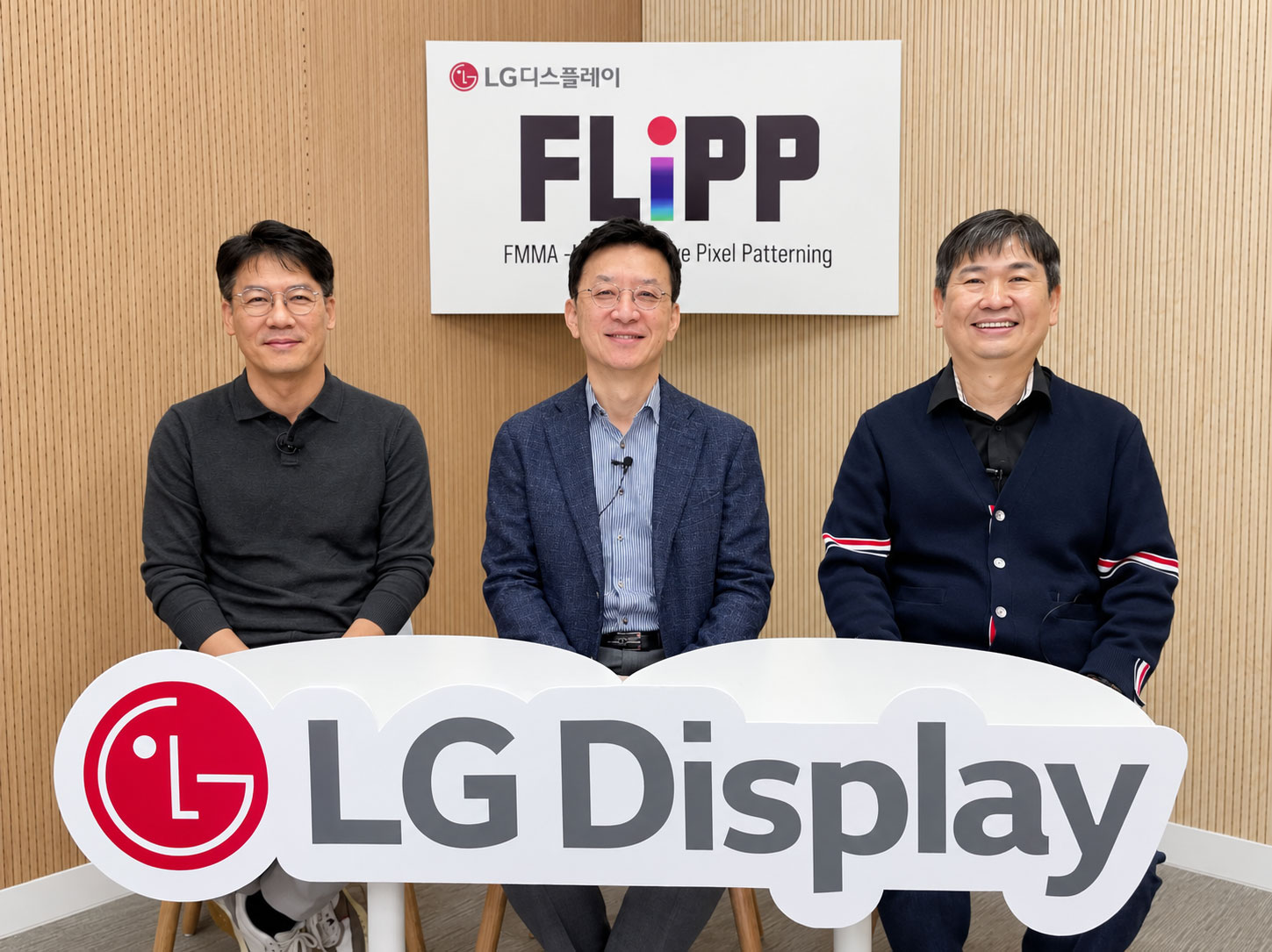
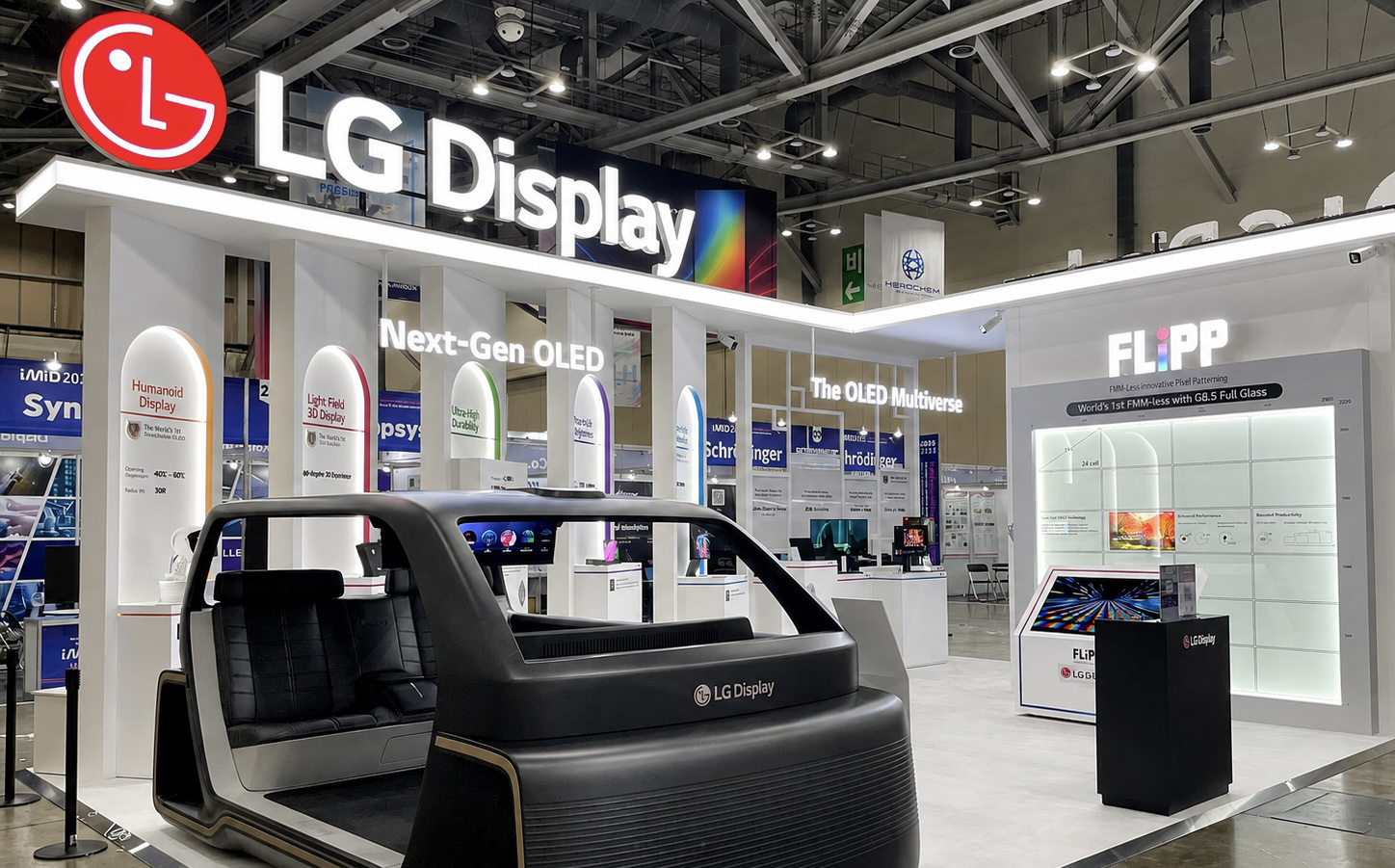
First unveiled by LG Display at IMID 2026, FLiPP is a next-generation OLED manufacturing process that forms pixels without the Fine Metal Mask (FMM).
For more than a decade, the FMM method has been widely used in OLED manufacturing and has reached a high level of maturity. However, as panel resolutions increase and display sizes grow, the method faces technical challenges. For example, even minute variations in the mask’s fine openings can cause color mixing, while the mask can sag at the center under gravity.
Global companies have made countless attempts to overcome these limitations. The breakthrough, however, required an entirely different approach. LG Display found the answer in FLiPP, a next-generation OLED pixel patterning process that eliminates the FMM from the manufacturing process.
Moving Beyond FMM to Enable a New Approach to OLED Patterning

FLiPP moves beyond the conventional method of using an FMM to control where pixels are evaporated. Instead, it uses photolithography to precisely pattern OLED pixels.
The process follows the sequence of “evaporation → encapsulation → photopatterning.”
First, organic light-emitting materials are evaporated across the entire substrate. The areas that need to remain are then protected through the encapsulation process, while unnecessary areas are removed using UV light. This process is repeated sequentially for red, green and blue to complete the RGB pixels.
In the conventional FMM method, organic materials must be evaporated at precise locations through microscopic openings in the mask. FLiPP takes a fundamentally different approach: organic materials are first formed across the entire substrate, after which only the areas needed to form the pixels are retained through patterning.
Eliminating FMM to Maximize OLED Performance

One of the key advantages of FLiPP is its improved aperture ratio enabled by eliminating the FMM.
The aperture ratio refers to the proportion of the total display area occupied by the actual pixels. Free from the physical constraints of the FMM, FLiPP minimizes the spacing between pixels, increasing the aperture ratio of approximately 55%.
The higher aperture ratio, combined with individual optimization of RGB devices, leads to overall improvements in OLED performance. Under the same conditions, FLiPP can deliver 1.6 times higher luminance, 2.4 times longer lifespan, and 13% lower power consumption compared with the FMM method.
FLiPP also enables individual optimization of red, green and blue devices, allowing pixel designs to be tailored to the characteristics of each emitter. This improves OLED device efficiency while enabling a wider color gamut and wider viewing angles.
*Based on a high-resolution 254 PPI panel for high-end notebook PCs.

Leveraging WOLED Infrastructure and Know-How to Enable the World’s First and Only 8th-Generation Mother Glass OLED Patterning Process
FLiPP’s ability to operate on large 8th-generation mother glass is made possible by LG Display’s accumulated expertise and infrastructure for large-size OLED production.
In an 8th-generation FMM-based process, the mother glass must be divided into two sections through a half-cut process to avoid issues such as sagging at the center of the mask. FLiPP, however, does not use an FMM, eliminating the need for half-cutting and allowing the 8th-generation mother glass to be used as a full sheet. This enables more panels to be produced from a single sheet of glass, improving cutting efficiency.
FLiPP also adopts the inline evaporation method used in existing WOLED production to enhance process efficiency. In the FMM method, the mother glass and FMM must be precisely aligned and attached before organic materials are evaporated. The mask must then be separated and replaced with a new FMM, followed by another alignment and attachment process before the next organic material can be evaporated. This cycle is repeated for each evaporation step.
FLiPP, on the other hand, eliminates the need for an FMM and uses an inline process in which the glass mother sheet moves along the production line like a conveyor belt, passing sequentially through each evaporation stage. This reduces the repeated mask alignment and separation processes, as well as waiting and transfer times between process steps, enabling continuous evaporation.
As a result, FLiPP reduces deposition process time by approximately 40% compared with the FMM method, improving overall manufacturing efficiency.
In other words, FLiPP is not an innovation that requires LG Display to build an entirely new production infrastructure from the ground up. Rather, it represents a process innovation that combines LG Display’s accumulated WOLED production expertise and infrastructure with a new OLED patterning technology to further enhance manufacturing capabilities.
Maximizing Manufacturing Flexibility with the FLiPP One Platform

Free from the physical constraints of FMM, FLiPP is not inherently limited by panel size or resolution. In theory, a single mother glass can be used to manufacture OLED panels in a wide range of sizes, from 1-inch-class wearable displays to over 100-inch ultra-large TVs.
Its application can also extend beyond conventional displays to panels for VR and AR devices, opening up opportunities to expand into a diverse range of products.

To further expand this manufacturing flexibility, LG Display plans to develop the FLiPP One Platform. Starting with IT panels such as tablets and laptops, the company plans to expand its application to a broad range of products, from wearables to TVs, developing FLiPP into a new manufacturing platform capable of producing OLED products tailored to diverse customer needs.
In particular, LG Display aims to leverage FLiPP to strengthen its competitiveness in next-generation OLED markets, including the IT OLED market, where a transition from LCD to OLED is expected to accelerate.
A New Manufacturing Paradigm Built on 22 Years of OLED Expertise

The foundation behind LG Display’s development of FLiPP lies in 22 years of accumulated OLED technology and know-how since the company began its OLED research.
LG Display brought together its large-size WOLED production infrastructure and evaporation expertise, technological capabilities in OLED materials and devices, and diverse technical expertise required to develop a new pixel patterning process. Together, these capabilities made FLiPP possible as an entirely new approach to OLED manufacturing.
By combining decades of accumulated expertise with innovation, LG Display is setting a new standard for next-generation OLED manufacturing. With differentiated technologies that can reshape the industry, the company plans to further strengthen its technological competitiveness in the next-generation OLED market.
TAGS differentiated customer value
, FLiPP
, FMM-less
, LG Display
, LGD
, Tandem WOLED
, Technology_driven company
Post navigation
← Previous Post
Next Post →
Related Posts


SUBSCRIBE
KOR


ENG

COPYRIGHT © 2021 LG DISPLAY CO., LTD.
ALL RIGHTS RESERVED.

Privacy Policy
User Guide
Direct Marketing
COPYRIGHT © 2024 LG DISPLAY CO., LTD. ALL RIGHTS RESERVED.
SUBSCRIBE


COPYRIGHT © 2024 LG DISPLAY CO., LTD. ALL RIGHTS RESERVED.

Search for:
Recommended : K-display 2026
| Tandem WOLED
| Tandem OLED
| Humanoid Display
|
Scroll to Top
This site uses cookies. By continuing to browse the site you are agreeing to our use of cookies. For more information please see ourCookie Policy.
Close