Choose your cookie settings When you visit ing.com we may process personal data via cookies. You can set your cookie preferences below and change at any time via the cookie statement page . Choose Choose your cookies. Customize your personal…
Choose your cookie settings
When you visit ing.com we may process personal data via cookies. You can set your cookie preferences below and change at any time via the cookie statement page
.
Choose
Choose your cookies. Customize your personal preferences for analytical and social media cookies.
Reject
Reject all non-essential cookies. We will only use cookies that are strictly necessary and required for the website to function properly.
Accept
Accept all non-essential cookies. You accept all cookies used by ING or third parties, such as analytical and social media platforms (e.g. YouTube).
Your cookie settings
Functional cookies These are technical cookies needed to keep the website running smoothly. They help with things like navigating between pages and remembering your settings, like how the site looks or works for you. They cannot be turned off.
On Off
Analytical cookies Analytics cookies are used to understand how people use the site — like where they click, scroll, or move their mouse. It helps us to get insights on what works and what doesn’t, so we can make the website better.
On Off
Social media cookies Social media cookies are used to display content from social media like for example YouTube. These are third-party cookies, the types and duration of these cookies are set by the social networks and beyond ING’s control.
On Off
Confirm choice Accept all
You can always adapt your preference via the cookie statement page

Clear
ING Global
-
About us
Back
Back
About us

Empowering people to stay a step ahead in life and in business.
It's our purpose
Management structure
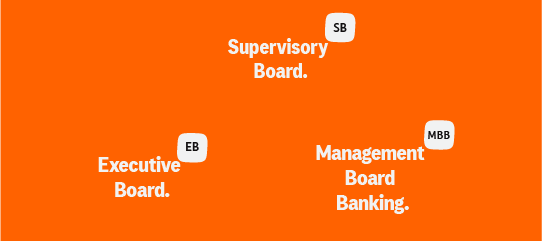
We have a statutory two-tier board management structure. This structure separates the Supervisory Board from the Executive Board and the Management Board Banking. Each board has distinct responsibilities, ensuring a balance between oversight and execution.

ING Group is a publicly-listed company
It's the parent of one main legal entity, ING Bank. ING Bank is the parent company of various Dutch and foreign banks.

Compliance
In this section you will read how we adhere to laws, regulations, internal policies, and ethical standards relevant to its operations ensuring that we operate within legal and moral boundaries, safeguarding our integrity, reputation, and financial stability.
Empowering people to stay a step ahead in life and in business.
It's our purpose
-
Sustainability
Back
Back
Sustainability

Sustainability approach
Our sustainability strategy spans climate, nature and social agendas.
Climate action
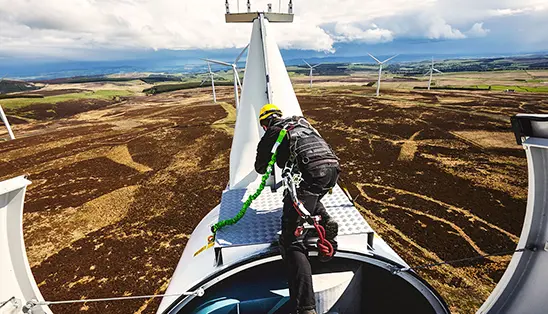
At ING, our climate ambition is to play a leading role in accelerating the low carbon transition. We’re stepping up action on climate because it matters to the bank, our customers and society.

Sustainable business
As a bank, the biggest impact we can make is through our financing. Through how we manage our business and work with our clients, we can make a positive contribution to society’s efforts to tackle climate change.

Advocacy and collective action
Rising to this global challenge demands system-level solutions. We’re eager to work with others, build partnerships and advocate publicly for the change that’s needed.

Our progress
We monitor our progress and are committed to transparent disclosure. We are eager to share what we learn along the way while continuing to learn from others.

Sustainability
We aim to put sustainability at the heart of what we do.
-
Investors
Back
Back
Investors

Share information
This is the central hub for shareholders and investors to access key data about ING’s equity structure, performance, and distribution policies.

Financial performance
Read about our financial results and strategic progress.

Presentations
Here’s a section with curated investor-facing materials that support transparency and strategic communication.

Fixed income information
Here’s detailed information for debt investors and financial analysts about ING’s bond issuances and funding instruments.
Quarterly results
2Q2026 results
On Thursday 30 July, we published our second-quarter 2026 results.
View quarterly results page

Quarterly results
2Q2026 results
On Thursday 30 July, we published our second-quarter 2026 results.
View quarterly results page
-
Newsroom
Back
Back
Newsroom
Newsroom
Explore the latest news, press releases, and stories from ING - highlighting our strategy, performance, and impact.
Also check out our financial performance in the investors section.
Quarterly results

-
Careers
Back
Back
Careers
-
Back
Back
Pages
ING Global
Back
Back
Where do you want to go?
All locations
-
Europe
-
Asia Pacific
-
Americas
Choose a country
-
Netherlands
-
Germany
-
Hungary
-
Turkey
-
Austria
-
Belgium
-
Bulgaria
-
Czech Republic
-
France
-
Ireland
-
Italy
-
Luxembourg
-
Poland
-
Romania
-
Russia
-
Slovakia
-
Spain
-
Sweden
-
Switzerland
-
Ukraine
-
United Arab Emirates
-
United Kingdom
personal banking
private banking
business banking
wholesale banking
westland utrecht
personal banking
business banking
wholesale banking
wholesale banking
personal banking
wholesale banking
business banking
wholesale banking
personal banking
wholesale banking
business banking
private banking
wholesale banking
wholesale banking
personal banking
wholesale banking
wholesale banking
personal banking
wholesale banking
personal banking
wholesale banking
business banking
private banking
personal banking
wholesale banking
securities services
personal banking
wholesale banking
wholesale banking
wholesale banking
wholesale banking
personal banking
wholesale banking
wholesale banking
wholesale banking
wholesale banking
wholesale banking
Choose a country
-
India
-
China
-
Hong Kong SAR
-
Indonesia
-
Japan
-
Philippines
-
Singapore
-
South Korea
-
Taiwan
-
Vietnam
-
Australia
wholesale banking
wholesale banking
Personal Banking
wholesale banking
wholesale banking
wholesale banking
wholesale banking
wholesale banking
wholesale banking
wholesale banking
wholesale banking
wholesale banking
Personal Banking
Choose a country
wholesale banking
Mexico
Topic sites
Economic and financial analysis - ING Think
-
-
Newsroom
-
News
-
ING to redeem Perpetual Capital Securities
ING to redeem Perpetual Capital Securities
10 mins read
Share
Listen
ING announced today it will redeem USD 1,500 million of 5.750% Perpetual Additional Tier 1 Contingent Convertible Capital Securities (the “Perpetual Capital Securities”) on the call date of 16 November 2026, in line with ING’s goal to continuously optimise its capital structure.
The Perpetual Capital Securities (CUSIP 456837AR4/ISIN US456837AR44) will be redeemed in full in accordance with their terms, with payment to be made on 16 November 2026. The redemption price will be the principal amount of the Perpetual Capital Securities. Accrued and unpaid interest due on the redemption date will be paid in the usual manner to holders of record as of 13 November 2026. The paying agent for the Perpetual Capital Securities is The Bank of New York Mellon, London Branch 160 Queen Victoria Street London EC4V 4LA United Kingdom.
Any future decisions by ING as to whether it will exercise (or cause to be exercised) calls in respect of some or all of any series of its then outstanding debt securities will be made on an economic basis, taking into account the interests of all stakeholders. Other factors that ING will consider include prevailing market conditions, regulatory approval and capital requirements.
Note for editors
Further information on ING and news can be found on this website. Photos of ING operations, buildings and its executives are available for download at Flickr
.
ING profile
ING is a global financial institution with a strong European base, offering banking services through its operating company ING Bank. The purpose of ING Bank is: empowering people to stay a step ahead in life and in business. ING Bank’s more than 60,000 employees offer retail and wholesale banking services to customers in over 100 countries.
ING Group shares are listed on the exchanges of Amsterdam (INGA NA, INGA.AS), Brussels and on the New York Stock Exchange (ADRs: ING US, ING.N).
ING aims to put sustainability at the heart of what we do. Our policies and actions are assessed by independent research and ratings providers, which give updates on them annually. ING's ESG rating by MSCI has been upgraded from 'AA' to 'AAA' in October 2025. As of July 2026, in Sustainalytics’ view, ING’s management of ESG material risk is ‘Strong’ with an ESG risk rating of 16.7 (low risk). ING Group shares are also included in major sustainability and ESG index products of leading providers. Here are some examples: Euronext, STOXX, Morningstar and FTSE Russell.
Important legal information
Elements of this press release contain or may contain information about ING Groep N.V. and/ or ING Bank N.V. within the meaning of Article 7(1) to (4) of EU Regulation No 596/2014 (‘Market Abuse Regulation’).
ING Group’s annual accounts are prepared in accordance with International Financial Reporting Standards as adopted by the European Union (‘IFRS- EU’). In preparing the financial information in this document, except as described otherwise, the same accounting principles are applied as in the 2025 ING Group consolidated financial statements. All figures in this document are unaudited. Small differences are possible in the tables due to rounding.
Certain of the statements contained herein are not historical facts, including, without limitation, certain statements made of future expectations and other forward-looking statements that are based on management’s current views and assumptions and involve known and unknown risks and uncertainties that could cause actual results, performance or events to differ materially from those expressed or implied in such statements. Actual results, performance or events may differ materially from those in such statements due to a number of factors, including, without limitation: (1) changes in general economic conditions and customer behaviour, in particular economic conditions in ING’s core markets, including changes affecting currency exchange rates and the regional and global economic impact of the invasion of Russia into Ukraine and related international response measures (2) changes affecting interest rate levels (3) any default of a major market participant and related market disruption (4) changes in performance of financial markets, including in Europe and developing markets (5) fiscal uncertainty in Europe and the United States (6) discontinuation of or changes in ‘benchmark’ indices (7) inflation and deflation in our principal markets (8) changes in conditions in the credit and capital markets generally, including changes in borrower and counterparty creditworthiness (9) failures of banks falling under the scope of state compensation schemes (10) non-compliance with or changes in laws and regulations, including those concerning financial services, financial economic crimes and tax laws, and the interpretation and application thereof (11) geopolitical risks, political instabilities and policies and actions of governmental and regulatory authorities, including in connection with the invasion of Russia into Ukraine, other existing or emerging military conflicts, the risk of further military escalation, geopolitical tensions, trade restrictions and the related international response measures (12) legal and regulatory risks in certain countries with less developed legal and regulatory frameworks (13) prudential supervision and regulations, including in relation to stress tests and regulatory restrictions on dividends and distributions (also among members of the group) (14) ING’s ability to meet minimum capital and other prudential regulatory requirements (15) changes in regulation of US commodities and derivatives businesses of ING and its customers (16) application of bank recovery and resolution regimes, including write down and conversion powers in relation to our securities (17) outcome of current and future litigation, enforcement proceedings, investigations or other regulatory actions, including claims by customers or stakeholders who feel misled or treated unfairly, and other conduct issues (18) changes in tax laws and regulations and risks of non-compliance or investigation in connection with tax laws, including FATCA (19) operational and IT risks, such as system disruptions or failures, breaches of security, cyber-attacks, human error, changes in operational practices or inadequate controls including in respect of third parties with which we do business and including any risks as a result of incomplete, inaccurate, or otherwise flawed outputs from the algorithms and data sets utilized in artificial intelligence (20) risks and challenges related to cybercrime including the effects of cyberattacks and changes in legislation and regulation related to cybersecurity and data privacy, including such risks and challenges as a consequence of the use of emerging technologies, such as advanced forms of artificial intelligence and quantum computing (21) changes in general competitive factors, including ability to increase or maintain market share (22) inability to protect our intellectual property and infringement claims by third parties (23) inability of counterparties to meet financial obligations or ability to enforce rights against such counterparties (24) changes in credit ratings (25) business, operational, regulatory, reputation, transition and other risks and challenges in connection with climate change, diversity, equity and inclusion and other ESG-related matters, including data gathering and reporting and also including managing the conflicting laws and requirements of governments, regulators and authorities with respect to these topics (26) inability to attract and retain key personnel (27) future liabilities under defined benefit retirement plans (28) failure to manage business risks, including in connection with use of models, use of derivatives, or maintaining appropriate policies and guidelines (29) changes in capital and credit markets, including interbank funding, as well as customer deposits, which provide the liquidity and capital required to fund our operations, and (30) the other risks and uncertainties detailed in the most recent annual report of ING Groep N.V. (including the Risk Factors contained therein) and ING’s more recent disclosures, including press releases, which are available on www.ING.com.
This document may contain ESG-related material that has been prepared by ING on the basis of publicly available information, internally developed data and other third-party sources believed to be reliable. ING has not sought to independently verify information obtained from public and third-party sources and makes no representations or warranties as to accuracy, completeness, reasonableness or reliability of such information. This document may also discuss one or more specific transactions and/or contain general statements about ING’s ESG approach. The approach and criteria referred to in this document are intended to be applied in accordance with applicable law. Due to the fact that there may be different or even conflicting laws, the approach, criteria or the application thereof, could be different.
Materiality, as used in the context of ESG, is distinct from, and should not be confused with, such term as defined in the Market Abuse Regulation or as defined for Securities and Exchange Commission (‘SEC’) reporting purposes. Any issues identified as material for purposes of ESG in this document are therefore not necessarily material as defined in the Market Abuse Regulation or for SEC reporting purposes. In addition, there is currently no single, globally recognized set of accepted definitions in assessing whether activities are “green” or “sustainable.” Without limiting any of the statements contained herein, we make no representation or warranty as to whether any of our securities constitutes a green or sustainable security or conforms to present or future investor expectations or objectives for green or sustainable investing. For information on characteristics of a security, use of proceeds, a description of applicable project(s) and/or any other relevant information, please reference the offering documents for such security.
This document may contain inactive textual addresses to internet websites operated by us and third parties. Reference to such websites is made for information purposes only, and information found at such websites is not incorporated by reference into this document. ING does not make any representation or warranty with respect to the accuracy or completeness of, or take any responsibility for, any information found at any websites operated by third parties. ING specifically disclaims any liability with respect to any information found at websites operated by third parties. ING cannot guarantee that websites operated by third parties remain available following the publication of this document, or that any information found at such websites will not change following the filing of this document. Many of those factors are beyond ING’s control.
Any forward-looking statements made by or on behalf of ING speak only as of the date they are made, and ING assumes no obligation to publicly update or revise any forward-looking statements, whether as a result of new information or for any other reason.
This document does not constitute an offer to sell, or a solicitation of an offer to purchase, any securities in the United States or any other jurisdiction.
Related links
Go to
Stay up to date
Follow us
ING Global
 Mobile primary customer base increases by 259,000 in the third quarter