May 7, 2026 Record total sales increased 10%, with core organic sales down 1% Accelerating ESAB’s compounder journey with equipment Acquisitions outperforming with EWM and Aktiv up double-digits Eddyfi expected to close mid-year Reiterating 2026…
May 7, 2026
- Record total sales increased 10%, with core organic sales down 1%
- Accelerating ESAB’s compounder journey with equipment
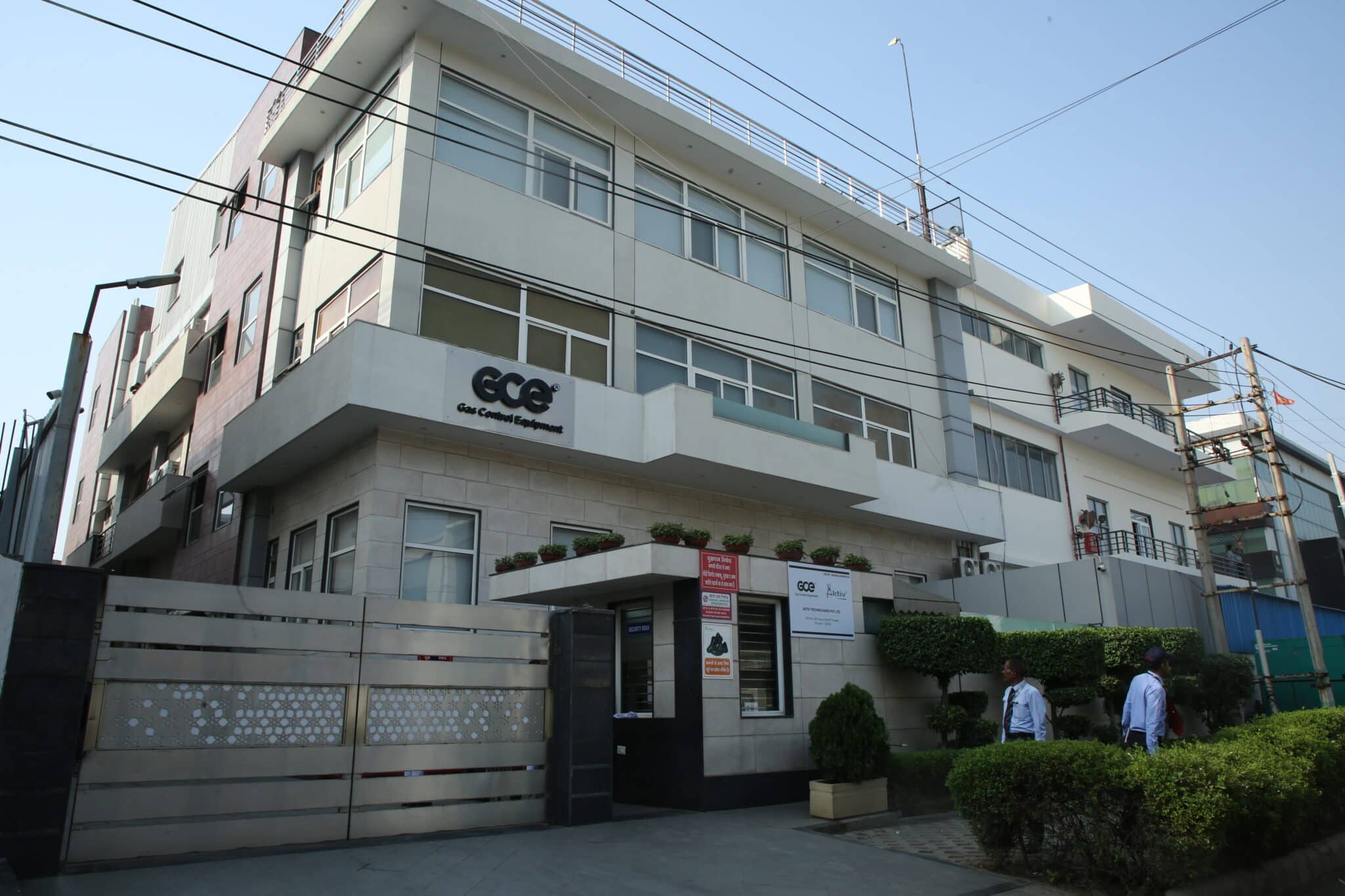
- Acquisitions outperforming with EWM and Aktiv up double-digits
- Eddyfi expected to close mid-year
- Reiterating 2026 Outlook
NORTH BETHESDA, Md.--(BUSINESS WIRE)-- ESAB Corporation (“ESAB” or the “Company”) (NYSE: ESAB), a focused premier industrial compounder, today announced financial results for the first quarter of 2026.
ESAB reported record first quarter sales of $746 million, an increase of 10% on a reported basis or a decrease of 1% on a core organic growth basis before acquisitions and currency translation, as compared to the prior year. ESAB also reported first quarter net income from continuing operations attributable to ESAB of $50 million or $0.82 diluted earnings per share and core adjusted net income of $80 million or $1.31 diluted earnings per share, up 5% on a year-over-year basis. Core adjusted EBITDA of $136 million rose 6% and core adjusted EBITDA margin decreased by 80 basis points on a year-over-year basis to 19.0%, reflecting EWM dilution and additional costs related to the conflict in Iran, both as compared to the prior year quarter.
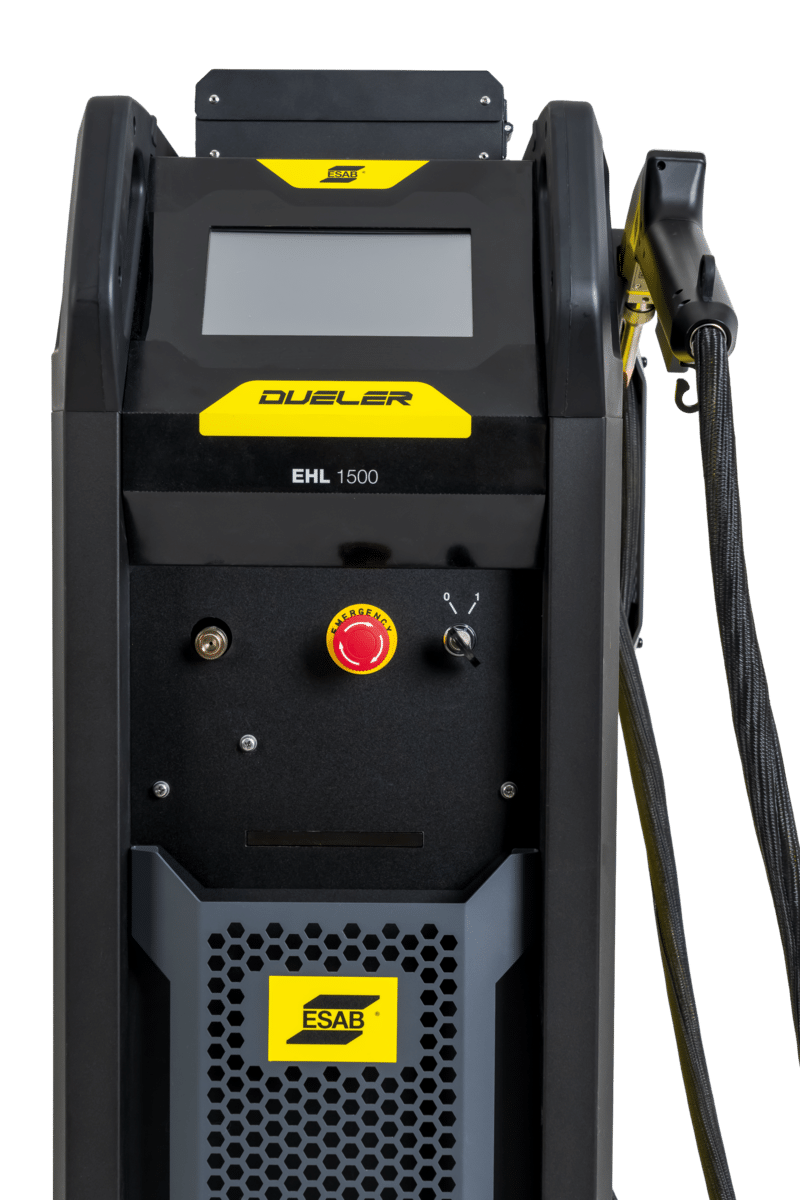
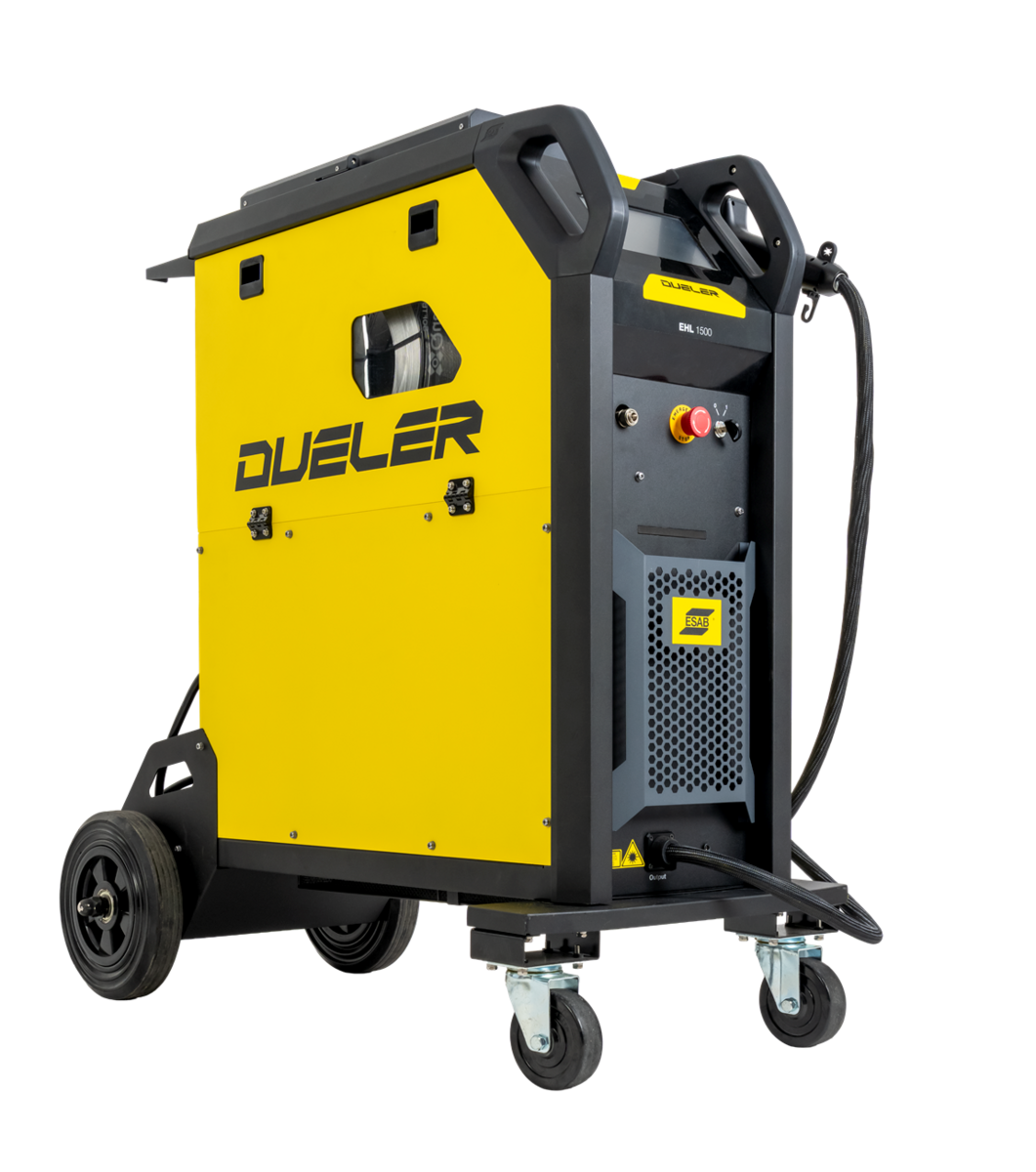
"ESAB delivered a strong first quarter, a powerful demonstration of the resilience of our business model and the strength of our unmatched global footprint. The Americas remained solid, with the U.S. accelerating behind our new and innovative product launches, while Europe and Asia performed in line with expectations. The Middle East saw limited disruption following the start of the conflict, and most importantly, our teams are safe and continuing to serve customers with the agility that defines ESAB. Where the conflict has pressured global supply chains and input costs, we have moved decisively to implement pricing and operational actions that we expect to fully offset the impact," said Shyam P. Kambeyanda, ESAB President and CEO.
Kambeyanda added, "2026 is another positive inflection point for ESAB, and we are energized about the path ahead. Customer enthusiasm for EWM's portfolio is exceeding our expectations, representing a clear differentiator for ESAB. The integration of EWM is progressing ahead of schedule and we are excited about the future. Building on that momentum, we are thrilled to welcome Eddyfi into the ESAB family, which represents a defining step that extends our workflow solutions, opens compelling new adjacencies, and meaningfully accelerates ESAB's journey to becoming a premier industrial compounder. The Eddyfi financing is successfully completed, and the transaction remains on-track to close mid-year. Last and most importantly, I am delighted to welcome Brent Jones as our new CFO, whose outstanding leadership and deeply relevant experience will be instrumental in delivering our financial targets, advancing our premier strategy, and creating long-term shareholder value."
Reiterating Full Year 2026 Outlook
ESAB is reiterating its full-year 2026 outlook. We remain confident in our ability to achieve our full-year 2026 core organic sales growth, core adjusted EBITDA and core adjusted EPS outlook. This assumes total core sales growth of 6.0% to 9.0%, core organic sales growth of 2.0% to 4.0%, M&A contribution of 4.0%, FX impact of 0.0% to 1.0%, core adjusted EBITDA of $575 million to $595 million and core adjusted EPS of $5.70 to $5.90. The guidance above does not include any impact from the Eddyfi acquisition or its related financing.
About ESAB Corporation
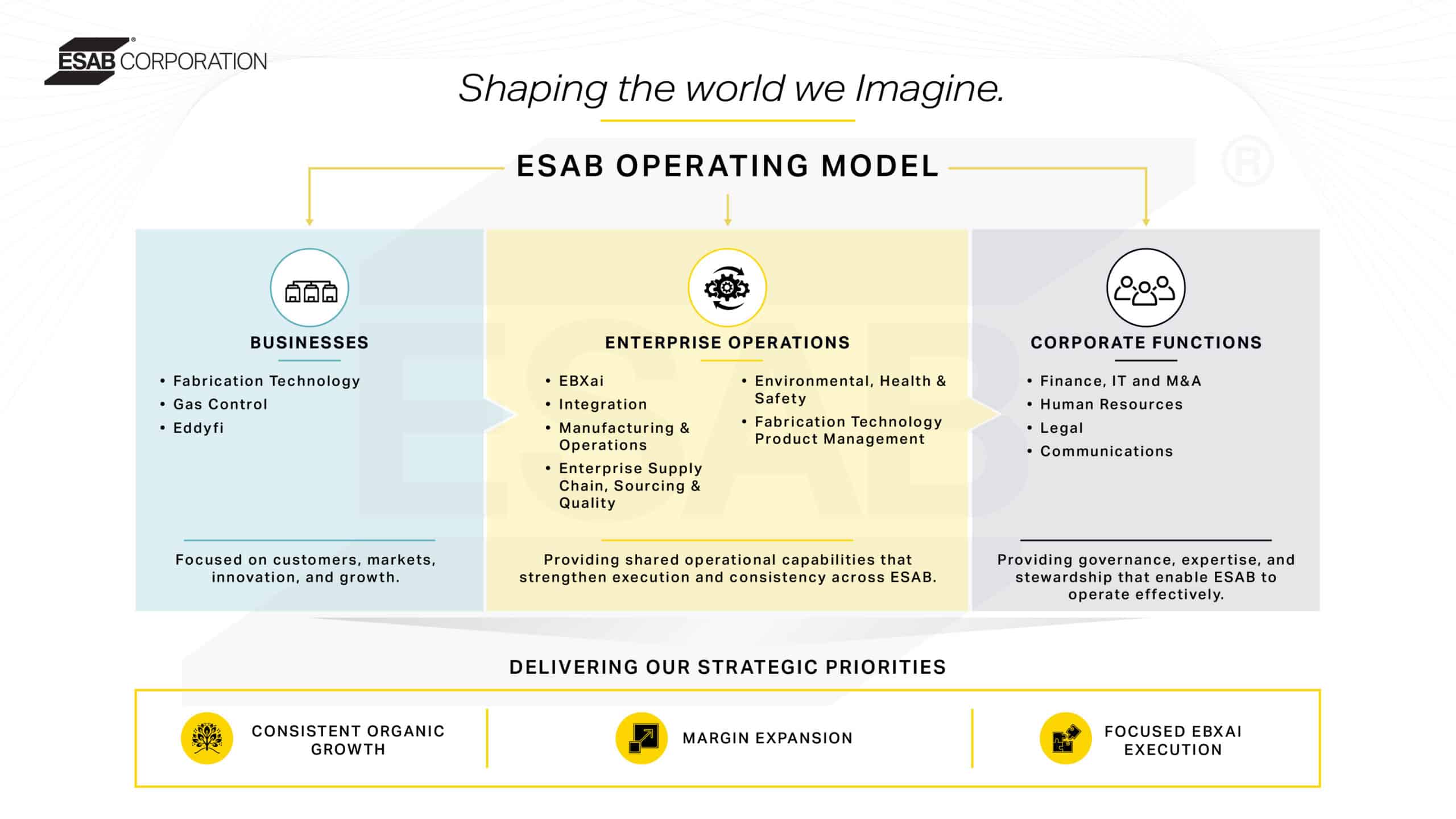
Founded in 1904, ESAB Corporation is a focused industrial compounder. The Company’s rich history of innovative products, workflow solutions and its business system ESAB Business Excellence (“EBXai”), enables the Company’s purpose of Shaping the world we imagineTM. ESAB Corporation is based in North Bethesda, Maryland, and employs approximately 10,300 associates and serves customers in approximately 150 countries. To learn more, visit www.ESABcorporation.com
.
Conference Call and Webcast
The Company will hold a conference call to discuss its first quarter 2026 results beginning at 8:00 a.m. Eastern on Thursday, May 7, 2026, which will be open to the public by calling +1-888-550-5302 (U.S. callers) and +1-646-960-0685 (International callers) and referencing the conference ID number 4669992 and through webcast via ESAB’s website www.ESABcorporation.com
under the “Investors” section. Access to a supplemental slide presentation can also be found on ESAB's website under the same heading. Both the audio of this call and the slide presentation will be archived on the website later today and will be available until the next quarterly call. The Company’s quarterly report on Form 10-Q for the fiscal quarter ended April 3, 2026, filed May 7, 2026, is also available on ESAB’s website under the “Investors” section.
Non-GAAP Financial Measures and Other Adjustments
ESAB has provided in this press release financial information that has not been prepared in accordance with accounting principles generally accepted in the United States (“non-GAAP”). ESAB presents some of these non-GAAP financial measures including and excluding Russia due to economic and political volatility caused by the war in Ukraine, which results in enhanced investor interest in this information. Core non-GAAP financial measures exclude Russia for the three months ended April 3, 2026, and April 4, 2025. These non-GAAP financial measures may include one or more of the following: adjusted net income from continuing operations, Core adjusted net income from continuing operations, adjusted EBITDA (earnings before interest, taxes, Pension settlement loss, Restructuring and other related charges, acquisition transaction, due diligence and integration expenses, amortization of intangibles and fair value step up on acquired inventories and depreciation and other amortization), Core adjusted EBITDA, organic sales, Core organic sales, adjusted free cash flow and ratios based on the foregoing measures. ESAB also provides adjusted EBITDA and adjusted EBITDA margin on a segment basis, as well as Core adjusted EBITDA and Core adjusted EBITDA margin on a segment basis.
Adjusted net income from continuing operations represents Net income from continuing operations attributable to ESAB Corporation, excluding Restructuring and other related charges, acquisition transaction, due diligence and integration expenses and amortization of intangibles and fair value step up on acquired inventories. Adjusted net income includes the tax effect of non-GAAP adjusting items at applicable tax rates and excludes the impact of discrete tax charges or gains in each period. ESAB also presents adjusted net income margin from continuing operations, which is subject to the same adjustments as adjusted net income from continuing operations. Adjusted net income per diluted share from continuing operations is a calculation of adjusted net income from continuing operations over the weighted-average diluted shares outstanding. ESAB also presents Core adjusted net income from continuing operations and Core adjusted net income per share - diluted from continuing operations, which are subject to the same adjustments as Adjusted net income from continuing operations and Adjusted net income per diluted share from continuing operations, further removing the impact of Russia for the three months ended April 3, 2026, and April 4, 2025.
Adjusted EBITDA excludes from Net income from continuing operations the effect of Income tax expense, Interest expense and other, net, Restructuring and other related charges, acquisition transaction, due diligence and integration expenses, amortization of intangibles and fair value step up on acquired inventories and depreciation and other amortization. ESAB presents adjusted EBITDA margin, which is subject to the same adjustments as adjusted EBITDA. Further, ESAB presents these non-GAAP performance measures on a segment basis, which excludes the impact of Restructuring and other related charges, acquisition transaction, due diligence and integration expenses, amortization of intangibles and fair value step up on acquired inventories and depreciation and other amortization from operating income. ESAB also presents Core adjusted EBITDA and Core adjusted EBITDA margin, which are subject to the same adjustments as Adjusted EBITDA and Adjusted EBITDA margin, respectively, further removing the impact of Russia for the three months ended April 3, 2026, and April 4, 2025.
ESAB presents organic sales, which excludes the impact of acquisitions and foreign exchange rate fluctuations and presents core organic sales, which further excludes the impact of the Russia business for the three months ended April 3, 2026, and April 4, 2025.
Adjusted free cash flow represents cash flows from operating activities excluding cash outflows related to discontinued operations and acquisition-related payments less Purchases of property, plant and equipment.
These non-GAAP financial measures assist ESAB management in comparing its operating performance over time because certain items may obscure underlying business trends and make comparisons of long-term performance difficult, as they are of a nature and/or size that occur with inconsistent frequency or relate to unusual events or discrete restructuring plans and other initiatives that are fundamentally different from the ongoing productivity and core business of the Company.
ESAB management also believes that presenting these measures allows investors to view its performance using the same measures that the Company uses in evaluating its financial and business performance and trends.
Non-GAAP financial measures should not be considered in isolation from, or as a substitute for, financial information calculated in accordance with GAAP. Investors are encouraged to review the reconciliation of these non-GAAP measures to their most directly comparable GAAP financial measures. A reconciliation of non-GAAP financial measures presented above to GAAP results has been provided in the financial tables included in this press release.
Forward-Looking Statements
This press release includes forward-looking statements, including forward-looking statements within the meaning of the U.S. Private Securities Litigation Reform Act of 1995. Such forward-looking statements include, but are not limited to, statements concerning the Company’s plans, goals, objectives, outlook, expectations, and intentions, and other statements that are not historical or current fact. Forward-looking statements are based on the Company’s current expectations and involve risks and uncertainties that could cause actual results to differ materially from those expressed or implied in such forward-looking statements, including general risks and uncertainties such as market conditions, economic conditions, geopolitical events, changes in laws, regulations or accounting rules, fluctuations in interest rates, terrorism, wars or conflicts, major health concerns, natural disasters or other disruptions of expected business conditions. Factors that could cause the Company’s results to differ materially from current expectations include, but are not limited to, risks related to the impact of the war in Ukraine and the conflict in the Middle East and the resulting escalating geopolitical tensions; impact of supply chain disruptions; the impact of creditworthiness and financial viability of customers; impact of inflationary pressures, tariffs and trade policies, foreign exchange fluctuations and commodity prices; other impacts on the Company’s business and ability to execute business continuity plans; and the other factors detailed in the Company’s Annual Report on Form 10-K for the year ended December 31, 2025, filed with the U.S. Securities and Exchange Commission (“SEC”) on February 20, 2026, as well as other risks discussed in the Company’s filings with the SEC. In addition, these statements are based on assumptions that are subject to change. This press release speaks only as of the date hereof. The Company disclaims any duty to update the information herein.
**ESAB CORPORATION
****CONSOLIDATED AND CONDENSED STATEMENTS OF OPERATIONS
****Dollars in thousands, except per share data
**(Unaudited)
|
|
|
|
|
|
|
|
|
Three Months Ended |
|
|
|
|
|
|
|
April 3, 2026 |
|
|
|
April 4, 2025 |
|
|
| Net sales |
$ |
745,597 |
|
|
$ |
678,138 |
|
| Cost of sales |
|
470,485 |
|
|
|
422,936 |
|
| Gross profit |
|
275,112 |
|
|
|
255,202 |
|
| Selling, general and administrative expense |
|
174,472 |
|
|
|
140,858 |
|
| Restructuring and other related charges |
|
10,161 |
|
|
|
4,499 |
|
| Operating income |
|
90,479 |
|
|
|
109,845 |
|
| Interest expense and other, net |
|
25,577 |
|
|
|
16,782 |
|
| Income from continuing operations before income taxes |
|
64,902 |
|
|
|
93,063 |
|
| Income tax expense |
|
13,111 |
|
|
|
20,499 |
|
| Net income from continuing operations |
|
51,791 |
|
|
|
72,564 |
|
| Loss from discontinued operations, net of taxes |
|
(2,554 |
) |
|
|
(2,732 |
) |
| Net income |
|
49,237 |
|
|
|
69,832 |
|
| Income attributable to noncontrolling interest, net of taxes |
|
(1,593 |
) |
|
|
(2,469 |
) |
| Net income attributable to ESAB Corporation |
$ |
47,644 |
|
|
$ |
67,363 |
|
| Earnings (loss) per share – basic |
|
|
|
|
|
|
|
| Income from continuing operations |
$ |
0.82 |
|
|
$ |
1.15 |
|
| Loss on discontinued operations |
|
(0.04 |
) |
|
|
(0.05 |
) |
| Net income per share – basic |
$ |
0.78 |
|
|
$ |
1.10 |
|
| Earnings (loss) per share – diluted |
|
|
|
|
|
|
|
| Income from continuing operations |
$ |
0.82 |
|
|
$ |
1.14 |
|
| Loss on discontinued operations |
|
(0.04 |
) |
|
|
(0.04 |
) |
| Net income per share – diluted |
$ |
0.78 |
|
|
$ |
1.10 |
|
**ESAB CORPORATION
****RECONCILIATION OF GAAP TO NON-GAAP FINANCIAL MEASURES
****Dollars in millions, except per share data
**(Unaudited)
|
|
|
|
|
|
|
|
|
Three Months Ended |
|
|
|
|
|
|
|
April 3, 2026 |
|
|
|
April 4, 2025 |
|
|
| Adjusted Net Income |
|
|
|
|
|
|
|
| Net income from continuing operations (GAAP) |
$ |
51.8 |
|
|
$ |
72.6 |
|
| Less: Income attributable to noncontrolling interest, net of taxes |
|
1.6 |
|
|
|
2.5 |
|
| Net income from continuing operations attributable to ESAB Corporation (GAAP) |
|
50.2 |
|
|
|
70.1 |
|
| Restructuring and other related charges – pretax(1) |
|
10.2 |
|
|
|
4.5 |
|
| Acquisition-amortization and other related charges – pretax(2) |
|
27.6 |
|
|
|
9.6 |
|
| Tax effect on above items(3) |
|
(9.0 |
) |
|
|
(3.5 |
) |
| Adjusted net income from continuing operations (non-GAAP) |
|
79.0 |
|
|
|
80.7 |
|
| Adjusted net loss (income) from continuing operations attributable to Russia (non-GAAP)(4) |
|
1.4 |
|
|
|
(3.8 |
) |
| Core adjusted net income from continuing operations (non-GAAP) |
$ |
80.4 |
|
|
$ |
76.9 |
|
| Adjusted net income margin from continuing operations |
|
10.6 |
% |
|
|
11.9 |
% |
|
|
|
|
|
|
|
|
| Adjusted Net Income Per Share |
|
|
|
|
|
|
|
| Net income per share – diluted from continuing operations (GAAP) |
$ |
0.82 |
|
|
$ |
1.14 |
|
| Restructuring and other related charges – pretax(1) |
|
0.17 |
|
|
|
0.07 |
|
| Acquisition-amortization and other related charges – pretax(2) |
|
0.45 |
|
|
|
0.16 |
|
| Tax effect on above items(3) |
|
(0.15 |
) |
|
|
(0.06 |
) |
| Adjusted net income per share – diluted from continuing operations (non-GAAP) |
|
1.29 |
|
|
|
1.31 |
|
| Adjusted net loss (income) per share – diluted from continuing operations attributable to Russia (non-GAAP)(4) |
|
0.02 |
|
|
|
(0.06 |
) |
| Core adjusted net income per share – diluted from continuing operations (non-GAAP) |
$ |
1.31 |
|
|
$ |
1.25 |
|
|
|
| (1) |
Includes severance and other termination benefits, including outplacement services as well as the cost of relocating associates, relocating equipment, lease termination expenses, impairment of long-lived assets and other costs in connection with the closure and optimization of facilities and product lines. |
| (2) |
Includes transaction, diligence and integration expenses totaling $10.3 million for the three months ended April 3, 2026, and $1.4 million for the three months ended April 4, 2025. Additionally, it includes amortization of intangibles and fair value step up on acquired inventories totaling $12.5 million for the three months ended April 3, 2026, and $8.2 million for the three months ended April 4, 2025. Additionally, includes $4.8 million of bridge loan commitment fees related to the Eddyfi Technologies acquisition. |
| (3) |
This line item reflects the aggregate tax effect of all non-tax adjustments reflected in the preceding line items of the table. ESAB estimates the tax effect of each adjustment by applying ESAB’s overall estimated effective tax rate to the pretax amount, unless the nature of the item and/or tax jurisdiction in which the item has been recorded requires application of a specific tax rate or tax treatment, in which case the tax effect of such item is estimated by applying such specific tax rate or tax treatment. |
| (4) |
Numbers calculated following the same definition as Adjusted net income from continuing operations for total Company. |
**ESAB CORPORATION
****RECONCILIATION OF GAAP TO NON-GAAP FINANCIAL MEASURES
****Dollars in millions
**(Unaudited)
|
|
|
|
|
|
|
|
|
|
|
|
|
Three Months Ended April 3, 2026(1) |
|
|
|
|
|
|
|
|
|
|
|
Americas |
|
|
|
EMEA & APAC |
|
|
|
Total |
|
|
| Net income from continuing operations (GAAP) |
|
|
|
|
|
|
|
|
$ |
51.8 |
|
| Income tax expense |
|
|
|
|
|
|
|
|
|
13.1 |
|
| Interest expense and other, net |
|
|
|
|
|
|
|
|
|
25.6 |
|
| Operating income (GAAP) |
$ |
35.2 |
|
|
$ |
55.3 |
|
|
$ |
90.5 |
|
| Adjusted to add |
|
|
|
|
|
|
|
|
|
|
|
| Restructuring and other related charges(2) |
|
9.0 |
|
|
|
1.2 |
|
|
|
10.2 |
|
| Acquisition-amortization and other related charges(3) |
|
7.7 |
|
|
|
15.1 |
|
|
|
22.8 |
|
| Depreciation and other amortization |
|
4.2 |
|
|
|
8.9 |
|
|
|
13.1 |
|
| Adjusted EBITDA (non-GAAP) |
|
56.0 |
|
|
|
80.6 |
|
|
|
136.6 |
|
| Adjusted EBITDA attributable to Russia (non-GAAP)(4) |
|
— |
|
|
|
0.7 |
|
|
|
0.7 |
|
| Core adjusted EBITDA (non-GAAP) |
$ |
56.0 |
|
|
$ |
79.9 |
|
|
$ |
135.9 |
|
| Adjusted EBITDA margin (non-GAAP) |
|
19.4 |
% |
|
|
17.6 |
% |
|
|
18.3 |
% |
| Core adjusted EBITDA margin (non-GAAP)(5) |
|
19.4 |
% |
|
|
18.7 |
% |
|
|
19.0 |
% |
|
|
| (1) |
Numbers may not sum due to rounding. |
| (2) |
Includes severance and other termination benefits, including outplacement services as well as the cost of relocating associates, relocating equipment, lease termination expenses, impairment of long-lived assets and other costs in connection with the closure and optimization of facilities and product lines. |
| (3) |
Includes transaction, diligence and integration expenses totaling $10.3 million for the three months ended April 3, 2026, and amortization of intangibles and fair value step up on acquired inventories totaling $12.5 million for the three months ended April 3, 2026. |
| (4) |
Numbers calculated following the same definition as Adjusted EBITDA for total Company. |
| (5) |
Net sales were $31.1 million relating to Russia for the three months ended April 3, 2026. |
**ESAB CORPORATION
****RECONCILIATION OF GAAP TO NON-GAAP FINANCIAL MEASURES
****Dollars in millions
**(Unaudited)
|
|
|
|
|
|
|
|
|
|
|
|
|
Three Months Ended April 4, 2025(1) |
|
|
|
|
|
|
|
|
|
|
|
Americas |
|
|
|
EMEA & APAC |
|
|
|
Total |
|
|
| Net income from continuing operations (GAAP) |
|
|
|
|
|
|
|
|
$ |
72.6 |
|
| Income tax expense |
|
|
|
|
|
|
|
|
|
20.5 |
|
| Interest expense and other, net |
|
|
|
|
|
|
|
|
|
16.8 |
|
| Operating income (GAAP) |
$ |
43.2 |
|
|
$ |
66.6 |
|
|
$ |
109.8 |
|
| Adjusted to add |
|
|
|
|
|
|
|
|
|
|
|
| Restructuring and other related charges(2) |
|
1.7 |
|
|
|
2.8 |
|
|
|
4.5 |
|
| Acquisition-amortization and other related charges(3) |
|
5.6 |
|
|
|
4.0 |
|
|
|
9.6 |
|
| Depreciation and other amortization |
|
3.9 |
|
|
|
6.0 |
|
|
|
10.0 |
|
| Adjusted EBITDA (non-GAAP) |
|
54.5 |
|
|
|
79.4 |
|
|
|
133.9 |
|
| Adjusted EBITDA attributable to Russia (non-GAAP)(4) |
|
— |
|
|
|
6.0 |
|
|
|
6.0 |
|
| Core adjusted EBITDA (non-GAAP) |
$ |
54.5 |
|
|
$ |
73.4 |
|
|
$ |
127.9 |
|
| Adjusted EBITDA margin (non-GAAP) |
|
19.4 |
% |
|
|
20.0 |
% |
|
|
19.7 |
% |
| Core adjusted EBITDA margin (non-GAAP)(5) |
|
19.4 |
% |
|
|
20.0 |
% |
|
|
19.8 |
% |
|
|
| (1) |
Numbers may not sum due to rounding. |
| (2) |
Includes severance and other termination benefits, including outplacement services as well as the cost of relocating associates, relocating equipment, lease termination expenses, impairment of long-lived assets and other costs in connection with the closure and optimization of facilities and product lines. |
| (3) |
Includes transaction, diligence and integration expenses totaling $1.4 million for the three months ended April 4, 2025, and amortization of intangibles and fair value step up on acquired inventories totaling $8.2 million for the three months ended April 4, 2025. |
| (4) |
Numbers calculated following the same definition as Adjusted EBITDA for total Company. |
| (5) |
Net sales were $31.3 million relating to Russia for the three months ended April 4, 2025. |
**ESAB CORPORATION
****RECONCILIATION OF GAAP TO NON-GAAP FINANCIAL MEASURES
****Change in Sales
****Dollars in millions
**(Unaudited)
|
|
|
|
|
|
|
|
|
|
|
|
|
|
|
|
|
|
|
|
|
|
Sales Growth(1) |
|
|
|
|
|
|
|
|
|
|
|
|
|
|
|
|
|
|
|
|
Americas |
|
|
|
|
|
|
EMEA & APAC |
|
|
|
|
|
|
Total ESAB |
|
|
|
|
|
|
$ |
|
|
|
Change % |
|
|
$ |
|
|
|
Change % |
|
|
$ |
|
|
|
Change % |
|
| For the three months ended April 4, 2025 |
$ |
280.7 |
|
|
|
|
|
$ |
397.5 |
|
|
|
|
|
$ |
678.1 |
|
|
|
|
| Components of Change: |
|
|
|
|
|
|
|
|
|
|
|
|
|
|
|
|
|
|
|
|
| Existing businesses (organic sales)(2) |
|
(2.1 |
) |
|
(0.7 |
)% |
|
|
(10.5 |
) |
|
(2.7 |
)% |
|
|
(12.6 |
) |
|
(1.9 |
)% |
| Acquisitions(3) |
|
— |
|
|
— |
% |
|
|
42.8 |
|
|
10.8 |
% |
|
|
42.8 |
|
|
6.3 |
% |
| Foreign Currency translation(4) |
|
9.8 |
|
|
3.5 |
% |
|
|
27.5 |
|
|
6.9 |
% |
|
|
37.3 |
|
|
5.5 |
% |
| Total sales growth |
|
7.7 |
|
|
2.7 |
% |
|
|
59.8 |
|
|
15.0 |
% |
|
|
67.5 |
|
|
9.9 |
% |
| For the three months ended April 3, 2026 |
$ |
288.4 |
|
|
|
|
|
$ |
457.2 |
|
|
|
|
|
$ |
745.6 |
|
|
|
|
|
|
| (1) |
Numbers may not sum due to rounding. |
| (2) |
Excludes the impact of acquisitions and foreign exchange rate fluctuations, thus providing a measure of change due to organic growth factors such as price, product mix and volume. |
| (3) |
Represents the incremental sales in comparison to the portion of the prior period during which we did not own the business. |
| (4) |
Represents the difference between prior year sales valued at the actual prior year foreign exchange rates and prior year sales valued at current year foreign exchange rates. |
|
|
|
|
|
|
|
|
|
|
|
|
|
|
|
|
|
|
|
|
|
|
Core Sales Growth(1)(5) |
|
|
|
|
|
|
|
|
|
|
|
|
|
|
|
|
|
|
|
|
Americas |
|
|
|
|
|
|
EMEA & APAC |
|
|
|
|
|
|
ESAB |
|
|
|
|
|
|
$ |
|
|
|
Change % |
|
|
$ |
|
|
|
Change % |
|
|
$ |
|
|
|
Change % |
|
| For the three months ended April 4, 2025 |
$ |
280.7 |
|
|
|
|
|
$ |
366.2 |
|
|
|
|
|
$ |
646.9 |
|
|
|
|
| Components of Change: |
|
|
|
|
|
|
|
|
|
|
|
|
|
|
|
|
|
|
|
|
| Existing businesses (core organic sales)(2) |
|
(2.1 |
) |
|
(0.7 |
)% |
|
|
(5.3 |
) |
|
(1.5 |
)% |
|
|
(7.4 |
) |
|
(1.1 |
)% |
| Acquisitions(3) |
|
— |
|
|
— |
% |
|
|
42.8 |
|
|
11.7 |
% |
|
|
42.8 |
|
|
6.6 |
% |
| Foreign Currency translation(4) |
|
9.8 |
|
|
3.5 |
% |
|
|
22.4 |
|
|
6.1 |
% |
|
|
32.2 |
|
|
5.0 |
% |
| Total core sales growth |
|
7.7 |
|
|
2.7 |
% |
|
|
59.9 |
|
|
16.4 |
% |
|
|
67.6 |
|
|
10.5 |
% |
| For the three months ended April 3, 2026 |
$ |
288.4 |
|
|
|
|
|
$ |
426.1 |
|
|
|
|
|
$ |
714.5 |
|
|
|
|
|
|
| (1) |
Numbers may not sum due to rounding. |
| (2) |
Excludes the impact of acquisitions and foreign exchange rate fluctuations, thus providing a measure of change due to organic growth factors such as price, product mix and volume. |
| (3) |
Represents the incremental sales in comparison to the portion of the prior period during which we did not own the business. |
| (4) |
Represents the difference between prior year sales valued at the actual prior year foreign exchange rates and prior year sales valued at current year foreign exchange rates. |
| (5) |
Represents sales excluding Russia for the three months ended April 3, 2026, and April 4, 2025. |
**ESAB CORPORATION
****RECONCILIATION OF GAAP TO NON-GAAP FINANCIAL MEASURES
****Adjusted Free Cash Flow
****Dollars in millions
**(Unaudited)
|
|
|
|
|
|
|
|
|
Three Months Ended |
|
|
|
|
|
|
|
April 3, 2026 |
|
|
|
April 4, 2025 |
|
|
| Net cash provided by operating activities (GAAP) |
$ |
46.9 |
|
|
$ |
35.4 |
|
| Purchases of property, plant and equipment (GAAP) |
|
(13.7 |
) |
|
|
(7.3 |
) |
| Payments related to discontinued operations |
|
4.3 |
|
|
|
2.3 |
|
| Acquisition-related payments(1) |
|
2.0 |
|
|
|
— |
|
| Adjusted free cash flow (non-GAAP) |
$ |
39.5 |
|
|
$ |
30.4 |
|
|
|
| (1) |
Represents payments related to due diligence, transaction and other related costs. |
**ESAB CORPORATION
****2026 Outlook
****Dollars in millions, except per share amounts
**(Unaudited)
|
|
|
|
| ESAB 2026 Outlook |
|
|
|
|
Outlook(1) |
|
|
| 2025 Core net sales |
$ |
2,700.4 |
|
| Organic growth |
2.0% - 4.0 |
|
% |
| Acquisitions |
~4.0 |
|
% |
| Currency |
0.0% - 1.0 |
|
% |
| 2026 Core net sales growth range |
6.0 - 9.0 |
|
% |
|
|
|
|
| 2025 Core adjusted EBITDA |
$ |
540.0 |
|
| 2026 Core adjusted EBITDA range |
|
575 - 595 |
|
|
|
|
|
| 2025 Core adjusted EPS |
$ |
5.27 |
|
| 2026 Core adjusted EPS range |
$5.70 - $5.90 |
|
|
|
|
| (1) |
Excludes any impact from the Eddyfi acquisition or its related financing. |
**ESAB CORPORATION
****CONSOLIDATED AND CONDENSED BALANCE SHEETS
****Dollars in thousands, except share and per share amounts
**(Unaudited)
|
|
|
|
|
|
|
|
|
April 3, 2026 |
|
|
|
December 31, 2025 |
|
|
| ASSETS |
|
|
|
|
|
|
|
| CURRENT ASSETS: |
|
|
|
|
|
|
|
| Cash and cash equivalents |
$ |
1,004,790 |
|
|
$ |
185,863 |
|
| Trade receivables, less allowance for credit losses of $21,638 and $21,765 |
|
488,460 |
|
|
|
451,298 |
|
| Inventories, net |
|
520,597 |
|
|
|
481,765 |
|
| Prepaid expenses |
|
79,022 |
|
|
|
66,103 |
|
| Other current assets |
|
77,289 |
|
|
|
76,876 |
|
| Total current assets |
|
2,170,158 |
|
|
|
1,261,905 |
|
| Property, plant and equipment, net |
|
377,352 |
|
|
|
381,876 |
|
| Goodwill |
|
1,930,604 |
|
|
|
1,949,702 |
|
| Intangible assets, net |
|
655,922 |
|
|
|
673,006 |
|
| Lease assets - right of use |
|
106,178 |
|
|
|
113,310 |
|
| Other assets |
|
384,455 |
|
|
|
386,295 |
|
| Total assets |
$ |
5,624,669 |
|
|
$ |
4,766,094 |
|
|
|
|
|
|
|
|
|
| LIABILITIES AND EQUITY |
|
|
|
|
|
|
|
| CURRENT LIABILITIES: |
|
|
|
|
|
|
|
| Current portion of debt |
$ |
3,788 |
|
|
$ |
2,412 |
|
| Accounts payable |
|
398,501 |
|
|
|
360,391 |
|
| Accrued liabilities |
|
327,707 |
|
|
|
301,986 |
|
| Total current liabilities |
|
729,996 |
|
|
|
664,789 |
|
| Long-term debt |
|
2,032,436 |
|
|
|
1,232,540 |
|
| Other liabilities |
|
626,569 |
|
|
|
657,236 |
|
| Total liabilities |
|
3,389,001 |
|
|
|
2,554,565 |
|
| Equity: |
|
|
|
|
|
|
|
| Common stock - $0.001 par value - 600,000,000 shares authorized, 60,881,557 and 60,721,079 shares outstanding as of April 3, 2026, and December 31, 2025, respectively |
|
61 |
|
|
|
61 |
|
| Additional paid-in capital |
|
1,905,399 |
|
|
|
1,904,889 |
|
| Retained earnings |
|
842,343 |
|
|
|
800,806 |
|
| Accumulated other comprehensive loss |
|
(557,013 |
) |
|
|
(539,716 |
) |
| Total ESAB Corporation equity |
|
2,190,790 |
|
|
|
2,166,040 |
|
| Noncontrolling interest |
|
44,878 |
|
|
|
45,489 |
|
| Total equity |
|
2,235,668 |
|
|
|
2,211,529 |
|
| Total liabilities and equity |
$ |
5,624,669 |
|
|
$ |
4,766,094 |
|
**ESAB CORPORATION
****CONSOLIDATED AND CONDENSED STATEMENTS OF CASH FLOWS
****Dollars in thousands
**(Unaudited)
|
|
|
|
|
|
|
|
|
Three Months Ended |
|
|
|
|
|
|
|
April 3, 2026 |
|
|
|
April 4, 2025 |
|
|
| Cash flows from operating activities: |
|
|
|
|
|
|
|
| Net income |
$ |
49,237 |
|
|
$ |
69,832 |
|
| Adjustments to reconcile net income to net cash provided by operating activities: |
|
|
|
|
|
|
|
| Depreciation, amortization and other impairment charges |
|
23,868 |
|
|
|
17,491 |
|
| Net gain on sale of property, plant and equipment |
|
(56 |
) |
|
|
(5,665 |
) |
| Stock-based compensation expense |
|
3,948 |
|
|
|
5,361 |
|
| Deferred income tax benefit |
|
(4,771 |
) |
|
|
(2,774 |
) |
| Amortization of debt issuance costs |
|
5,764 |
|
|
|
628 |
|
| Changes in operating assets and liabilities: |
|
|
|
|
|
|
|
| Trade receivables, net |
|
(33,819 |
) |
|
|
(32,026 |
) |
| Inventories, net |
|
(40,123 |
) |
|
|
(35,393 |
) |
| Accounts payable |
|
39,662 |
|
|
|
21,405 |
|
| Other operating assets and liabilities |
|
3,205 |
|
|
|
(3,449 |
) |
| Net cash provided by operating activities |
|
46,915 |
|
|
|
35,410 |
|
| Cash flows from investing activities: |
|
|
|
|
|
|
|
| Purchases of property, plant and equipment |
|
(13,703 |
) |
|
|
(7,294 |
) |
| Proceeds from sale of property, plant and equipment |
|
275 |
|
|
|
4,605 |
|
| Net cash used in investing activities |
|
(13,428 |
) |
|
|
(2,689 |
) |
| Cash flows from financing activities: |
|
|
|
|
|
|
|
| Proceeds from borrowings on Senior Notes |
|
1,000,000 |
|
|
|
— |
|
| Proceeds from borrowings on revolving credit facilities and other |
|
131,217 |
|
|
|
— |
|
| Repayments of borrowings on Term Loans |
|
— |
|
|
|
(2,500 |
) |
| Repayments of borrowings on revolving credit facilities and other |
|
(317,374 |
) |
|
|
— |
|
| Payment of debt issuance costs |
|
(17,017 |
) |
|
|
— |
|
| Payment of dividends |
|
(6,092 |
) |
|
|
(4,861 |
) |
| Distributions to noncontrolling interest holders |
|
(1,117 |
) |
|
|
(1,168 |
) |
| Other financing |
|
(3,438 |
) |
|
|
(4,590 |
) |
| Net cash provided by (used in) financing activities |
|
786,179 |
|
|
|
(13,119 |
) |
| Effect of foreign exchange rates on Cash and cash equivalents |
|
(739 |
) |
|
|
22,388 |
|
| Increase in Cash and cash equivalents |
|
818,927 |
|
|
|
41,990 |
|
| Cash and cash equivalents, beginning of period |
|
185,863 |
|
|
|
249,358 |
|
| Cash and cash equivalents, end of period |
$ |
1,004,790 |
|
|
$ |
291,348 |
|
Investor Relations Contact:
Mark Barbalato
Vice President, Investor Relations
E-mail: [email protected]
Phone: 1-301-323-9098
Media Contact:
Tilea Coleman
Vice President, Corporate Communications
E-mail: [email protected]
Phone: 1-301-323-9092
Source: ESAB Corporation
View All News
Contact Us
+1.301.323.9098
[email protected]
Quick Links
Investor Email Alerts
To opt in for investor email alerts, please enter your email address in the field below and select at least one alert option. After submitting your request, you will receive an activation email to the requested email address. You must click the activation link in order to complete your subscription. You can sign up for additional alert options at any time.
At ESAB Corporation, we promise to treat your data with respect and will not share your information with any third party. You can unsubscribe to any of the investor alerts you are subscribed to by visiting the “unsubscribe” section below. If you experience any issues with this process, please contact us for further assistance.
By providing your email address below, you are providing consent to ESAB Corporation to send you the requested investor email alert updates.
*Indicates required field.
Enter Your Email Address *
Investor Alert OptionsInvestor Alert Options *
|
| News |
| Quarterly Reports |
| Annual Reports |
| SEC Filings |
| Events and Presentations |
| End-of-Day Stock Quote |
Submit Sign Up
Unsubscribe
Email Alert Sign Up Confirmation

© ESAB Corporation 2026 - All rights reserved
Powered By Q4 Inc. 5.191.0.1 (opens in new window)

 English