High-Altitude Platform Station (HAPS) technology has the potential to reshape how the world stays connected. Also referred to as High Altitude Pseudo Satellites, HAPS describes uncrewed vehicles that operate in the stratosphere. The terms are often…

High-Altitude Platform Station (HAPS) technology has the potential to reshape how the world stays connected. Also referred to as High Altitude Pseudo Satellites, HAPS describes uncrewed vehicles that operate in the stratosphere. The terms are often used interchangeably to describe these platforms, which function like satellites by providing persistent services such as communications and Earth observation.
These aircraft help address challenges that traditional satellites and ground-based fiber systems cannot overcome, paving the way toward a world where anyone, anywhere can communicate.
Because they are still in the developmental and experimental stages, most people have never heard of these unmanned aerial aircraft. Yet, they are poised to revolutionize telecommunications, and it won’t be long before HAPS become commonplace.
Let’s explore HAPS in more detail below.
What are HAPS (High Altitude Pseudo Satellites)?
High Altitude Platform Stations are unmanned aerial vehicles
(UAVs) that operate in the Earth’s stratosphere. They are built for endurance and long-duration flight, performing tasks similar to standard satellites.
How are HAPS Different from Traditional Satellites?
Unlike a traditional satellite that orbits the Earth, HAPS fly at a lower altitude and hover in a fixed or semi-fixed position, which allows them to achieve flexible local coverage.
They can also be easily repositioned and retrieved for maintenance. Overall, they make for a more convenient and cheaper solution
compared to traditional satellites.
How do HAPS Work?
HAPS can sustain their stationary positions thanks to their structure. Depending on the type of HAPS, they can achieve aerodynamic lift or aerostatic lift.
There are two main categories of HAPS:
- Lighter than air (LTA): These are balloons or airships that achieve lift using hydrogen or helium.
- Heavier than air (HTA): These are fixed-wing UAVs that look much like a solar aircraft.
Most HAPS can remain airborne for months at a time due to their solar energy systems. This significantly reduces the need to take them out of commission for refueling or battery swaps, or recharging.
The Airbus Zephyr
, for instance, is an HTA craft capable of reaching a height of 60,000 feet and remaining in place for up to 64 days. Its sustained flight time is made possible
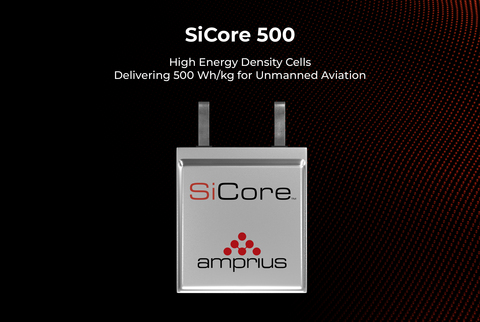
by using 450 Wh/kg silicon nanowire anode-based lithium-ion batteries from Amprius Technologies.
Why HAPS Matter for Global Communication
HAPS offer a unique opportunity to address internet equality across the globe. Their fixed position is able to drastically reduce latency and remove the barriers that make reaching rural or remote areas difficult.
To get an idea of their potential, let’s compare HAPS to Starlink
, the first commercial low-Earth orbit (LEO) satellite-based internet service.
Although Starlink has revolutionized internet connectivity with its low Earth orbit (LEO) satellites, problems still remain. It offers a reasonable latency of 20-40 milliseconds, but the cost of deploying the satellites is extremely high. Maintenance is next to impossible, which further increases costs.
Because Starlink satellites move, ground terminals must electronically track them to maintain signal lock. That’s not always possible if there are obstacles in the way.
In contrast, HAPS are closer to the ground, and their fixed position means that connectivity is constant with potentially sub-millisecond latency. Furthermore, deploying and maintaining them is easier and much lower in cost.
Therefore, they are poised to be an excellent solution for reaching areas that remain disconnected, especially in developing regions.
The Role of HAPS in Emergency Response
HAPS are quickly deployed and easily repositioned. This quick adaptation ability is critical for emergency response and creating a temporary bridge across network breakdowns.
Research conducted by the European Space Agency has revealed
that HAPS can replace collapsed networks by acting as aerial cell towers to restore mobile and internet communication between first responders, command centers, and victims.
Simulations show that HAPS nodes are capable of reestablishing data links up to nearly 500 miles away, maintaining real-time rescue operation coordination and data transmission.
The Advantages of HAPS Over Traditional Systems
Cost Efficiency
HAPS are significantly cheaper to develop than traditional systems, but that’s not where the cost savings end. They are also cheaper to deploy and maintain throughout their entire lifecycle.
In contrast, orbital satellites require rocket launches to deploy, which come with complex infrastructure and, of course, an increased cost.
Plus, once an orbital satellite is in situ, it’s next to impossible to perform maintenance. Usually, if it breaks down, it’s consigned to a graveyard orbit, and a new one has to take its place.
HAPS, on the other hand, can be brought in for maintenance, which drastically reduces long-term operational expenses.
One study
has found that the total cost of ownership of a HAPS system is estimated at around $4.4 million. In contrast, just the launch alone of an orbital satellite can cost between $10 million and $60 million.
Coverage
While the coverage of one HAPS system is not as broad as that of an orbital satellite, it’s still significantly wider than ground-based cell towers.
For instance, a single Zephyr aircraft can provide cellphone coverage that matches the equivalent of 250 towers
. This coverage equates to around 2,895 square miles.
If the coverage provided by a single HAPS is not enough, more HAPS can be added to expand reach and capacity at a lower cost than using orbital satellites.
Flexibility
HAPS’ ability to hover persistently yet move when needed makes them incredibly versatile.
They can relocate to new zones within hours, allowing them to provide coverage where it is needed in the moment. That’s why they’re so important for addressing emergency situations, or sudden population surges, such as at large festivals and events.
If there isn’t a HAPS currently in the air at the desired location, deploying and repositioning one is a rapid and low-cost process.
It’s also worth mentioning their modular payloads. Operators can swap or upgrade sensors, data relays, and more in order to match the required mission. If a HAPS is needed for environmental monitoring rather than surveillance, its equipment can be quickly modified.
Reduced Latency
The distance between a HAPS and the Earth’s surface is about 12 miles, while an orbital satellite sits between 500 and 1,242 miles.
This close proximity offers superior connectivity with extremely low latency.
As mentioned previously, HAPS have potentially sub-millisecond latency
, while LEO satellites average around 30 milliseconds. Geo-stationary satellites fare even worse, with around 250 milliseconds of latency.
What does this mean in practical terms?
Lower latency means data exchange can happen in as close to real time as possible, a critical factor for emergency operations. A few milliseconds can be the difference between success and failure in time-sensitive situations.
Lower latency also means less delay and buffering, which improves user experience for everyday usage like internet and phone services, especially in rural areas where the signal is typically unreliable.
Sustainability
From an environmental perspective, HAPS are vastly more sustainable compared to traditional satellites.
Most modern HAPS are solar powered, relying on the sun’s energy to fuel them throughout their mission. Energy is stored in high-density batteries, giving them the necessary power to continue working during the hours of darkness.
Their position in the stratosphere helps them avoid the atmospheric drag and fuel consumption experienced by conventional aircraft. As well, they don’t require fuel-heavy rocket launches to deploy, further reducing their environmental impact.
Overall, the greenhouse gas emissions of a HAPS are drastically reduced compared to other airborne vehicles.
Then there’s the question of space junk. Decommissioned satellites can’t simply return to Earth for recycling. Instead, they’re forever consigned to graveyard orbits.
It is estimated that there are ~11,500–14,000 tons of debris
orbiting Earth, and this figure is projected to increase significantly. This debris reflects sunlight, which brightens the sky and severely obstructs astronomical research. It also increases collision risk for future spacecraft.
HAPS, on the other hand, can be recovered, repaired, and recycled, minimizing further pollution of our skies.
Integrating HAPS with Existing Networks
Perhaps the biggest benefits of HAPS are their ability to integrate seamlessly with existing networks without requiring a complete overhaul of infrastructure.
In fact, they’re not designed to replace existing systems. Their beauty lies in the ability to extend and enhance, creating a multi-layered yet unified ecosystem.
For instance, HAPS can extend cellular 4G, 5G and future 6G coverage by acting as sky-based cell towers. They act as the flexible middle ground to fill coverage gaps where fiber is too expensive or physically impossible to implement.
We’ll also start to see hybrid constellations that combine LEO satellites and HAPS. With this setup, LEO satellites can handle global coverage and long-distance transmission, while HAPS will deliver fast, localized connectivity.
This hybrid approach would ensure the continuity of service, even if one area is disrupted, resulting in a resilient and adaptable network.
Looking ahead, HAPS are expected to play a critical role in Non-Terrestrial Networks
(NTN). These are purely airborne communication systems that combine satellites in various orbits to extend connectivity beyond terrestrial capabilities (similar to hybrid setups).
They aim to unify all aerial and space-based communication platforms, including HAPS, drones, and traditional satellites, into one integrated system.
NTNs are essential for expanding 5G and emerging 6G networks. Ultimately, they may be the key to achieving true and complete global coverage.
Key HAPS Developers & Programs
Around the world, major aerospace and telecommunications innovators are advancing HAPS programs, each contributing unique designs, missions, and breakthroughs toward global connectivity.
|
|
|
|
| Developer / Organization |
Primary Project or Platform |
Purpose / Focus |
Key Milestones or Notes |
| Airbus Defense and Space |
Zephyr (solar-powered HTA UAV) |
Persistent communication and Earth observation |
Reached 60,000 ft altitude and stayed aloft 64 days; powered by 450 Wh/kg Amprius Li-ion batteries |
| SoftBank (Japan) |
HAPSMobile / Sunglider (with AeroVironment) |
Stratospheric broadband internet |
Completed test flights in New Mexico, providing direct smartphone connectivity; commercial launch planned 2026 |
| AeroVironment |
Sunglider partnership with SoftBank |
UAV design and flight systems |
Expertise in lightweight solar UAVs; contributed to high-altitude flight validation |
| Sceye (USA) |
Stratospheric airships |
Broadband internet and environmental monitoring |
Partnered with SoftBank to deploy pre-commercial HAPS in Japan 2026 |
| Stratospheric Platforms Ltd. (UK) |
5G HAPS aircraft |
Delivering 5G coverage from stratosphere |
Collaborated with Saudi CITC on trials proving stable 5G from the stratosphere |
| European Space Agency (ESA) |
HAPS research & emergency-network trials |
Emergency response, telecom backup |
Demonstrated 800 km communication range for network restoration after disasters |
| Saudi Communications, Space & Technology Commission (CITC) |
Joint 5G HAPS trial with Stratospheric Platforms |
Telecom infrastructure for remote regions |
Validated HAPS as temporary 5G cell towers in low-coverage areas |
Challenges and What’s Next for HAPS
Technical Barriers
HAPS technology faces some interesting engineering hurdles that must be overcome to secure their longevity.
Given that they operate in the stratosphere, they must be equipped to handle extreme temperature variations and prolonged radiation exposure.
To overcome this, HAPS require lightweight yet durable materials that can withstand these conditions. For instance, Airbus Zephyr
uses ultra-light carbon-fiber composites.
High altitude winds are less of a concern (since it is much calmer and more stable in the stratosphere), but wind is still a consideration during launch periods and for maintaining a stable position once in place.
To retain precision control, HAPS require advanced communication terminals with laser links and tracking systems.
Additionally, flight endurance is another challenge, with months-long operation being the ultimate goal. For this to happen, solar power systems, battery composition, and storage must continue to improve without increasing payload.
Although recent prototypes have demonstrated impressive performance, scaling this reliability across fleets for widescale use remains a major technical goal.
Regulatory and Airspace Coordination
There’s no doubt that our skies are already cluttered with countless aircraft, drones, satellites, and other debris.
Integrating HAPS into this crowded environment would require significant regulatory consideration and aircraft coordination adjustments.
For this to happen, aviation authorities and the telecommunications industry have to cooperate to develop clear regulations and standardized global frameworks.
Cross-border coordination, spectrum allocation, and collision avoidance are all considerations that have to be addressed in order to reduce interference risk and operational bottlenecks.
Future Outlook
Although challenges are present, HAPS is an incredibly promising technology that major telecom and aerospace leaders are heavily investing in.
Many research and pilot programs are currently underway.
SoftBank’s HAPSMobile and AeroVironment
have partnered to develop the Sunglider, designed to provide broadband internet from the stratosphere. The project has successfully completed test flights in New Mexico, demonstrating stable connectivity directly to smartphones on the ground.
SoftBank has also announced that it will partner with Sceye
and launch pre-commercial HAPS communications services in Japan in 2026.
Additionally, the Saudi Communications, Space & Technology Commission (CITC) and Stratospheric Platforms
have used a long-endurance aircraft to trial 5G coverage from the stratosphere, proving that HAPS can act as a temporary telecom infrastructure in areas lacking ground networks.
Ongoing R&D efforts are set to continue focusing on improving flight durations and developing smart control systems that allow HAPS to automatically adapt to changing atmospheric conditions and on-ground demand.
As things develop, we expect HAPS to move from the experimental stage and into commercial deployment.
Conclusion
As ground-based communications infrastructure reaches its limits while demand continues to increase, our skies offer a real, practical solution to the problem.
HAPS represent a solid step toward a truly borderless network, revolutionizing global connectivity in an efficient and cost-effective way.
Perhaps the most exciting thing about HAPS is its potential to truly close the digital divide. Its flexibility and ability to reach remote locations will result in a more inclusive and connected world.
In short, HAPS are redefining the boundaries of communication not just for devices, but for humanity itself.
Share this article
More Blog Posts
View All
Blog
READ MORE
Blog
READ MORE
Blog
READ MORE
LOAD MORE (27)

Powered by Amprius.
1180 Page Ave, Fremont, CA 94538 USA
(opens in a new tab)
+1 (800) 425-8803
(opens in a new tab)
[email protected]
(opens in a new tab)
Contact us
Powered by Amprius.
Our Solutions
Industries
Company Information
(opens in a new tab)
(opens in a new tab)
Amprius is not responsible for and expressly disclaims all liability for damages of any kind arising out of the use, reference to, or reliance on any information contained within this website. While Amprius makes reasonable efforts to always provide current and accurate information, Amprius does not make any warranty, expressed or implied, as to the completeness, timeliness or accuracy of the information contained within this website. The information may not be correct, complete or up to date. While the information is periodically updated, the information is only current as of the date posted, and Amprius undertakes no duty to maintain or update the information other than as required by applicable law.
© 2026 Amprius Technologies. All rights reserved.
Company
About UsDiscover what drives us forward.
News and EventsGet our latest updates.
CareersExplore exciting job opportunities.
Our Solutions
OverviewOverview Driving innovation with silicon anode batteries.
SiCoreThe highest-performing, most energy-dense batteries.
Product SelectorFind the right cell for your application.
Industries we serve
Unmanned AviationBoosting performance with extended range and rapid charging.
Manned AviationEnhancing pilot and passenger safety while improving flight efficiency.
Light Electric Vehicles Reimagining mobility with our high-performing, lightweight design.
Electric Vehicles Powering reliable EVs for everyday and extended use.
AI & RoboticsEnergizing progress with high-density energy solutions.
Company
About UsDiscover what drives us forward.
News and EventsGet our latest updates.
CareersExplore exciting job opportunities.
Our Solutions
OverviewOverview Driving innovation with silicon anode batteries.
SiCoreThe highest-performing, most energy-dense batteries.
Industries we serve
Unmanned AviationBoosting performance with extended range and rapid charging.
Manned AviationEnhancing pilot and passenger safety while improving flight efficiency.
Light Electric Vehicles Reimagining mobility with our high-performing, lightweight design.
Electric Vehicles Powering reliable EVs for everyday and extended use.
AI & RoboticsEnergizing progress with high-density energy solutions.
Contact us
(opens in a new tab)
Contact us
(opens in a new tab)
Request a catalog
Request technical specs by filling out the form below.
X/Twitter
This field is for validation purposes and should be left unchanged.
Name(Required)
First Last
Email(Required)
Phone
Organization(Required)
Website
Industry(Required)
IndustryAerospaceUAV / UASGovernmentUniversitiesEV / LEVRoboticsPack IntegratorsOther
Country(Required)
Your locationAfghanistanÅland IslandsAlbaniaAlgeriaAmerican SamoaAndorraAngolaAnguillaAntarcticaAntigua and BarbudaArgentinaArmeniaArubaAustraliaAustriaAzerbaijanBahamasBahrainBangladeshBarbadosBelarusBelgiumBelizeBeninBermudaBhutanBoliviaBonaire, Sint Eustatius and SabaBosnia and HerzegovinaBotswanaBouvet IslandBrazilBritish Indian Ocean TerritoryBrunei DarussalamBulgariaBurkina FasoBurundiCabo VerdeCambodiaCameroonCanadaCayman IslandsCentral African RepublicChadChileChinaChristmas IslandCocos IslandsColombiaComorosCongoCongo, Democratic Republic of theCook IslandsCosta RicaCôte d'IvoireCroatiaCubaCuraçaoCyprusCzechiaDenmarkDjiboutiDominicaDominican RepublicEcuadorEgyptEl SalvadorEquatorial GuineaEritreaEstoniaEswatiniEthiopiaFalkland IslandsFaroe IslandsFijiFinlandFranceFrench GuianaFrench PolynesiaFrench Southern TerritoriesGabonGambiaGeorgiaGermanyGhanaGibraltarGreeceGreenlandGrenadaGuadeloupeGuamGuatemalaGuernseyGuineaGuinea-BissauGuyanaHaitiHeard Island and McDonald IslandsHoly SeeHondurasHong KongHungaryIcelandIndiaIndonesiaIranIraqIrelandIsle of ManIsraelItalyJamaicaJapanJerseyJordanKazakhstanKenyaKiribatiKorea, Democratic People's Republic ofKorea, Republic ofKuwaitKyrgyzstanLao People's Democratic RepublicLatviaLebanonLesothoLiberiaLibyaLiechtensteinLithuaniaLuxembourgMacaoMadagascarMalawiMalaysiaMaldivesMaliMaltaMarshall IslandsMartiniqueMauritaniaMauritiusMayotteMexicoMicronesiaMoldovaMonacoMongoliaMontenegroMontserratMoroccoMozambiqueMyanmarNamibiaNauruNepalNetherlandsNew CaledoniaNew ZealandNicaraguaNigerNigeriaNiueNorfolk IslandNorth MacedoniaNorthern Mariana IslandsNorwayOmanPakistanPalauPalestine, State ofPanamaPapua New GuineaParaguayPeruPhilippinesPitcairnPolandPortugalPuerto RicoQatarRéunionRomaniaRussian FederationRwandaSaint BarthélemySaint Helena, Ascension and Tristan da CunhaSaint Kitts and NevisSaint LuciaSaint MartinSaint Pierre and MiquelonSaint Vincent and the GrenadinesSamoaSan MarinoSao Tome and PrincipeSaudi ArabiaSenegalSerbiaSeychellesSierra LeoneSingaporeSint MaartenSlovakiaSloveniaSolomon IslandsSomaliaSouth AfricaSouth Georgia and the South Sandwich IslandsSouth SudanSpainSri LankaSudanSurinameSvalbard and Jan MayenSwedenSwitzerlandSyria Arab RepublicTaiwanTajikistanTanzania, the United Republic ofThailandTimor-LesteTogoTokelauTongaTrinidad and TobagoTunisiaTürkiyeTurkmenistanTurks and Caicos IslandsTuvaluUgandaUkraineUnited Arab EmiratesUnited KingdomUnited StatesUruguayUS Minor Outlying IslandsUzbekistanVanuatuVenezuelaViet NamVirgin Islands, BritishVirgin Islands, U.S.Wallis and FutunaWestern SaharaYemenZambiaZimbabwe Country
Submit Request
Δ








 Cookie Notice


 (opens in a new tab)