Published: February 20, 2026 The Critical Role of Flux in Through Hole PCB Assembly Printed circuit boards, or PCBs, are platforms that hold electrical components in place. They help route power and signals, turning collections of individual chips…
Published: February 20, 2026
The Critical Role of Flux in Through Hole PCB Assembly
Printed circuit boards, or PCBs, are platforms that hold electrical components in place. They help route power and signals, turning collections of individual chips and resistors into the fully-realized phones, laptops, cars, industrial machinery that are the backbone of modern society.
A chemical process called fluxing is critical to PCBs working properly. Flux is a chemical compound applied during soldering that removes oxides from metal surfaces, improves solder wetting, and prevents re-oxidation during the heating process.
If you were painting, fluxing would be akin to sanding down a surface so paint can be evenly applied. Flux cleans and prepares the metal so solder can flow smoothly and bond properly, ensuring reliable electrical connections.
Without proper flux application, solder joints can fail due to trapped contaminants, incomplete wetting, or poor hole‑fill coverage, issues that weaken both the top and bottom side solder joints. Basically, if flux isn’t doing its job, solder won’t fully connect the component lead through the board, leading to weak or intermittent joints.
As electronics become more compact, powerful, and environmentally friendly, fluxing has evolved to be more precise and less wasteful, making advanced flux chemistry and application methods increasingly important to high‑reliability PCB manufacturing.
What Solder Flux Does and Why It’s Essential
Solder flux chemically cleans oxidation and contamination from copper pads, component leads, and solder surfaces, while reducing surface tension so molten solder can spread and wet the joint area instead of beading up.
Flux also creates a temporary protective layer that blocks new oxide formation during high‑temperature soldering, which is essential for forming strong, low‑resistance, long‑lasting solder joints. This means that the connection is protected while it’s hot, so that rust doesn’t form to compromise the chemical process.
It all adds up to each solder joint being solid, low-resistance and durable, which is critical when there are thousands of joints on a single board.
Common Types of Solder Flux and Residues
Rosin-Based Flux
Rosin flux combines natural pine resin with solvents and activators and is best suited for clean, easily solderable surfaces, typically leaving a hard, non‑conductive residue that can be removed with compatible solvents or, in many applications, safely left on the assembly. In practical terms, it is a very sticky flux that provides a robust, forgiving soldering window and excellent protection of cleaned metal surfaces, which is why it is still widely used in high‑reliability electronics and manual rework.
It can be challenging for conventional pressure and air-spray fluxers, which struggle due to their nozzle clogging as a result of heavy buildup of the sticky rosin flux. That’s not to say that rosin is “bad,” but it demands precise, well-controlled application technology.
Rosin-based fluxes can often be used when manufacturers need a flux that stays active for a long period of time, such as in high-reliability or legacy processes involving aerospace, industry, military hardware or vintage electronics.
No-Clean Flux
No-clean flux uses low‑solids formulations with relatively mild activators, so it leaves only a thin, non‑corrosive residue that usually does not have to be cleaned off the board. It is designed so that whatever tiny amount is left behind after soldering can safely stay there, which helps manufacturers skip a full cleaning step and save time, equipment, and chemistry costs.
A newer class of materials blends rosin and no-clean flux by using low‑solids rosin‑based no‑clean chemistries, where a rosin backbone provides good protection and soldering performance, but the overall solids content and activator package are tuned so that residues behave like a no‑clean system. In practice, that means you get some of the robustness and wide process window associated with rosin, while still aiming for residues that are benign enough to leave in place under the right design and reliability conditions.
They’re often used for fast, streamlined manufacturing processes where product design allows residues to stay on the board.
Water-Soluble Flux
Water-soluble flux traditionally is alcohol-based, and designed to aggressively clean difficult or oxidized metal surfaces. This makes it very effective when solderability is poor or process windows are tight. In simpler terms, it’s the “heavy-duty cleaner” of the flux world, formulated to bite through tough oxides so solder will still wet and form good joints when conditions aren’t ideal.
These chemistries are typically high in solids content but not as sticky as rosin, so they flow and rinse more easily. The tradeoff is that their residues are conductive and corrosive if left in place, which means assemblies must be thoroughly washed with water (and often a controlled cleaning process) to avoid long-term reliability issues like leakage or corrosion under components.
These are sometimes used in high-reliability or safety-critical products in the medical, aerospace or automotive fields, where a manufacturer wants a very active flux during soldering but does not want to leave any residue on the board.
Water Based No-clean flux
Water-based no-clean flux is a newer class of no-clean chemistry where water replaces most or all of the organic solvent, making the flux more environmentally friendly and easier to work with from a VOC and emissions standpoint. In practical terms, it was developed to meet stricter air-quality regulations (such as in California) by delivering no-clean performance with a 100% water-based carrier instead of traditional solvent systems.
Compared with traditional water-soluble flux, water-based no-clean is generally less expensive overall because it is almost always designed to be truly “no-clean,” avoiding the cost and complexity of post-solder water-wash equipment and processes. The tradeoff is that water-based systems can be more difficult to dry completely in the soldering line, so process tuning (preheat, thermal profile, and creation of a very thin flux application with precise thickness control) becomes more critical to ensure all water is driven off before soldering.
Because the term “water-based” sounds similar to “water-soluble,” it is easy to confuse these two: water-soluble flux must be washed off after soldering, while water-based no-clean is formulated so that any remaining residue can be safely left on the board in most designs. Put simply, water-based no-clean is about moving to a greener, lower-VOC carrier while keeping the convenience of no-clean processing, not about creating a flux that requires extra rinsing.
A common use case for water‑based no‑clean flux is high‑volume assembly in regions with strict VOC and air‑quality regulations (like California), where manufacturers want the process simplicity of no‑clean but need to eliminate alcohol‑based carriers for environmental and compliance reasons. In that setting, water‑based no‑clean lets them keep a streamlined, “no post‑wash” line while reducing solvent emissions and chemistry costs, as long as the process is tuned to fully dry the flux before soldering and the product’s reliability requirements allow residues to remain.
Flux in Different Soldering Processes
Flux interacts a little differently with each major soldering process, but the goal is always the same: clean surfaces, promote wetting, and leave behind reliable joints. In surface-mount reflow, flux is built into the solder paste; in wave soldering and selective soldering, it is applied as a separate liquid layer that has to be precisely deposited, preheated, and activated so every lead, pad, and through-hole sees just enough chemistry at just the right time.
SMT Reflow Soldering
This is a process used to attach components directly to the flat pads on a printed circuit board.
In SMT reflow soldering, flux is usually built into the solder paste itself, so it activates as the board passes through a controlled temperature profile and the paste melts. In technical terms, the flux has to survive preheat, activate at the right temperature to remove oxides and promote wetting, and then burn off or become benign by the time the solder solidifies, without degrading or leaving overly aggressive residues.
In plainer language, during reflow the “flux inside the paste” wakes up as things heat up, cleans and prepares the pads and component leads just as the solder turns liquid, and then gets out of the way so each tiny joint can freeze into a solid, reliable connection.
The “wave” in wave soldering literally means a standing wave of molten solder. A wave soldering machine pumps liquid solder up through a nozzle. Flux is then applied to the bottom of the printed circuit board before it encounters the molten solder wave.
The flux must quickly activate, clean the surfaces, and promote good wetting as solder contacts all exposed leads and pads.
It is spread evenly across the underside so that, when the board passes over the wave, solder can reliably wick up through every plated through-hole and fill each barrel, giving consistent, fully formed joints instead of random skips, icicles, or weak connections.
In this context, “selective” means that the soldering system is programmed to only apply flux, heat, and molten solder to specific pins or regions of the board, instead of exposing the entire underside to a full solder wave like in traditional wave soldering.
It is an automated way of “spot‑soldering” only the joints you care about, which helps protect nearby components, mixed‑technology areas, and temperature‑sensitive parts.
Limitations of Traditional Flux Application Methods
Traditional fluxing methods all aim to get the right chemistry to the right places on the board, but they were developed long before today’s dense, mixed‑technology assemblies and stricter environmental demands. The methods below have characteristic weaknesses in control, coverage, maintenance, and material usage that start to show up as defects, waste, and process headaches when you push for high‑precision, high‑reliability manufacturing.
Foam Fluxing
Foam fluxing uses air bubbled through a tank of liquid flux to create a “foam head” that the bottom of the PCB passes over, coating the board as it skims the surface. This makes it hard to control exactly how much flux is deposited and where it goes, so coverage can be uneven, solids can build up unpredictably, and overall flux usage tends to be higher and more wasteful than more modern, metered application methods.
In 2026, this method is rarely used, mainly for simpler, lower-density boards, where cost and basic coverage matter more than tight control of flux volume.
Spray Fluxing
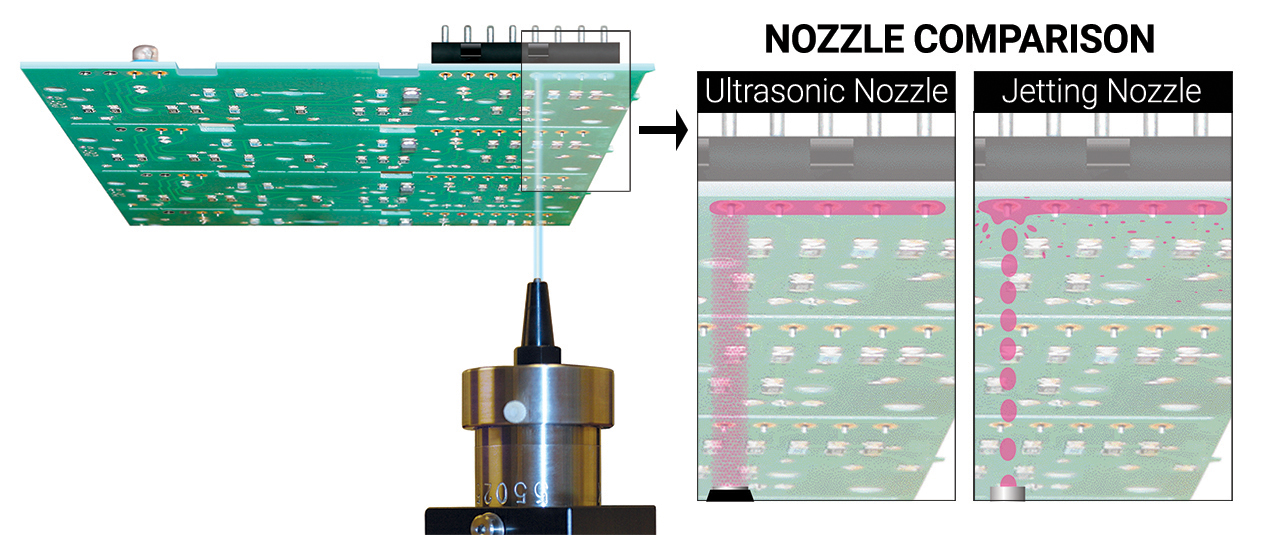
Traditional pressure‑based spray fluxing uses compressed air to atomize liquid flux into a cone or fan pattern, then blasts that spray toward the underside of the PCB. A significant portion of the droplets can miss the target area, bounce off the board, or form a very uneven droplet size range, which leads to overspray on conveyors and pallets, inconsistent coverage, and poor penetration into plated through‑holes where reliable barrel fill is needed.
This process is often used in wave soldering lines, where manufacturers are looking for more control than foam fluxing but have not yet moved to ultrasonic systems.
Selective Jet Fluxing
Selective jet (or drop‑jet) fluxing systems fire tiny, metered droplets of flux at specific pads or pins. In practice, this makes them a common choice inside selective solder machines, but the small orifices and pulsed operation mean they can clog easily with higher‑solids or rosin‑rich fluxes, can spit “satellite” droplets that contaminate nearby areas, and often demand frequent maintenance and cleaning to stay consistent.
These are often used in processes that are designed around this technology from the start, but ultrasonic technology does provide an upgrade path to achieve more reliability and cleaner operation.
Sono-Tek’s Ultrasonic Fluxing Revolution
In the late 1980s, the movement to save the ozone layer was front-page news, and the Montreal Protocol had put global pressure on industry to phase out chlorofluorocarbons (CFCs) that were causing the problem.
That was a tall order: CFCs were used in everything from aerosols to refrigeration and cleaning solvents. Electronics manufacturing, including PCB defluxing, accounted for roughly 10-20% of global CFC consumption, which was a large target for change.
Back then, AT&T was one of the largest producers of telecommunications and computer hardware in the world, and had an urgent need to meet the new global mandate to eliminate their need for CFC-based cleaning. They set a goal to be CFC-free by 1994.
At the time, Sono-Tek was a relatively small and new manufacturing firm, but AT&T saw the potential in our ground-breaking ultrasonic spray technology. It allowed them to deposit a thin, uniform, tightly controlled layer of flux, allowing AT&T to solder boards with far less residue and reducing the need for CFC-intensive cleaning without sacrificing quality.
“Using the Sono-Tek nozzles, AT&T’s product eliminates the need for chlorofluorocarbons that are used in cleaning soldered circuit board assemblies in the electronics industry. Chlorofluorocarbons released into the atmosphere are believed to be destroying the ozone layer that protects the earth from ultraviolet sun rays.
As Sono-Tek’s nozzle vibrates, the device is able to deposit precise amounts of “flux,” a material that cleans and deoxidizes metal surfaces at soldering points.
AT&T said the product would help the electronics industry comply with the international mandate to reduce worldwide chlorofluorocarbons by 50% by the end of 1998.”
–Poughkeepsie Journal, 1989
Two years later, AT&T gave Sono-Tek permission to sell ultrasonic spray systems to other companies. Quickly, Hewlett-Packard also placed an order with us.
By 1993, AT&T announced that it had beaten its own deadline, thanks in part to a “low-solids fluxer” that uses an ultrasonic atomization system, and that 140 of the systems had been sold to 32 companies worldwide.
How Ultrasonic Fluxing Works
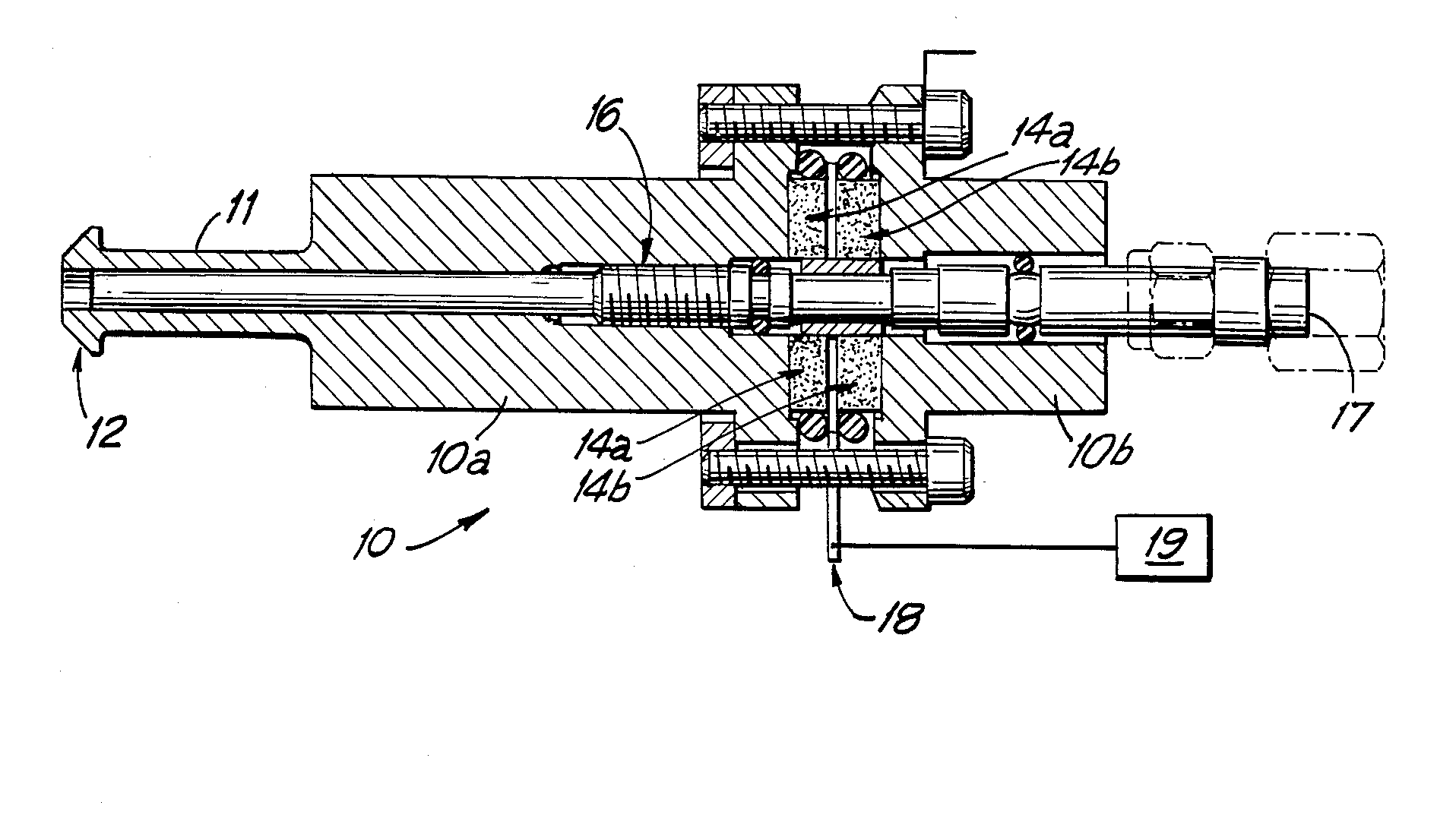
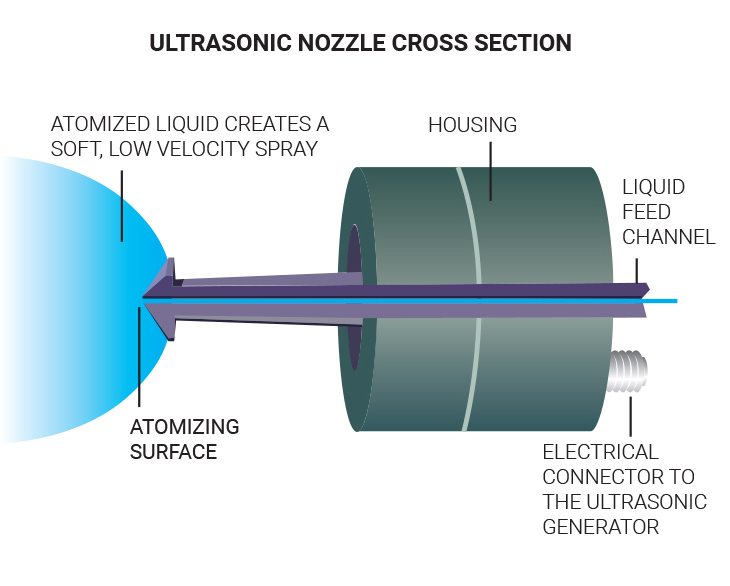
Ultrasonic fluxing uses a piezoelectric transducer driven at high frequency (often around 40–60 kHz) to vibrate a metal nozzle so that a thin film of liquid flux on its surface breaks up into a mist of very uniform, low‑velocity microdroplets.
In practical terms, that means that the energy that applies the flux comes from vibration rather than from high fluid pressure (as in spray fluxing) or high‑speed air, so you get a soft, controlled spray ideal for precise, repeatable coating of the PCB underside.
Unparalleled Precision and Uniform Coverage
Ultrasonic atomization creates droplets that are all very close to the same size and delivers them in a gentle, low‑velocity spray, rather than blasting them at the board. That tight droplet control helps the flux mist flow into plated through‑holes and around components instead of bouncing off, so you get a thin, even coating across complex board geometries with far less overspray and missed areas than traditional pressure or air‑assisted spraying.
Benefits for Soldering Quality and Production
Stronger, Cleaner Solder Joints
Uniform flux deposition from an ultrasonic system means every joint sees about the same amount of cleaning and activation, rather than some areas being starved and others flooded.
Reduced Flux Consumption and Waste
Sono‑Tek ultrasonic systems
are designed to put flux only where it is needed, in a thin, well‑controlled layer, instead of flooding the entire underside of the board. That targeted, low‑flow spray can cut flux usage dramatically compared with legacy approaches, and in the newest selective‑area fluxing configurations, users can see up to around a 90% reduction in flux consumption relative to conventional “full‑bottom” spray methods that coat the entire PCB underside, even though those traditional spray fluxers now represent the vast majority of installed systems.
Minimized Overspray Contamination
Because ultrasonic fluxing uses a gentle, low‑velocity spray with tightly controlled droplet size, far fewer droplets bounce off the board or drift into unintended areas.This results in less stray flux on connectors, keep‑out zones, and pallet surfaces, which reduces downstream cleaning, lowers the risk of residue‑related reliability issues, and keeps the fluxing section of the line much cleaner over time.
High Throughput and Flexibility
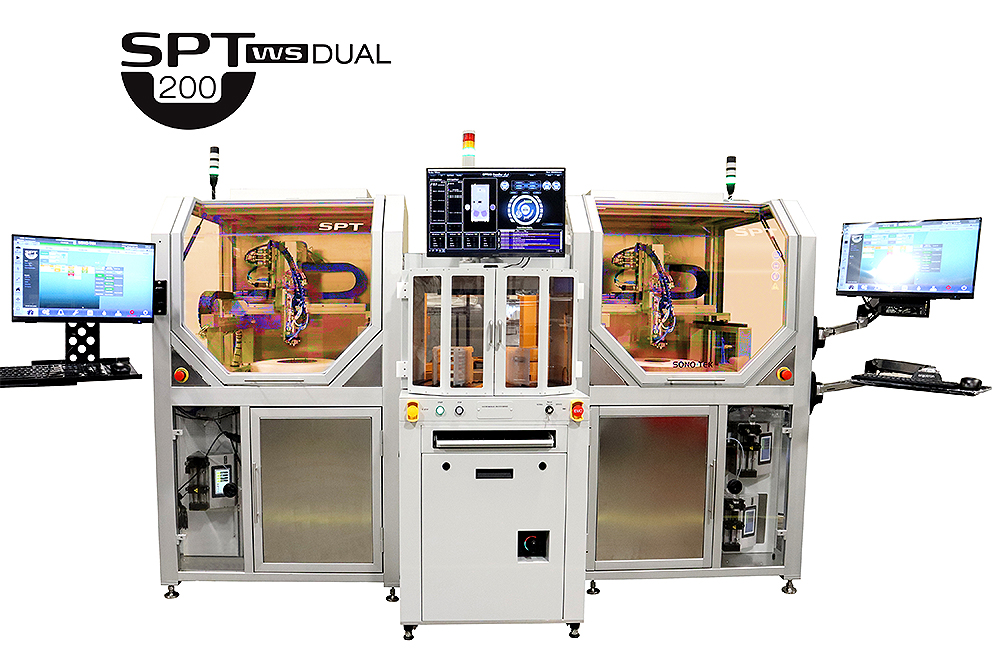
Sono‑Tek systems are built to keep up with real production: they can run as high‑speed reciprocating fluxers for full‑bottom coverage or as stationary heads for targeted, selective‑area fluxing, depending on line needs.
Compatibility with All Flux Chemistries
The large‑orifice, non‑clogging design of ultrasonic nozzles lets them reliably atomize a wide range of fluxes, including high‑solids rosin (up to roughly 35% solids), low‑solids no‑clean, water‑soluble, and VOC‑free formulations, without constantly plugging up.
That means process engineers can choose the chemistry that best fits reliability, cleaning, and environmental requirements, instead of being forced into only thin, low‑solids fluxes just to keep the fluxer running.
Real-World Impact and Industry Adoption
Quality and Reliability in High-Stakes Electronics
Consistent, repeatable flux deposition directly supports high first‑pass yields by reducing classic soldering defects like opens, bridges, and insufficient hole fill, which in turn cuts rework and scrap on the line. That level of control is especially important in high‑stakes sectors such as aerospace, medical, automotive, and other high‑reliability electronics, where every joint must meet strict process windows and documented quality standards for long‑term field performance.
Enhanced Process Integration
Sono-Tek’s ultrasonic fluxing technology is integrated by virtually all major wave solder OEM manufacturers worldwide
, making our technology the embedded standard in many production platforms.
Looking Ahead: Sustaining Innovation in Flux Application
As PCB assemblies continue to increase in density and complexity, with finer pitches and mixed-technology boards, precision flux application will become even more critical. Ultrasonic spray technology is well-positioned to meet these evolving demands through continued refinement of droplet control, selective deposition capabilities
Sono-Tek’s pioneering work in ultrasonic spray fluxing, as evidenced by our ground-breaking 1989 partnership with AT&T, has fundamentally transformed PCB assembly by enabling precise, efficient, and repeatable flux application that was not possible with traditional methods.
The combination of uniform droplet size, minimal overspray, dramatic material savings, and compatibility with all flux types has made ultrasonic fluxing the preferred choice for modern electronics manufacturing.
Previous
Next
Archives
Select Month July 2026 May 2026 April 2026 March 2026 February 2026 December 2025 October 2025 March 2025 July 2024 May 2024 January 2024 March 2023 October 2022 September 2022 June 2022 April 2022 December 2021 November 2021 October 2021 September 2021 August 2021 July 2021 May 2021 February 2021 January 2021 October 2020 September 2020 July 2020 May 2020 April 2020 March 2020 January 2020 November 2019 October 2019 September 2019 August 2019 July 2019 June 2019 May 2019 March 2019 January 2019 November 2018 October 2018 July 2018 June 2018 January 2018 October 2016 February 2016 December 2015 September 2015 June 2015 February 2015 January 2015 November 2014 October 2014 July 2014 March 2014 January 2014 November 2013 October 2013 September 2013 July 2013 September 2012 August 2012 April 2012 February 2012 December 2011 October 2011 September 2011 February 2011 April 2010 November 2009 September 2009 July 2009 June 2009 November 2008 April 2008 July 2007 May 2007
Our expertise is your advantage. Tell us about your coating application... Contact Us
 ISO 9001:2015 Certified
2012 Route 9W, Milton, N.Y. 12547 USA Phone: 1-845-795-2020
Fax: 1-845-795-2720
© 2018 Sono-Tek Corporation. All rights reserved. Terms of Use & Privacy
Notifications