November 2, 2026 at 4:30 PM EST Download PDF New Phase 2 REC-4881 data presented at CGA-IGC in an expanded adult population aged 18 years and older show deep, durable polyp burden reductions in FAP, with activity throughout the GI tract and in…
November 2, 2026 at 4:30 PM EST
Download PDF
-
New Phase 2 REC-4881 data presented at CGA-IGC in an expanded adult population aged 18 years and older show deep, durable polyp burden reductions in FAP, with activity throughout the GI tract and in larger, higher-risk polyps.
-
**REC-4881 shows deep activity throughout the GI tract in post colectomy patients, including near-clearance:**After 12 weeks of treatment, nearly 1 in 2 patients in the upper GI and more than 1 in 3 in the lower GI achieved polyp burden reductions of ≥65%. Two patients achieved ≥98% reductions in upper GI polyp burden.
-
**REC-4881 reductions persisted off treatment:**Twelve weeks after stopping treatment, 85% of evaluable patients remained below baseline polyp burden.
-
**REC-4881 reductions in larger, higher-risk polyps:**Six of eight patients with polyps >5 mm at baseline had reductions in these polyp counts after 12 weeks of treatment; four had reductions of at least 80%, including two whose larger-polyp counts fell from more than 90 to one.
-
REC-4881 no new safety signals observed: Favorable chronic dosing safety profile, with predominantly Grade 1/2 AEs, and no additional discontinuations reported since the prior data cutoff.
-
**REC-1245 Phase 1 data update:**Encouraging monotherapy activity with 2 confirmed partial responses in endometrial cancer, 1 unconfirmed partial response in liver cancer, and a 91.7% disease control rate (11/12) at doses ≥45 mg; 45 mg selected for exploratory expansion cohorts based on emerging efficacy and manageable safety profile.
-
Sanofi options the first development candidate from Recursion collaboration, a potential first-in-class, dual targeting inhibitor oral small molecule in immunology, which will now advance into Sanofi’s portfolio, with Phase 1 clinical study expected to begin in 2027.
-
**Expected cash runway extended into 2029,**including proceeds from the October 2026 follow-on offering; 2026 cash operating expense guidance reiterated at less than $375 million, with 2027 guidance of less than $360 million.
-
Appointed Fred Hassan as Chair of the Board, effective October 31, 2026. Mr. Hassan brings more than four decades of pharmaceutical leadership and Board experience across company transformation, drug development and commercialization.
SALT LAKE CITY, Nov. 02, 2026 (GLOBE NEWSWIRE) -- Recursion (Nasdaq: RXRX), a leading clinical-stage company pioneering AI-enabled drug discovery and development, today reported financial results for the third quarter ended September 30, 2026, together with business updates highlighting continued clinical, pipeline and platform execution.
Recursion will host a webinar with earnings updates on REC-4881 data, REC-1245 data, as well as REC-4881 KOL and patient panels, presented live from CGA-IGC on Tuesday, November 3, 2026 at 8:00 am ET / 6:00 am MT / 1:00 pm GMT from Recursion’s X, LinkedIn, and YouTube accounts giving analysts, investors, and the public the opportunity to ask questions of the Company by submitting questions here: Question Form.
“To pioneer a new blueprint for making medicines with AI, we believe you have to tie together three core capabilities in one engine: uncover novel biology, design differentiated molecules against challenging targets, and generate clinical evidence that matters for patients,” said Najat Khan, Ph.D., President and Chief Executive Officer of Recursion. “The new TUPELO data are important clinical evidence, with REC-4881 showing deep polyp burden reductions across the upper and lower GI tract, including larger, higher-risk polyps, and reductions that persist after treatment stops. REC-1245 is an encouraging early example of that engine coming together within a single program, from biological insight surfaced by our platform to molecule design and now early clinical signals in heavily pretreated patients.”
“Beyond our own pipeline, Sanofi has optioned a potential first-in-class molecule against a challenging dual target, while Genentech has advanced an unexplored neuroscience target from our maps. These are different programs, but they are outputs of the same AI-native engine, providing evidence of repeatability. We will keep concentrating capital where the evidence is strongest and turning innovation into impact for patients who are waiting.”
Internal Pipeline Highlights

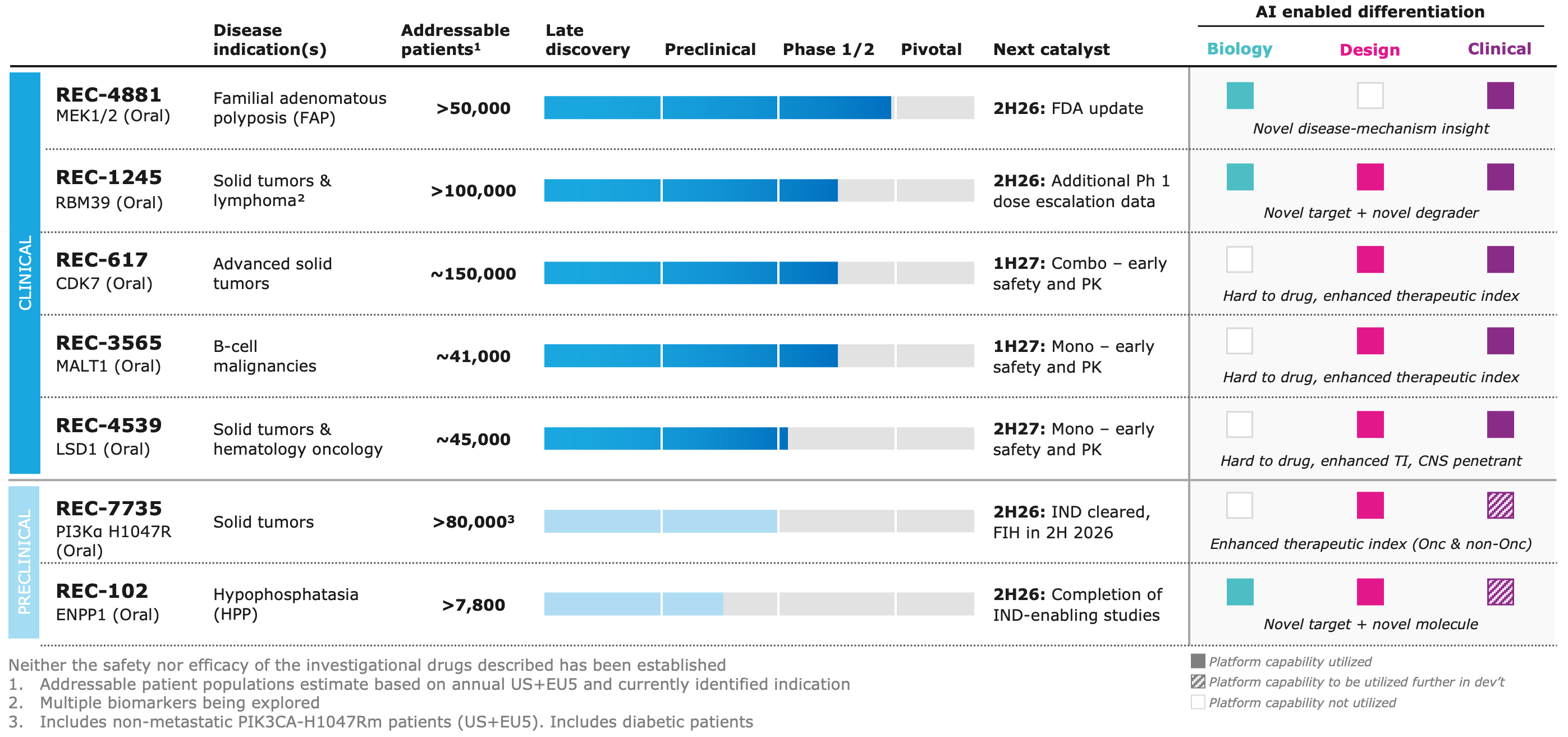
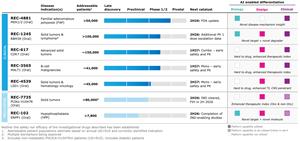
Recursion internal pipeline: five oncology and rare-disease programs (REC-4881, REC-1245, REC-4539, REC-7735, REC-102) shown by target, indication, addressable patient population, development stage, next catalyst, and AI-enabled differentiation.
Positive Phase 2 results from ongoing TUPELO trial of REC-4881 in FAP highlight activity across GI tract and on larger polyps
FAP is a genetically defined driver of GI cancer, affecting >50,000 patients in the US and EU5 who face major surgeries and life-long surveillance with no approved therapies, representing a potential $15 billion opportunity, based on Company estimates. Among the approximately 35,000 post-colectomy patients, upper GI disease represents the highest unmet need in FAP, due to risks of bleeding and perforation from polyp removal, high complication and morbidity rates from surgery, and higher cancer risk.
REC-4881, a potential first-in-class oral therapy granted FDA Orphan Drug and Fast Track designations, is designed to address both Wnt/β-catenin initiation and MAPK evolution pathways. The opportunity was identified through unbiased phenotypic screening using Recursion’s proprietary AI foundation models, which revealed MEK1/2 inhibition as a potential way to reverse cellular phenotypes associated with APC loss, a previously unappreciated synthetic rescue relationship.
On November 2, Recursion announced further positive data from its ongoing Phase 1b/2 TUPELO trial of REC-4881, an investigational, oral MEK1/2 inhibitor in development for FAP. These data were presented by Lisa Boardman, M.D., Professor of Medicine at Mayo Clinic, in a presidential plenary session at The Collaborative Group of the Americas on Inherited Gastrointestinal Cancer (CGA-IGC) Annual Meeting in Denver, Colorado.
-
Deep, durable reductions in total polyp burden, strengthened in the expanded adult FAP population (18+): After 12 weeks of REC-4881 (4 mg QD), 87% of patients (13 of 15) had a reduction in total polyp burden, with a 47% median reduction; approximately 1 in 3 achieved reductions of ≥65%. Twelve weeks after stopping treatment, 85% of evaluable patients (11 of 13) remained below baseline.
-
Activity across the upper and lower GI tract, including near-clearance: After 12 weeks of treatment, median polyp burden reductions were 55% in the upper GI and 50% in the lower GI, supporting REC-4881’s potential as a single oral therapy to address FAP across the GI tract.
-
Upper GI, the area of greatest unmet need in FAP (results first reported Oct. 15): 92% of patients (12 of 13) had reductions after 12 weeks of treatment, with two patients achieving ≥98% reductions; half (6 of 12) improved by at least one Spigelman stage; and 92% (11 of 12) remained below baseline 12 weeks after stopping treatment.
-
New lower GI results highlight breadth of activity: 9 of 11 patients (82%) with measurable lower GI polyp burden at baseline had reductions after 12 weeks of treatment, with a 50% median reduction and 1 in 3 achieving ≥65%; 70% of evaluable patients remained below baseline 12 weeks after stopping treatment.
-
New analysis shows substantial reductions in larger, higher-risk polyps: 6 of 8 patients with polyps >5 mm at baseline had fewer of these polyps after 12 weeks of treatment. Four achieved reductions of ≥80%, including two whose counts fell from more than 90 polyps to one. Six of eight remained below their baseline count 12 weeks after stopping treatment.
-
No new safety signals observed: Favorable chronic dosing safety profile. The highest-grade treatment-related adverse event was Grade 1 or 2 in 21 of 26 patients (81%) and Grade 3 in four patients (15%); one patient had no TRAEs. No Grade 4 or 5 TRAEs, and no additional discontinuations since the previous data cutoff.
The Company anticipates initiating a registrational trial in the second half of 2027, pending ongoing FDA discussions, and will provide additional details later this year.
Early data from the Phase 1 dose-escalation portion of DAHLIA, our ongoing open-label Phase 1/2 study of REC-1245, show the following (data cutoff: August 21, 2026):
REC-1245 is a potential first-in-class oral molecular glue designed to exploit a synthetic-lethal vulnerability in cancers by degrading RBM39, a splicing factor that regulates genes involved in DNA repair and stress response. The Recursion platform contributed each of the three core elements of the program: the target, the molecule and the initial hypotheses on which patients are most likely to benefit. The target emerged from Recursion’s platform, which found that degrading RBM39 mimics the loss of CDK12, while sparing CDK13-associated liabilities. REC-1245 was identified within 18 months after screening only 204 compounds using Recursion’s design platform. The same platform-derived biology pointed to tumors intrinsically primed by replication stress and reliance on accurate splicing, including hard-to-treat cancers such as endometrial, hepatocellular and ovarian cancers and transcriptionally driven tumors.
-
Three partial responses per RECIST 1.1 criteria (2 confirmed, 1 unconfirmed) in heavily pretreated patients with endometrial cancer and hepatocellular carcinoma, all at doses of 45 mg once daily (QD) or higher, with a disease control rate of 91.7% at those doses (n=12).
-
Recursion has selected 45 mg QD for exploratory expansion cohorts, including endometrial cancer, where limited second-line treatments are approved; at the 45 mg QD dose (n=10), no dose-limiting toxicities or treatment-related serious adverse events were observed, and treatment-related adverse events were predominantly Grade 1 or 2. Most frequent TRAEs were Grade 1 or Grade 2 fatigue and anemia (30% each).
-
Preliminary dose expansion data in endometrial cancer are expected in the second half of 2027. Dose escalation will also continue in other solid tumor indications.
Other Portfolio Updates: REC-7735 is an orally bioavailable, precision-designed small molecule inhibitor of PI3Kα H1047R generated using the Recursion OS. In the second half of 2026, Recursion initiated the Phase 1/2 ZINNIA clinical study for patients with select PIK3CA H1047R-mutant solid tumors.
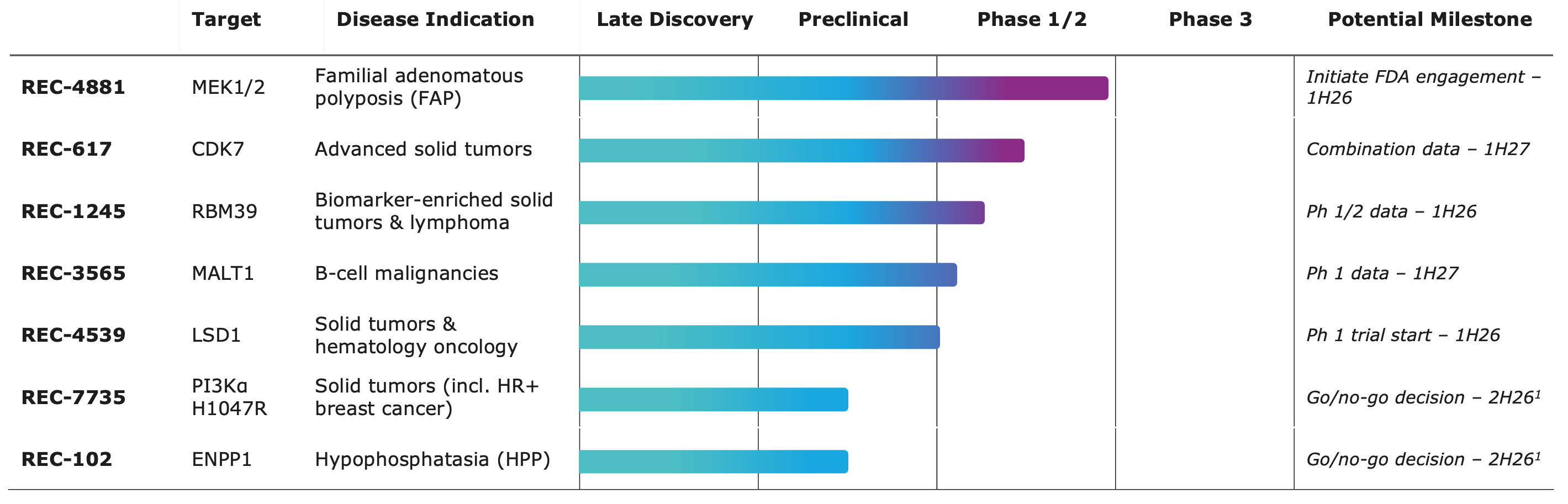
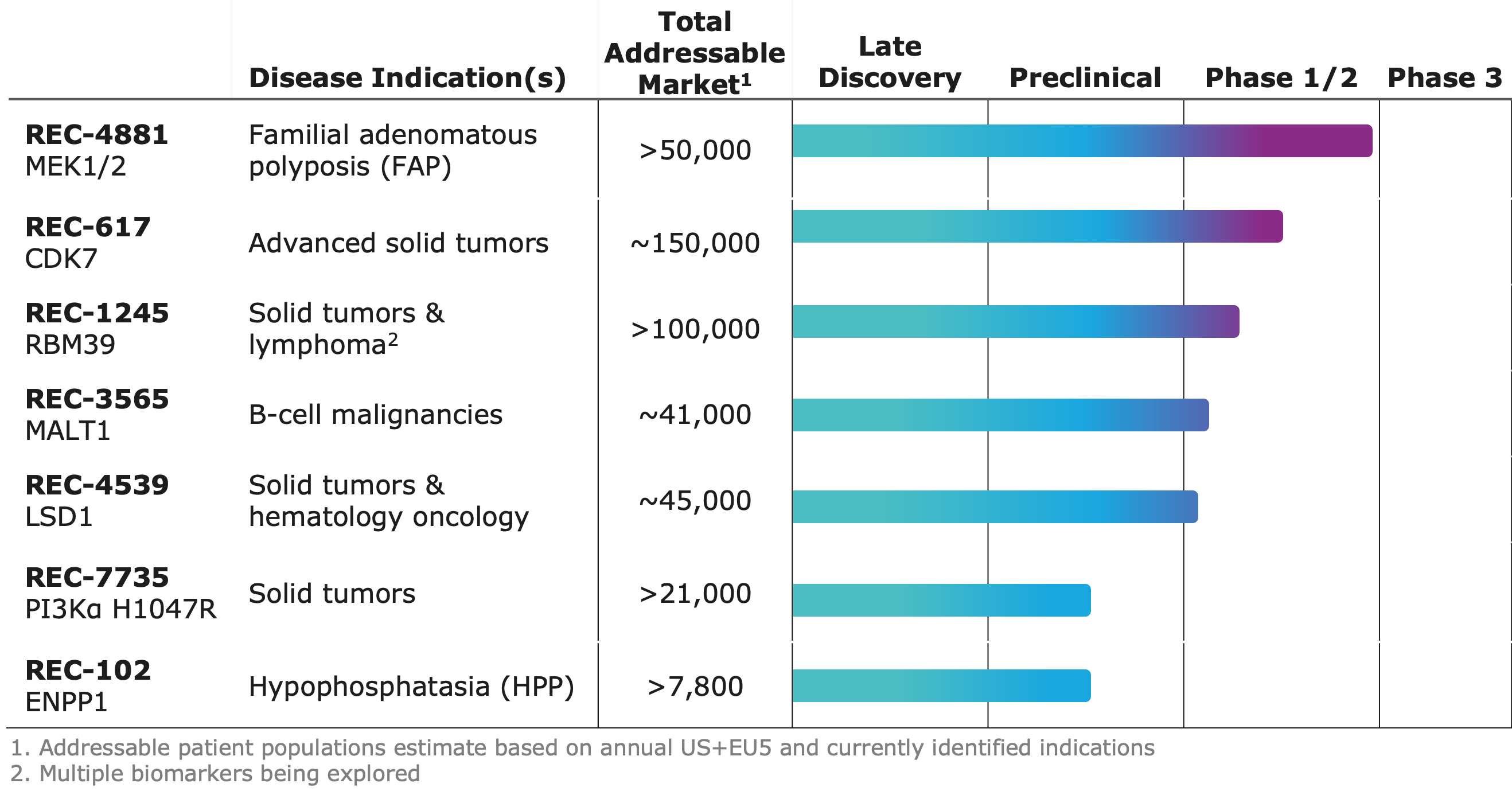
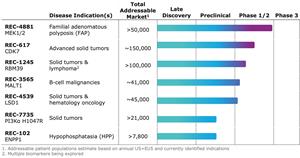
As announced in October 2026, given the promising data in REC-4881 and REC-1245, Recursion plans to continue to focus resources on its high-impact partnerships and internal programs including REC-4881 (MEK1/2 - familial adenomatous polyposis), REC-1245 (RBM39 - endometrial cancer and other solid tumors), REC-4539 (LSD1 - solid tumors and hematology), REC-7735 (PI3Kα H1047R - solid tumors) and REC-102 (ENPP1 - hypophosphatasia). Recursion intends to pursue partnership opportunities to advance REC-617 (CDK7) and REC-3565 (MALT1).
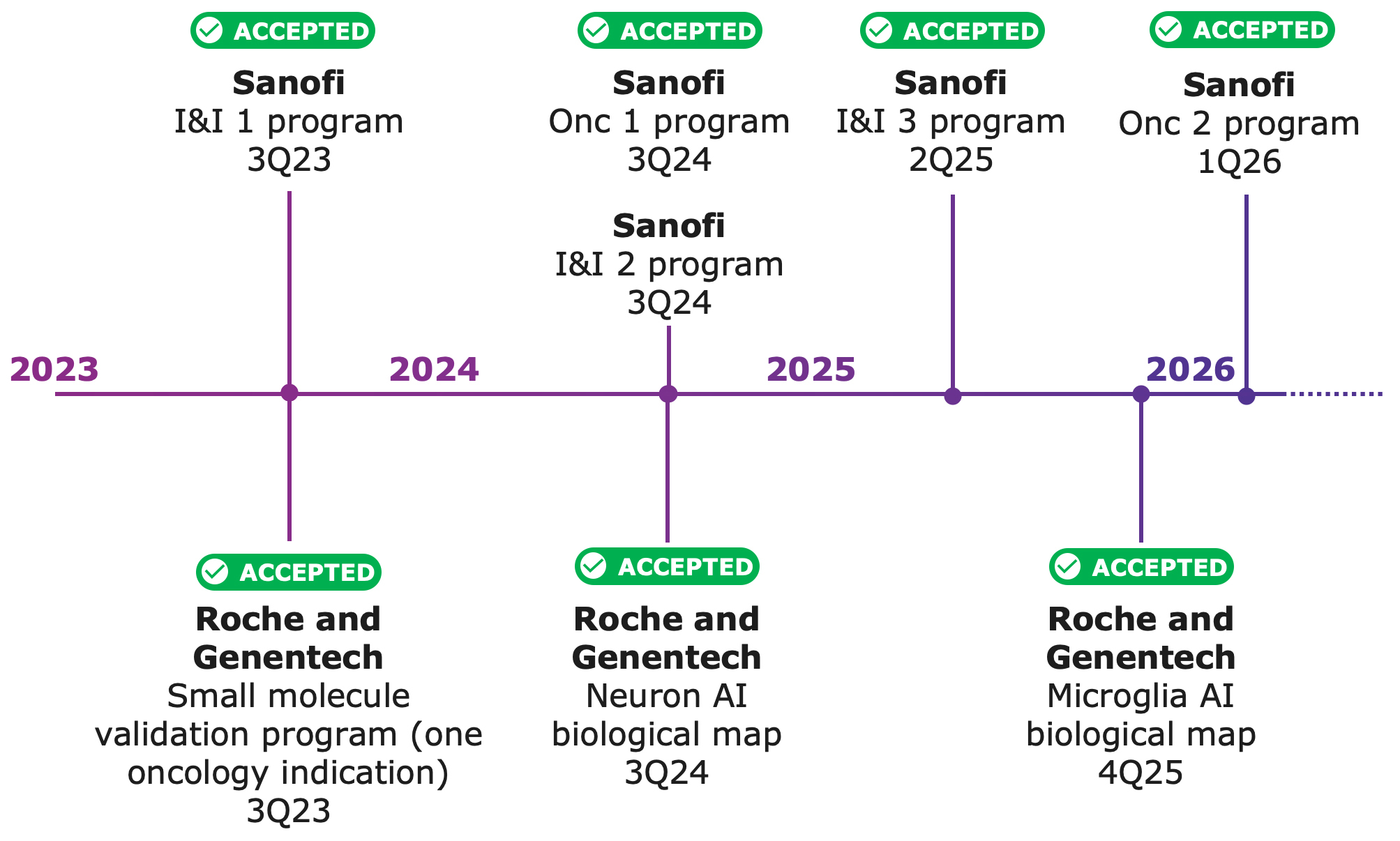
Partnered Discovery Highlights Recursion’s 9th Milestone Achieved in Past Two Years
Sanofi options potential first-in-class immunology development candidate
Sanofi has optioned the first development candidate from the two companies’ multi-program research collaboration. The candidate has now been added to Sanofi’s development pipeline and is expected to enter Phase 1 clinical trials in 2027, with Sanofi funding and leading further development and commercialization to advance the program toward patients.
The option triggered a $10 million milestone payment to Recursion, bringing total upfront and milestone payments achieved from Sanofi under the collaboration to $144 million; Recursion is eligible for more than $300 million in additional milestones under the program, with double digit royalties on net product sales, if approved.
The potential first-in-class oral small molecule was designed to achieve a differentiated profile against a challenging dual target implicated in inflammatory disease. Optimizing for this target pair required navigating complex and competing chemistry constraints to achieve the desired balance of drug-like properties. The candidate was delivered by the combination of Recursion’s integrated AI-enabled drug design platform and small-molecule chemistry capabilities with Sanofi’s deep expertise in drug discovery and immunology. Recursion applied multiple computational design approaches across iterative cycles of prediction, chemical design, synthesis, and experimental validation to rapidly explore and optimize a complex chemical space.
With the first development candidate optioned, the collaboration has now achieved six progress-based milestones across five programs. Additional programs across the collaboration continue to advance. Over the next 12 months, other programs in the joint portfolio have the potential to reach development candidate and other progress-based milestones.
To learn more about this milestone, read the press release.
Genentech advanced first neuroscience target into early discovery program
In 3Q26, Genentech exercised the first Validated Target Option under the companies' neuroscience collaboration, advancing a previously unexplored neuroscience target.
The milestone provides additional early evidence that Recursion's AI-native platform can both discover and play a key role experimentally validating unexplored therapeutic targets in neuroscience, one of medicine's most challenging therapeutic areas, where decades of research have largely focused on a limited number of well-studied targets. Predictions generated from the first whole-genome CRISPR knockout map, which was built by Recursion in partnership with Roche and Genentech from a subset of over 1 trillion internally manufactured iPSC-derived neuronal cells, were rigorously jointly validated with Genentech. Only targets that consistently demonstrated compelling evidence across pathway, functional, and disease validation progress into a validation package.
Next steps will include advancing the target through small molecule design, hit generation, and validation using Recursion's AI-native chemistry platform. More broadly, the neuronal and microglial maps of biology remain reusable assets capable of being collaboratively utilized with biological, genetics, and computational expertise to generate and experimentally validate additional therapeutic hypotheses. To date, Recursion has achieved $216 million in upfront and milestone payments from the Roche and Genentech collaboration. The collaboration includes up to 40 potential small molecule discovery programs, each carrying the potential for more than $300 million in development, commercialization, and net sales milestones as well as tiered royalties up to high single digits per small molecule program for Recursion.
Potential upcoming milestones across partnered discovery:
-
Potential for additional differentiated AI-enabled oral molecules to reach development candidate and late-stage discovery milestones with Sanofi over the next 12 months
-
Translating AI-driven insights from maps of biology into new potentially novel targets from reusable high-dimensional data/maps with Roche and Genentech
-
Using Recursion’s chemistry platform to design potential first-in-class molecules for the collaboration's first neuroscience target with Genentech
Fred Hassan appointed Chair of the Board
Recursion announced that its Board of Directors has appointed Fred Hassan as Chair, effective October 31, 2026.
Mr. Hassan brings more than four decades of pharmaceutical leadership spanning company transformation, drug development, commercialization, investing and Board service. As Chairman and Chief Executive Officer of Schering-Plough, he led a transformation that restored sales growth and strong cash flow while expanding the company’s Phase 3 pipeline from three new molecular entities to eight. He previously served as Chairman and Chief Executive Officer of Pharmacia.
Mr. Hassan also brings extensive perspective from across the biotechnology and investment ecosystem. He serves as Lead Independent Director of BridgeBio Pharma, where his Board tenure has spanned the FDA approval and U.S. launch of Attruby, and as Executive Chair of Norstella, the pharmaceutical intelligence company behind Citeline, MMIT and Evaluate. His prior Board roles include Amgen and Prometheus Biosciences. He is also a Director at Warburg Pincus, where he previously served as Partner and Managing Director.
Third Quarter 2026 Financial Results
-
Cash Position: Cash, cash equivalents and restricted cash were $561.5 million as of September 30, 2026. Including net proceeds of approximately $187.2 million from the Company's underwritten offering which completed on October 16, 2026, pro forma cash, cash equivalents and restricted cash were approximately $748.7 million. Based on current operating plans with no additional financing, the Company expects its cash runway to extend into 2029.
-
Revenue: Total revenue, consisting primarily of revenue from collaboration agreements, was $18.6 million for the third quarter of 2026, compared to $5.2 million for the third quarter of 2025. The increase was driven primarily by the Company’s collaboration with Sanofi, under which the Company achieved a $10.0 million milestone for an immunology small molecule program during the quarter.
-
**Research and Development Expenses:**Research and development expenses were $99.1 million for the third quarter of 2026, compared to $121.1 million for the third quarter of 2025. The decrease was driven primarily by $22.8 million of in-process research and development costs related to the acquisition of full rights to REC-102, Recursion’s ENPP1 inhibitor for the treatment of hypophosphatasia (HPP), from its joint venture with Rallybio that were recognized in the third quarter of 2025 and did not recur in the current period.
-
**General and Administrative Expenses:**General and administrative expenses were $32.6 million for the third quarter of 2026 compared to $41.6 million for the third quarter of 2025. The decrease in general and administrative expense compared to the prior period was primarily driven by a decrease in infrastructure technology expenses and professional service costs.
-
**Net Loss:**Net loss was $119.0 million for the third quarter of 2026, compared to a net loss of $162.3 million for the third quarter of 2025.
-
Operational Cash Flows: Net cash used in operating activities was $77.4 million for the three months ended September 30, 2026, compared to net cash used in operating activities of $117.4 million for the three months ended September 30, 2025. The decrease in cash used in operating activities was primarily driven by operating efficiencies across the company and working capital movements.
-
Cash Operating Expense: Cash operating expense, excluding partnership inflows and transaction costs, for the nine months ended September 30, 2026 was $271.5 million compared to $323.1 million for the nine months ended September 30, 2025.
About Recursion
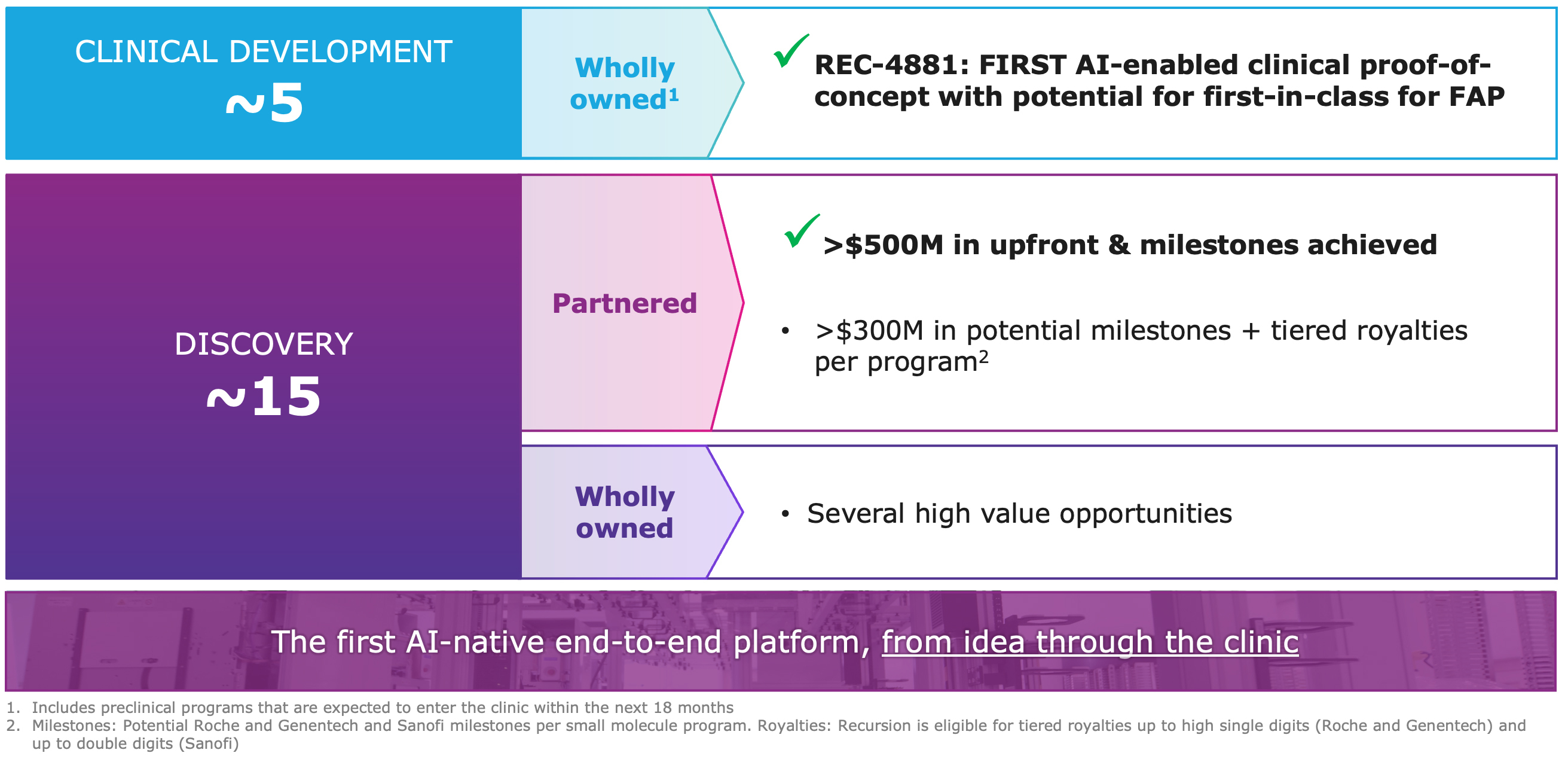
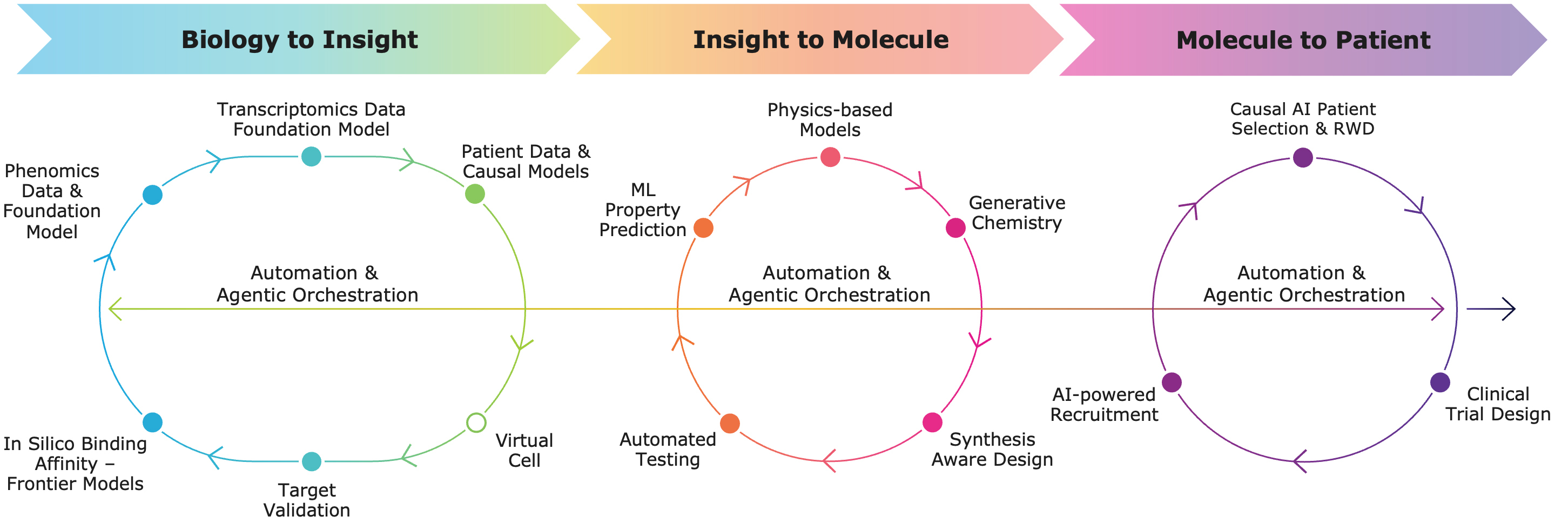
Recursion (NASDAQ: RXRX) is a leading clinical-stage company pioneering AI-enabled drug discovery and development decoding biology to radically improve lives. Recursion is advancing a portfolio of differentiated investigational medicines across its wholly owned and partnered pipeline in oncology, rare disease, neuroscience, immunology, and other therapeutic areas with significant unmet need. Enabling its mission is the Recursion OS, an AI-native, end-to-end drug discovery and development platform integrating biology, chemistry, and clinical development into a unified intelligence system. Powered by proprietary multimodal data, purpose-built AI models, and bilingual teams fluent in both science and AI, the Recursion OS is designed to translate complex science into medicines that matter — faster, better, and at scale — for patients who are waiting.
Recursion's platform infrastructure is anchored in Salt Lake City, Utah and Milton Park, Oxfordshire, where its automated biology and chemistry laboratories generate proprietary data at industrial scale. Recursion also maintains offices in New York, Montréal, and London, three global hubs for talent and leadership at the intersection of AI and scientific innovation.
Media Contact
[email protected]
Investor Contact
[email protected]
| Recursion Pharmaceuticals Inc Condensed Consolidated Statements of Operations (unaudited) |
| (in thousands, except share and per share amounts) |
| | Three months ended September 30, | | Nine months ended September 30, |
| | | 2026 | | | 2025 | | | | 2026 | | | 2025 | |
| Revenue | | | | | |
| Operating revenue | $ | 18,055 | | $ | 4,983 | | | $ | 31,659 | | $ | 38,905 | |
| Grant revenue | | 497 | | | 192 | | | | 1,035 | | | 238 | |
| Total revenue | | 18,552 | | | 5,175 | | | | 32,694 | | | 39,143 | |
| | | | | | |
| Operating costs and expenses | | | | | |
| Cost of revenue | | 10,045 | | | 14,687 | | | | 34,026 | | | 56,678 | |
| Research and development | | 99,122 | | | 121,062 | | | | 276,632 | | | 379,331 | |
| General and administrative | | 32,561 | | | 41,628 | | | | 108,684 | | | 142,932 | |
| Total operating costs and expenses | | 141,728 | | | 177,377 | | | | 419,342 | | | 578,941 | |
| | | | | | |
| Loss from operations | | (123,176 | ) | | (172,202 | ) | | | (386,648 | ) | | (539,798 | ) |
| Other income, net | | 4,165 | | | 9,952 | | | | 14,524 | | | 3,005 | |
| Loss before income taxes | | (119,011 | ) | | (162,250 | ) | | | (372,124 | ) | | (536,793 | ) |
| Income tax benefit (expense) | | (25 | ) | | (3 | ) | | | 4,579 | | | 156 | |
| Net loss | $ | (119,036 | ) | $ | (162,253 | ) | | $ | (367,545 | ) | $ | (536,637 | ) |
| | | | | | |
| Per share data | | | | | |
| Net loss per share of Class A, B and Exchangeable common stock, basic and diluted | $ | (0.22 | ) | $ | (0.36 | ) | | $ | (0.69 | ) | $ | (1.27 | ) |
| Weighted-average shares (Class A, B and Exchangeable) outstanding, basic and diluted | | 543,000,977 | | | 446,988,046 | | | | 534,971,854 | | | 422,642,653 | |
Recursion Pharmaceuticals Inc
Condensed Consolidated Balance Sheets (unaudited)
(in thousands)
| | S****eptember 30, | D****ecember 31, |
| | | 2026 | | | 2025 | |
| Assets | | |
| Current assets | | |
| Cash and cash equivalents | $ | 549,853 | | $ | 743,294 | |
| Restricted cash | | 6,657 | | | 4,594 | |
| Other receivables | | 34,065 | | | 24,649 | |
| Prepaid data assets | | 2,882 | | | 11,742 | |
| Other current assets | | 22,564 | | | 28,566 | |
| Total current assets | | 616,021 | | | 812,845 | |
| | | |
| Restricted cash, non-current | | 5,020 | | | 6,033 | |
| Property and equipment, net | | 85,838 | | | 103,931 | |
| Operating lease right-of-use assets | | 51,198 | | | 45,339 | |
| Financing lease right-of-use assets | | 15,663 | | | 20,210 | |
| Intangible assets, net | | 273,677 | | | 309,903 | |
| Goodwill | | 160,710 | | | 162,158 | |
| Deferred tax assets | | 957 | | | 957 | |
| Other assets, non-current | | 12,628 | | | 12,754 | |
| Total assets | $ | 1,221,712 | | $ | 1,474,130 | |
| | | |
| Liabilities and stockholders’ equity | | |
| Current liabilities | | |
| Accounts payable | $ | 16,384 | | $ | 18,118 | |
| Accrued expenses and other liabilities | | 66,651 | | | 70,230 | |
| Unearned revenue | | 15,811 | | | 37,605 | |
| Operating lease liabilities | | 12,264 | | | 12,663 | |
| Notes payable and financing lease liabilities | | 11,808 | | | 9,091 | |
| Total current liabilities | | 122,918 | | | 147,707 | |
| | | |
| Unearned revenue, non-current | | 120,020 | | | 114,012 | |
| Operating lease liabilities, non-current | | 50,535 | | | 46,647 | |
| Notes payable and financing lease liabilities, non-current | | 93 | | | 9,564 | |
| Deferred tax liabilities | | 18,371 | | | 23,255 | |
| Other liabilities, non-current | | 3,963 | | | 2,080 | |
| Total liabilities | | 315,900 | | | 343,265 | |
| | | |
| Stockholders’ equity | | |
| Common stock | | 6 | | | 5 | |
| Additional paid-in capital | | 3,319,723 | | | 3,170,145 | |
| Accumulated deficit | | (2,443,547 | ) | | (2,076,002 | ) |
| Accumulated other comprehensive income | | 29,630 | | | 36,717 | |
| Total stockholders’ equity | | 905,812 | | | 1,130,865 | |
| | | |
| Total liabilities and stockholders’ equity | $ | 1,221,712 | | $ | 1,474,130 | |
Recursion Pharmaceuticals Inc
Selected Cash Flow Information (unaudited)
(in thousands)
| | | Three months ended September 30, | Nine months ended September 30, |
| | | | 2026 | | | 2025 | | | 2026 | | | 2025 | |
| Net cash used in operating activities | | $ | (77,406 | ) | $ | (117,360 | ) | $ | (264,454 | ) | $ | (325,735 | ) |
| Net cash used in investing activities | | | (407 | ) | | (2,549 | ) | | (2,704 | ) | | (15,627 | ) |
| Net cash provided by (used in) financing activities | | 83,144 | 251,340 | | 78,407 | | | 389,526 | |
| Effect of exchange rate changes on cash, cash equivalents and restricted cash | | | (621 | ) | 1,869 | | (3,640 | ) | | 15,957 | |
| Cash, cash equivalents and restricted cash, beginning of period | | 556,820 | 533,845 | | 753,921 | | | 603,024 | |
| Cash, cash equivalents and restricted cash, end of period | | $ 561,530 | $ 667,145 | $ | 561,530 | | $ | 667,145 | |
Non-GAAP Financial Measure
The reconciliation of operating cash expense to net cash used in operating activities is provided in the following tables:
| Cash Operating Expense - Nine months ended September 30, 2026 | (in millions) | |
| Net cash used in operating activities | $ | 264.5 | * |
| Add: partnership inflows | | 7.0 | |
| Cash Operating Expense - Nine months ended September 30, 2026 | $ | 271.5 | |
*This is from the Recursion Inc Consolidated Statement of Cash Flows for the nine months ended September 30, 2026 (see above)
| Cash Operating Expense - Nine months ended September 30, 2025 | (in millions) | |
| Net cash used in operating activities | $ | 325.7 | | * |
| Add: partnership inflows | | 7.0 | | |
| Subtract: Transaction costs | | (9.6 | ) | |
| Cash Operating Expense - Nine months ended September 30, 2025 | $ | 323.1 | | |
*This is from the Recursion Inc Consolidated Statement of Cash Flows for the nine months ended September 30, 2025 (see above)
To supplement our financial statements prepared in accordance with U.S. GAAP, we monitor and consider operating cash expense, which is a non-GAAP financial measure. We define cash operating expense as the net cash used in operating activities, excluding non-ordinary course transaction costs and partnership cash inflows. This non-GAAP financial measure is not based on any standardized methodology prescribed by U.S. GAAP and is not necessarily comparable to similarly-titled measures presented by other companies. We believe operating cash expense to be a liquidity measure that provides useful information to management and investors about the amount of cash consumed by the operations of the business. A limitation of using this non-U.S. GAAP measure is that operating cash expense does not represent the total change in cash and cash equivalents for the period because it excludes cash provided by or used for other investing and financing activities. We account for this limitation by providing information about our capital expenditures and other investing and financing activities in the statements of cash flows in our financial statements. Additionally, we reconciled operating cash expense above to net cash used in operating activities, the most directly comparable U.S. GAAP financial measure. In addition, it is important to note that other companies, including companies in our industry, may not use operating cash expense, may calculate operating cash expense in a different manner than we do or may use other financial measures to evaluate their performance, all of which could reduce the usefulness of operating cash expense as a comparative measure. Because of these limitations, operating cash expense should not be considered in isolation from, or as a substitute for, financial information prepared in accordance with U.S. GAAP.
Forward-Looking Statements
This document contains information that includes or is based upon “forward-looking statements” within the meaning of the Private Securities Litigation Reform Act of 1995, including, without limitation, those regarding the impact of preclinical and clinical data from our programs, including the Phase 2 data from the TUPELO trial of REC-4881; the timing and outcome of anticipated engagement with the FDA, including the definition of a registrational path for REC-4881; the impact of the Phase 1 data from the DAHLIA trial of REC-1245 on the future success of that program; the selection of a dose for REC-1245 expansion cohorts; the potential for REC-7735 to limit metabolic liabilities and improve therapeutic index; Recursion’s ability to translate platform insights into validated targets and optimized development candidates; Recursion’s plans to focus resources on its high-impact partnerships and internal programs and to pursue partnership opportunities for REC-617 and REC-3565; the expected initiation of a Phase 1 clinical study of the development candidate optioned by Sanofi; the impact of Genentech’s option of any neuroscience target on future development of that or other potential targets; the reusability of our maps of biology and the potential to generate and experimentally validate additional therapeutic hypotheses, including through multi-modal maps combining our phenomics data with partner-provided data; financial position, including the expected impact of the net proceeds of our October 2026 underwritten offering, cash runway, cash burn, and 2026 and 2027 cash operating expense guidance; the occurrence or realization of potential milestones; the timing of data readouts and other milestones; Recursion’s future as a leader in AI-enabled drug discovery and development and ability to deliver better treatments to patients faster; expectations relating to early and late stage discovery, preclinical, and clinical programs, including timelines for commencement of and enrollment in studies, data readouts, presentations at scientific and medical meetings, and meetings with regulators; expectations and developments with respect to licenses and collaborations, including option exercises by partners and the amount and timing of potential milestone payments and royalties; prospective products and their potential future indications, differentiated profiles, and market opportunities; developments with Recursion OS, including the ability to discover and develop new medicines; and all other statements that are not historical facts. Forward-looking statements may or may not include identifying words such as “plan,” “will,” “may,” “could,” “should,” “expect,” “anticipate,” “intend,” “believe,” “estimate,” “project,” “designed to,” “potential,” “continue,” and similar terms. These statements are subject to known or unknown risks and uncertainties that could cause actual results to differ materially from those expressed or implied in such statements, including but not limited to: challenges inherent in pharmaceutical research and development, including the timing and results of preclinical and clinical programs, where the risk of failure is high and failure can occur at any stage prior to or after regulatory approval due to lack of sufficient efficacy, safety considerations, or other factors; the risk that interim, preliminary, or topline data from our clinical trials may change as more patient data become available and may not be predictive of final results; our ability to leverage and enhance our drug discovery platform; the performance and limitations of our artificial intelligence and machine learning models and the data on which they are trained; our reliance on third parties, including collaborators, contract research organizations, and manufacturers; our ability to initiate clinical trials and enroll patients on expected timelines; competition from other therapies and platforms; our ability to obtain financing for development activities and other corporate purposes; the success of our collaboration activities and our collaborators’ discretion over option exercises, program advancement, and funding; our ability to obtain regulatory approval of, and ultimately commercialize, drug candidates; our ability to obtain, maintain, and enforce intellectual property protections; cyberattacks or other disruptions to our technology systems; our ability to attract, motivate, and retain key employees and manage our growth; inflation and other macroeconomic issues; and other risks and uncertainties such as those described under the heading “Risk Factors” in our filings with the U.S. Securities and Exchange Commission, including our Annual Report on Form 10-K and our subsequent Quarterly Reports on Form 10-Q. All forward-looking statements speak only as of the date of this document and are based on management’s current estimates, projections, and assumptions, and Recursion undertakes no obligation to correct or update any such statements, whether as a result of new information, future developments, or otherwise, except to the extent required by applicable law.
A photo accompanying this announcement is available at https://www.globenewswire.com/NewsRoom/AttachmentNg/e3f63cf6-70c6-464e-9e63-6608b58ef3fd


Pipeline image

Recursion internal pipeline: five oncology and rare-disease programs (REC-4881, REC-1245, REC-4539, REC-7735, REC-102) shown by target, indication, addressable patient population, development stage, next catalyst, and AI-enabled differentiation.
Source: Recursion Pharmaceuticals
 Ryan Kelly Recursion Pharmaceuticals [email protected]
 Ryan Kelly Recursion Pharmaceuticals
 Ryan Kelly Recursion Pharmaceuticals





 Ryan Kelly Recursion Pharmaceuticals
 Ryan Kelly Recursion Pharmaceuticals
 Ryan Kelly Recursion Pharmaceuticals
 Ryan Kelly Recursion Pharmaceuticals
 Ryan Kelly Recursion Pharmaceuticals


 Ryan Kelly Recursion Pharmaceuticals
 Media Contact

 Investor Contact