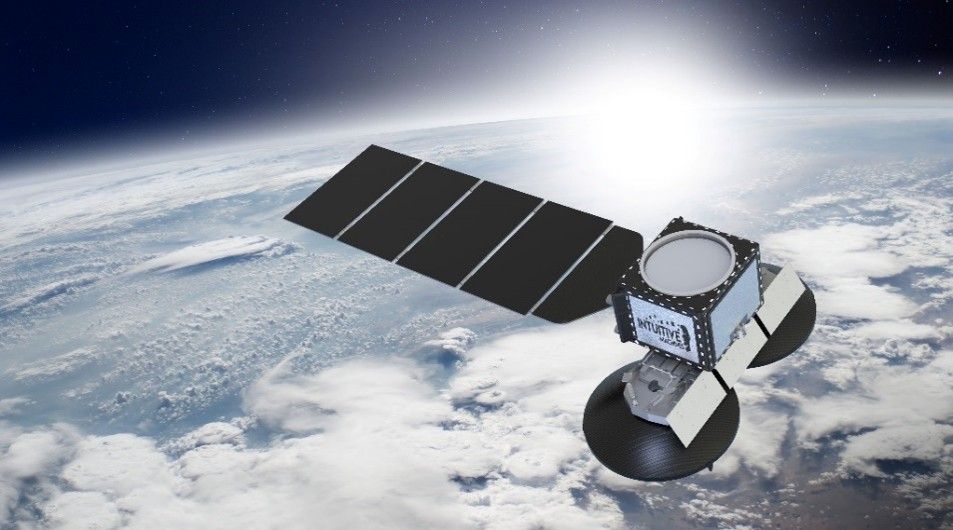
As Intuitive Machines prepares for its third mission to the lunar surface in the first quarter of 2027, the company is applying data and experience from two lunar landings in 2024 and 2025 to continue advancing the technologies required for…
As Intuitive Machines prepares for its third mission to the lunar surface in the first quarter of 2027, the company is applying data and experience from two lunar landings in 2024 and 2025 to continue advancing the technologies required for precise, repeatable, autonomous lunar landings.
The ability to fly, learn, improve, and fly again is increasingly important as Intuitive Machines shifts its Nova-C lunar lander into repeatable production and expands its fleet with the Nova-D cargo lander. Greater mission cadence creates more opportunities to test and mature technologies, apply what is learned in the lunar environment, and build the capabilities needed to deliver science, technology, and infrastructure to the Moon at scale.
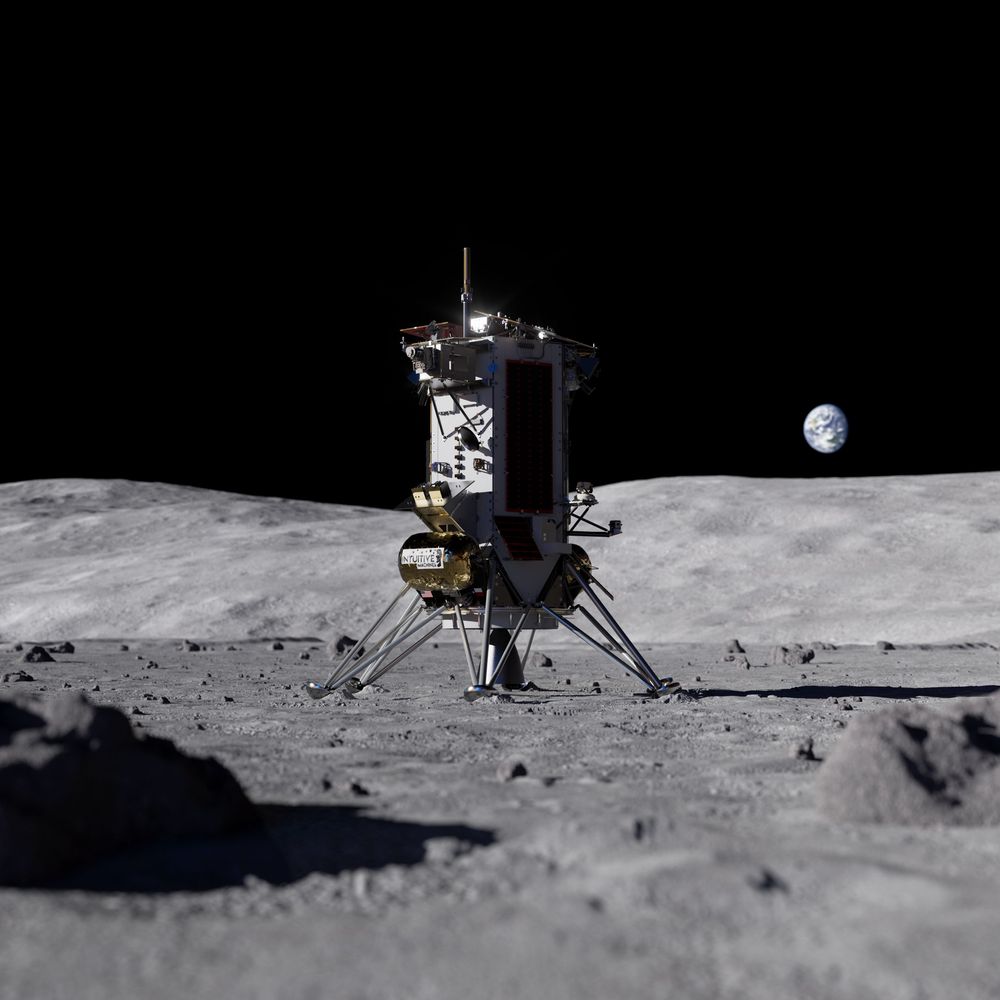
Rendering of Intuitive Machines Nova-C “Trinity” lunar lander in the Reiner Gamma region of the Moon during the upcoming IM-3 mission.
The Challenges of Autonomous Lunar Landing
Laser systems must survive launch, vacuum, radiation, and extreme temperature changes while maintaining the precision required for lunar navigation. Once in space, there is no opportunity to repair or adjust the hardware.
During final descent, an IM Nova lander initially travels at approximately 1.6 kilometers per second. Over roughly 15 minutes, the lander must autonomously decelerate, navigate relative to lunar terrain, and guide itself toward its landing target. Accurate range and velocity data are critical to that process. That requires a navigation system that is both precise enough for autonomous landing and robust enough to perform in the lunar environment, which is where Intuitive Machines’ work with Psionic comes in.
From NASA Research to Commercial Lunar Operations
The originating Navigation Doppler LiDAR (NDL) sensor technology was developed at NASA’s Langley Research Center in Hampton, Virginia, to support precision landing and flew as a payload on IM-1. During that mission the technology proved its capability through launch, transit, and lunar environments and provided valuable flight data through the lunar environment.
Through its exclusive license of NASA’s NDL technology, Psionic commercialized the technology as the Psionic Space Navigation Doppler LiDAR-Lander (PSNDL-L). Building on the foundational NASA technology, Psionic has reduced the technology’s size, weight, and power requirements while increasing accuracy and redundancy, advancing it for operational integration into lunar landers.
Now a core capability within Intuitive Machines’ primary navigation architecture, PSNDL-L uses Doppler LiDAR beams reflected from the lunar surface to precisely measure the lander’s velocity and position during descent. The velocity and range data is then input and used by the lander’s autonomous navigation system to determine and execute the required flight maneuvers to land on the lunar surface.
Psionic Serves as Primary Navigation on IM-3 and Subsequent Missions
IM-3 will target the Reiner Gamma region of the Moon, where Intuitive Machines will deliver a suite of science and technology payloads to investigate one of the lunar surface’s most distinctive features, created from a unique magnetic anomaly. Precision during final descent will be critical to placing Nova-C at the intended landing location, helping optimize payload deployment and operations once on the surface.
For IM-3 through IM-6, Intuitive Machines will use the PSNDL-L technology as a primary navigation sensor on our production line-qualified Nova-C lunar landers.
PSNDL-L is expected to provide navigation data from approximately 10 kilometers to 10 meters above the lunar surface, with range precision better than one meter and velocity accuracy better than two centimeters per second.
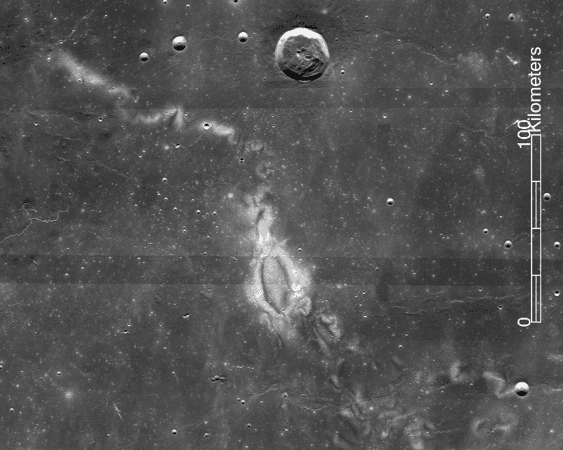
Reiner Gamma, a distinctive lunar magnetic anomaly and the targeted landing region for Intuitive Machines’ IM-3 mission. Image credit: LROC.
During the critical final phase of descent, PSNDL-L will provide Nova-C with highly accurate measurements of both its distance from the lunar surface and its velocity, including speed and direction. Nova-C’s guidance, navigation, and control system will combine those measurements with data from other sensors to determine the lander’s position, movement, and orientation in real time and autonomously execute the maneuvers required for landing.
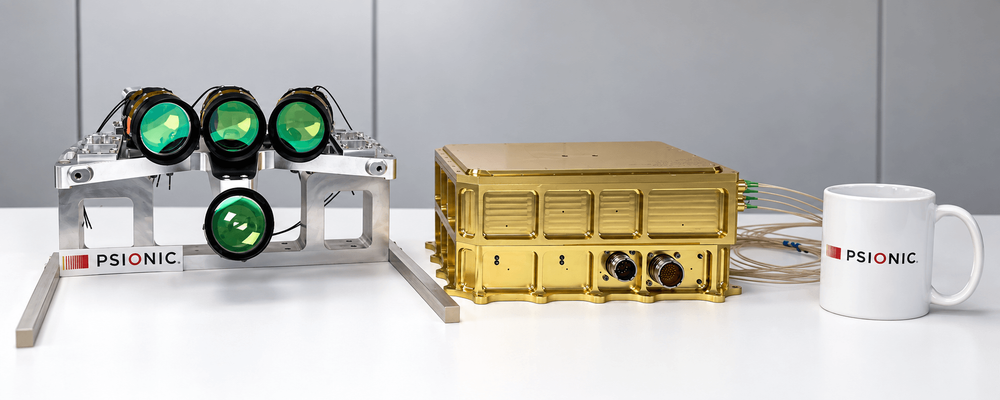
Designed to deliver precision navigation capabilities in a compact footprint for optimal integration aboard the Nova-C lunar lander, PSNDL-L will serve as the primary velocity and range sensor during terminal descent, providing the precise measurements needed for accurate and repeatable lunar landings. A prototype of the PSNDL-L is pictured here. Photo courtesy of Psionic.
The technology represents an evolution from the time-of-flight LiDAR sensors used during the Intuitive Machines previous lunar missions. Those systems provided range, or distance, measurements only. PSNDL-L uses multiple Doppler LiDAR beams to provide both range and three-dimensional velocity information, giving the lander a more complete understanding of its movement relative to the lunar surface.
Psionic is also supporting pre-flight integration through development of a PSNDL-L emulator and simulator along with other modeling services. Additionally, the company is creating an engineering model that enables lab, field, and atmospheric performance testing, along with additional mission support as needed.
Advancing the Capabilities for Long-Term Lunar Operations
Each layer of the lunar economy has its own specific requirements, and navigation is a cornerstone that the rest of the economy is built upon. The integration of PSNDL-L on IM-3 illustrates the virtuous cycle between NASA technology development and the commercial space industry.
NASA research, commercial innovation, and repeated lunar flight are advancing the capabilities needed for long-term lunar operations and sustained exploration of the Moon. Intuitive Machines supports that future by building mission-critical spacecraft and systems, connecting networks, and operating infrastructure across Earth orbit, cislunar space, and deep space for commercial, civil, and national security customers.
Planning your next mission?Contact usto learn more.