08-12-2026 PDF Version – KOMZIFTI® (ziftomenib) generated $9.1 million in net product revenue, up 57% over 1Q, and approximately 115 new patient starts, up 35% over 1Q – – KOMZIFTI® achieved majority share of new patient starts in R/R NPM1-m AML…
08-12-2026
PDF Version
– KOMZIFTI® (ziftomenib) generated $9.1 million in net product revenue, up 57% over 1Q, and approximately 115 new patient starts, up 35% over 1Q –
– KOMZIFTI® achieved majority share of new patient starts in R/R NPM1-m AML menin inhibitor class, establishing leadership after just two full quarters of launch –
– Long-term, frontline AML data presented at EHA 2026 support potential for ziftomenib to transform standard of care and a $7 billion TAM –
– Clinical updates support darlifarnib’s potential to enhance targeted therapies in RCC and KRAS-mutated tumors –
– $519.0 million in cash, cash equivalents and short-term investments, plus $180 million in anticipated collaboration payments –
– Management to host webcast and conference call today at 4:30 p.m. ET / 1:30 p.m. PT –
SAN DIEGO, Aug. 12, 2026 (GLOBE NEWSWIRE) -- Kura Oncology, Inc. (Nasdaq: KURA), a biopharmaceutical company focused on precision medicines for cancer, today reported second quarter 2026 financial results and provided a corporate update.
“In only its second full quarter of launch, KOMZIFTI established early leadership in relapsed or refractory NPM1-mutant AML, achieving a majority share of new patient starts in the menin inhibitor class,” said Troy Wilson, Ph.D., J.D., President and Chief Executive Officer of Kura Oncology. “Increasing physician preference for KOMZIFTI, combined with outstanding commercial execution and encouraging frontline data, establish a strong foundation for ziftomenib as a potential market leader throughout the AML treatment continuum. In parallel, darlifarnib is emerging as a differentiated precision combination platform across multiple targeted therapies in major solid tumor indications. Together, these programs position Kura to build long-term value while advancing innovative therapies for patients with significant unmet need.”
Recent Developments
KOMZIFTI Commercial Launch
Commercial highlights for the quarter included:
-
$9.1 million in net product revenue, a 57% increase from 1Q 2026
-
Approximately 115 new patient starts (NPS), a 35% increase from 1Q 2026
-
**More than 250 total prescriptions (TRx) in 2Q 2026,**including repeat prescriptions, a 59% increase from 1Q 2026
-
In its second full quarter on the market, KOMZIFTI achieved a majority share of new patient starts in the R/R NPM1-m AML menin inhibitor class
New patient starts are a key indicator of physician preference, future prescription growth, and overall market leadership. Additional indicators of KOMZIFTI’s commercial momentum included broader adoption across academic and community treatment centers, increasing repeat prescribing, and physician-directed use of KOMZIFTI in combination with established standards of care.
Advancing Ziftomenib Across the Broader AML Treatment Landscape
-
EHA 2026Long-term KOMET-007 data demonstrated high and durable clinical activity with 600 mg ziftomenib plus intensive chemotherapy (7+3) in 99 patients with newly diagnosed NPM1-m or KMT2A-r AML, including:
-
- CRc rates of 96% and 90%, respectively
-
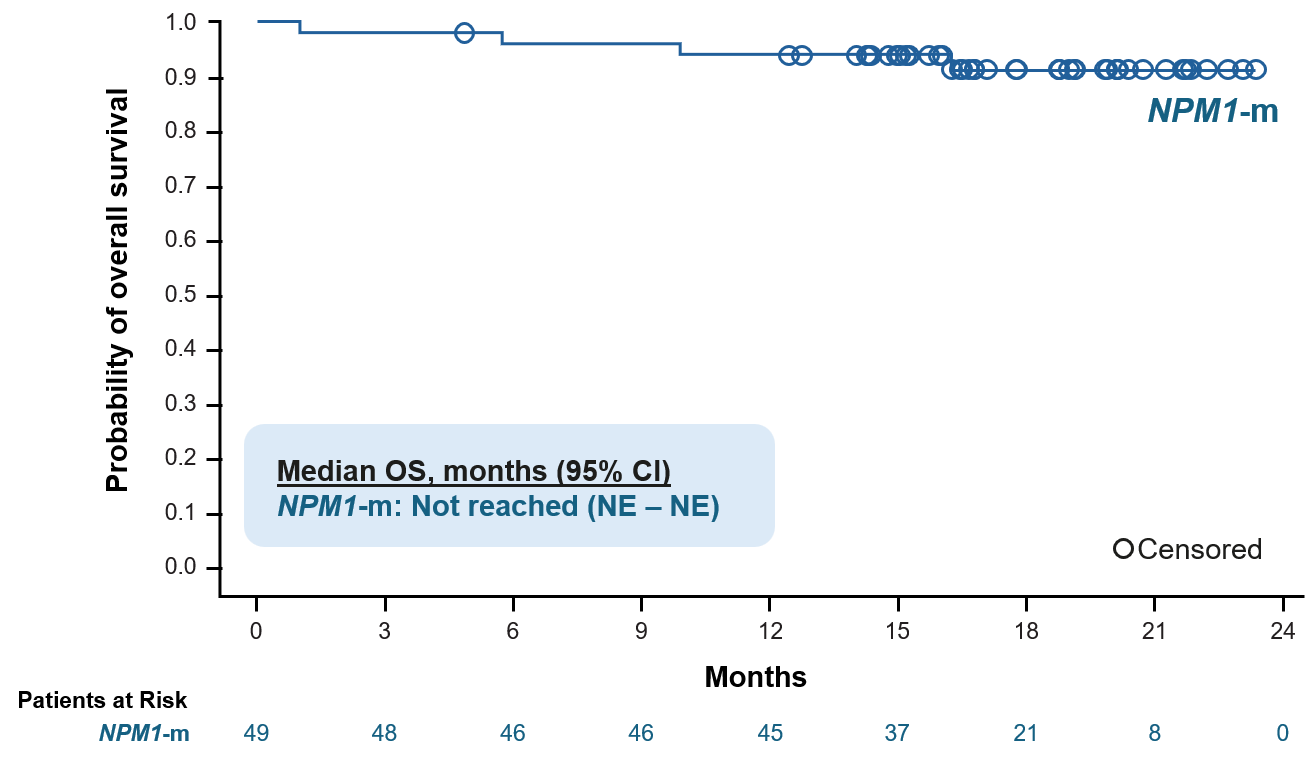
12-month OS rates of 94% and 71%, respectively
-
Deep MRD negativity, no new safety signals, and median overall survival not reached in either molecular subgroup
-
**Blood****Publication (June 2026)**Updated KOMET-007 results demonstrated deep and durable responses with 600 mg ziftomenib plus venetoclax and azacitidine in R/R NPM1-m AML. Venetoclax-naïve patients achieved an 87% ORR and 70% CRc rate, with 75% of composite complete responders achieving central MRD negativity. Median duration of CRc was 9.2 months. Median OS in these patients was not reached after 10.7 months of follow-up. The regimen was generally well tolerated, with low rates of differentiation syndrome and QTc prolongation.
Together, these results support the potential of ziftomenib in combination with standard-of-care regimens, increasing confidence in the ongoing KOMET-017 frontline program.
-
Registrational and Combination Programs
-
Site activation and patient enrollment across KOMET-017 frontline registrational studies for intensive and non-intensive chemotherapy eligible patients ongoing
-
Enrollment in KOMET-008 evaluating ziftomenib plus gilteritinib in patients with R/R FLT3-ITD/NPM1 co-mutated AML continues
-
Enrollment in the KOMET-007 cohort evaluating ziftomenib plus quizartinib and intensive chemotherapy in patients with newly diagnosed FLT3/NPM1 co-mutated AML ongoing
Advancing Darlifarnib as a Precision Combination Platform Across Solid Tumors
-
**KRASG12C-mutated Solid Tumors (ASCO 2026)**First-in-human Phase 1 FIT-001 data evaluating darlifarnib plus adagrasib provided clinical proof of mechanism, including tumor shrinkage in 77% of response-evaluable patients and confirmed ORRs of:
-
-
50% in non-small cell lung cancer
-
29% in KRAS inhibitor-naïve colorectal cancer
-
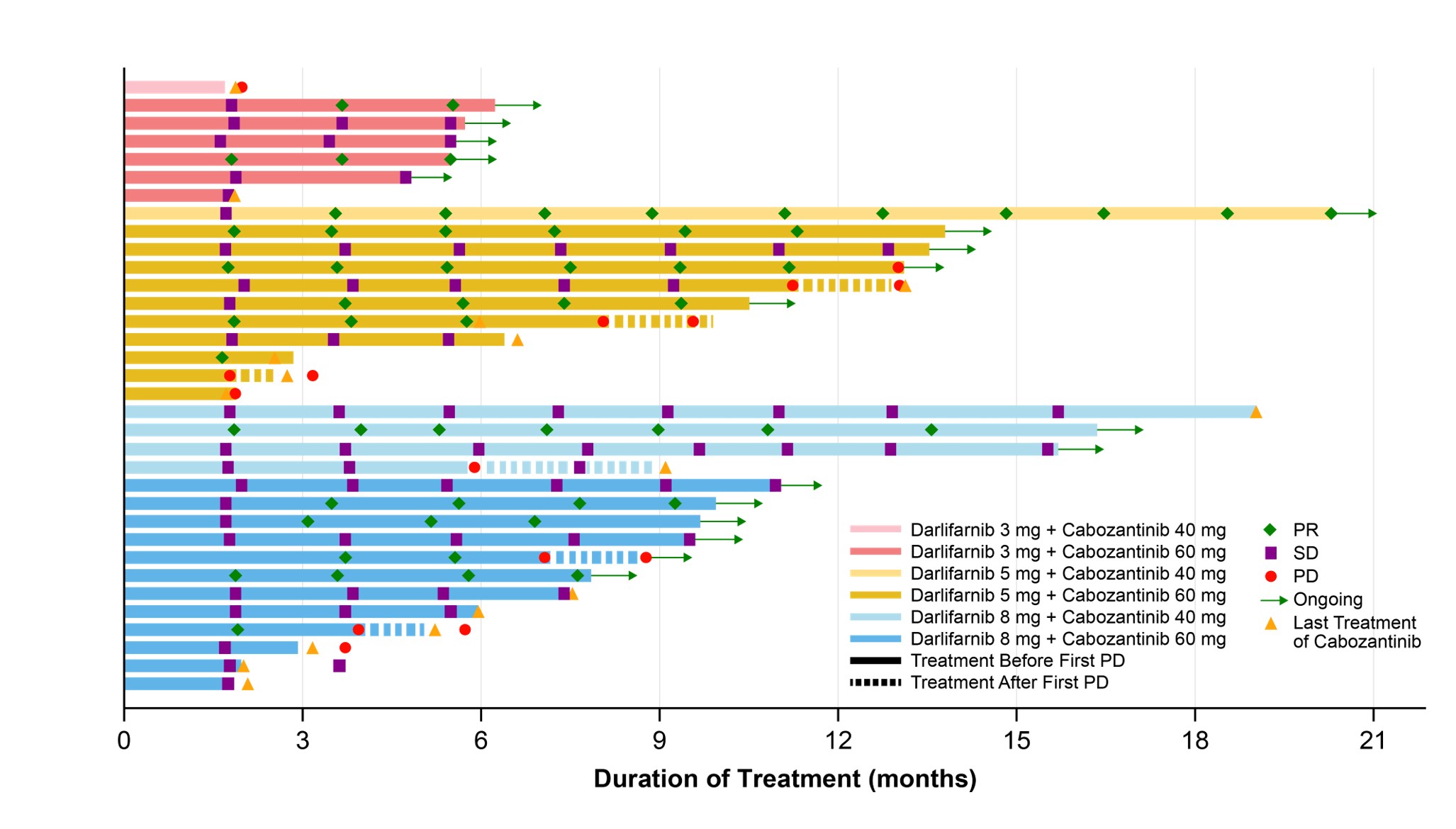
**Cabozantinib-naïve Clear Cell Renal Cell Carcinoma (KCRS 2026)**Updated Phase 1 FIT-001 results demonstrated encouraging and durable clinical activity with darlifarnib plus cabozantinib, with ORRs of up to 50% across dose levels and an mPFS of 13 months.
-
**Cabozantinib-exposed Clear Cell Renal Cell Carcinoma (IKCS 2026)**Phase 1 FIT-001 data demonstrated darlifarnib’s potential to overcome resistance to VEGFR-targeted therapy. Despite prior cabozantinib exposure, patients on the combination of darlifarnib plus cabozantinib, across multiple dose levels of each, achieved a:
-
-
94% disease control rate (DCR)
-
Tumor shrinkage in 75% of patients
Collectively, these data continue to support darlifarnib’s potential as a precision combination platform capable of enhancing multiple targeted therapy classes while creating opportunities for future development opportunities, potential strategic collaborations, and multiple registrational paths.
- FIT-001 Phase 1b Dose ExpansionEnrollment continues in the global, randomized FIT-001 Phase 1b study evaluating darlifarnib plus cabozantinib versus cabozantinib alone to establish the recommended Phase 3 dose in patients with cabozantinib-naïve ccRCC.
Anticipated Milestones: Commercial and Development Priorities
Kura expects multiple commercial and clinical catalysts over the next 12 to 18 months.
KOMZIFTI 2026 Commercial Execution
-
Expand physician adoption across academic and community treatment centers
-
Increase repeat prescribing and broaden physician adoption
-
Deliver sustained quarter-over-quarter growth
-
Strengthen leadership within R/R NPM1-m AML menin inhibitor market
Building on Emerging Leadership Across the AML Treatment Continuum
Kura’s strategy is to build on KOMZIFTI’s early commercial success by moving ziftomenib into earlier lines of therapy, combining it with multiple standards of care and expanding its use across genetically defined AML populations.
Key near-term milestones include anticipated presentation of:
-
Updated long-term KOMET-007 Phase 1b data evaluating ziftomenib with venetoclax and azacitidine in newly diagnosed, intensive chemotherapy-ineligible NPM1-m AML patients, including durability, survival, and MRD outcomes – 2H 2026
-
Initial data from the KOMET-007 Phase 1b study evaluating ziftomenib with 7+3 intensive chemotherapy and quizartinib in patients with newly diagnosed NPM1-m/FLT3-ITD AML – 2H 2026
-
Initial KOMET-008 data evaluating ziftomenib with gilteritinib in patients with R/R NPM1-m/FLT3-m AML, including activity in patients previously treated with FLT3 inhibitors – 2H 2026
-
An exploratory analysis from the KOMET-001 study evaluating ziftomenib monotherapy activity in molecularly defined, MEIS1-associated AML subtypes beyond NPM1-m and KMT2A-r disease – 2H 2026
Ziftomenib and Menin Inhibition – Expansion Beyond AML
-
Continue enrollment of KOMET-015 study evaluating ziftomenib plus imatinib in patients with gastrointestinal stromal tumors
-
Progress preclinical development of next-generation menin inhibitor for use in other solid tumors
KO-7246 (Next-Generation Menin Inhibitor)
-
Advance KO-7246, a next-generation menin inhibitor specifically designed for use in diabetes and cardiometabolic disease, into IND-enabling studies
-
Present additional scientific data characterizing menin inhibitors in preclinical models of diabetes
Darlifarnib – Precision Combination Platform in Solid Tumors
-
Complete enrollment in the randomized FIT-001 Phase 1b study evaluating darlifarnib plus cabozantinib in cabozantinib-naïve ccRCC in 1H 2027and report initial clinical data in2H 2027
-
Initiate a platform study of darlifarnib plus daraxonrasib in patients with KRAS-mutant 2L+ PDAC in 1H 2027
-
Advance darlifarnib as a precision combination platform across additional targeted therapy classes
Second Quarter 2026 Financial Results
-
Net product revenue: $9.1 million, compared to none for 2Q 2025
-
Collaboration revenue: $11.8 million, compared to $15.3 million for 2Q 2025
-
R&D expenses: $61.9 million, compared to $62.8 million for 2Q 2025
-
SG&A expenses: $31.8 million, compared to $25.2 million for 2Q 2025
-
Net loss:$68.3 million, compared to $66.1 million for 2Q 2025. Net loss includes $8.2 million in non-cash, share-based compensation expense compared to $6.9 million for the same period in 2025.
As of June 30, 2026, Kura had $519.0 million in cash, cash equivalents and short-term investments, compared to $667.2 million as of December 31, 2025. Combined with $180 million in anticipated collaboration payments from Kyowa Kirin, the Company believes its current cash resources will be sufficient to fund the ziftomenib AML program through the topline results from the first pivotal Phase 3 KOMET-017 trial, anticipated in 2028.
Conference Call and Webcast
Kura’s management will host a webcast and conference call at 4:30 p.m. ET / 1:30 p.m. PT today, August 12, 2026, to discuss financial results and to provide a corporate update. A live webcast and archived replay of the event will be available on the Investors section of the Company’s website at www.kuraoncology.com.
About Kura Oncology
Kura Oncology is a biopharmaceutical company committed to realizing the promise of precision medicines for the treatment of cancer. Kura’s pipeline of small molecule drug candidates is designed to target cancer signaling pathways and address high-need hematologic malignancies and solid tumors. Kura developed and is commercializing KOMZIFTI® (ziftomenib), the FDA-approved once-daily, oral menin inhibitor for the treatment of adults with relapsed or refractory NPM1-mutated acute myeloid leukemia, and continues to pioneer advancements in menin inhibition and farnesyl transferase inhibition. For additional information, please visit the Kura website and follow us on X and LinkedIn.
Forward-Looking Statements
This news release contains certain forward-looking statements that involve risks and uncertainties that could cause actual results to be materially different from historical results or from any future results expressed or implied by such forward-looking statements. Such forward-looking statements include statements regarding, among other things, the commercial potential of KOMZIFTI; physician preference for KOMZIFTI; Kura’s research, preclinical and clinical development activities; plans and projected timelines for ziftomenib, darlifarnib, KO-7246, and other preclinical assets; ziftomenib’s potential to transform the standard of care for AML and to serve as a foundational therapy and market leader across the AML treatment continuum; the market opportunity for ziftomenib; darlifarnib’s potential to serve as a precision combination platform and enhance clinical activity in multiple targeted therapy classes, while creating opportunities for future development, potential strategic collaborations, and multiple registrational paths; the expected timing and presentation of results and data from clinical trials; Kura’s ability to generate long-term value; and Kura’s anticipated cash runway. Factors that may cause actual results to differ materially include risks associated with market competition, market acceptance and commercialization of KOMZIFTI and Kura’s product candidates; risks associated with the conduct of preclinical studies and clinical trials; the risk that Kura may not obtain access to third-party compounds Kura seeks to evaluate in combination with its product candidates; the risk of the FDA not permitting Kura’s planned trials to proceed; the risk that Kura’s product candidates may not receive regulatory approval; the potential for KOMZIFTI or Kura’s product candidates to have unexpected adverse side effects; risks that Kura’s actual future financial and operating results may differ from its expectations or goals; the risk that Kura may not be able to obtain additional financing; the risk that the collaboration with Kyowa Kirin is unsuccessful; and other risks associated with the process of discovering, developing and commercializing drugs that are safe and effective for use as human therapeutics, and in the endeavor of building a business around such drugs. You are urged to consider statements that include the words “may,” “will,” “would,” “could,” “should,” “believes,” “estimates,” “projects,” “potential,” “expects,” “plans,” “anticipates,” “intends,” “continues,” “designed,” “goal,” or the negative of those words or other comparable words to be uncertain and forward-looking. For a further list and description of the risks and uncertainties the Company faces, please refer to the Company's periodic and other filings with the Securities and Exchange Commission, which are available at www.sec.gov. Such forward-looking statements are current only as of the date they are made, and Kura assumes no obligation to update any forward-looking statements, whether as a result of new information, future events or otherwise.
Abbreviations
7+3, cytarabine plus daunorubicin; AML, acute myeloid leukemia; ccRCC, clear cell renal cell carcinoma; CRc, composite complete remission; DCR, disease control rate; FLT3, Fms-like tyrosine kinase 3 gene; FLT3-ITD, FMS-like tyrosine kinase 3 internal tandem duplication; G12C, a specific amino-acid substitution; IND, Investigational New Drug application; KMT2A, lysine methyltransferase 2A gene; -m, mutant; MEIS1, Myeloid Ecotropic Viral Integration Site 1; NPM1, nucleophosmin 1 gene; ITD, Internal Random Duplication; ORR, overall response rate; OS, overall survival; PDAC, pancreatic ductal adenocarcinoma; -r, rearranged; KRAS, Kirsten Rat Sarcoma Virus oncogene homolog; mPFS, median progression free survival, MRD, minimal residual disease; QTc, corrected QT interval; R/R, relapsed/refractory; VEGFR, vascular endothelial growth factor receptor
| KURA ONCOLOGY, INC. | |
| Statements of Operations Data | |
| (unaudited) | |
| (in thousands, except per share data) | |
| | | | | | | | | | | | | |
| | | Three Months Ended | | | Six Months Ended | |
| | | June 30, | | | June 30, | |
| | | 2026 | | | 2025 | | | 2026 | | | 2025 | |
| Revenue | | | | | | | | | | | | |
| Product revenue, net | | $ | 9,122 | | | $ | — | | | $ | 14,888 | | | $ | — | |
| Collaboration revenue | | | 11,752 | | | | 15,288 | | | | 24,251 | | | | 29,396 | |
| Total revenue | | | 20,874 | | | | 15,288 | | | | 39,139 | | | | 29,396 | |
| Operating expenses | | | | | | | | | | | | |
| Cost of product sales | | | 243 | | | | — | | | | 505 | | | | — | |
| Research and development | | | 61,891 | | | | 62,785 | | | | 127,154 | | | | 118,758 | |
| Selling, general and administrative | | | 31,750 | | | | 25,169 | | | | 63,305 | | | | 48,004 | |
| Total operating expenses | | | 93,884 | | | | 87,954 | | | | 190,964 | | | | 166,762 | |
| Other income, net | | | 4,688 | | | | 6,544 | | | | 10,178 | | | | 14,041 | |
| Income tax expense | | | 5 | | | | — | | | | 13 | | | | 226 | |
| Net loss | | $ | (68,327 | ) | | $ | (66,122 | ) | | $ | (141,660 | ) | | $ | (123,551 | ) |
| Net loss per share, basic and diluted | | $ | (0.77 | ) | | $ | (0.75 | ) | | $ | (1.60 | ) | | $ | (1.41 | ) |
| Weighted average number of shares used in computing net loss per share, basic and diluted | | | 88,855 | | | | 87,586 | | | | 88,733 | | | | 87,501 | |
| KURA ONCOLOGY, INC. | |
| Balance Sheet Data | |
| (unaudited) | |
| (in thousands) | |
| | | | | | | |
| | | June 30, | | | December 31, | |
| | | 2026 | | | 2025 | |
| Cash, cash equivalents and short-term investments | | $ | 519,025 | | | $ | 667,240 | |
| Working capital | | | 441,246 | | | | 591,689 | |
| Total assets | | | 587,791 | | | | 738,363 | |
| Long-term liabilities | | | 421,167 | | | | 447,254 | |
| Accumulated deficit | | | (1,315,748 | ) | | | (1,174,088 | ) |
| Stockholders’ equity | | | 48,431 | | | | 174,135 | |
About KOMZIFTI**®****(ziftomenib)**
KOMZIFTI (ziftomenib) is an oral menin inhibitor approved for the treatment of adult patients with relapsed or refractory acute myeloid leukemia (AML) with a susceptible NPM1 mutation who have no satisfactory alternative treatment options.
Ziftomenib is in development for the treatment of frontline and R/R AML harboring NPM1 mutations, KMT2A translocations and FLT3 mutations, with the potential to be combined with approved therapies and benefit a broad spectrum of patients.
IMPORTANT SAFETY INFORMATION FOR KOMZIFTI FROM THE U.S. PRESCRIBING INFORMATION
Boxed WARNING: DIFFERENTIATION SYNDROME
Differentiation syndrome, which can be fatal, has occurred with KOMZIFTI. Signs and symptoms may include fever, joint pain, hypotension, hypoxia, dyspnea, rapid weight gain or peripheral edema, pleural or pericardial effusions, pulmonary infiltrates, acute kidney injury, and rashes. If differentiation syndrome is suspected, interrupt KOMZIFTI, and initiate oral or intravenous corticosteroids with hemodynamic and laboratory monitoring until symptom resolution; resume KOMZIFTI upon symptom improvement.
WARNINGS AND PRECAUTIONS
Differentiation Syndrome
KOMZIFTI can cause fatal or life-threatening differentiation syndrome (DS). DS is associated with rapid proliferation and differentiation of myeloid cells. Symptoms of DS, including those seen in patients treated with KOMZIFTI, may include fever, hypoxia, joint pain, hypotension, dyspnea, rapid weight gain or peripheral edema, pleural or pericardial effusions, acute kidney injury, and rashes.
In the clinical trial, DS occurred in 29 (26%) of 112 patients with R/R AML with an NPM1 mutation who were treated with KOMZIFTI at the recommended dosage. DS was Grade 3 in 13% and fatal in two patients. In broader evaluation of all patients with any genetic form of AML treated with KOMZIFTI monotherapy in clinical trials, DS occurred in 25% of patients. Four fatal cases of DS occurred out of 39 patients with KMT2A-rearranged AML treated with KOMZIFTI. KOMZIFTI is not approved for use in patients with KMT2A-rearranged AML.
In the 112 patients with an NPM1 mutation, DS was observed with and without concomitant hyperleukocytosis, in as early as 3 days and up to 46 days after KOMZIFTI initiation. The median time to onset was 15 days. Two patients experienced more than one DS event. Treatment was interrupted and resumed in 15 (13%) patients, while it was permanently discontinued in 2 (2%) patients.
Prior to starting treatment with KOMZIFTI, reduce the WBC counts to less than 25 x 10⁹/L. If DS is suspected, interrupt KOMZIFTI, initiate oral or intravenous corticosteroids (e.g., dexamethasone 10 mg every 12 hours) for a minimum of 3 days with hemodynamic and laboratory monitoring. Resume treatment with KOMZIFTI at the same dose level when signs and symptoms improve and are Grade 2 or lower. Taper corticosteroids over a minimum of 3 days after adequate control or resolution of symptoms. Symptoms of DS may recur with premature discontinuation of corticosteroid treatment.
QTc Interval Prolongation
KOMZIFTI can cause QTc interval prolongation. In the clinical trial, QTc interval prolongation was reported as an adverse reaction in 12% of 112 patients treated with KOMZIFTI at the recommended dosage for R/R AML with an NPM1 mutation. QTc interval prolongation was Grade 3 in 8% of patients. The heart-rate corrected QT interval (using Fridericia’s method) (QTcF) was greater than 500 msec in 9% of patients, and the increase from baseline QTcF was greater than 60 msec in 12% of patients. KOMZIFTI dose reduction was required for 1% of patients due to QTc interval prolongation. QTc prolongation occurred in 14% of the 42 patients less than 65 years of age and in 10% of the 70 patients 65 years of age or older.
Correct electrolyte abnormalities, including hypokalemia and hypomagnesemia, prior to treatment with KOMZIFTI. Perform an ECG prior to initiation of treatment with KOMZIFTI, and do not initiate KOMZIFTI in patients with QTcF > 480 msec. Perform an ECG at least once weekly for the first four weeks on treatment, and at least monthly thereafter. Interrupt KOMZIFTI if the QTc interval is > 500 ms or the change from baseline is > 60 ms (Grade 3). In patients with congenital long QTc syndrome, congestive heart failure, electrolyte abnormalities, or those who are taking medications known to prolong the QTc interval, more frequent ECG monitoring may be necessary. Concomitant use of KOMZIFTI with drugs known to prolong the QTc interval may increase the risk of QTc interval prolongation, result in a greater increase in the QTc interval and adverse reactions associated with QTc interval prolongation, including Torsades de Pointes, other serious arrhythmias, and sudden death.
Embryo-Fetal Toxicity
Based on findings in animals and its mechanism of action, KOMZIFTI can cause embryo-fetal harm when administered to a pregnant woman. Advise pregnant women of the potential risk to the fetus. Advise females of reproductive potential to use effective contraception during treatment with KOMZIFTI and for 6 months after the last dose. Advise males with female partners of reproductive potential to use effective contraception during treatment with KOMZIFTI and for 3 months after the last dose.
ADVERSE REACTIONS
Fatal adverse reactions occurred in 4 (4%) patients who received KOMZIFTI, including 2 with differentiation syndrome, 1 with infection, and 1 with sudden death. Serious adverse reactions were reported in 79% of patients who received KOMZIFTI. Serious adverse reactions occurring in ≥ 5% of patients included infection without an identified pathogen (29%), febrile neutropenia (18%), bacterial infection (16%), differentiation syndrome (16%), and dyspnea (6%).
Dosage interruption of KOMZIFTI due to an adverse reaction occurred in 54% of patients. Adverse reactions that required dose interruption in ≥ 2% of patients included infection without an identified pathogen (15%), differentiation syndrome (13%), febrile neutropenia (5%), pyrexia (4%), electrocardiogram QT prolonged (4%), leukocytosis (4%), bacterial infection (3%), cardiac failure (2%), cholecystitis (2%), diarrhea (2%), pruritus (2%), and thrombosis (2%). Dose reduction of KOMZIFTI due to an adverse reaction occurred in 4% of patients. Permanent discontinuation of KOMZIFTI due to an adverse reaction occurred in 21% of patients. Adverse reactions that required permanent discontinuation of KOMZIFTI in ≥ 2% of patients were infection without an identified pathogen (8%), bacterial infection (4%), cardiac arrest (2%), and differentiation syndrome (2%).
Most common (≥ 20%) adverse reactions, including laboratory abnormalities, were aspartate aminotransferase increased (53%), infection without an identified pathogen (52%), potassium decreased (52%), albumin decreased (51%), alanine aminotransferase increased (50%), sodium decreased (49%), creatinine increased (45%), alkaline phosphatase increased (41%), hemorrhage (38%), diarrhea (36%), nausea (35%), fatigue (34%), edema (30%), bacterial infection (28%), musculoskeletal pain (28%), bilirubin increased (27%), potassium increased (26%), differentiation syndrome (26%), pruritus (23%), febrile neutropenia (22%), and transaminases increased (21%).
DRUG INTERACTIONS
Drug interactions may occur when KOMZIFTI is concomitantly used with:
-
Strong or Moderate CYP3A4 Inhibitors: Monitor patients more frequently for KOMZIFTI-associated adverse reactions.
-
Strong or Moderate CYP3A4 Inducers: Avoid concomitant use of KOMZIFTI.
-
Gastric Acid Reducing Agents: Avoid concomitant use of KOMZIFTI with proton pump inhibitors (PPIs), H2 receptor antagonists (H2RAs), or locally acting antacids. If concomitant use with H2RAs or locally acting antacids cannot be avoided, modify KOMZIFTI administration time.
-
Take KOMZIFTI 2 hours before or 10 hours after administration of an H2 receptor antagonist.
-
Take KOMZIFTI 2 hours before or 2 hours after administration of a locally acting antacid.
-
Drugs that Prolong the QTc Interval: Avoid concomitant use of KOMZIFTI. If concomitant use cannot be avoided, obtain ECGs when initiating, during concomitant use, and as clinically indicated. Interrupt KOMZIFTI if the QTc interval is > 500 ms or the change from baseline is > 60 ms.
USE IN SPECIFIC POPULATIONS
**Pregnancy:**Based on findings in animals and its mechanism of action, KOMZIFTI can cause embryo-fetal harm when administered to a pregnant woman. Advise pregnant women of the potential risk to a fetus. Verify pregnancy status in females of reproductive potential prior to starting KOMZIFTI.
Lactation: Because of the potential for adverse reactions in the breastfed child, advise women not to breastfeed during treatment with KOMZIFTI and for 2 weeks after the last dose.
Infertility: Based on findings in animals, KOMZIFTI may impair fertility in females and males of reproductive potential.
Please see full Prescribing Information, including Boxed WARNING.