GEOS
Fiscal year ends September Quarters are offset from the calendar — Q1 is Oct–Dec

Geospace Technologies Corporation designs and manufactures technology solutions for smart water management, energy exploration, and industrial applications. The company operates through three segments: Smart Water, Energy Solutions, and Intelligent Industrial. In Smart Water, it produces Hydroconn connector cables, Aquana remote shutoff valves, and IoT platforms for water utilities and property managers. The Energy Solutions segment provides seismic data acquisition systems, including the Pioneer, Mariner, and Mariner Deep nodes, as well as OptoSeis fiber optic sensing technology for reservoir monitoring. Intelligent Industrial includes industrial sensors, imaging products, and contract manufacturing services. The company also offers defense and security products under the Quantum brand, such as SADAR detection systems and Heartbeat Detector technology, serving U.S. government agencies. Founded in 1980 as a subsidiary of OYO Corporation, the company was formerly known as OYO Geospace Corporation before changing its name in 2012.

Summarised from the company's own disclosures, fiscal year ended Nov 2025

Industry Specialty Industrial Machinery Homepage geospace.com
Sector Industrials IR page geospace.com/company/investor-relations
Tags
seismic data acquisition, smart water management, fiber optic sensing, border security, industrial iot, contract manufacturing, reservoir monitoring, vibration monitoring, ocean bottom nodes, water utility infrastructure, Hydroconn, Aquana, Pioneer, Mariner, Mariner Deep, OptoSeis, Insight by OptoSeis, SADAR, Quantum, Heartbeat Detector, EXILE Technologies, Concord Technologies, Geovox
Press page geospace.com/news

Metrics

Valuation  
Market cap $ 63.255M
Market cap (USD) $ 63.255M
P/E -1.59
PEG —
P/BV 0.66
P/S 0.69
P/OCF -2.01
P/FCF -1.71
Dividend yield —
Turnover / mcap —
Returns  
ROE -7.5%
ROI -9.8%
ROIC -8.5%
Profit margin -8.8%
Growth  
Revenue growing No
Profits growing No
Revenue up 3y No
Revenue up 5y No
Earnings growth 3y (net profit CAGR) —
Quality  
Profitable No
Margin expanding No
Buying back stock No
Diluting (TTM) Yes
Debt/Equity —
Podcast bulls (TTM) Sign up
Podcast bears (TTM) Sign up
Podcast sentiment (TTM) Sign up
Podcast sentiment % (TTM) Sign up
News sentiment (TTM) 5
Quality score -70.6%
Insiders  
Buys, 1w Sign up
Buys, 1m Sign up
Buys, 1y Sign up
Sells, 1w Sign up
Sells, 1m Sign up
Sells, 1y Sign up

Sign up to see this company's insider trades

Figure FY 2025 FY 2024 FY 2023 FY 2022 FY 2021 FY 2020 FY 2019 FY 2018 FY 2017 FY 2016 FY 2015 FY 2014 FY 2013 FY 2012 FY 2011 FY 2010 FY 2009 FY 2008 FY 2007 FY 2006 FY 2005 FY 2004 FY 2003 FY 2002 FY 2001 FY 2000
Revenue 110.803M 135.598M 124.509M 64.109M 75.864M 34.136M 45.847M 75.748M 73.721M 62.06M 84.867M 236.912M 300.607M 191.664M 172.97M 128.533M 92.86M 134.495M 138.106M 103.7M 72.823M 63.538M 50.854M 65.049M 63.618M 53.474M
Net profit -9.724M -6.578M 12.206M -22.856M -14.056M -19.242M -146K -19.212M -56.791M -45.97M -32.641M 36.911M 69.557M 35.118M 29.711M 14.082M 1.76M 14.152M 19.599M 9.77M 2.507M 5.953M -2.533M 1.119M — -1.191M
Free cash flow -30.205M -12.94M 11.594M -11.165M -10.36M 15.206M 3.693M -12.122M 8.914M -3.562M -13.558M 60.858M -76.545M 39.211M -3.594M 26.554M 15.632M -17.818M -4.606M 576K -7.872M 5.872M -8.647M 1.817M -2.298M -1.175M

Figure FY 2025 FY 2024 FY 2023 FY 2022 FY 2021 FY 2020 FY 2019 FY 2018 FY 2017 FY 2016 FY 2015 FY 2014 FY 2013 FY 2012 FY 2011 FY 2010 FY 2009 FY 2008 FY 2007 FY 2006 FY 2005 FY 2004 FY 2003 FY 2002 FY 2001 FY 2000
Share price 18.96 10.34 12.95 4.41 9.55 6.18 15.37 13.7 17.82 19.48 13.81 35.15 84.29 — — — — — — — — — — — — —
Price performance 12m 0.83 -0.2 1.94 -0.54 0.55 -0.6 0.12 -0.23 -0.09 0.41 -0.61 -0.58 — — — — — — — — — — — — — —

Filed figures

Figure Sep 2016 Sep 2017 Sep 2018 Sep 2019 Sep 2020 Sep 2021 Sep 2022 Sep 2023 Sep 2024 Sep 2025
Balance sheet detail
Trade receivables (USD) 15.4M 9.44M 14.3M 24.2M 13.6M 12.2M 12.7M 20.2M 14.6M 12.7M
↳ YoY growth +21.3% -38.7% +51.8% +68.9% -43.8% -10.2% +3.7% +59.2% -27.4% -13.5%
↳ 5y CAGR -4.9% -10.3% -22.0% -0.3% +1.4% -4.5% +6.1% +7.1% -9.6% -1.4%
Lease liabilities (USD) — — — — 83,000 1.23M 1.01M 769,000 512,000 974,000
Cash and deposits (USD) 10.3M 15.1M 11.9M 18.9M 32.7M 14.1M 16.1M 18.8M 6.9M 26.3M
Intangible assets (USD) — — 8.01M 10.1M 8.33M 7.25M 5.57M 4.81M 1.65M 5.16M
Right-of-use assets (USD) — — — — 100,000 1.19M 957,000 714,000 464,000 915,000
Cash flow detail
Operating cash flow (USD) -1.7M 10.1M -10.4M 5.63M 18.1M -7.17M -10M 15.6M -9.08M -22.2M
Purchases of property, plant and equipment (USD) -1.87M -1.18M -1.72M -1.94M -2.92M -3.19M -1.13M -3.96M -3.86M -7.97M
Change in receivables (cash effect) (USD) -3.43M 7.74M -5.09M — — -1.05M 1.05M -5.56M 6.59M -4.24M
Change in inventories (cash effect) (USD) 5.19M 2.96M -7.82M -1.87M 5,000 -7.67M -2.36M -11M -11M -7.57M
Share buybacks (cash effect) (USD) — — — — — -6.81M -695,000 0.00 -6.39M -615,000
Interest paid (cash effect) (USD) -26,000 -39,000 -336,000 -99,000 -38,000 — — — — —
Income taxes paid (cash effect) (USD) — — 649,000 -2.4M -2.53M -551,000 -169,000 -151,000 -164,000 -409,000
Share-based compensation (USD) 5.22M 5.73M 2.32M 2.33M 2.31M 1.97M 1.73M 1.37M 1.3M 1.51M
Operating cash flow before change in receivables (USD) 1.73M 2.35M -5.31M — — -6.12M -11.1M 21.1M -15.7M -18M
Free cash flow (OCF - PPE - intangibles) (USD) -3.56M 8.91M -12.1M 3.69M 15.2M -10.4M -11.2M 11.6M -12.9M -30.2M
Income detail
Research and development expense (USD) 13.9M 13.8M 10.8M 15.5M 16.6M 14.8M 18.1M 15.9M 16.3M 18.9M
↳ 5y CAGR +3.7% +2.5% -5.9% -1.3% +2.4% +1.4% +5.6% +7.9% +1.0% +2.7%
Total comprehensive income (USD) -49M -55.1M -20.6M -284,000 -20.2M -13.7M -21.8M 9.7M 6.99M -10M
Comprehensive income to owners (USD) -49M -55.1M -20.6M -284,000 -20.2M -13.7M -21.8M 9.7M 6.99M -10M
Provision for credit losses (USD) 763,000 — 1.01M 436,000 — — 292,000 -138,000 -110,000 66,000
Credit cost ratio (credit losses / average receivables) (%) 5.4% — 8.5% 2.3% — — 2.3% 0.8% 0.6% 0.5%
Reported Nov 17, 2016 Dec 1, 2017 Nov 22, 2019 Nov 22, 2019 Nov 20, 2020 Nov 19, 2021 Nov 17, 2023 Nov 17, 2023 Nov 22, 2024 Nov 21, 2025

Sign up to see institutional holdings

Sign Up

Podcast Mentions

Sign up to see podcast mentions and sentiment

Sign Up

November 5, 2026|

Geospace

Balancing seismic performance, operational efficiency, and survey economics

Ocean-bottom node (OBN) technology continues to play an important role in modern marine seismic acquisition, providing the multicomponent data needed for increasingly complex subsurface imaging applications.

Selecting the right equipment involves balancing survey objectives with efficient deployment, reliable recording, and predictable offshore operations.

While survey geometry and subsurface imaging requirements drive acquisition design, equipment characteristics influence how efficiently a survey can be executed. Sensor performance, recording endurance, deployment methods, equipment turnaround, and long-term reliability all contribute to the technical and economic evaluation.

Understanding how these factors work together provides a more complete picture of OBN performance and operational value.

Five Factors That Shape OBN Technology Evaluation

Evaluating ocean-bottom node technology involves five interconnected considerations:

  • Operating Environment: Water-depth rating, pressure tolerance, and mechanical integrity.

  • Seismic Performance: Sensor response, noise floor, dynamic range, and four-component recording.

  • Recording Endurance: Battery capacity, onboard storage, sample rate, and acquisition duration.

  • Deployment and Recovery: Node dimensions, equipment handling, vessel compatibility, and turnaround requirements.

  • Lifecycle Economics: Equipment utilization, maintenance, operational efficiency, and total cost of ownership.

These factors are best evaluated collectively. A specification that appears advantageous in isolation may offer limited value if other equipment characteristics constrain the acquisition program.

For example, extended battery life provides practical value only when memory capacity, recording configuration, and system reliability support the planned deployment period. Similarly, a compact node design offers operational advantages when storage density, charging infrastructure, and handling processes complement the overall acquisition workflow.
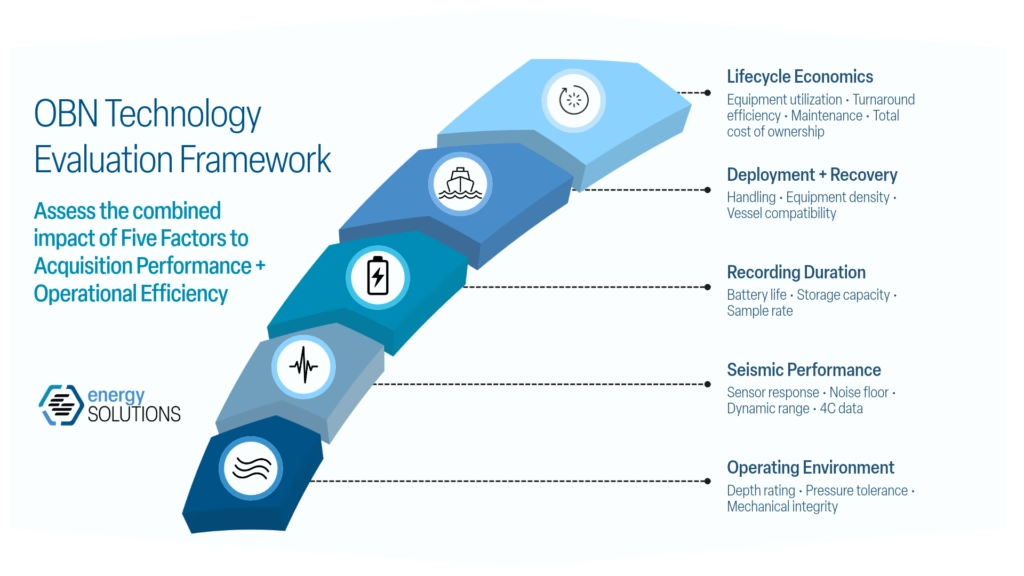
OBN technology evaluation framework showing five factors influencing seismic acquisition performance and operational efficiency: operating environment, seismic performance, recording endurance, deployment and recovery, and lifecycle economics.

Operating Environment and Mechanical Design

Water-depth ratings and mechanical specifications establish the operating boundaries of an ocean-bottom node. Pressure tolerance, housing construction, and environmental protection influence equipment reliability throughout deployment and recovery.

Beyond depth capability, node dimensions, weight, and mechanical configuration affect vessel operations and compatibility with deployment systems.

Shallow-water operations may place greater emphasis on compact equipment, handling efficiency, and rapid turnaround. Deepwater acquisition often introduces additional logistical demands involving specialized deployment systems, recovery operations, and extended offshore schedules.

Geospace offers two ocean-bottom node systems designed for different operating environments:

  • Mariner supports acquisition at depths up to 750 meters, with continuous recording capability of up to 70 days.

  • Mariner Deep supports deepwater acquisition at depths up to 3,048 meters, with continuous recording capability of up to 200 days.

Mechanical design and operating specifications provide an important foundation for evaluating equipment reliability and compatibility with established acquisition practices.

Seismic Performance and Data Quality

Seismic data quality begins with sensor design and the performance of the acquisition electronics.

Four-component (4C) ocean-bottom recording combines three-component particle-motion measurements with pressure measurements from a hydrophone. These complementary measurements support multicomponent seismic processing and subsurface imaging.

Performance considerations include sensor sensitivity, frequency response, instrument noise, dynamic range, digitization, and orientation measurements.

Specifications should be considered in relation to the acquisition objectives and expected recording conditions. Low instrument noise, high dynamic range, and accurate timing contribute to data fidelity, while sensor orientation information supports subsequent processing.

Geospace Mariner and Mariner Deep incorporate GS-ONE OMNI geophones and hydrophones for autonomous four-component recording. Both systems include internal heading sensors and built-in testing capabilities to support equipment verification.

The combined performance of the sensors, recording electronics, and system configuration ultimately determines the quality and consistency of acquired data.

Recording Duration and Acquisition Flexibility

Battery life and onboard recording capacity influence acquisition scheduling, equipment utilization, and servicing requirements.

Longer recording duration provides greater flexibility for projects involving extended acquisition windows, challenging weather conditions, or complex deployment and recovery logistics.

However, maximum battery life alone does not establish the practical recording capability of an OBN system.

Sample interval, channel count, memory capacity, battery performance, and power consumption collectively determine whether a node can support the intended acquisition period.

The relationship between these specifications becomes particularly important when comparing systems with different recording architectures.

Mariner provides up to 70 days of continuous autonomous recording, while Mariner Deep extends recording capability to 200 days.

Extended recording duration can reduce battery-related servicing requirements and provide greater scheduling flexibility. The operational value depends on the complete recording configuration and the demands of the acquisition program.

Deployment, Recovery, and Equipment Handling

Deployment and recovery methods influence offshore efficiency, equipment requirements, and vessel utilization.

Depending on the survey, ocean-bottom nodes may be deployed through node-on-a-rope systems, remotely operated vehicle (ROV) placement, or other specialized methods. Each approach introduces different considerations for positioning, handling, recovery, and vessel operations.

Node dimensions, weight, mechanical configuration, and compatibility with handling systems influence the efficiency of these activities.

Compact equipment can improve onboard storage density and simplify handling, particularly when acquisition programs involve large node inventories.

Mariner’s slim-profile design increases node capacity within charging and download containers, helping contractors make more efficient use of available vessel space.

Operational efficiency also depends on the relationship between node design and the broader deployment system. Equipment handling, storage arrangements, charging infrastructure, and data transfer processes collectively influence offshore productivity.

Charging, Data Download, and Equipment Turnaround

OBN productivity extends beyond the time that nodes spend recording on the seafloor.

Following recovery, equipment preparation may involve data download, battery charging, testing, inspection, and handling before subsequent deployment.

The efficiency of these processes affects equipment availability and overall acquisition productivity.

Systems that simplify charging and data transfer can reduce repetitive handling requirements and improve equipment turnaround, particularly for contractors managing large node inventories.

Mariner incorporates wireless, connector-free charging and data download technology. Eliminating external connectors from these operations reduces the number of physical connections required during equipment preparation.

Equipment turnaround becomes an increasingly important consideration as survey scale, channel count, and deployment frequency increase.

Evaluating Ocean-Bottom Node Survey Economics

The acquisition price of an OBN system represents only one component of its total economic value.

Survey economics also reflect equipment utilization, vessel requirements, deployment and recovery efficiency, maintenance, equipment turnaround, and recording reliability.

Several factors contribute to the evaluation:

Equipment density and logistics: Compact node designs can improve storage efficiency and reduce onboard space requirements.

Recording endurance: Extended autonomous operation provides scheduling flexibility and may reduce servicing interruptions.

Equipment turnaround: Efficient charging, testing, and data transfer support equipment availability between deployments.

Reliability and data confidence: Consistent recording performance helps protect acquisition investments and reduces the risk of equipment-related data loss.

Lifecycle costs: Maintenance requirements, equipment longevity, inventory utilization, and handling efficiency influence total cost of ownership.

These considerations become particularly significant when evaluating large OBN inventories deployed across multiple projects.

Comparing equipment solely on initial purchase or rental cost can overlook operational differences that influence project economics. A broader evaluation considers how equipment design and performance contribute to efficient acquisition throughout the equipment’s service life.

Matching OBN Technology to Acquisition Requirements

Ocean-bottom node performance is best evaluated through the combined contribution of seismic capability, mechanical design, recording endurance, and operational efficiency.

Equipment specifications provide essential technical benchmarks, but their practical value depends on how effectively they support the complete acquisition workflow.

Geospace designs and manufactures ocean-bottom seismic acquisition technology with an emphasis on high-fidelity sensing, dependable recording, and operational efficiency.

Its Mariner and Mariner Deep systems provide four-component seismic recording capabilities for different marine operating environments, supported by Geospace’s experience in seismic sensor and acquisition technology.

Explore Geospace Ocean-Bottom Node Solutions

Mariner: Shallow-Water Ocean-Bottom Node

Compact four-component seismic acquisition technology designed for shallow-water surveys, efficient equipment handling, and streamlined charging and data transfer.

Mariner Deep: Deepwater Ocean-Bottom Node

Extended-duration four-component seismic acquisition technology designed for deepwater operations, with continuous recording capability of up to 200 days.

Discuss Your Acquisition Requirements
October 30, 2026|

Geospace

From equipment transportation to field deployment and data recovery, lightweight seismic nodes for desert exploration are helping contractors simplify large-scale land acquisition in challenging environments.

Desert seismic exploration presents a unique set of operational challenges. Large survey areas, remote locations, difficult terrain and extreme temperatures place significant demands on field crews and equipment. Across North Africa and the Middle East, seismic contractors balance the need for high-quality subsurface data with the cost and complexity of acquiring it.

As surveys grow in channel count and geographic coverage, recording system efficiency becomes increasingly important. Every land node requires transportation, deployment, monitoring, retrieval and preparation for its next assignment.

Lightweight autonomous seismic land nodes offer a practical way to simplify these operations. By reducing equipment weight, eliminating cables and streamlining field handling, they help crews work more efficiently while meeting the technical requirements of seismic acquisition.

The Logistics Challenge of Desert Seismic Surveys

In regions such as Algeria, Libya, Egypt and Morocco, seismic exploration may involve large distances between operational bases and survey locations. Sand dunes, rocky terrain, limited access routes and changing environmental conditions can complicate the movement of personnel and equipment.

The challenges extend beyond logistics. Desert geology can also create difficult conditions for seismic imaging. The Society of Exploration Geophysicists (SEG), through itsSEAM Arid Model, examines desert environments containing karst structures, wadis, outcropping bedrock and complex near-surface conditions that can obscure deeper imaging targets.

These geological challenges reinforce the need for thoughtful survey design and dependable seismic recording systems. At the same time, contractors must manage the practical demands of moving equipment across large survey areas.

A high-channel-count survey can require thousands or tens of thousands of recording units. Each must be delivered to its designated location, deployed correctly and eventually recovered. When individual units are heavy or require additional cables and connections, the burden increases across the entire survey.

Reducing the size and weight of each recording unit can create meaningful advantages. Smaller equipment loads may allow crews to carry more nodes per trip, reduce repeated transportation and simplify equipment handling in remote locations.

These improvements become particularly valuable when multiplied across large surveys.

Why Node Weight Matters at Scale

A small difference in equipment weight can become substantial when multiplied across thousands of recording channels.

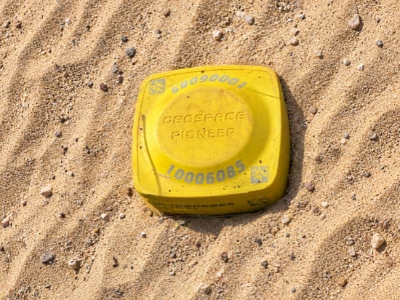
The Geospace Pioneer autonomous land seismic node weighs approximately 0.45 kg (1 lb), including its deployment spike. Its compact design combines the geophone, digitizer, GPS receiver, battery and onboard memory in a single sealed enclosure.

Consider the equipment weight associated with a 10,000-node survey:

| Number of Pioneer nodes | Approximate total node weight |

| 1,000 | 450 kg (992 lb) |

| 5,000 | 2,250 kg (4,960 lb) |

| 10,000 | 4,500 kg (9,921 lb) |

Calculations use 0.45 kg per Pioneer node and exclude transportation containers, charging equipment and other supporting infrastructure.

At this scale, even modest differences in individual node weight can significantly affect the amount of equipment that must be moved.

For field crews, lighter nodes can mean more equipment carried per trip and less physical strain during repeated deployment and retrieval activities. For acquisition managers, the potential benefits extend to transportation planning, equipment distribution and overall crew productivity.

The objective is not simply to make seismic equipment smaller. It is to reduce the work required to operate a large recording system.

Faster Deployment with Fewer Connections

Field productivity depends on more than equipment weight. The time required to prepare and deploy each recording unit also matters.

Traditional cable-based acquisition systems require crews to manage physical connections between equipment. Autonomous nodes eliminate the need for long recording cables, allowing individual receivers to operate independently.

Pioneer takes this approach further with its connectorless design and QuickDeploy capability.

A field technician can activate the node, place its spike into the ground and proceed to the next location. Under suitable conditions, deployment can take as little as five seconds per unit.

Pioneer also performs self-diagnostic checks, with quality-control information available through its field communications system.

For high-channel-count surveys, reducing repeated handling tasks can help improve deployment productivity. These operational advantages are particularly relevant in remote desert environments, where access, terrain and travel distances can make field activities more demanding.

Extended Recording for Remote Operations

Battery endurance is another important consideration for desert seismic acquisition. Returning to deployed equipment for battery replacement or recharging adds work to an already complex field operation. Long recording periods can help reduce the need for these interventions.

As a lightweight seismic node for desert exploration, Pioneer supports up to 50 days of continuous recording, operating 24 hours per day under specified conditions.

This extended endurance gives acquisition teams greater flexibility when planning long-duration surveys, extended recording windows or operations where repeated access to deployed equipment is difficult.Long battery life can also support rolling acquisition strategies, allowing crews to relocate equipment between survey areas without automatically requiring a recharge after every deployment.

Actual recording duration depends on operating conditions and survey configuration. Acquisition teams should evaluate battery endurance, onboard storage and recording settings together when planning field operations.

Connectorless Design for Challenging Environments

Desert environments introduce additional challenges for equipment maintenance. Fine sand, dust, temperature changes and repeated handling can affect exposed mechanical and electrical connections. Pioneer uses a sealed enclosure with no external connectors for charging or data transfer. Instead, the system uses wireless data communication and inductive charging.

This design eliminates the repeated plugging and unplugging of electrical connectors during routine equipment turnaround.

For seismic contractors, fewer physical connections mean fewer connector-handling tasks and reduced exposure to connector-related maintenance issues.

The sealed design also helps simplify equipment handling in dusty environments. However, equipment deployment methods and operating limits should always follow manufacturer recommendations and project-specific requirements.

Field Quality Control Supports Data Confidence

Operational efficiency is only valuable when the acquisition system also delivers reliable seismic data.

Pioneer integrates a Geospace GS-5 5 Hz vertical geophone with a 24-bit digitizer and GPS receiver. The system provides 122 dB instantaneous dynamic range and supports multiple recording sample intervals. These specifications provide the technical foundation for seismic acquisition, while field quality-control tools help crews monitor equipment condition during deployment.

Independent research reinforces the importance of understanding land seismic recording conditions. In his2024 SEG Distinguished Lecture, How Does the Thin Near Surface of the Earth Produce up to 100 Times More Noise on Land Seismic Data than on Marine Data?, geophysicist Christof Stork examined how complex near-surface conditions generate noise that can degrade land seismic data.

His research highlights the importance of understanding local noise characteristics and adapting acquisition and processing strategies to the conditions encountered in the field.

While no recording system can eliminate geological noise, reliable equipment monitoring helps acquisition teams identify instrument and deployment issues before they affect field operations.

The Pioneer system includes a Line Health Recorder that provides access to operational information such as:

  • Geophone condition and impedance

  • GPS position and timing information

  • Battery status

  • Recording and memory status

  • Instrument condition and diagnostic information

These checks help crews identify equipment or deployment issues while working in the field. This is particularly important in large desert surveys, where returning to a remote receiver location can require significant time and effort. Proper receiver coupling, survey design, source characteristics and data processing remain essential to achieving the desired imaging results. Effective field QC complements these practices by giving acquisition teams better information for managing the recording system.

Simplifying Camp-Side Equipment Turnaround

The operational benefits of lightweight nodes continue after equipment is retrieved from the field. Large seismic surveys require efficient systems for downloading recorded data, recharging batteries, testing equipment and preparing nodes for redeployment. Pioneer’s wireless rack system combines these activities into a streamlined equipment-management process.

The system supports:

Wireless charging: One hour of charging can provide approximately 10 days of recording capability.

Wireless data transfer: Recorded data can be downloaded at approximately 3 MB/s per rack slot.

Instrument testing: Equipment checks help verify node readiness before redeployment.

By combining charging, data transfer and testing within the rack system, Pioneer reduces the need for separate manual connections and repeated equipment handling.

The Geospace Equipment Manager (GEM) software supports the broader workflow, including equipment setup, recorded-data recovery and preparation of standard seismic data deliverables.

For acquisition teams managing thousands of nodes, efficient camp-side operations are an important part of maintaining field productivity.

Operational Efficiency Without Compromising Data Quality

Desert seismic acquisition requires a balance between operational efficiency and technical performance.

Reducing equipment weight, simplifying deployment and extending battery life can improve the logistics of acquiring seismic data. However, these advantages must be supported by dependable sensors, recording electronics and quality-control processes.

Pioneer was developed to address both sides of this requirement.

Its lightweight, autonomous design reduces the physical burden of large-scale acquisition, while its integrated geophone, digitizer, GPS timing and field QC capabilities support the technical requirements of land seismic recording.

For contractors evaluating equipment for remote desert surveys, the important question is not simply how much an individual node weighs or how long its battery lasts.

It is how the complete acquisition system can help crews deploy, operate and recover thousands of channels efficiently while maintaining confidence in the recorded data.

A More Efficient Approach to Desert Seismic Acquisition

As land seismic projects continue to demand greater operational efficiency, equipment design will remain an important factor in acquisition planning.

Lightweight autonomous nodes give contractors more flexibility in how they transport, deploy and manage recording equipment across large survey areas. For desert exploration in North Africa, the Middle East and other remote regions, these advantages can help address some of the most persistent challenges of field operations.

Geospace Pioneer brings together lightweight design, extended recording endurance, connectorless operation and integrated quality-control capabilities in a system designed for productive land seismic acquisition.

The result is a simpler approach to managing large numbers of seismic receivers, helping crews do more with less equipment-handling effort.

Explore theGeospace Pioneer autonomous land seismic system or contact Geospace to discuss your next land seismic acquisition project.

Recent News Posts

Your AMI System Doesn’t Have to Come From One Manufacturer

Your AMI System Doesn’t Have to Come From One Manufacturer

The Right Connection Can Give Utilities More Control Over Their Technology Choices Selecting an AMI system involves a lot of big decisions. Meters, endpoints, radios, valves, and software platforms can represent significant investments, and each plays a different role...

The Science Behind Heartbeat Detector®

The Science Behind Heartbeat Detector®

Decades of Research, Testing, and Security Applications A person concealed inside a vehicle may be out of sight, but their heartbeat produces a small physical signal. Every beat creates mechanical forces that travel through the body and into surfaces it contacts....

How to Choose the Right Contract Manufacturing Partner for High-Reliability Electronics

How to Choose the Right Contract Manufacturing Partner for High-Reliability Electronics

The Right Manufacturing Partner Does More Than Build Your Product For many OEMs, selecting a contract manufacturing partner begins with a simple objective: find a supplier capable of building a product on time and within budget. But as electronic products become more...

Flexible Downhole Deployment for a Clearer View of the Subsurface

Flexible Downhole Deployment for a Clearer View of the Subsurface

Insight Delivers a Clearer View of the Subsurface Understanding the subsurface starts with measurements you can trust. Whether you are evaluating a reservoir, conducting a seismic survey or monitoring microseismic subsurface changes, a useful downhole seismic data...

How Smart Water Technology Supports Insurance Risk Reduction

How Smart Water Technology Supports Insurance Risk Reduction

Water damage has always been a concern for commercial property owners. But the conversation around water risk is changing. For owners and operators, a water event can extend well beyond the cost of repairing a pipe. Damage can disrupt operations, affect residents or...

Your AMI System Doesn't Have to Come From One Manufacturer Bull 1 Bear 0 Product/operations

October 30, 2026|

Geospace

The Right Connection Can Give Utilities More Control Over Their Technology Choices

Selecting an AMI system involves a lot of big decisions.

Meters, endpoints, radios, valves, and software platforms can represent significant investments, and each plays a different role in how the system performs. Utilities spend considerable time evaluating those technologies to determine what best fits their operational needs and budget.

But choosing one component doesn’t necessarily mean every component that follows has to come from the same manufacturer.

The connection between them can give utilities more options.

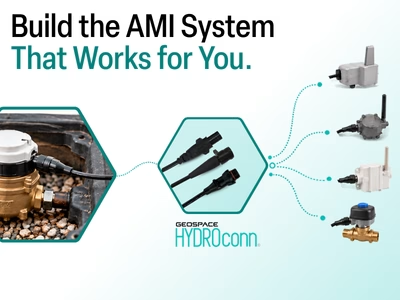
Hydroconn® by Geospace is designed to help utilities connect equipment across different AMI ecosystems, giving them more flexibility to evaluate each component based on what works best for their system.

One Decision Shouldn’t Automatically Make the Next One

Consider the meter.

A utility may select a meter because of its accuracy, expected service life, cost, or existing installed base. But the best meter for the application may not always mean the same manufacturer offers the utility’s preferred endpoint, radio, or future technology.

The same applies when an existing system changes.

A utility may want to keep thousands of meters already in the ground while introducing a new endpoint. Another may want to upgrade its communication technology without replacing equipment that still has years of useful service remaining.

In those situations, connectivity becomes important.

If the connection supports equipment from different manufacturers, utilities can have more freedom to evaluate components individually instead of assuming one equipment choice has determined the rest of the system.

Mix and Match Where It Makes Sense

Most utilities are not starting with a blank slate.

Existing infrastructure, previous purchasing decisions, changing technology, budgets, and phased upgrades all influence what is in the field.

That can create AMI systems made up of different generations and manufacturers.

Hydroconn is designed for that reality.

The Hydroconn connectivity platform includes Series III, Series IV, and Series V connectors, along with HydroAdapt™ solutions that help utilities connect across different meter and endpoint technologies.

Series III supports the connection commonly known throughout the industry as the “Nicor connector.” Series IV provides compatibility with Itron® connections, while Series V expands Hydroconn compatibility to Badger Meter® applications. HydroAdapt provides additional flexibility by allowing utilities to adapt from one Hydroconn connector type to another without field splicing.

Together, these options allow utilities to create different equipment configurations while maintaining a proven connection between them.

Evaluate the Equipment, Not Just the Ecosystem

When evaluating a meter, endpoint, radio, valve, or platform, utilities should be able to ask a straightforward question:

Is this the right technology for our system?

Cost matters. Performance matters. Availability, support, installation, and long-term maintenance matter.

Compatibility matters too, but it does not always have to eliminate an otherwise good option.

Understanding the available connector and adapter options early in the evaluation process can help utilities see configurations that may not be obvious when equipment is evaluated only within a single manufacturer’s ecosystem.

That can be particularly valuable during an AMI expansion or migration, when replacing every component simply to maintain compatibility may not make operational or financial sense.

Keep Control of the Configuration

AMI infrastructure can remain in service for many years. During that time, manufacturers, communication technologies, utility requirements, and budgets can all change.

Utilities should have the flexibility to change with them.

With more than 40 million connectors deployed, Hydroconn gives utilities a connectivity platform designed to work across evolving AMI environments and help preserve choice as infrastructure changes.

Choosing the right connection isn’t just about making today’s equipment work together.

It’s about maintaining the freedom to decide what your AMI system looks like next.

Recent News Posts

Lightweight Seismic Nodes Improve Operational Efficiency in Desert Exploration

Lightweight Seismic Nodes Improve Operational Efficiency in Desert Exploration

From equipment transportation to field deployment and data recovery, lightweight seismic nodes for desert exploration are helping contractors simplify large-scale land acquisition in challenging environments. Desert seismic exploration presents a unique set of...

The Science Behind Heartbeat Detector®

The Science Behind Heartbeat Detector®

Decades of Research, Testing, and Security Applications A person concealed inside a vehicle may be out of sight, but their heartbeat produces a small physical signal. Every beat creates mechanical forces that travel through the body and into surfaces it contacts....

How to Choose the Right Contract Manufacturing Partner for High-Reliability Electronics

How to Choose the Right Contract Manufacturing Partner for High-Reliability Electronics

The Right Manufacturing Partner Does More Than Build Your Product For many OEMs, selecting a contract manufacturing partner begins with a simple objective: find a supplier capable of building a product on time and within budget. But as electronic products become more...

Flexible Downhole Deployment for a Clearer View of the Subsurface

Flexible Downhole Deployment for a Clearer View of the Subsurface

Insight Delivers a Clearer View of the Subsurface Understanding the subsurface starts with measurements you can trust. Whether you are evaluating a reservoir, conducting a seismic survey or monitoring microseismic subsurface changes, a useful downhole seismic data...

How Smart Water Technology Supports Insurance Risk Reduction

How Smart Water Technology Supports Insurance Risk Reduction

Water damage has always been a concern for commercial property owners. But the conversation around water risk is changing. For owners and operators, a water event can extend well beyond the cost of repairing a pipe. Damage can disrupt operations, affect residents or...

Prompts

Geospace Technologies Corporation (ticker GEOS), listed in United States.

Company History

Date Change Detail
Oct 5, 2012 Renamed OYO GEOSPACE CORP → GEOSPACE TECHNOLOGIES CORP

ETFs Holding Geospace Technologies Corporation

ETF Weight in ETF Shares Market value As of
DFAS 0.00% 46,843 $ 163.014K Nov 12, 2026
DFUS 0.00% 15,067 $ 52.433K Nov 12, 2026
DFAC 0.00% 60,346 $ 210.004K Nov 12, 2026
DFSU 0.00% 805 $ 2,801.40 Nov 12, 2026
DFAU 0.00% 440 $ 1,531.20 Nov 12, 2026
AVUS 0.00% 1,159 $ 3,952.19 Nov 16, 2026
AVSC 0.00% 24,799 $ 84.565K Nov 16, 2026
AVSU 0.00% 956 $ 3,259.96 Nov 16, 2026
BSVO 0.00% 20,291 $ 70K Nov 18, 2026