August 25, 2026 PDF Version Quarterly Revenues Increased by 203.5% QoQ Broadened Revenue Sources beyond Passenger Mobility Advanced Regulatory Sandbox Programs in Thailand and Hong Kong Launched Global Fast Track Program to Accelerate Overseas Market…
August 25, 2026
PDF Version
-
Quarterly Revenues Increased by 203.5% QoQ
-
Broadened Revenue Sources beyond Passenger Mobility
-
Advanced Regulatory Sandbox Programs in Thailand and Hong Kong
-
Launched Global Fast Track Program to Accelerate Overseas Market Entry and Commercialization
GUANGZHOU, China, Aug. 25, 2026 (GLOBE NEWSWIRE) -- EHang Holdings Limited (Nasdaq: EH) (“EHang” or the “Company”), the world’s leading advanced air mobility (“AAM”) technology platform company, today announced its unaudited financial results for the second quarter ended June 30, 2026.
Operational and Financial Highlights for the Second Quarter of 2026
-
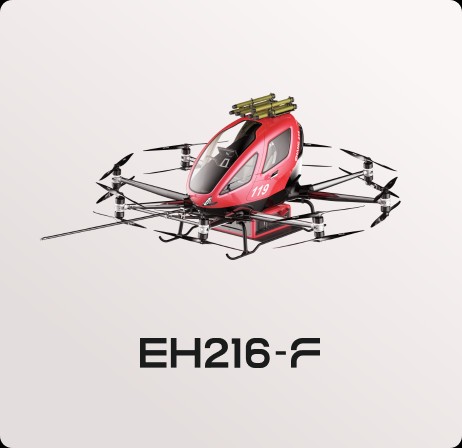
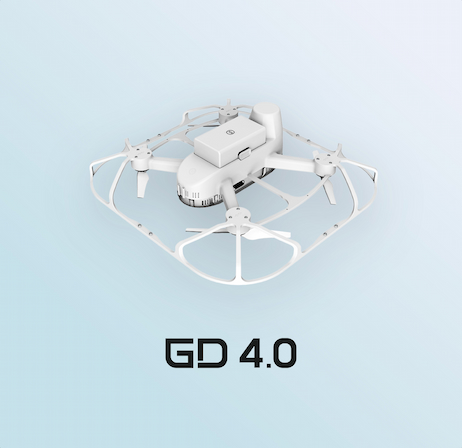
Sales and deliveries of products included 36 units of electric vertical take-off and landing (“eVTOL”) aircraft, comprising 35 units of the EH216 series1 and one unit of VT35, compared with 52 units of the EH216 series in the second quarter of 2025 and increasing notably from 4 units in the first quarter of 2026; 520 units of GD4.0 formation drones, compared with 1,000 units in the first quarter of 2026.
-
Total revenues were RMB77.9 million (US$11.5 million), representing a significant increase of 203.5% from RMB25.7 million in the first quarter of 2026, and a decrease of 31.3% from RMB113.3 million in the second quarter of 2025.
-
Gross margin was 61.2%, on par with 61.5% in the second quarter of 2025 and 62.5% in the first quarter of 2026.
-
Operating loss was RMB131.7 million (US$19.4 million), compared with RMB100.1 million in the second quarter of 2025 and RMB127.9 million in the first quarter of 2026.
-
Net loss was RMB128.3 million (US$18.9 million), compared with RMB103.0 million in the second quarter of 2025 and RMB126.4 million in the first quarter of 2026.
-
Adjusted operating loss2(non-GAAP) was RMB62.0 million (US$9.1 million), compared with RMB23.9 million in the second quarter of 2025 and RMB77.1 million in the first quarter of 2026.
-
Adjusted net loss3(non-GAAP) was RMB58.5 million (US$8.6 million), compared with RMB12.5 million in the second quarter of 2025 and RMB75.6 million in the first quarter of 2026.
-
Cash and cash equivalents, short-term investments and treasury investment balances were RMB929.4 million (US$137.0 million) as of June 30, 2026.
Business Highlights for the Second Quarter of 2026 and Recent Developments
Since the second quarter of 2026, amid a more cautious regulatory environment in China, EHang has focused on three strategic priorities—strengthening domestic operational capabilities, upgrading its global market entry strategies, and broadening its revenue source—while advancing from certification toward operational readiness and capability deployment.
Deepening Domestic Operational Readiness and Standardizing Operational Capabilities
EHang continued to strengthen the end-to-end operational systems at the Guangzhou and Hefei sites of two Air Operator Certificate (“OC”) holders, covering personnel training, operational support, insurance services, airspace coordination and emergency response. Routine trial operations at the two sites have remained safe and stable for 17 months, providing real-world operating data and experience to support regulatory engagement and future commercial operations.
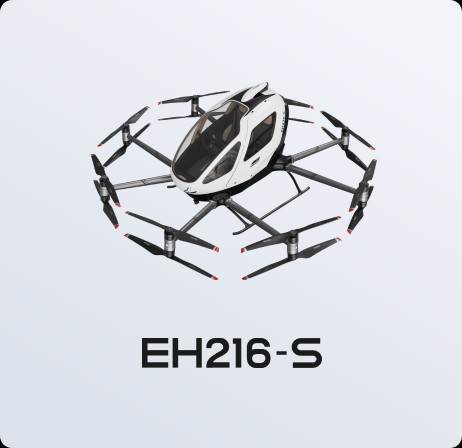
The Company also advanced the EH216-S from single-site operations toward A-to-B route operations. At its Guangzhou headquarters, the first point-to-point test route has entered internal trial operation, further validating route planning, ground support, multi-aircraft dispatching and contingency response capabilities.
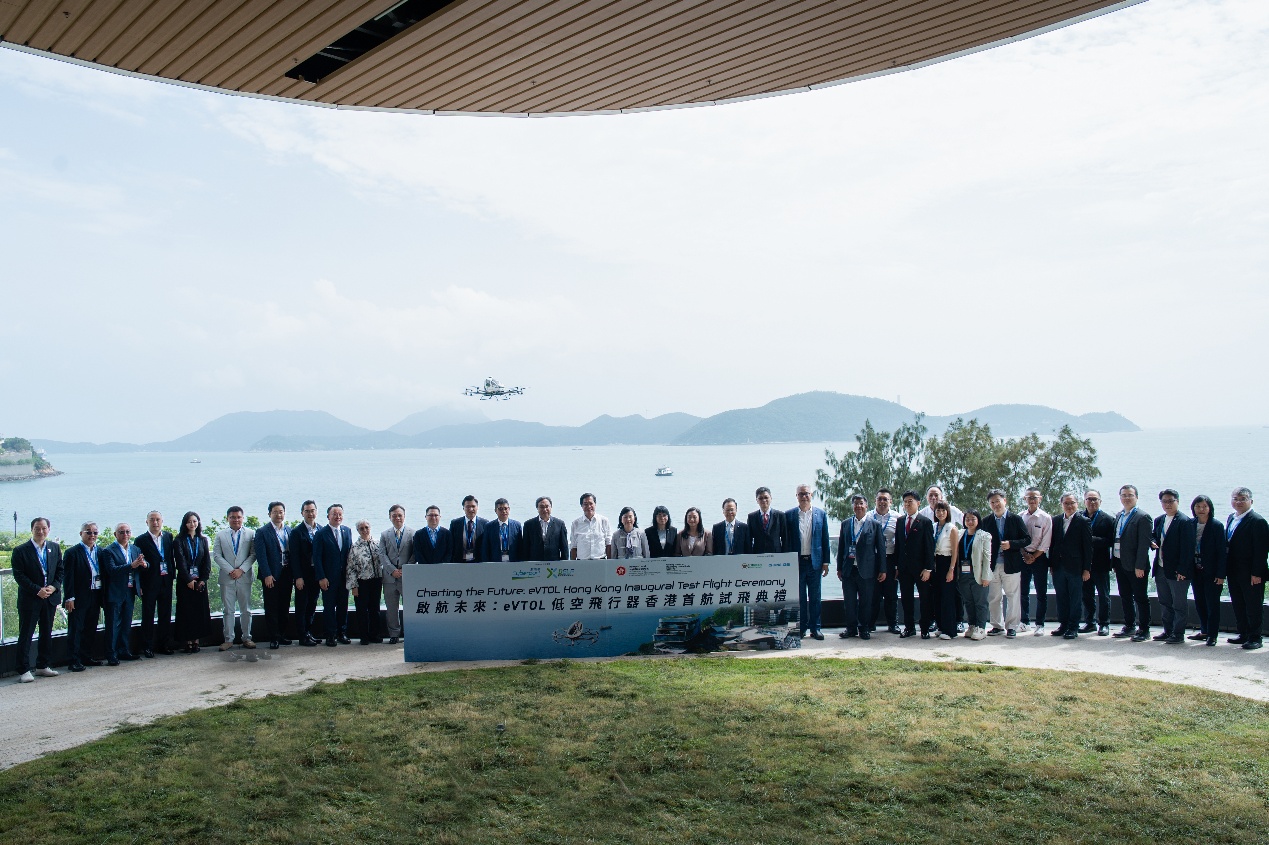
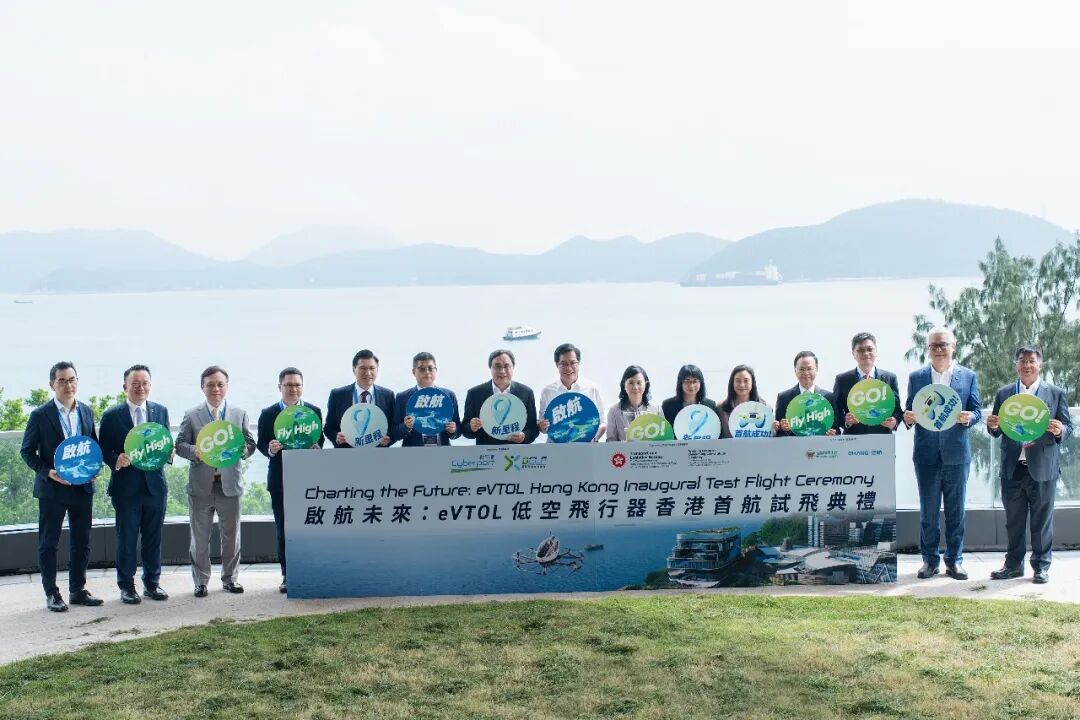
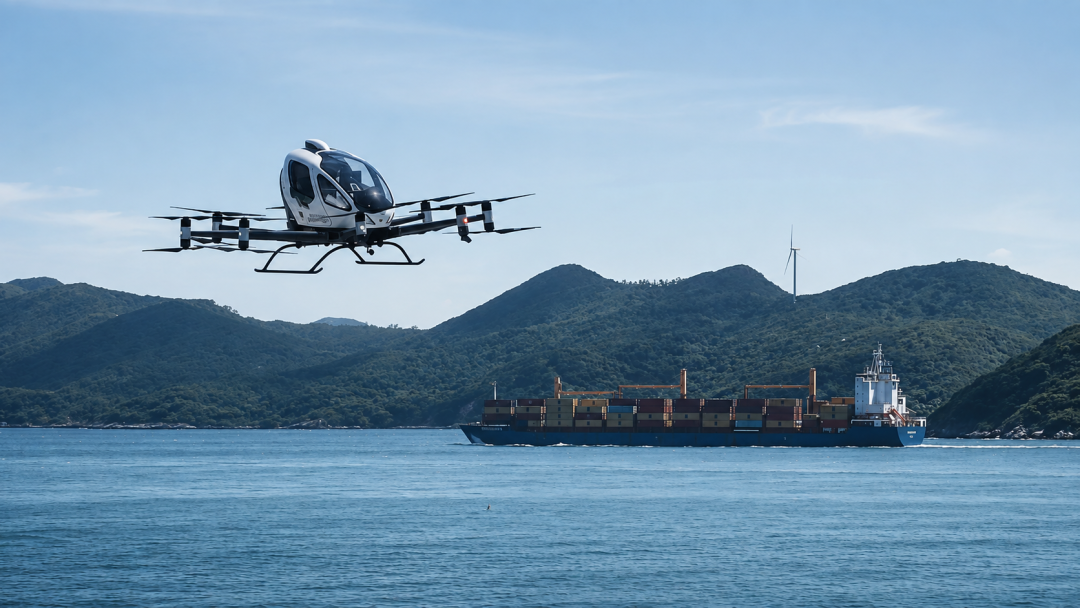
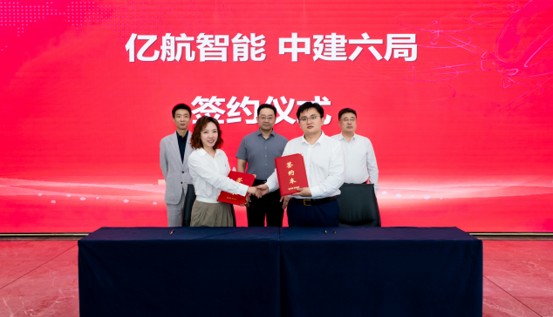
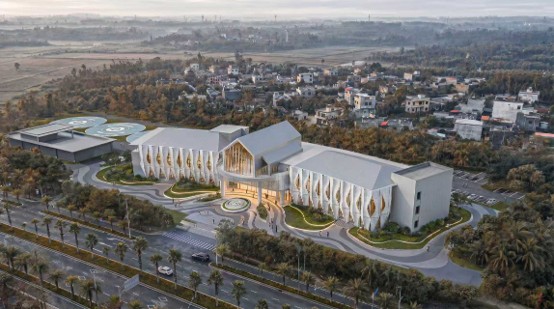
EHang continued to expand practical transportation applications, including low-altitude routes across Erhai Lake in Dali, Yunnan and a cross-sea low-altitude corridor project in Lingao, Hainan, in cooperation with China Construction Sixth Engineering Bureau. In Hong Kong, the Company was selected into the “Low-Altitude Economy Regulatory Sandbox X” Trial Projects and has commenced flight validation, with a public flight event planned in the near term.
Building on its operating experience, EHang is standardizing its certifications, operating data, know-how and safety management capabilities into replicable solutions for customers and partners. The Company is also enhancing EH216-S operational support, with its battery cooling vehicle increasing daily utilization to 12–15 flights per aircraft and independent air-conditioning systems reducing cabin temperature by 10–15°C, supporting greater efficiency, passenger comfort and future scaled operations.
Expanding Overseas Markets and Building a Standardized, Replicable Global Market Entry Model
Through collaboration with local civil aviation authorities and partners, EHang continued to accelerate the deployment of its pilotless eVTOL technologies and operational systems overseas. Since the second quarter, the EH216-S has expanded its flight footprint to Mexico, Switzerland and Kazakhstan. To date, the EH216 series has flown in 23 countries worldwide, with nearly 100,000 safe flight missions completed.
In Thailand, the Company continued local flight validation and commercial operation preparations under the regulatory sandbox framework. A clear regulatory pathway has been established with the Civil Aviation Authority of Thailand, with the goal of obtaining a commercial operation certificate within 2026.
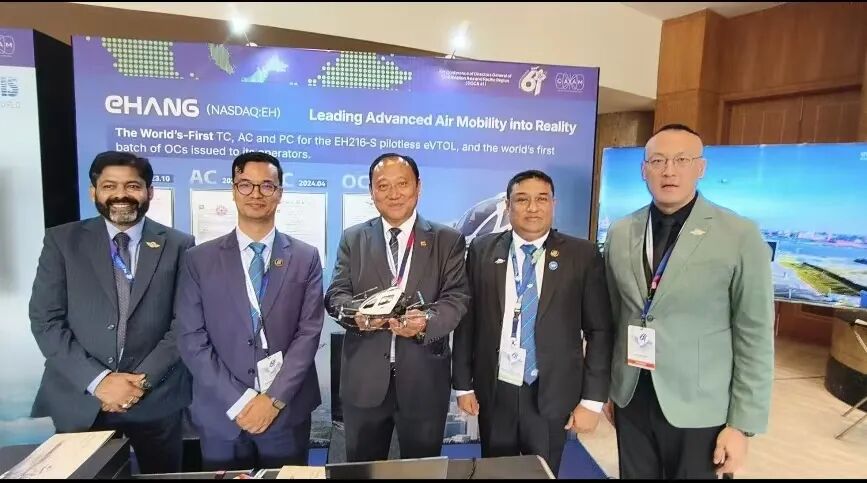
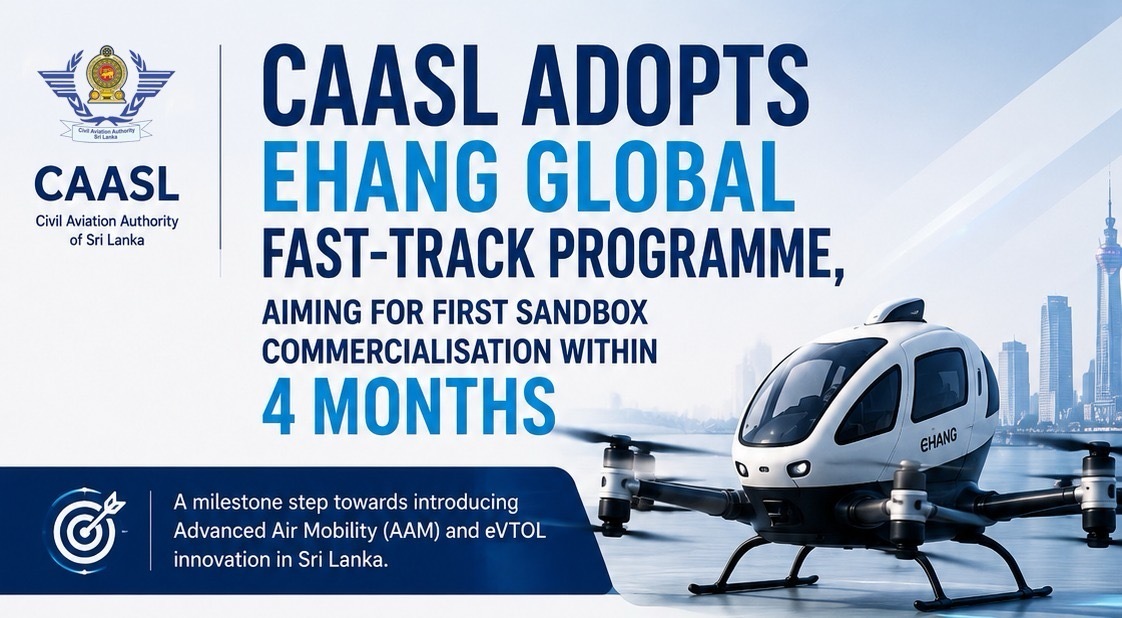
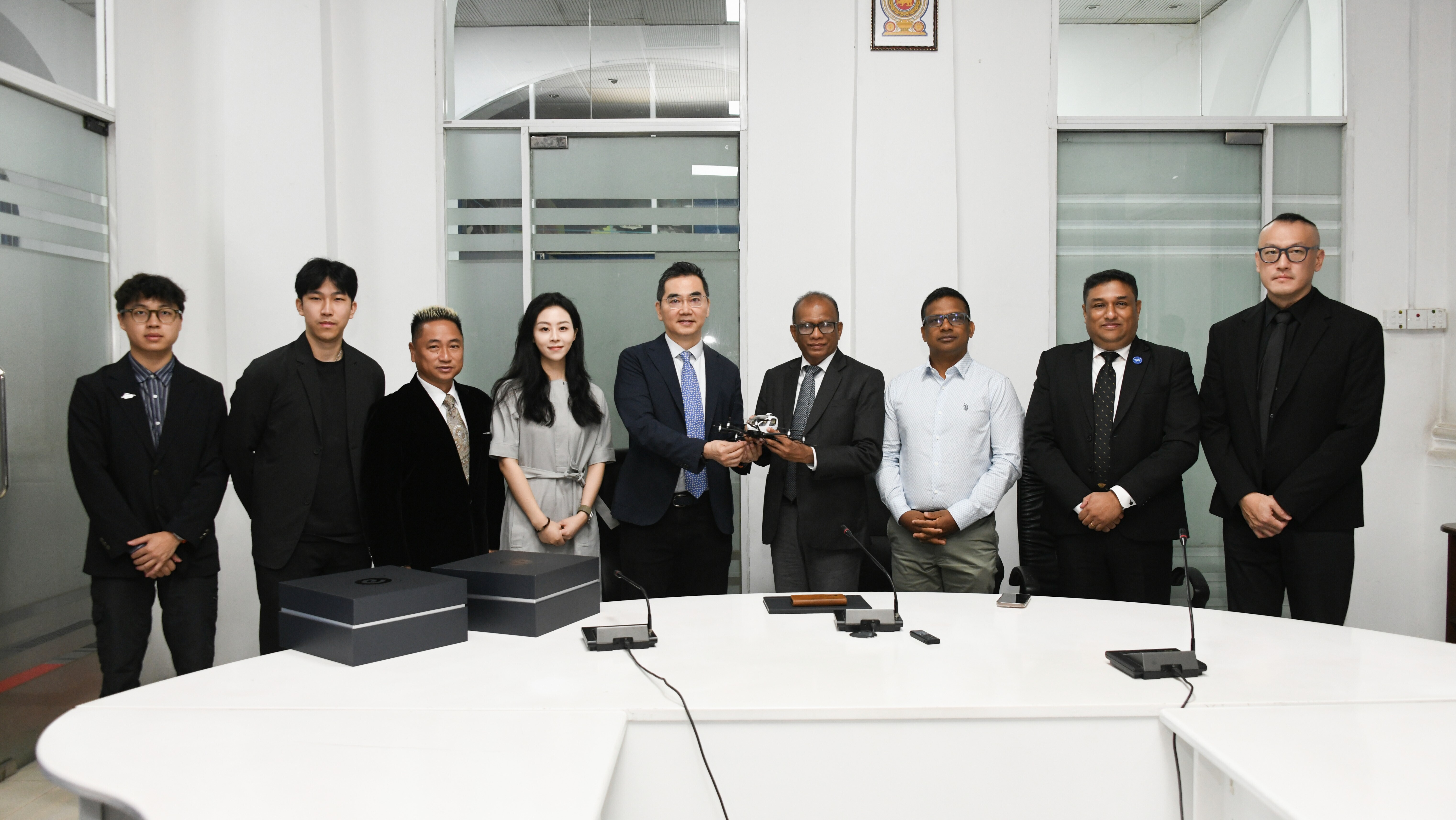
Building on nearly a decade of experience in airworthiness certification, operations and regulatory engagement, EHang further advanced its Global Fast Track Program, providing a structured and accelerated pathway for introducing pilotless eVTOL operations in international markets. The program covers regulatory coordination, validation flights, operational readiness and commercialization. Sri Lanka is the inaugural market under the initiative and is advancing toward sandbox commercialization subject to applicable regulatory, technical, operational and safety assessments. EHang is also exploring similar collaboration pathways in other international markets.
By moving from product delivery toward the export of experience, capabilities and standards, EHang is building a more efficient and replicable global commercialization model.
Expanding the Product Portfolio and Application Scenarios to Diversify Growth Drivers
EHang remains focused on passenger air mobility as its long-term strategic priority, while leveraging its aviation-grade technologies and safety capabilities to expand into non-passenger applications such as logistics, firefighting and aerial media.
Aerial media remains an important part of this diversification. The Company continued to expand GD-series formation drone sales and drone show services, while further developing recurring venue-based performances alongside one-off large-scale events. EHang has also been expanding the business into Japan, Thailand and Europe, enhancing its sustainability and replicability.
In aerial logistics and firefighting, the Company is advancing product development and testing based on real customer demand, with trial applications in port logistics and forest firefighting.
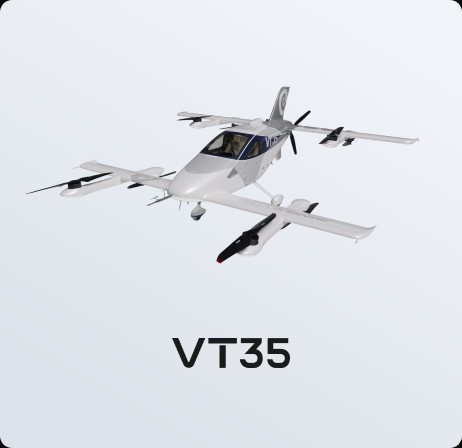
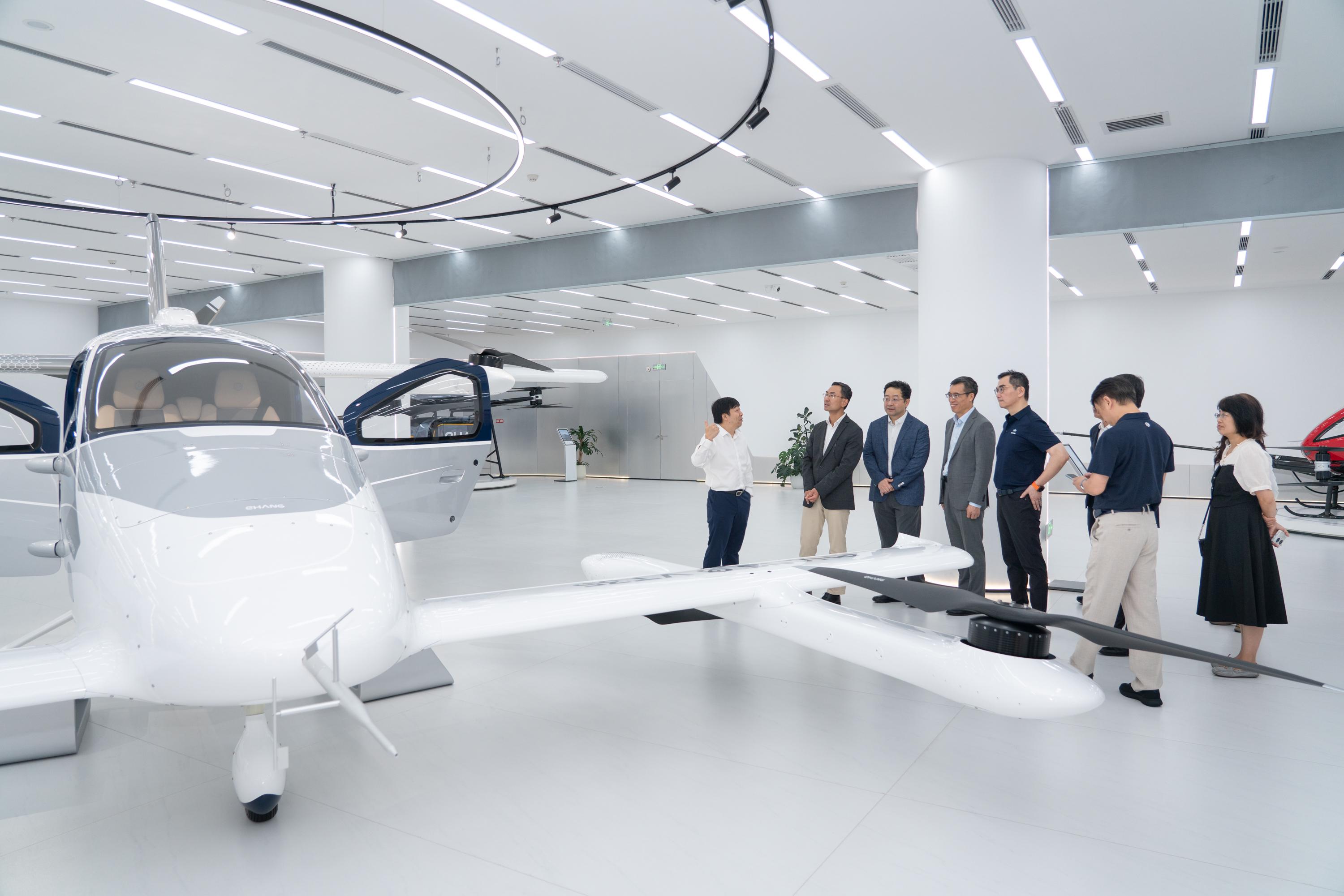
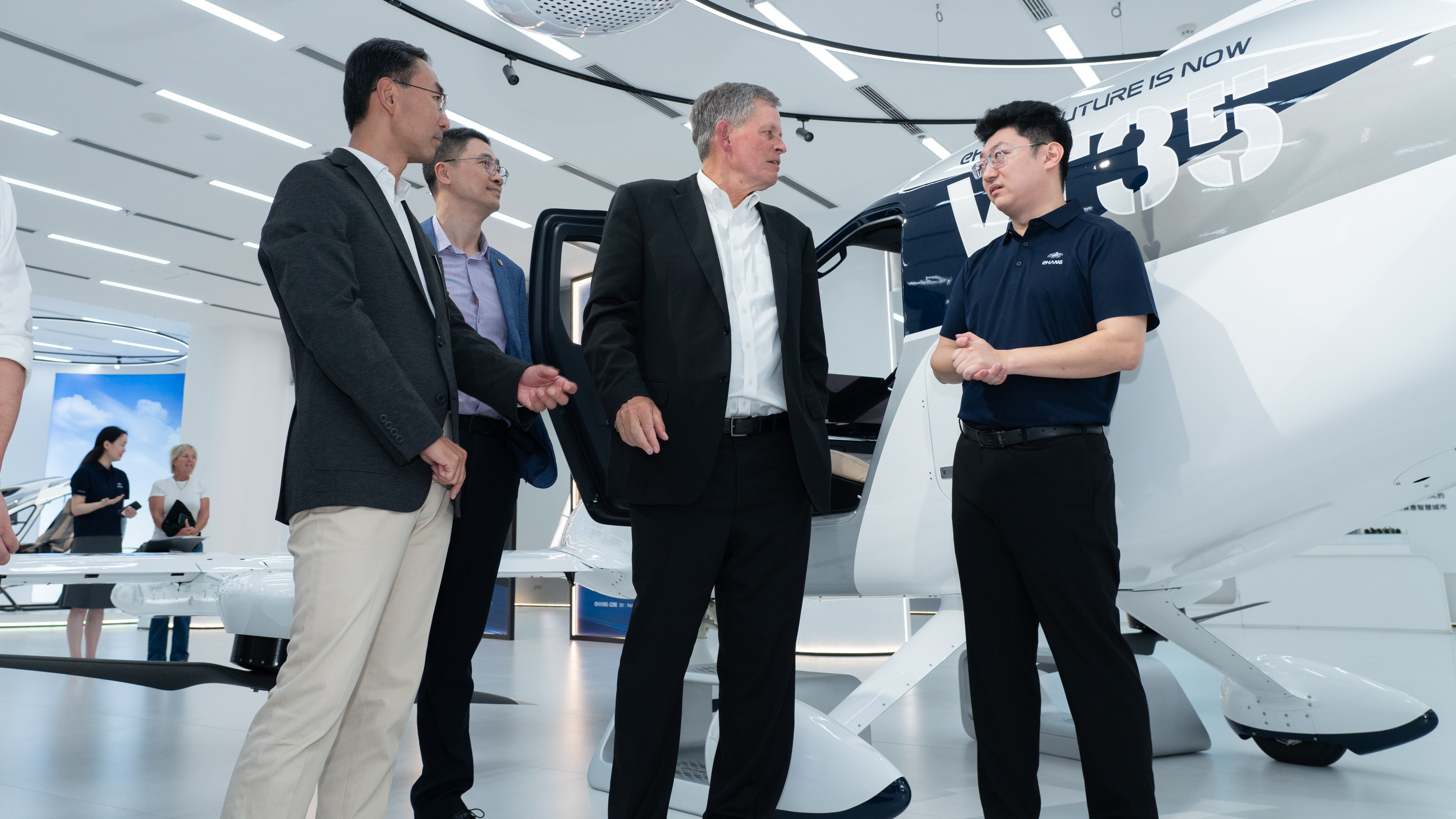
Meanwhile, EHang continued to advance the development and airworthiness certification of the VT35 long-range lift-and-cruise eVTOL through ongoing testing and trial flights. The Company also enhanced its urban low-altitude flight management platform and further integrated it with Hefei government’s city-level flight service system to support future large-scale, high-density urban low-altitude operations.
Management Remarks
Mr. Huazhi Hu, Founder, Chairman and Chief Executive Officer of EHang: “Since the second quarter, EHang has entered an important strategic transition, moving from obtaining certifications toward operational readiness, scenario validation, capability deployment and global expansion. Certification is only the starting point. Scalable commercialization ultimately depends on safe and reliable products, strong operational capabilities, replicable scenario solutions and the ability to deploy them across global markets.
In late June, a major accident involving a piloted light-sport aircraft in China prompted greater caution around low-altitude aviation safety regulation and affected the pace of passenger commercial operation approvals in certain regions. We fully understand this regulatory approach. For pilotless passenger aviation, safety, regulation and traceability have always been the foundation for commercial operations. We see this as a temporary adjustment in industry pace, not a change in market demand, our technology foundation or long-term direction.
We are therefore focused on three priorities: refining replicable flight operational models in China while accelerating capability deployment overseas; diversifying revenue through logistics, firefighting and aerial media while keeping passenger transportation at the core; and improving efficiency by focusing resources on core R&D, airworthiness, operations and businesses with clear revenue potential. We are also improving organizational efficiency and revitalizing structure, controlling capital expenditures and expanding the use of AI in R&D design, knowledge reuse and cross-functional processes.
We firmly believe advanced air mobility will continue toward greater automation, intelligence and pilotless operations. Our goal is to keep strengthening our safety record and standardized operational capabilities, so that EHang is ready to scale as the regulatory and commercial environment matures.”
Mr. Conor Yang, Chief Financial Officer of EHang: “We are pleased with the continued progress across our global and regional markets, highlighted by the rollout of our Global Fast Track Program and the advancement of regulatory sandbox initiatives in Thailand and Hong Kong. These milestones reflect growing regulatory collaboration and open up additional commercialization pathways for our pilotless eVTOL solutions.
At the same time, we recognize that the recent industry air incidents have prompted a more cautious regulatory stance in China, creating near-term uncertainty around the timing of passenger commercial service approvals in China. In light of this evolving environment, we have decided to withdraw our previously issued 2026 revenue guidance of RMB600 million and are not providing a replacement at this time. We will revisit our outlook and provide updated guidance once regulatory visibility improves.
As of June 30, cash and investment balances totaled RMB929.4 million, supporting our commercialization, product development and global expansion. We will continue to improve operating efficiency and create sustainable long-term value for shareholders.”
Unaudited Financial Results for the Second Quarter of 2026
Revenues
Total revenues were RMB77.9 million (US$11.5 million), compared with RMB113.3 million in the second quarter of 2025, and RMB25.7 million in the first quarter of 2026. The quarter-over-quarter 203.5% increase was primarily driven by increased sales volume of eVTOL aircraft, including EH216 series and VT35.
Costs of revenues
Costs of revenues were RMB30.2 million (US$4.4 million), compared with RMB43.6 million in the second quarter of 2025 and RMB9.6 million in the first quarter of 2026. The quarter-over-quarter increase was in line with the increase in the sales volume of eVTOL aircraft.
Gross profit and gross margin
Gross profit was RMB47.7 million (US$7.0 million), compared with RMB69.7 million in the second quarter of 2025, and RMB16.0 million in the first quarter of 2026. The quarter-over-quarter increase was primarily due to the increase in the sales volume of eVTOL aircraft.
Gross margin was 61.2%, on par with 61.5% in the second quarter of 2025 and 62.5% in the first quarter of 2026.
Operating expenses
Total operating expenses were RMB182.3 million (US$26.9 million), compared with RMB172.5 million in the second quarter of 2025, and RMB151.7 million in the first quarter of 2026.
-
Sales and marketing expenses were RMB34.4 million (US$5.1 million), compared with RMB41.1 million in the second quarter of 2025, and RMB23.9 million in the first quarter of 2026. The year-over-year decrease was primarily attributable to decreases in sales-related compensation. The quarter-over-quarter increase was primarily attributable to higher share-based compensation expenses due to new grant of share-based awards in the end of first quarter of 2026.
-
General and administrative expenses were RMB84.1 million (US$12.4 million), compared with RMB73.8 million in the second quarter of 2025, and RMB67.7 million in the first quarter of 2026. The year-over-year and the quarter-over-quarter increases were primarily attributable to higher share-based compensation expenses due to new grant of share-based awards in the end of first quarter of 2026, and increases in current expected credit loss of accounts receivable.
-
Research and development expenses were RMB63.8 million (US$9.4 million), compared with RMB57.6 million in the second quarter of 2025, and RMB60.1 million in the first quarter of 2026. The year-over-year increase was mainly attributable to increased employee compensation. The quarter-over-quarter increase was mainly attributable to higher share-based compensation expenses due to new grant of share-based awards in the end of first quarter of 2026.
Operating loss
Operating loss was RMB 131.7 million (US$19.4 million), compared with RMB100.1 million in the second quarter of 2025 and RMB127.9 million in the first quarter of 2026.
Net loss
Net loss was RMB 128.3 million (US$18.9 million), compared with RMB103.0 million in the second quarter of 2025 and RMB126.4 million in the first quarter of 2026.
Net loss per ordinary share and per ADS
Basic and diluted net loss per ordinary share were both RMB0.84 (US$0.12).
Basic and diluted net loss per American depositary share (“ADS”) were both RMB1.68 (US$0.24). Each ADS represents two of our Class A ordinary shares.
Balance sheets
Cash and cash equivalents, short-term investments and treasury investment balances were RMB929.4 million (US$137.0 million) as of June 30, 2026.
Non-GAAP Financial Measures
The Company uses adjusted gross profit, adjusted operating expenses, adjusted sales and marketing expenses, adjusted general and administrative expenses, adjusted research and development expenses, adjusted operating income (loss), adjusted net income (loss), adjusted net income (loss) attributable to ordinary shareholders, adjusted basic and diluted net earnings (loss) per ordinary share and adjusted basic and diluted net earnings (loss) per ADS (collectively, the “Non-GAAP Financial Measures”) in evaluating its operating results and for financial and operational decision-making purposes. There was no income tax impact on the Company’s non-GAAP adjustments because the non-GAAP adjustments are usually recorded in entities located in tax-free jurisdictions, such as the Cayman Islands, or such expenses were not deductible.
The Company believes that the Non-GAAP Financial Measures help identify underlying trends in its business that could otherwise be distorted by the effects of item of (i) share-based compensation expenses and (ii) certain non-operational expenses, such as provisions for legal proceedings, which are included in their comparable GAAP measures. The Company believes that the Non-GAAP Financial Measures provide useful information about its operating results, enhance the overall understanding of its past performance and future prospects, and allow for greater visibility with respect to key metrics used by its management in their financial and operational decision-making.
The Non-GAAP Financial Measures are not defined under U.S. GAAP and are not presented in accordance with U.S. GAAP. The Non-GAAP Financial Measures have limitations as analytical tools. One of the key limitations of using the Non-GAAP Financial Measures is that they do not reflect all items of expense that affect the Company’s operations. Share-based compensation expenses have been and may continue to be incurred in the business and are not reflected in the presentation of the Non-GAAP Financial Measures. Further, the Non-GAAP Financial Measures may differ from the non-GAAP information used by other companies, including peer companies, and therefore their comparability may be limited. The Company compensates for these limitations by reconciling the Non-GAAP Financial Measures to the nearest U.S. GAAP measures, all of which should be considered when evaluating the Company’s performance.
Each of the Non-GAAP Financial Measures should not be considered in isolation or construed as an alternative to its comparable GAAP measure or any other measure of performance or as an indicator of the Company’s operating performance or financial results. Investors are encouraged to review the Company’s most directly comparable GAAP measures in conjunction with the Non-GAAP Financial Measures. The Non-GAAP Financial Measures presented here may not be comparable to similarly titled measures presented by other companies. Other companies may calculate similarly titled measures differently, limiting their usefulness as comparative measures to the Company’s data. The Company encourages investors and others to review its financial information in its entirety and not rely on a single financial measure.










 English
 (Photo: Truong Viet Dzung, Vice Chairman of Hanoi People’s Committee; Cu Ngoc Trang, Director of Hanoi Department of Science and Technology, alongside relevant competent officials; Conor Yang, Chief Financial Officer of EHang; Dang Duc Dung, President & CEO of HungViet, and other representatives attended the signing ceremony.)
 (Photo: Truong Viet Dzung, Vice Chairman of Hanoi People’s Committee delivers remarks at the signing ceremony.)