On October 30, 2026, AeroVironment, Inc. (the “Company”), as borrower, and certain subsidiaries of the Company as guarantors thereto (the “Guarantors”), Bank of America, N.A., as administrative agent (the “Administrative Agent”), lender, letter of credit issuer, swingline lender, and each other lender from time to time party thereto, including JPMorgan Chase Bank, N.A., U.S. Bank National Association, Citizens Bank, N.A., Citibank, N.A., Royal Bank of Canada (collectively the “Existing Lenders”) and BMO Bank N.A., as a new lender (the “New Lender”), entered into a Sixth Amendment to Credit Agreement (the “Sixth Amendment”). The Sixth Amendment relates to the Company’s existing Credit Agreement, dated as of February 19, 2021 (as amended and supplemented to date, the “Existing Credit Agreement”), by and among the Company, the Guarantors party thereto, the lenders from time to time party thereto, the Administrative Agent and the letter of credit issuers party thereto.
|
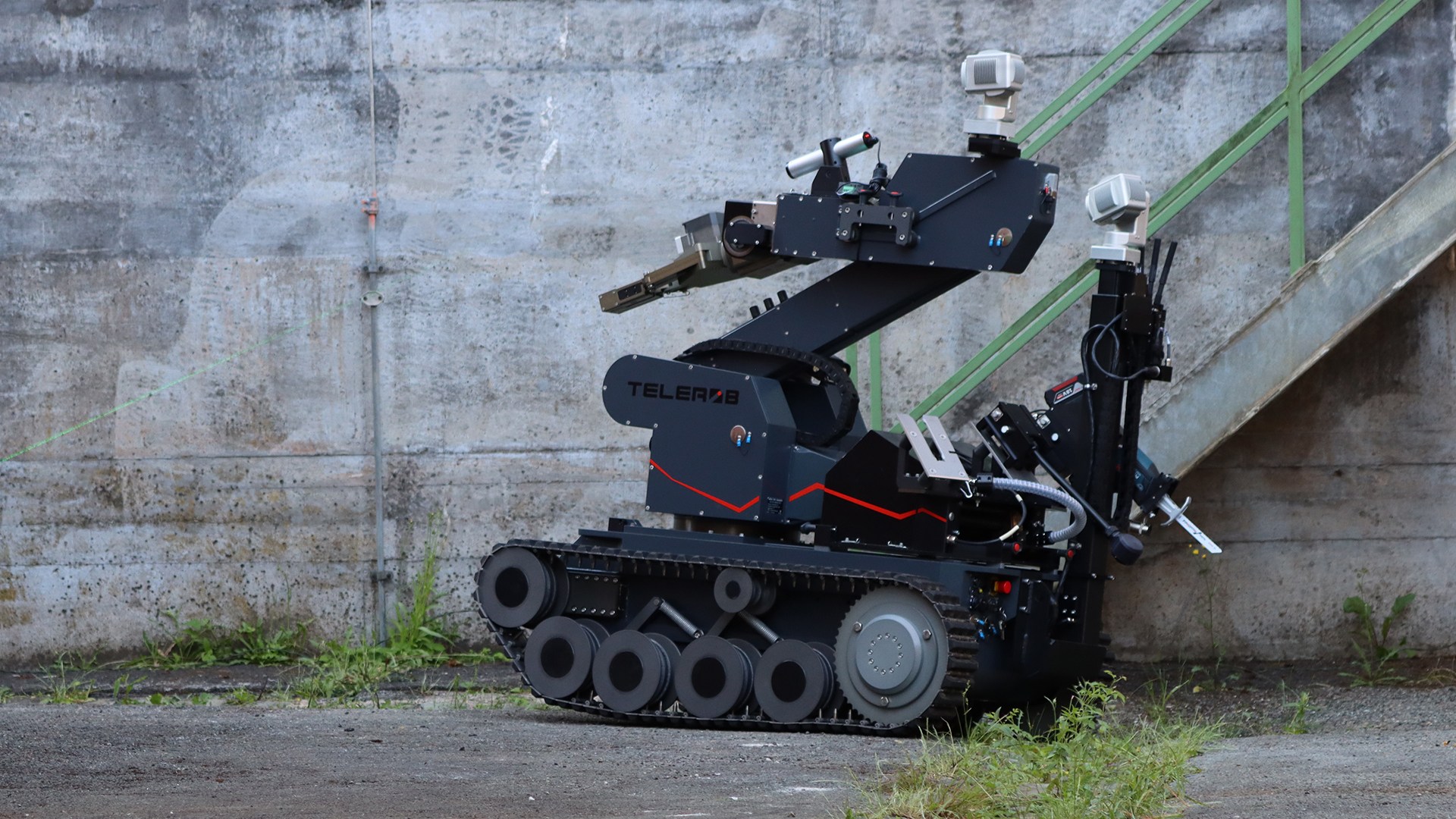
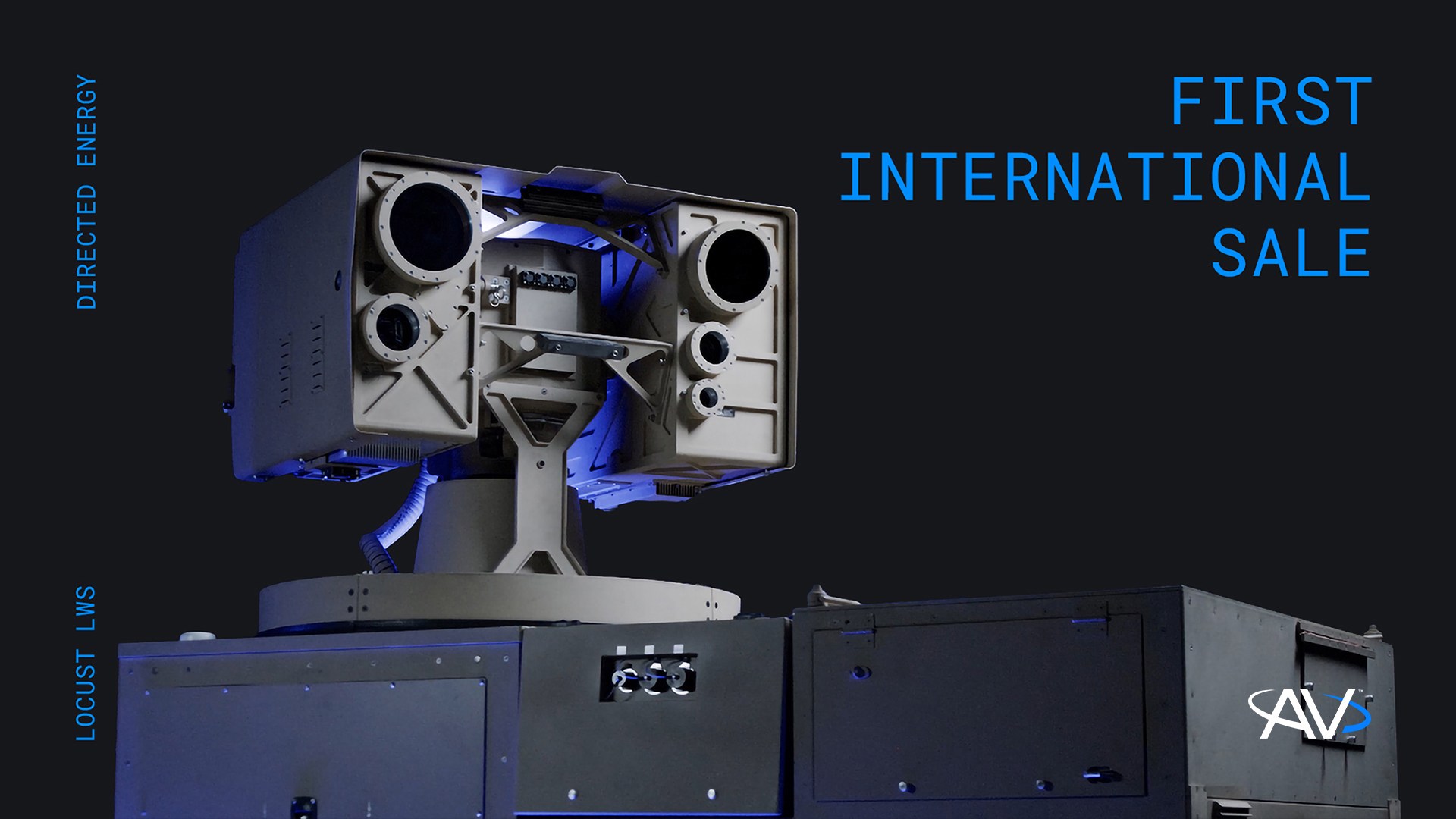
AeroVironment, Inc. is a defense technology provider delivering integrated capabilities across air, land, sea, space, and cyber domains. The company operates in two reportable segments: Autonomous Systems and Space, Cyber and Directed Energy. Its product portfolio includes uncrewed aircraft systems such as the Puma, Raven, and JUMP series; precision strike and loitering munitions like the Switchblade and Red Dragon; and counter-UAS solutions including the Titan family and Freedom Eagle. Additional offerings comprise electronic warfare systems, unmanned maritime vehicles, uncrewed ground systems for explosive ordnance disposal, and space-based platforms featuring digital beamforming technology. AeroVironment serves the United States Military, U.S. allies, and commercial industries globally. The company’s innovation hub, MacCready Works, focuses on rapid prototyping and maturation of autonomy and AI technologies. In May 2025, the company acquired BlueHalo Financing Topco, LLC to expand its operational capabilities. Summarised from the company's own disclosures, fiscal year ended Jun 2026 |
Industry Aerospace & Defense | Homepage avinc.com |
| Sector Industrials | IR page avinc.com | |
|
Tags
unmanned aircraft systems, loitering munitions, counter-uas, electronic warfare, unmanned ground vehicles, unmanned maritime vehicles, space-based platforms, directed energy, autonomous systems, defense technology, Puma LE, Puma 3 AE, Puma VTOL, P550, Raven B, VAPOR 55 CLE, JUMP 20, JUMP 20-X, T-20, AV_Halo, Kinesis Command and Control Software, Switchblade 300, Switchblade 400, Switchblade 600, Blackwing, Red Dragon, Mayhem 10, Titan 4, Titan SV MPV3, Titan-MS, Freedom Eagle, FE-1, SharkCage Tactical Chassis, BlueFin Angler SDR, MacCready Works, AVACORE, SPOTR-EDGE, WildCat, Mission Specialist Defender, Mission Specialist Wraith, Pro 5, Ally, tEODor EVO, Telemax EVO, TOM 50 RE, BADGER, WASP, BlueHalo
|
Press page avinc.com/news |
Metrics
| Valuation | |
|---|---|
| Market cap | $ 7.228B |
| Market cap (USD) | $ 7.228B |
| P/E | -35.03 |
| PEG | — |
| P/BV | 1.64 |
| P/S | 3.61 |
| P/OCF | 122.89 |
| P/FCF | -288.76 |
| Dividend yield | — |
| Turnover / mcap | — |
| Returns | |
|---|---|
| ROE | -10.0% |
| ROI | -5.2% |
| ROIC | -4.5% |
| Profit margin | -13.4% |
| Growth | |
|---|---|
| Revenue growing | Yes |
| Profits growing | No |
| Revenue up 3y | Yes |
| Revenue up 5y | Yes |
| Earnings growth 3y (net profit CAGR) | — |
| Quality | |
|---|---|
| Profitable | No |
| Margin expanding | No |
| Buying back stock | No |
| Diluting (TTM) | Yes |
| Debt/Equity | 16.6% |
| Podcast bulls (TTM) | Sign up |
| Podcast bears (TTM) | Sign up |
| Podcast sentiment (TTM) | Sign up |
| Podcast sentiment % (TTM) | Sign up |
| News sentiment (TTM) | 34 |
| Quality score | -27.8% |
| Insiders | |
|---|---|
| Buys, 1w | Sign up |
| Buys, 1m | Sign up |
| Buys, 1y | Sign up |
| Sells, 1w | Sign up |
| Sells, 1m | Sign up |
| Sells, 1y | Sign up |
Sign up to see this company's insider trades
| Figure | FY 2026 | FY 2025 | FY 2024 | FY 2023 | FY 2022 | FY 2021 | FY 2020 | FY 2019 | FY 2018 | FY 2017 | FY 2016 | FY 2015 | FY 2014 | FY 2013 | FY 2012 | FY 2011 | FY 2010 | FY 2009 | FY 2008 | FY 2007 | FY 2006 |
|---|---|---|---|---|---|---|---|---|---|---|---|---|---|---|---|---|---|---|---|---|---|
| Revenue | 1.977B | 820.627M | 716.72M | 540.536M | 445.732M | 394.912M | 367.296M | 314.274M | 271.052M | 264.873M | 264.098M | 259.398M | 251.703M | 240.152M | 325.008M | 292.503M | 249.518M | 247.662M | 215.746M | 173.721M | — |
| Net profit | -265.122M | 43.619M | 59.666M | -176.167M | -4.185M | 23.345M | 41.07M | 47.419M | 19.852M | 12.457M | 8.966M | 2.895M | 13.718M | 10.426M | 30.451M | 25.909M | 20.716M | 24.245M | 21.386M | 20.718M | 11.208M |
| Free cash flow | -140.948M | -24.134M | -7.691M | -3.468M | -31.907M | 75.269M | 13.877M | 18.05M | 60.873M | -20.361M | -6.278M | 34.134M | 21.72M | 12.173M | 3.762M | 23.313M | 25.192M | 26.468M | 7.596M | 11.984M | 9.163M |
| Figure | FY 2026 | FY 2025 | FY 2024 | FY 2023 | FY 2022 | FY 2021 | FY 2020 | FY 2019 | FY 2018 | FY 2017 | FY 2016 | FY 2015 | FY 2014 | FY 2013 | FY 2012 | FY 2011 | FY 2010 | FY 2009 | FY 2008 | FY 2007 | FY 2006 |
|---|---|---|---|---|---|---|---|---|---|---|---|---|---|---|---|---|---|---|---|---|---|
| Share price | 197.29 | 119.19 | 153.28 | 91.66 | 94.14 | 111.5 | 60.96 | 67.1 | 45.51 | 27.84 | 28.94 | 26.8 | 35.07 | 18.03 | 25.68 | 28.61 | 26.62 | 26.01 | 19.82 | 17 | — |
| Price performance 12m | 0.66 | -0.22 | 0.67 | -0.03 | -0.16 | 0.83 | -0.09 | 0.47 | 0.63 | -0.04 | 0.08 | -0.24 | 0.95 | -0.3 | -0.1 | 0.07 | 0.02 | 0.31 | 0.17 | — | — |
Filed figures
Lines the statements and their notes report beside the headline figures, read from the filings' XBRL as filed (no restatement applied), with figures computed from one filing's own lines. Cash-flow lines carry their cash direction: an outflow is negative. Each period links to its filing; a figure's period, report date and tag are in its tooltip.
| Figure | Apr 2017 | Apr 2018 | Apr 2019 | Apr 2020 | Apr 2021 | Apr 2022 | Apr 2023 | Apr 2024 | Apr 2025 | Apr 2026 |
|---|---|---|---|---|---|---|---|---|---|---|
| Balance sheet detail | ||||||||||
| Trade receivables (USD) | 74.4M | 56.8M | 31.1M | 73.7M | 62.6M | 60.2M | 87.6M | 70.3M | 102M | 316M |
| ↳ YoY growth | +32.7% | -23.6% | -45.3% | +137.2% | -15.0% | -4.0% | +45.6% | -19.8% | +45.0% | +210.1% |
| ↳ 5y CAGR | +5.7% | +23.5% | -0.4% | +17.0% | +2.3% | -4.1% | +9.1% | +17.8% | +6.7% | +38.2% |
| Borrowings, current (USD) | — | — | — | — | 10M | 10M | 7.5M | 10M | — | — |
| Borrowings, non-current (USD) | — | — | — | — | 188M | 178M | 126M | 17.1M | 30M | 729M |
| Lease liabilities (USD) | — | — | — | 10.2M | 25.3M | 28.7M | 29.4M | 32.6M | 34.3M | 106M |
| Cash and deposits (USD) | 79.9M | 144M | 173M | 255M | 149M | 77.2M | 133M | 73.3M | 40.9M | 377M |
| Intangible assets (USD) | 1.41M | 628,000 | 459,000 | 13.6M | 106M | 97.2M | 43.6M | 72.2M | 48.7M | 930M |
| Right-of-use assets (USD) | — | — | — | 8.79M | 22.9M | 26.8M | 27.4M | 30M | 31.9M | 100M |
| Net debt (borrowings + leases - cash) (USD) | — | — | — | — | 74M | 139M | 30M | -13.6M | 23.4M | 457M |
| Cash flow detail | ||||||||||
| Operating cash flow (USD) | -10.5M | 70.4M | 26.9M | 25.1M | 86.5M | -9.62M | 11.4M | 15.3M | -1.32M | -78.4M |
| Purchases of property, plant and equipment (USD) | -9.86M | -9.56M | -8.9M | -11.2M | -11.3M | -22.3M | -14.9M | -23M | -22.8M | -62.5M |
| Purchases of intangible assets (USD) | — | — | — | — | — | — | — | -1.5M | — | — |
| Change in receivables (cash effect) (USD) | -18.6M | 11.2M | 25.8M | -42.9M | 17.2M | 3.08M | -27.4M | 19.2M | -31.8M | -129M |
| Change in inventories (cash effect) (USD) | -22.6M | 2.27M | -16.6M | 8.86M | -5.18M | -27.2M | -61.8M | -23M | 2.97M | -112M |
| Change in payables (cash effect) (USD) | 2.84M | 5.74M | -7.05M | 3.13M | 2.57M | -7.04M | 12.5M | 13M | 22.3M | 28.1M |
| Interest paid (cash effect) (USD) | — | — | — | — | — | -5.03M | -10.2M | -6.82M | -1.76M | -12.8M |
| Income taxes paid (cash effect) (USD) | -1.8M | -1.81M | -6.78M | -532,000 | -2.41M | -1.88M | -2.91M | -20.4M | -24.6M | -3.61M |
| Share-based compensation (USD) | 3.71M | 4.96M | 6.99M | 6.23M | 6.93M | 5.39M | 10.8M | 17.1M | 21.5M | 38.3M |
| Operating cash flow before change in receivables (USD) | 8.13M | 59.2M | 1.13M | 68M | 69.4M | -12.7M | 38.8M | -3.92M | 30.4M | 50.3M |
| Free cash flow (OCF - PPE - intangibles) (USD) | -20.4M | 60.9M | 18.1M | 13.9M | 75.3M | -31.9M | -3.47M | -9.19M | -24.1M | -141M |
| Income detail | ||||||||||
| Research and development expense (USD) | 33M | 26.4M | 34.2M | 46.5M | 53.8M | 54.7M | 64.3M | 97.7M | 101M | 128M |
| ↳ 5y CAGR | +1.3% | -6.6% | +6.1% | >-0.01% | +4.9% | +10.6% | +19.4% | +23.3% | +16.7% | +18.9% |
| Total comprehensive income (USD) | 12.6M | 20.2M | 47.5M | 41.4M | 23.4M | -11M | -174M | 58.5M | 42.7M | -264M |
| Comprehensive income to owners (USD) | — | 18M | 47.5M | 41.4M | 23.3M | -11M | -174M | 58.5M | 42.7M | — |
| Provision for credit losses (USD) | 56,000 | 977,000 | -39,000 | 388,000 | -114,000 | -6,000 | 99,000 | 4,000 | 43,000 | 1.99M |
| Credit cost ratio (credit losses / average receivables) (%) | 0.1% | 1.5% | 0.1% | 0.7% | 0.2% | 0.0% | 0.1% | 0.0% | 0.0% | 0.9% |
| Reported | Jun 28, 2017 | Jun 24, 2020 | Jun 24, 2020 | Jun 24, 2020 | Jun 29, 2021 | Jun 29, 2022 | Jun 28, 2023 | Jun 27, 2024 | Jun 25, 2025 | Jun 29, 2026 |
Sign up to see institutional holdings
Sign UpPodcast Mentions
Sign up to see podcast mentions and sentiment
Sign UpMaterial events reported to the SEC on Form 8-K or 6-K, newest first. The link opens the filing itself on EDGAR. Press releases from the company's own website, newest first.
10/14/2026
The question for Australia isn’t whether a capability is foreign or domestic. It’s whether Australia can control what happens next.
By Sean Colvin, Director of Business Development, Asia Pacific, AV
During six deployments to Afghanistan as a field service rep at AV, I learned that having a capability and being able to keep that capability in the fight are two very different things.
We were fielding, training, and repairing small unmanned aircraft systems (s-UAS) in an environment where missions could change quickly and equipment was being used far harder than it ever would have been in a normal training environment. We couldn’t assume that the aircraft, payloads, batteries or support equipment would always be available when we needed them.
So, we adapted.
We learned to anticipate failures, carry the right spares, cross-train personnel and find solutions with whatever resources were available rather than waiting for the perfect replacement or support package. The people closest to the mission often had to make the adjustment in real time.
Those deployments changed how I think about military capability.
Having the best technology is not enough. What matters is whether you can get it where it needs to go, adapt it when the mission changes, sustain it when conditions become difficult and keep enough of it in the fight to matter.
Nearly two decades later, I see a version of that same challenge playing out at a much larger scale in Australia and across the Indo-Pacific.
For years, the defense industry has tended to treat sovereignty, or independence, as a question of origin.
Where was a system designed? Where was it manufactured? Who owns the intellectual property? How much of its supply chain sits inside the country?
Those are legitimate questions. But I don’t believe they are sufficient anymore, especially as they relate to Australia and the Indo-Pacific.
The Australian Army is preparing for what its leadership describes as “archipelagic warfare” across the Indo-Pacific. It is prioritizing littoral maneuver, surveillance, reconnaissance, long-range strike, autonomous systems, resilient logistics and the command-and-control infrastructure required to connect them.
In that environment, I believe sovereignty should be measured by more than where a capability was built. It should be measured by how much control Australia has over what happens next: how quickly it can acquire and field that capability, integrate Australian technology, adapt it as requirements change, sustain it at distance and scale it when demand grows.
That is the distinction between possessing sovereign equipment and possessing what I would call operational sovereignty.
Despite the fact that Australia has the ability to go it alone inside of its own very capable industrial infrastructure, I believe operational sovereignty means going together.
Sovereignty Is Meaningless if You Don’t Control the Timeline
During 16 years of working with customers in more than 40 countries, I have watched the same pattern repeat itself: the technical capability is often ready before the acquisition architecture, integration permissions or sustainment model required to actually field it.
If we are serious when we talk about “speed to capability,” then sovereignty cannot only describe who built something. It must also describe whether the customer has a practical pathway to obtain and field it at operationally relevant speed.
That issue was s particularly relevant last week at LAND FORCES 2026 in Perth , where I met with Australian customers about expanding their one-way attack capabilities. These conversations are about more than buying additional systems. They are about whether a different acquisition pathway can shorten the distance between an operational requirement and a fielded capability while creating a more responsive way to scale as demand grows.
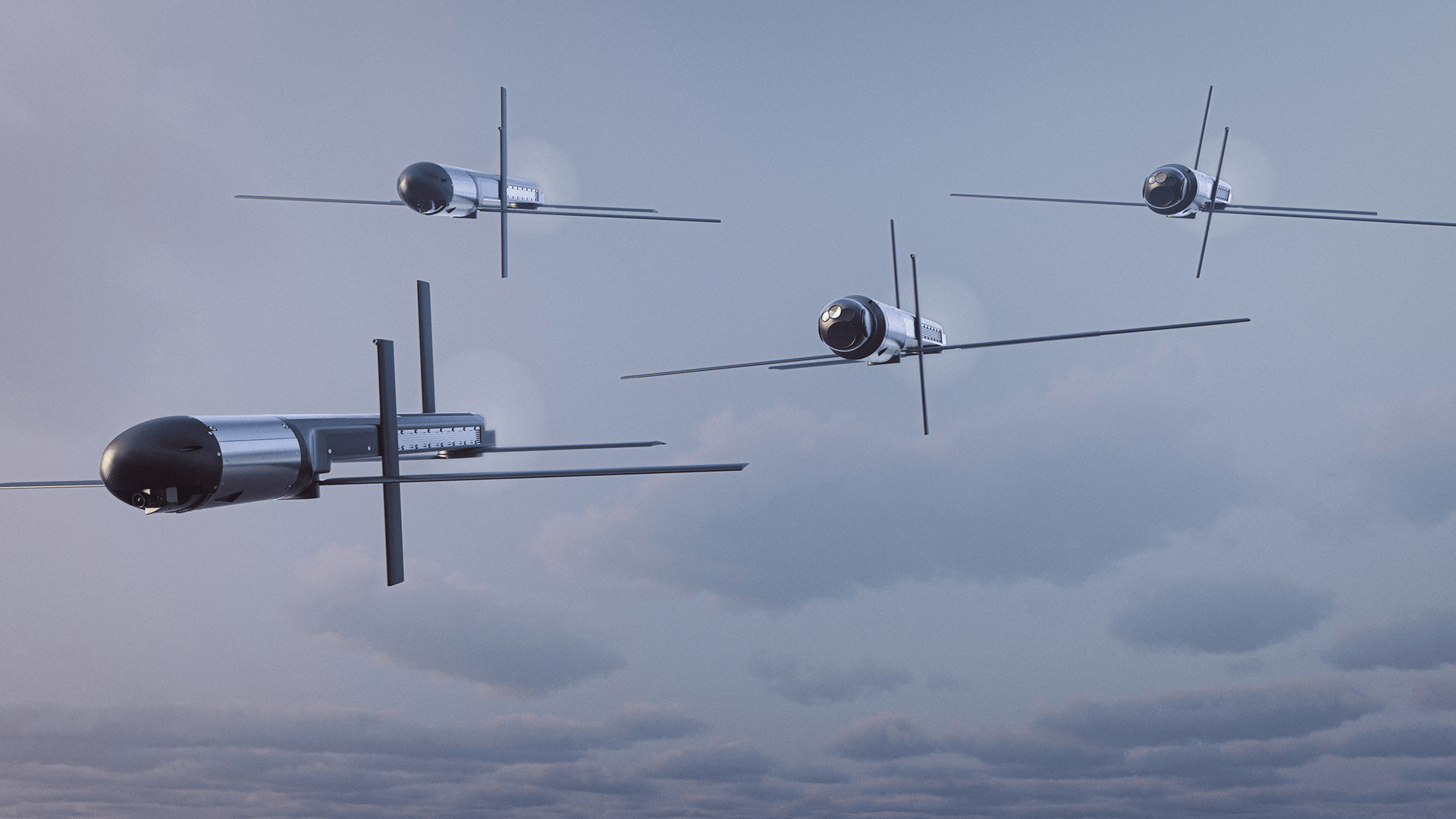
The fact that AV can now pursue Direct Commercial Sales (DCS) for one-way attack systems in Australia matters for precisely that reason. It creates another potential route between an operational requirement and the capability intended to satisfy it. And it does it with speed.
That lesson extends well beyond one-way attack systems.
A sovereign requirement without a responsive acquisition pathway is still a dependency.
Don’t Build a New Aircraft Every Time You Invent a Better Sensor
The same principle applies in the opposite direction.
Australia has an extraordinarily capable defense technology sector. But sovereign industrial capability should not require every Australian innovation to sit on top of an Australian-built platform.
That can actually constrain Australian technology rather than strengthen it.
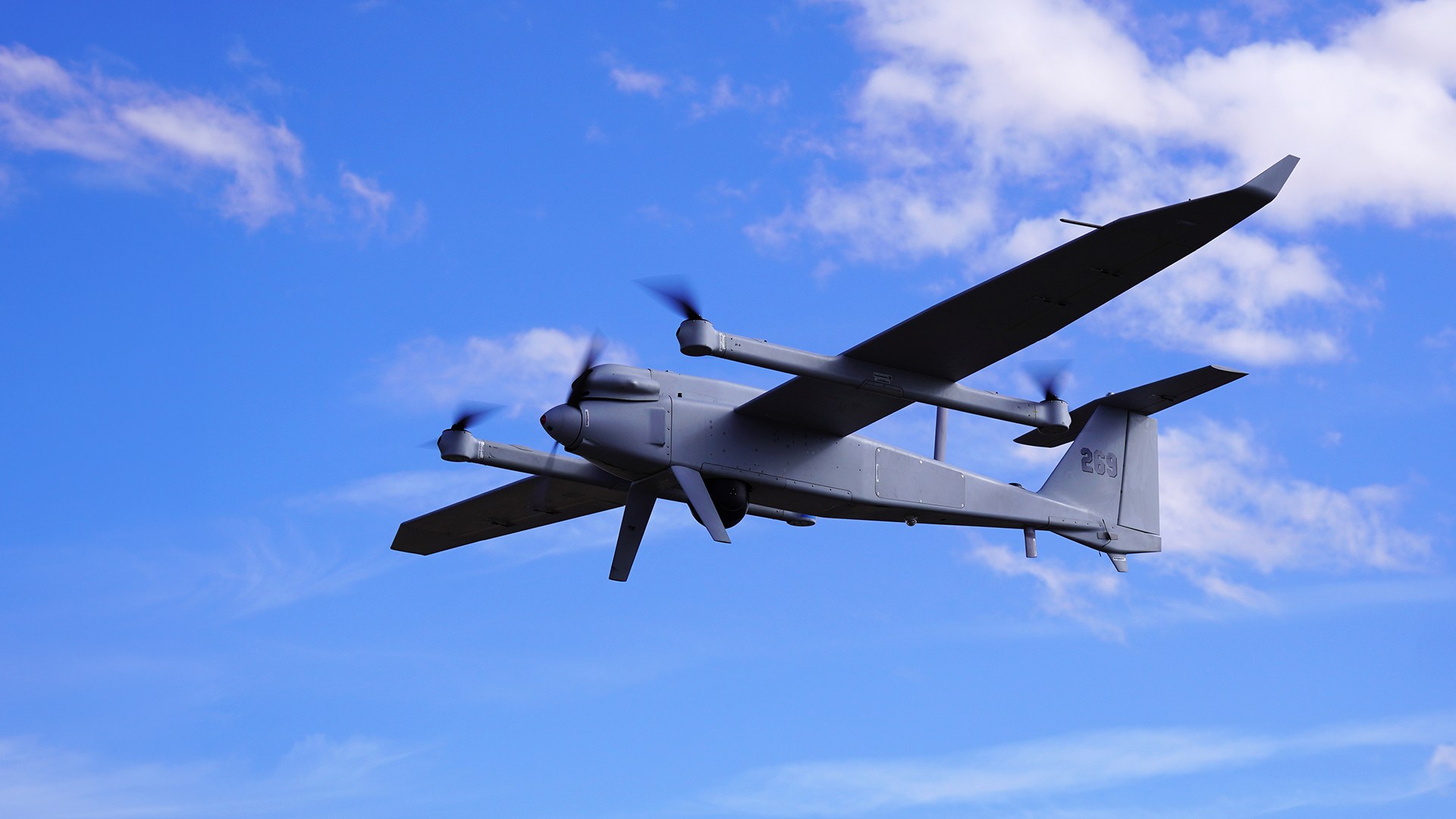
Our work with Australian defense technology company ARKEUS is a useful example of what the alternative can look like. Together, AV and ARKEUS integrated the Warden payload, an Australian-developed hyperspectral sensing technology, onto AV’s JUMP 20**®** , creating the first uncrewed platform to carry ARKEUS’ real-time, wide-area Hyperspectral Optical Radar capability. The result combines Australian sensor innovation with a proven allied aircraft to deliver a new intelligence surveillance and reconnaissance (ISR) capability without requiring Australia to develop an entirely new platform around the sensor.
We integrated Warden onto JUMP 20 because JUMP 20 gives Warden the endurance, altitude, payload capacity and runway-independent access needed to keep that sensor on station for extended periods. Rather than building a dedicated aircraft around the sensor, we use JUMP 20’s modular architecture to put the right sensor on the right platform for the mission.
I think the significance of that is larger than either ARKEUS or JUMP 20.
The traditional way of thinking about sovereign capability might ask: Who built the aircraft?
A more useful question is: How far can Australian technology travel?
If an Australian company develops a better sensor, autonomy package, communications capability or payload, it should not necessarily need to develop an entirely new platform around it, even though Australia has the industrial capability to do just that. With modular architectures and willing industry partners, that technology can be integrated onto proven allied platforms and potentially gain access to a much larger capability ecosystem.
That is not a concession of sovereignty.
It is leverage.
Australian innovation strengthens an allied platform. The allied platform gives Australian innovation another route to the warfighter. Both industrial bases become stronger.
Critically, the customer gets capability faster than if every innovation requires a new platform to be designed around it.
The Platform Is No Longer the Finished Product
This matters because military requirements are becoming increasingly difficult to freeze.
In conversations across the region, I routinely encounter customers who know the operational problem they need to solve before they know exactly what the final technical solution should look like.
That is not indecision. It is increasingly the nature of modern warfare.
Threats evolve. Sensors change. Communications requirements change. Adversaries introduce countermeasures. New payloads emerge. Lessons from current conflicts move around the world faster than traditional acquisition systems can respond to them.
A platform selected against today’s requirement can therefore become inadequate long before the end of its intended service life.
That changes what “proven” should mean.
A proven platform is not merely one that works today. It is one that has enough architectural flexibility, industrial support and production maturity to keep changing tomorrow.
I sometimes describe systems like our P550® as trucks for exactly this reason. The value isn’t simply what is carried on the platform when it leaves the factory. The value is that the platform provides the power, interfaces, payload capacity and architecture to carry different things as the mission changes.
The platform becomes infrastructure for capability.
That distinction will become increasingly important in the Indo-Pacific.
Australian Capability Should Move in Both Directions
If Australian technology should be able to move outward onto allied platforms, allied technology should also be able to develop deeper roots inside Australia’s industrial base.
That is the other half of operational sovereignty.
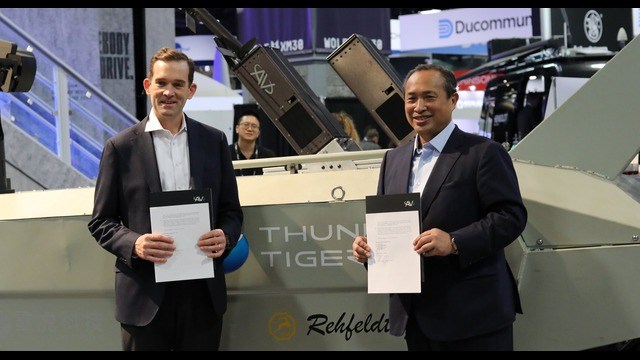
AV and NIOA Australia are pursuing an agreement around one-way attack systems . Signed during LAND FORCES 2026, the agreement establishes a framework for the companies to develop a path toward Australian co-production and localization of AV’s one-way attack systems. The specifics of that relationship matter, but the larger model matters more.
Australia should not have to choose between fielding mature allied technology and developing its own industrial capability.
The objective should be to do both.
Trusted international technology can be paired with Australian industry for integration, sustainment, support and, where appropriate, deeper industrial participation. At the same time, Australian technologies can be integrated into international systems and potentially reach allied capability ecosystems.
That is not a one-way supply chain.
It is a two-way industrial network.
I believe that is a much more useful way to think about the promise of AUKUS.
AUKUS Should Be an Integration Engine
The ambition for AUKUS should be greater than making it easier for three countries to purchase one another’s technology.
The real potential of AUKUS is considerably broader than the submarine program (SSN-AUKUS) that is expanding the nuclear-powered attack submarine fleet. With proper execution, AUKUS could become a long-term integrated defense-industrial and technology ecosystem, particularly across the Indo-Pacific.
Proper execution means that an Australian sensor should be able to find its way onto an American aircraft without years of unnecessary friction. American technology should be able to establish Australian sustainment and industrial capacity. British software or autonomy should be capable of being combined with technology developed in Australia or the United States when the mission demands it.
The competitive advantage is not simply interoperability.
It is recombination.
Whichever alliance can identify the best available technology, combine it fastest, put it into the hands of warfighters and then change it again when the adversary responds will possess a significant advantage.
That is particularly important for Australia.
Geography makes sustainment difficult. Distance makes logistics unforgiving. The Indo-Pacific places extraordinary demands on range, persistence, communications and supply chains. And the pace of technological change means Australia cannot assume that the capability it purchases today will remain configured the same way throughout its operational life.
So, I would judge sovereign capability against four practical questions.
-
Can Australia integrate it? Can Australian sensors, payloads, software and other technologies connect to it?
-
Can Australia adapt it? Can the capability change when Australian requirements or the threat changes?
-
Can Australia sustain it? Are the industrial relationships, technical knowledge and supply chains in place to keep it operating when distance and disruption begin to matter?
-
Can Australia scale it? If operational demand changes dramatically, can the industrial base deliver meaningful quantities rather than exquisite prototypes?
If the answer to those questions is yes, I care considerably less about the flag painted on the factory where every component originated.
Sovereign Doesn’t Have to Mean Alone
Australia is right to demand greater self-reliance.
But self-reliance and self-sufficiency are not the same thing.
In fact, insisting that sovereignty requires Australia to independently recreate every platform, sensor, payload and component its military may need could produce the opposite of the intended result: slower capability, smaller production runs, less access to allied innovation and systems that become harder to adapt as the threat changes.
There is another model.
Build Australian technology that can make allied platforms better. Bring proven allied technologies into partnerships that strengthen Australian industrial capacity. Design systems around modularity rather than technological lock-in. Create acquisition pathways that move at the speed of operational requirements. Use AUKUS to make technology move more freely across trusted industrial bases.
That is not giving up sovereignty.
That is exercising it.
The tactical edge in the Indo-Pacific will not belong to the country that can claim it built everything itself.
It will belong to the force that can get the right capability, integrate the best available technology, sustain it at distance, produce it at scale and change it faster than the adversary can respond.
Sovereign does not have to mean alone.
ABOUT THE AUTHOR
Sean Colvin, CAPM, is Director of Business Development for Asia Pacific at AV. During his 16 years with AV, he has supported customers and operations in more than 40 countries, including six deployments to Afghanistan. His experience spans international program management, business development, Foreign Military Sales and direct commercial programs.
——
ABOUT AV, JOINING THE MISSION
AeroVironment (AV) is a defense technology company with a mission to invent and deliver advantage to U.S. and allied militaries. AV isn’t for everyone. We hire the curious, the relentless, the mission-obsessed.
AV doesn’t just build defense technology; we redefine what’s possible. As the premier autonomous systems company in the U.S., we deliver breakthrough capabilities across air, land, sea, space, and cyber. From autonomy-enabled drones and loitering munitions to integrated autonomy and space resilience, our technologies shape the future of warfare and protect those who serve.
Founded by legendary innovator Dr. Paul MacCready, AV has spent more than 50 years pushing the boundaries of what unmanned systems can do. Our heritage includes seven platforms in the Smithsonian—but we’re not building history, we’re building what’s next.
If you’re ready to build technology that matters – with speed, scale, and purpose – come find your people.
Share
Domains
Solutions
News + Events
AeroVironment Announces Fiscal 2027 First Quarter Results
Press Release
09/09/2026
AeroVironment Announces Fiscal 2027 First Quarter Results
Read More
AV to Present at the 2026 Jefferies Global Industrials Conference

Press Release
08/27/2026
AV to Present at the 2026 Jefferies Global Industrials Conference
Read More
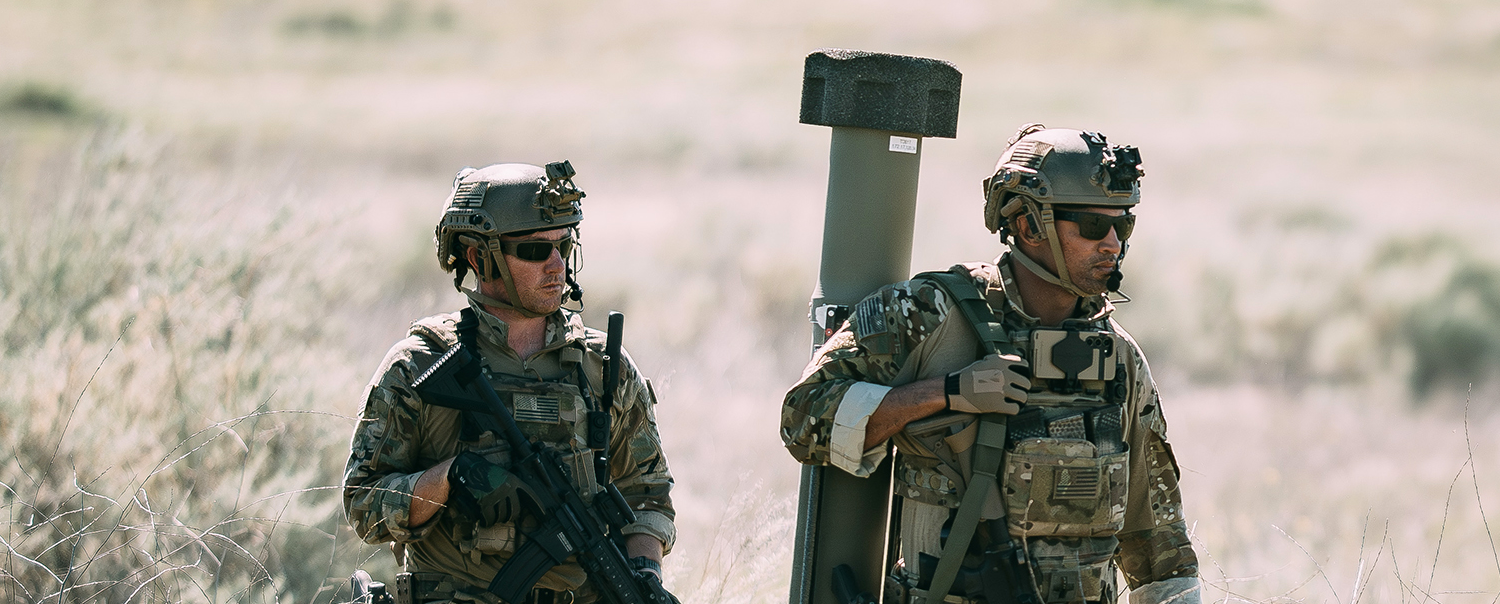
U.S. Army Selects AV’s Switchblade® 400 for LASSO Program
Press Release
05/04/2026
U.S. Army Selects AV’s Switchblade® 400 for LASSO Program
Read More
Previous
Next
Let’s Advance Your Mission
Product Catalog
View the full catalog to explore our solutions in detail.

Domains
Company
Social
Domains
Company
Social
10/14/2026
Companies to explore local sustainment, training and technical support, with potential expansion into Europe and Latin America
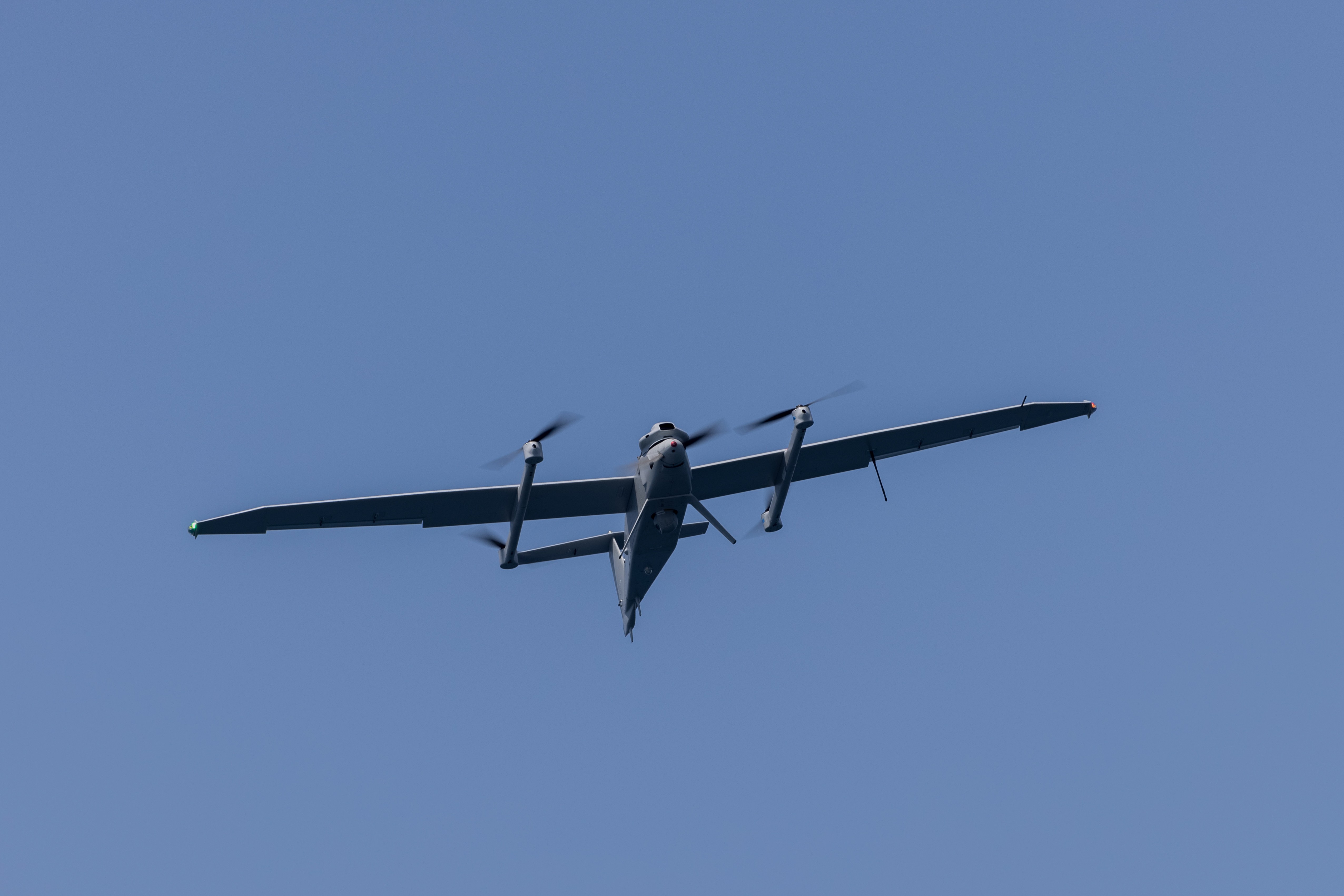
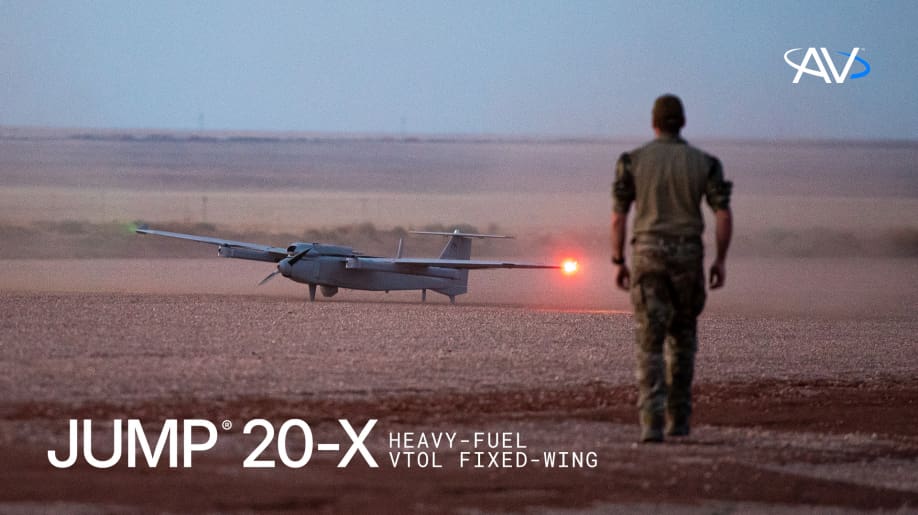
ARLINGTON, Va. — (OCTOBER 14, 2026) — AeroVironment, Inc. (“AV”) (NASDAQ: AVAV), a global defense technology leader, today announced a memorandum of understanding (MOU) with Alpha Unmanned Systems S.L. to explore collaboration supporting AV’s JUMP 20 fixed-wing unmanned aircraft system (UAS), which features vertical takeoff and landing (VTOL) capabilities. The announcement is being made in connection with the Association of the United States Army (AUSA) Annual Meeting & Exposition in Washington.
“A platform only delivers value when operators can keep it flying,” said Shane Hastings, senior vice president and general manager of uncrewed systems at AV. “This agreement is about exploring how to bring training, maintenance and sustainment closer to JUMP 20 customers in Europe, beginning with opportunities in Spain.”
The MOU establishes a framework for collaboration on JUMP 20 fielding, sustainment, training, maintenance and in-country and in-theater support, initially focused on Spain. The collaboration may expand to other markets in Europe and Latin America. The companies will also plan to evaluate integration of Alpha’s UAV subsystem products, including its GCASE Ground Control Station, GTRACK tracking system and AIS module, into the JUMP 20 platform.
“This collaboration with AV is a significant step for Alpha, pairing our subsystem technologies and in-country support capabilities with the JUMP 20 platform,” said Eric Freeman, CEO of Alpha Unmanned Systems. “Together, we intend to explore opportunities to strengthen local support for JUMP 20 in Spain, with the potential to support additional customers across Europe.”
About Alpha Unmanned Systems
Alpha Unmanned Systems S.L. is a Madrid-based company that develops unmanned aircraft and related subsystems for defense and security applications. The company provides training, integration and support services.











Prompts
Click prompts to add them under the company line, click again to take one out, then copy the result into your AI chat. Shared by Asian Century Stocks and Uncovered Thai Stocks. Thank you.
ETFs Holding AeroVironment, Inc.
Exchange-traded funds whose newest published daily portfolio holds one of the company's listings, largest weight first.
| ETF | Weight in ETF | Shares | Market value | As of |
|---|---|---|---|---|
| ARKX | 5.43% | 318,845 | $ 33.294M | Nov 18, 2026 |
| ARKQ | 3.11% | 561,472 | $ 58.629M | Nov 18, 2026 |
| FORH | 3.00% | 3,588 | $ 592.271K | Jun 30, 2026 |
| SPIT | 2.30% | 5,254 | $ 779.431K | Aug 31, 2026 |
| AFOS | 2.04% | 53,688 | $ 5.61M | Nov 18, 2026 |
| FFLS | 1.74% | 5,066 | $ 751.541K | Aug 31, 2026 |
| ARMY | 1.58% | 783 | $ 116.158K | Aug 31, 2026 |
| FFOX | 1.03% | 14,977 | $ 2.472M | Jun 30, 2026 |
| YNOT | 0.94% | 12,402 | $ 1.84M | Aug 31, 2026 |
| FFND | 0.72% | 4,762 | $ 706.443K | Aug 31, 2026 |
| MKTN short | -0.61% | -3,968 | $ -654.998K | Jun 30, 2026 |
| MMSC | 0.55% | 2,514 | $ 275.283K | Nov 16, 2026 |
| ILDR | 0.54% | 15,764 | $ 1.726M | Nov 16, 2026 |
| IDEF | 0.44% | 107,496 | $ 11.771M | Nov 16, 2026 |
| TMAT | 0.43% | 6,817 | $ 1.018M | Jul 31, 2026 |
| BTAL short | -0.38% | -6,578 | $ -1.086M | Jun 30, 2026 |
| CLSE short | -0.19% | -11,750 | $ -1.743M | Aug 31, 2026 |
| FTQI | 0.09% | 7,705 | $ 843.698K | Nov 16, 2026 |
| PSTR | 0.09% | 400 | $ 59.34K | Aug 31, 2026 |
| JMEE | 0.05% | 14,220 | $ 1.485M | Nov 17, 2026 |
| IALT short | -0.03% | -24,036 | $ -2.632M | Nov 16, 2026 |
| MSSM | 0.02% | 1,075 | $ 159.476K | Aug 31, 2026 |
| AVMC | 0.01% | 578 | $ 63.291K | Nov 16, 2026 |
| FSEG | 0.00% | 1 | $ 165.07 | Jun 30, 2026 |
| DFAC | 0.00% | 12,048 | $ 1.456M | Nov 12, 2026 |
| DXUV | 0.00% | 834 | $ 100.781K | Nov 12, 2026 |
| AVUS | 0.00% | 2,366 | $ 259.077K | Nov 16, 2026 |
| AVLC | 0.00% | 657 | $ 71.942K | Nov 16, 2026 |