Cash Dividend/ Distribution
Bull 0
Bear 0
Routine
|
PC Partner Group Limited is a technology company engaged in the design, manufacturing, and trading of electronics and personal computer parts and accessories. The Group operates through two main business segments: brand products and non-brand services. The brand segment includes the design and sale of own-brand VGA cards and mini-PCs under the ZOTAC brand, while the non-brand segment comprises ODM/OEM VGA card manufacturing, electronics manufacturing services (EMS), and component trading. Manufacturing is based in Mainland China and Indonesia, with trading operations in Singapore, Hong Kong, Mainland China, Taiwan, Japan, Korea, and the United States. The company serves markets in Asia Pacific, North and Latin America, the People’s Republic of China, and the Europe, Middle East, Africa, and India regions. Incorporated in 2010, the Group is listed on the Singapore Exchange Securities Trading Limited and has delisted from the Stock Exchange of Hong Kong. The company is developing GPU server and artificial intelligence-related businesses, with shipments scheduled to begin in the second half of 2026. Summarised from the company's own disclosures, fiscal year ended Jun 2026 |
Industry Computer Hardware | Homepage pcpartner.com |
| Sector Technology | IR page pcpartner.com/en | |
|
Tags
vga cards, mini-pcs, odm, oem, electronics manufacturing services, component trading, gpu servers, artificial intelligence, pc accessories, ZOTAC, MAGNUS ONE, ZOTAC GAMING GeForce RTX 30 Series
|
Press page — |
Metrics
| Valuation | |
|---|---|
| Market cap | S$ 643.887M |
| Market cap (USD) | $ 499.304M |
| P/E | 4.97 |
| PEG | — |
| P/BV | — |
| P/S | 0.28 |
| P/OCF | 0.84 |
| P/FCF | — |
| Dividend yield | — |
| Turnover / mcap | — |
| Returns | |
|---|---|
| ROE | — |
| ROI | 38.1% |
| ROIC | 38.1% |
| Profit margin | 3.6% |
| Growth | |
|---|---|
| Revenue growing | Yes |
| Profits growing | Yes |
| Revenue up 3y | No |
| Revenue up 5y | No |
| Earnings growth 3y (net profit CAGR) | -11.0% |
| Quality | |
|---|---|
| Profitable | Yes |
| Margin expanding | No |
| Buying back stock | No |
| Diluting (TTM) | No |
| Debt/Equity | — |
| Podcast bulls (TTM) | Sign up |
| Podcast bears (TTM) | Sign up |
| Podcast sentiment (TTM) | Sign up |
| Podcast sentiment % (TTM) | Sign up |
| News sentiment (TTM) | 0 |
| Quality score | 35.7% |
| Insiders | |
|---|---|
| Buys, 1w | Sign up |
| Buys, 1m | Sign up |
| Buys, 1y | Sign up |
| Sells, 1w | Sign up |
| Sells, 1m | Sign up |
| Sells, 1y | Sign up |
Podcast Mentions
Announcements made on SGXNet, newest first, routine notices (disclosures of interest, daily buy-backs, listing confirmations, coupons) included. The link opens the announcement on SGX. Press releases from the company's own website, newest first.
Microsoft Word - Dividend Exchange rate _ 17 Sept 26
Bull 0
Bear 0
Routine
®
PC PARTNER GROUP LIMITED 栢能集團有限公司* (Company Registration No.: 239079) (Incorporated in the Cayman Islands with limited liability)
Exchange Rate for Interim Dividend Payment to Scrip Shareholders
PC Partner Group Limited (the “Company”) announces that the interim dividend of SGD 0.1 per ordinary share payable to the Company’s scrip shareholders on 9 October 2026 (the “Dividend Payment Date”) will be paid in Hong Kong dollars (HKD) at the exchange rate of SGD 1.00 = HKD 6.127. For the avoidance of doubt, dividends payable on the Dividend Payment Date to shareholders other than scrip shareholders will continue to be paid in Singapore dollars (SGD).
By Order of the Board PC PARTNER GROUP LIMITED WONG Shik Ho Tony Chairman
Singapore, 17 September 2026
- For identification purposes only
Half Yearly Results
Bull 6
Bear 0
Results
Cash Dividend/ Distribution
Bull 2
Bear 0
Capital return
PC PARTNER GROUP LIMITED 栢能集團有限公司* (Company Registration No.:239079)
(Incorporated in the Cayman Islands with limited liability)
DATE OF BOARD MEETING The Board of Directors (the “Board”) of PC Partner Group Limited (“the Company”) hereby announces that a meeting of the Board will be held at 20W Pasir Panjang Road, #11-27, Mapletree Business City, Singapore 117439 on Friday, 14 August 2026 for the purpose of, among other matters, considering and approving the unaudited interim results of the Company and its subsidiaries for the six months ended 30 June 2026 and considering the declaration of an interim dividend, if any.
By order of the Board PC Partner Group Limited WONG Shik Ho Tony Chairman
Singapore, 31 July 2026
- For identification purposes only
Microsoft Word - Profit Alert Announcement _ 16 July 2026
Bull 5
Bear 0
Results
PC PARTNER GROUP LIMITED 栢能集團有限公司* (Company Registration No: 239079) (Incorporated in the Cayman Islands with limited liability) POSITIVE PROFIT ALERT FOR THE SIX MONTHS ENDED 30 JUNE 2026 The board (the “Board”) of directors (the “Directors”) of the Company wishes to inform the shareholders (the “Shareholders”) and potential investors of the Company that based on the management information currently available to the Board including the preliminary assessment of the latest unaudited management accounts of the Company and its subsidiaries (the “Group”) for the six months ended 30 June 2026, the Board expects the Group to report a net profit attributable to Shareholders of not less than HK$500 million for the six months ended 30 June 2026, compared to a net profit attributable to Shareholders of approximately HK$250 million for the six months ended 30 June 2025. The change was primarily driven by an increase in the average selling price of branded products, which has further strengthened the gross profit margin. The Company is still in the process of finalizing the results of the Group for the six months ended 30 June 2026. The information above is only a preliminary assessment by the management of the Company based on the unaudited financial statements of the Group (which have not been confirmed nor audited by the Company’s auditors) and the information currently available to them. The Company will disclose further details of the Group’s financial performance when the interim results of the Group for the six months ended 30 June 2026 are announced, which is expected to be published in August 2026.
By Order of the Board PC Partner Group Limited Wong Shik Ho Tony Chairman Singapore, 16 July 2026
- For identification purposes only
PC PARTNER GROUP LIMITED 栢能集團有限公司* (Company Registration No: 239079) (Incorporated in the Cayman Islands with limited liability)
INTERIM DIVIDEND FOR THE SIX MONTHS ENDED 30 JUNE 2026 NOTICE OF BOOK CLOSURE AND DIVIDEND PAYMENT DATE
The Board of Directors (the “Board”) of PC Partner Group Limited (the “Company”) wishes to inform the shareholders of the Company (the “Shareholders”) of the following arrangements in relation to the payment of the Company's interim dividend for the six months ended 30 June 2026 (the “Interim Dividend”) of SGD 0.1 per ordinary share: 1.
Interim Dividend Amount of Interim Dividend :
SGD 0.1 per ordinary Share
Dividend Type :
Cash
Book Closure Date The Company's branch share register in Singapore will be closed on Friday, 18 September 2026. No transfer of shares of the Company (the “Shares”) will be registered on that date. 3. Last Registration Date for Scrip Shareholders To qualify for the Interim Dividend, Shareholders holding share certificates in registered form must lodge their instruments of transfer together with the relevant share certificates with the Company's branch share registrar in Singapore, B.A.C.S. Private Limited, at 77 Robinson Road, #06-03 Robinson 77, Singapore 068896, no later than 5.00 p.m. on Thursday, 17 September 2026. 4. Record Date for CDP Shareholders Shareholders whose securities accounts with The Central Depository (Pte) Limited (“CDP”) are credited with Shares as at 5.00 p.m. on Thursday, 17 September 2026 will be entitled to the Interim Dividend.
1
Payment Date The Interim Dividend will be paid on Friday, 9 October 2026.
By Order of the Board PC PARTNER GROUP LIMITED WONG Shik Ho Tony Chairman
Singapore, 14 August 2026
- For identification purposes only
2
untitled
Bull 0
Bear 0
Routine
®
PC PARTNER GROUP LIMITED 栢能集團有限公司* (Company Registration No.: 239079) (Incorporated in the Cayman Islands with limited liability)
Exchange Rate for Dividend Payment to Scrip Shareholders PC Partner Group Limited (the “Company”) wishes to announce that the final dividend of SGD 0.05 per ordinary share and the special dividend of SGD 0.05 per ordinary share, payable to the Company’s scrip shareholders on 5 June 2026 (the “Dividend Payment Date”), will be paid in Hong Kong dollars at the exchange rate of HKD1.00 : SGD 0.16549. Pursuant to the Company’s announcement dated 1 December 2025, all dividends payable to shareholders holding CDP accounts or CDP sub-accounts (in which their shares of the Company are deposited) will be credited in Singapore dollars to their respective CDP accounts or CDP sub-accounts on the Dividend Payment Date.
By Order of the Board PC PARTNER GROUP LIMITED WONG Shik Ho Tony Chairman Singapore, 18 May 2026 *
For identification purposes only
PC PARTNER GROUP LIMITED (Incorporated in the Cayman Islands with limited liability) (the “Company”)
Minutes of the Annual General Meeting of the Company Held at #11-27, West Tower, 20 Pasir Panjang Road, Mapletree Business City, Singapore 117439 on 24 April 2026 at 11:00 A.M. Directors Present
Shareholders Present
:
:
Mr. Wong Shik Ho Tony Mr. Wong Fong Pak Mr. Leung Wah Kan Mr. Ho Nai Nap Mr. Man Wai Hung Mr. Low Teck Seng Ms. Chan Yim Mr. Chua Ser Miang Mr. Jason Goh Hseng Wei Mr. Kong Chee Keong Ms. Alicia Kwan Xiuying Mr. Teo Chun-Wei, Benedict
(Chairman)
(via Zoom)
As per the Attendance record maintained by the Company (In compliance with provisions regarding the use of personal data under the Personal Data Protection Act 2012, the names of shareholders present and those who raised questions during the meeting will not be disclosed in these Minutes.)
In Attendance
:
Mr. Gary Lau (Chief Financial Officer) Ms. Lee Yuet Wan (Company Secretary) Mr. Philip Aw (representing BDO LLP) Ms. Chong Ching Rou (representing BDO LLP)
Chairman Mr. Wong Shik Ho Tony was in the chair of the annual general meeting of the Company (the “Meeting”).
Quorum It was noted that a quorum of shareholders was present pursuant to the Company’s Articles of Association and the Meeting was duly constituted. 1
Notice There being no objection, the notice convening the Meeting was taken as read.
Voting a) The Chairman explained the poll voting procedures and the regulatory requirements relating to the publication of these minutes on the website of Singapore Exchange Securities Trading Limited (the “SGX-ST”). A copy of these minutes will also be published on the Company’s website thereafter. b) All resolutions at the Meeting were put to vote by poll in accordance with Rule 730A of the SGX-ST Listing Manual and Article 72 of the Company’s Articles of Association. c) B.A.C.S. Private Limited was appointed as the Polling Agent to oversee the polling process, and CACS Corporate Advisory Pte. Ltd. was appointed as the independent scrutineer for the vote-taking at the Meeting.
Directors’ Statement and the Audited Financial Statements for the Financial Year ended 31 December 2025, together with the Auditors’ Report thereon It was noted that, as there were no objections, the Directors’ Statement and the Audited Financial Statements for the Financial Year ended 31 December 2025, together with the Auditors’ Report thereon, were taken as read. It was further noted that the following resolution was duly proposed, seconded, and passed at the Meeting:“THAT the Directors’ Statement and the Audited Financial Statements for the financial year ended 31 December 2025, together with the Auditors’ Report thereon, as submitted to the Meeting, be and are hereby received and adopted.”
Final and Special Dividends It was noted that the following resolutions in relation to the Company’s final and special dividends were duly proposed, seconded, and passed at the Meeting:“THAT a final dividend of S$0.05 per ordinary share (tax-exempt) for the financial year ended 31 December 2025, as recommended by the board of Directors of the Company (the “Board”), be and is hereby declared and paid on 5 June 2026 to shareholders whose names appear on the Register of Members of the Company as at 5:00 p.m. on 18 May 2026.” “THAT a special dividend of S$0.05 per ordinary share (tax-exempt) for the year ended 31 December 2025, as recommended by the Board, be and is hereby declared and paid on 5 June 2026 to shareholders whose names appear on the Register of Members of the Company as at 5:00 p.m. on 18 May 2026.”
2
Re-election of Directors It was noted that the following resolutions in relation to the re-election of the Company’s directors (the “Directors”) were duly proposed, seconded, and passed at the Meeting:“THAT Mr. Wong Shik Ho Tony be and is hereby re-elected as a Director, and that he shall continue to serve as the Executive Director, Chairman of the Board, and Chairman of the Executive Committee of the Company.” “THAT Mr. Wong Fong Pak be and is hereby re-elected as a Director and that he shall continue to serve as the Executive Director, and a member of the Executive Committee of the Company.” “THAT Mr. Ho Nai Nap be and is hereby re-elected as a Director and he shall continue to serve as the Executive Director, and a member of the Executive Committee of the Company.” “THAT Ms. Chan Yim be and is hereby re-elected as a Director and she shall continue to serve as the Independent Non-executive Director, Chairman of the Remuneration Committee of the Company, and a member of the Nomination Committee of the Company.”
Directors’ Fees for Financial Year 2025 It was noted that the following resolution in relation to the Directors’ remuneration for the preceding financial year was duly proposed, seconded and passed at the Meeting:“THAT the payment of Directors’ fees amounting to S$2,184,461 for the financial year ended 31 December 2025 be and is hereby approved.”
Re-appointment of Auditors It was noted that the following resolution in relation to the re-appointment of the Company’s auditors was duly proposed, seconded and passed at the Meeting:“THAT BDO LLP, the retiring auditors, be and is hereby re-appointed as auditors of the Company to hold office until the conclusion of the next annual general meeting, at a remuneration to be fixed by the Board.”
Issuance and Allotment of Additional Shares and/or Instruments It was noted that the following resolution granting authority to the Company to issue and allot additional shares and/or instruments of the Company was duly proposed, seconded and passed at the Meeting:“THAT the Resolution regarding to the authority to issue and allot additional shares and/or instruments, as set out in Resolution 10 of the Notice of Annual General Meeting dated 1 April 2026, be and is hereby passed as an Ordinary Resolution.”
Adoption of the New Amended and Restated Memorandum and Articles of Association of the Company It was noted that a copy of the Company’s new Amended and Restated Memorandum and Articles of Association, which was marked “A” and initialed by the Chairman for the purposes of identification, was tabled at the Meeting. 3
It was further noted that the following special resolution for the adoption of the New Amended and Restated Memorandum and Articles of Association of the Company was duly proposed, seconded, and passed at the Meeting:“THAT the New Amended and Restated Memorandum and Articles of Association of the Company, as set out in Resolution 11 of the Notice of Annual General Meeting dated 1 April 2026, be and is hereby adopted and approved as a Special Resolution.” 12.
Questions and Answer Session It was noted that no substantial and relevant questions related to the resolutions of the Meeting were received from the Company’s shareholders (the “Shareholders”) prior to the Meeting. The Chairman opened the floor for a question-and-answer session. A summary of the substantial and relevant questions raised by the Shareholders and the Company’s responses during the Meeting is annexed to these Minutes as “Appendix 1”.
Close of Meeting There being no further business, the Chairman declared the Meeting terminated.
(signed) Wong Shik Ho Tony Chairman
4
Appendix 1 Summary of Shareholders’ Questions which are substantial and Relevant to resolutions tabled for approval at the Annual General Meeting on 24 April 2026 and the Company’s Responses during the meeting. The following substantial and relevant questions tabled at the Meeting were addressed by the following persons: Person Mr. Wong Shik Ho Tony Mr. Lau Ka Lai Gary
Position in the Company Chairman of the Board of Directors and Chief Executive Director Chief Financial Officer
Question 1: The Company’s gross profit margin has increased from 2024 to 2025. Can you give us some indication of what contributed to the increase? Are we going to see a similar kind of pattern moving forward, or was this a one-off? Answer: The increase in the gross profit margin in 2025 was driven primarily by two factors. First, the Company launched several new GPU products during the year, including the Blackwell GPU series. Second, U.S. trade restrictions on sales of the Company’s products were lifted after the Company was no longer classified as a Hong Kong company. This change made a significant contribution to last year’s gross profit margin. In 2025, the Company manufactured and exported high-end products that had previously been subject to restrictions, resulting in higher revenue and improved profitability. The Company is unable to provide detailed projections regarding future business performance at the Meeting and therefore does not intend to issue any quantitative guidance.
Question 2:
Why the Company’s profits and revenue in 2020 to 2021 are so high?
Answer: The Company’s profits and revenue in year 2021 were primarily driven by elevated demand related to cryptocurrency mining activities and temporary market conditions arising from the COVID-19 pandemic. The Company neither expects nor seeks a recurrence of COVID-19–driven demand. In addition, demand associated with cryptocurrency mining has structurally declined as a result of changes in mining algorithms, and public scaffold mining is no longer utilized.
5
Accordingly, the factors that contributed to the Company’s historical peak performance in year 2021 are unlikely to recur. The Company’s current strategic focus is directed toward long-term growth opportunities in artificial intelligence–related applications.
Question 3: I have some questions regarding your segmental reports. The segment report shows a top line (i.e., sales revenue) only, but there is no bottom line (i.e., net profit). Answer: The Company’s resources are largely shared and integrated across businesses, which makes it difficult to develop a distinct, standalone product launch or conduct a dedicated analysis for any single business for public disclosure purposes. As a result, the Company does not maintain a separate computational or performance report for the DML (i.e. direct manufacturing labour). Given the extensive sharing and integration of resources, the Company does not prepare segment-level profit and loss statements, nor does it track costs on a segment-specific basis.
Question 4: In the annual report, there is something about contingent liabilities. Maybe you can explain to us what actually happened. Answer: The Company has been involved in a dispute with the U.S. government regarding the tariff classification of products imported into the U.S. market. The Company considers these products to be gaming products; however, U.S. Customs and Border Protection classified them as general computer hardware. While this classification is not unreasonable, the Company holds a different view. If the products are classified as gaming products, they would be exempt from tariffs; otherwise, a 25% tariff applies. Accordingly, the Company filed a petition to challenge the classification. The adjudication process for such disputes typically takes several years, and the Company is currently unable to determine when a judgment will be issued by U.S. Customs. As a result, the matter has been recognized as a contingent liability of approximately US$25.0 million, of which US$11.8 million has already been paid. The Company believes it may be able to recover (or partially recover) the amounts paid once a judgment is rendered, although the timing of such a decision remains uncertain. The Company has engaged a legal counsel to handle the petition and the legal counsel has been in communication with U.S. Customs and Border Protection regarding the matter.
6
Question 5: Based on the last report, there is HKD 2.5 billion in cash that the Company is keeping. Your company is going to pay an ordinary and a special dividend. How the Company intends to manage its capital going forward. Does the Company have a formal dividend policy? Answer: Of course, we have a dividend policy, with a dividend payout ratio of around 30% to 40%. Historically, the Company has paid a minimum dividend payout of 40%, and in certain years, the payout has been higher. The Company will keep paying a good dividend. The Company has been listed for 15 years. During the year, it declared a special dividend of SGD 0.05 to commemorate its first year of listing on the Singapore Exchange, serving as an incentive to attract and reward long-term investors. As at present, the Company holds approximately HKD 2.5 billion in cash. Management intends to maintain a strong cash position to enhance financial resilience and preserve flexibility for opportunistic supplier arrangements and other strategic initiatives.
Question 6: I think it was a fellow shareholder who asked for quarterly updates. I know the Company is not obliged to do so, but I urge the Company to reconsider this because it is really happening in the market. Answer: The Company’s standard reporting practice is to publish financial results on a half-year basis. To date, it has not issued quarterly financial updates due to audit requirements, associated costs, and concerns that short-term volatility could lead to misleading market signals. Notwithstanding the above, the Company will continue to evaluate the feasibility of providing quarterly updates should it become operationally practicable and cost-effective in the future.
7
AMENDED AND RESTATED MEMORANDUM AND ARTICLES OF ASSOCIATION OF PC PARTNER GROUP LIMITED (Adopted by a Special Resolution passed on 24 April 2026)
–1–
THE COMPANIES ACT (REVISED) EXEMPTED COMPANY LIMITED BY SHARES AMENDED AND RESTATED MEMORANDUM OF ASSOCIATION OF PC PARTNER GROUP LIMITED (the “Company”) (Adopted by a Special Resolution passed on 24 April 2026) 1.
The name of the Company is PC Partner Group Limited.
The registered office of the Company will be situate at the offices of Ocorian Trust (Cayman) Limited, Windward 3, Regatta Office Park, P.O. Box 1350, Grand Cayman KY1-1108, Cayman Islands or at such other place in the Cayman Islands as the directors of the Company may from time to time decide.
The objects for which the Company is established are unrestricted and except as prohibited or limited by the laws of the Cayman Islands, the Company shall have full power and authority to carry out any object and shall have and be capable of from time to time and at all times exercising any and all of the powers at any time or from time to time exercisable by a natural person or body corporate in any part of the world whether as principal, agent, contractor or otherwise.
Without prejudice to the generality of the foregoing, the objects of the Company shall include, but without limitation, the following: 4.1 To carry on the business of an investment company and for that purpose to acquire and hold, either in the name of the Company or in that of any nominee, land and real estate, gold and silver bullion, shares (including shares in the Company), stocks, debentures, debenture stock, bonds, notes, obligations and securities issued or guaranteed by any company wherever incorporated or carrying on business and debentures, debenture stock, bonds, notes, obligations and securities issued or guaranteed by any government, sovereign, ruler, commissioners, public body or authority, supreme, dependent, municipal, local or otherwise in any part of the world. 4.2 To lend money with or without security either at interest or without and to invest money of the Company in such manner as the directors of the Company think fit. 4.3 To acquire by purchase, lease, exchange or otherwise lands, houses, buildings and other property or any interest in the same in any part of the world.
–2–
4.4 To carry on the business of a commodity, commodity futures and forward contracts trader and for that purpose to enter into spot, future or forward contracts for the purchase and sale of any commodity including, but without prejudice to the generality of the foregoing, any raw materials, processed materials, agricultural products, produce or livestock, gold and silver bullion, specie and precious or semi-precious stones, goods, articles, services, currencies, rights and interests which may now or in the future be bought and sold in commerce and whether such trading is effected on an organised commodity exchange or otherwise and either to take delivery of, or to sell or exchange any such commodities pursuant to any contract capable of being entered into on any such commodities exchange. 4.5 To carry on whether as principals, agents or otherwise the business of providing and supplying goods, equipment, materials and services of whatsoever nature, and of financiers, company promoters, realtors, financial agents, land owners and dealers in or managers of companies, estates, lands, buildings, goods, materials, services, stocks, leases, annuities and securities of whatsoever type or kind. 4.6 To purchase or otherwise acquire and hold any rights, privileges, concessions, patents, patent rights, licences, secret processes and any real or personal property of any kind whatsoever. 4.7 To build, equip, furnish, outfit, repair, purchase, own, charter and lease steam, motor, sail or other vessels, ships, boats, tugs, barges, lighters or other property to be used in the business of shipping, transportation, chartering and other communication and transport operations for the use of the Company or for others, and to sell, charter, lease, mortgage, pledge or transfer the same or any interest therein to others. 4.8 To carry on the business of importers, exporters and merchants of goods, produce, stores and articles of all kinds both wholesale and retail, packers, customs brokers, ship agents, warehousemen, bonded or otherwise and carriers and to transact every kind of agency, factor and brokerage business or transaction which may seem to the Company directly or indirectly conducive to its interests. 4.9 To carry on the business of consultants in connection with all manner of services and advisers on all matters relating to companies, firms, partnerships, charities, political and non-political persons and organisations, governments, principalities, sovereign and republican states and countries and to carry on all or any of the businesses of financial, industrial, development, architectural, engineering, manufacturing, contracting, management, advertising, professional business and personal consultants and to advise upon the means and methods for extending, developing, marketing and improving all types of projects,
–3–
developments, businesses or industries and all systems or processes relating to such businesses and the financing, planning, distribution, marketing and sale thereof. 4.10 To act as a management company in all branches of that activity and without limiting the generality of the foregoing, to act as managers of investments and hotels, estates, real property, buildings and businesses of every kind and generally to carry on business as managers, consultants or agents for or representatives of owners of property of every kind, manufacturers, funds, syndicates, persons, firms and companies for any purpose whatsoever. 4.11 To carry on any other trade or business which may seem to the Company capable of being carried on conveniently in connection with any business of the Company. 4.12 To borrow or raise money by the issue of ordinary debenture stock or on mortgage or in such other manner as the Company shall think fit. 4.13 To draw, make, accept, endorse, discount, execute and issue all instruments both negotiable and non-negotiable and transferable including promissory notes, bills of exchange, bills of lading, warrants, debentures and bonds. 4.14 To establish branches or agencies in the Cayman Islands and elsewhere and to regulate and to discontinue the same. 4.15 To distribute any of the property of the Company among the members of the Company in specie. 4.16 To acquire and take over the whole or any part of the business, property and liabilities of any person or persons, firm or company or to take or otherwise acquire and hold shares, stock, debentures or other securities of or interest in any other company carrying on any business or possessed of any property or rights. 4.17 To grant pensions, allowances, gratuities and bonuses to employees or ex-employees of the Company or the dependents of such persons and to support, establish or subscribe to any charitable or other institutions, clubs, societies or funds or to any national or patriotic fund. 4.18 To lend and advance moneys or give credit to such persons and on such terms as may be thought fit and to guarantee or stand surety for the obligations of any third party whether such third party is related to the Company or otherwise and whether or not such guarantee or surety is to provide any benefits to the Company and for that purpose to mortgage or charge the Company’s
–4–
undertaking, property and uncalled capital or any part thereof, on such terms and conditions as may be thought expedient in support of any such obligations binding on the Company whether contingent or otherwise. 4.19 To enter into partnership or into any arrangements for sharing profits, union of interests, co-operation, joint venture, reciprocal concession, amalgamation or otherwise with any person or persons or company engaged or interested or about to become engaged or interested in the carrying on or conduct of any business or enterprise from which the Company would or might derive any benefit whether direct or indirect and to lend money, guarantee the contracts of or otherwise assist any such person or company and to take subscribe for or otherwise acquire shares and securities of any such company and to sell, hold, re-issue with or without guarantee or otherwise deal with the same. 4.20 To enter into any arrangements with any authorities, municipal or local or otherwise and to obtain from any such authority any rights, privileges or concessions which the Company may think it desirable to obtain and to carry out, exercise and comply with any such arrangements, rights, privileges or concessions. 4.21 To do all such things as are incidental to or which the Company may think conducive to the attainment of the above objects or any of them. 5.
If the Company is registered as an exempted company as defined in the Companies Act (Revised) of the Cayman Islands, it shall have the power, subject to the provisions of the Companies Act (Revised) of the Cayman Islands and with the approval of a special resolution, to continue as a body incorporated under the laws of any jurisdiction outside the Cayman Islands and to be de-registered in the Cayman Islands.
The liability of each member of the Company is limited to the amount from time to time unpaid on such member’s shares.
The authorised share capital of the Company is HK$100,000,000.00 consisting of 1,000,000,000 shares of a nominal or par value of HK$0.10 each with the power for the Company to increase or reduce the said capital and to issue any part of its capital, original or increased, with or without any preference, priority or special privilege or subject to any postponement of rights or to any conditions or restrictions; and so that, unless the condition of issue shall otherwise expressly declare, every issue of shares, whether declared to be preference or otherwise, shall be subject to the power hereinbefore contained.
–5–
THE COMPANIES ACT (REVISED) EXEMPTED COMPANY LIMITED BY SHARES AMENDED AND RESTATED ARTICLES OF ASSOCIATION OF PC PARTNER GROUP LIMITED (Adopted by a Special Resolution passed on 24 April 2026) 1.
(a) Table “A” in Schedule 1 of the Companies Act (Revised) of the Cayman Islands shall not apply to the Company. (b) No marginal notes, titles or lead in references to Articles in the Company’s Memorandum of Association or these Articles of Association, or the table of contents which precedes the Company’s Memorandum of Association, shall form part of the Company’s Memorandum of Association or these Articles of Association or affect their interpretation. The following definitions apply in these Articles of Association unless the subject or context requires otherwise: “address” has the ordinary meaning given to it and includes any facsimile number, electronic number or address or website used for the purposes of any communication pursuant to these Articles; “appointor” means, in relation to an alternate Director, the Director who appointed the alternate to act as his alternate; “Articles” means these Articles of Association in their present form and all supplementary, amended or substituted articles of association of the Company for the time being in force; “Auditors” means the persons appointed by the Company from time to time to perform the duties of auditors of the Company; “Board” means the board of Directors, as constituted from time to time, or, as the context may require, a majority of the Directors present and voting at a meeting of the Directors at which a quorum is present; “CDP Proxy Form” has the meaning given to it in Article 85(a)(iii); “Chairman” means, except where the context otherwise requires, the chairman presiding at any meeting of Shareholders or the Board; “clear days” means in relation to a period of notice, that period excluding the day when the notice is given or deemed to be given and the day for which it is given or on which it is to take effect;
–6–
Marginal notes
Definitions
“Clearing House” means a clearing house recognized by the laws of the jurisdiction in which Shares are listed or quoted with the permission of the Company on a stock exchange in such jurisdiction; Ch.13. 44
“close associate(s)” has the meaning given to it in the HK Listing Rules; “Companies Act” means the Companies Act (As Revised) of the Cayman Islands (as amended from time to time) and every other act, order, regulation or other instrument having statutory effect (as amended from time to time) for the time being in force in the Cayman Islands applying to or affecting the Company, its Memorandum of Association and/or these Articles; “Companies Ordinance” means the Companies Ordinance (Cap. 622 of the Laws of Hong Kong) (as amended from time to time); “Company” means PC Partner Group Limited; “Debenture” and “Debenture Holder” mean and include, respectively, “debenture stock” and “debenture stockholder”; “Depositor” has the meaning given to it in the Singapore Securities and Futures Act; “Depository” has the meaning given to it in the Singapore Securities and Futures Act, and includes The Central Depository (Pte) Limited which operates the Central Depository System (as defined in the Singapore Securities and Futures Act) in Singapore; “Depository Agent” has the meaning given to it in the Singapore Securities and Futures Act; “Depository Register” has the meaning given to it in the Singapore Securities and Futures Act; “Designated Stock Exchange” means the Singapore Exchange Securities Trading Limited (and where applicable, its successors in title) for so long as the Shares of the Company are listed or quoted on the Singapore Exchange Securities Trading Limited or such other stock exchange in respect of which the Shares of the Company are listed or quoted and where such stock exchange deems such listing or quotation to be the primary listing or quotation of the Shares of the Company (including, without limitation, the HK Stock Exchange during the Relevant Period); “Director” means such person or persons as shall be appointed to the Board from time to time;
–7–
“Dividend” means dividends, distributions in specie or in kind, capital distributions and capitalisation issues; “elected Shares” has the meaning given to it in Article 160(a)(ii)(D); “electronic communication” means a communication sent, transmitted, conveyed and received by electronic means in any form through any medium (including, without limitation, by email, by wire, by radio, by telefax, by optical means or by other similar means); “Entitled Persons” has the meaning given to it in Article 175(b); “general meeting” means a general meeting of the Shareholders either (a) held at a physical place in Singapore; or (b) held at a physical place in Singapore and using technology that allows a person to participate in a meeting without being physically present at the place of meeting (which shall include, without limitation, website addresses, webinars, webcast, video or any form of conference call systems (telephone, video, web or otherwise)) (“virtual meeting technology”); “Head Office” means such office of the Company as the Board may from time to time determine to be the principal office of the Company; “HK Listing Rules” means the Rules Governing the Listing of Securities on The Stock Exchange of Hong Kong Limited (as amended from time to time); “HK Stock Exchange” means The Stock Exchange of Hong Kong Limited; “HK$” or “Hong Kong dollars” means Hong Kong dollars, the lawful currency for the time being of Hong Kong; “Holding Company” has the meaning ascribed to it by the Singapore Companies Act; “Hong Kong” means the Hong Kong Special Administrative Region of the People’s Republic of China; “Instruments” has the meaning given to it in Article 11(c); “Meeting Location(s)” has the meaning given to it in Article 71A(c); “Month” means a calendar month; “Newspapers” means at least one English language daily newspaper and at least one Chinese language daily newspaper, in each case published and circulating generally in the Relevant Territory and specified or not excluded for this purpose by the stock exchange in the Relevant Territory;
–8–
“Nominating Depositor” has the meaning given to it in Article 85(a)(iii); “non-elected Shares” has the meaning given to it in Article 160(a)(i)(D); “Ordinary Resolution” means a resolution as described in Article 1(e) of these Articles; “Paid” means, as it relates to a Share, paid or credited as paid; “physical meeting” means a general meeting convened for, and held and conducted by, physical attendance and participation by Shareholders and/or proxies at the Principal Meeting Place and, where applicable, one or more Meeting Location(s); “Principal Meeting Place” has the meaning given to it in Article 71A(b); “Register” means the principal register of Members and, where applicable, any branch register of Members of the Company to be maintained at such place within or outside the Cayman Islands as the Board shall determine from time to time; “Registered Office” means the registered office of the Company for the time being as required by the Companies Act; “Registration Office” means, in respect of any class of share capital, such place or places in the Relevant Territory or elsewhere where the Board may from time to time determine to keep a branch Register in respect of that class of share capital and where (except in cases where the Board otherwise agrees or directs) the transfers or other documents of title for Shares are to be lodged for registration and are to be registered; “relevant intermediary” has the meaning given to it in Section 181(6) of the Singapore Companies Act; “Relevant Period” means the period commencing from the date on which any of the securities of the Company first become listed on the HK Stock Exchange to and including the date immediately before the day on which none of such securities are so listed (and so that if at any time listing of any such securities is suspended for any reason whatsoever and for any length of time, they shall nevertheless be treated, for the purposes of this definition, as listed); “Relevant Territory” means Hong Kong, Singapore or such other territory where any of the securities of the Company is listed on a stock exchange in that territory; “S$” or “Singapore dollars” means Singapore dollars, the lawful currency for the time being of Singapore;
–9–
“Seal” means the common seal of the Company and any one or more facsimile seals or duplicate seals from time to time of the Company (including a Securities Seal) for use in the Cayman Islands or in any place outside the Cayman Islands; “Secretary” means the person, firm or corporation for the time being performing the duties of that office of the Company and includes any assistant, deputy, acting or temporary secretary; “Securities Seal” means a seal for sealing certificates for Shares or other securities issued by the Company which is a facsimile of the Seal with the addition on its face of the words “Securities Seal”; “Share” means a share in the capital of the Company and includes stock except where a distinction between stock and Shares is expressed or implied; “Shareholder” or “Member” means a person who is duly registered in the Register as the holder for the time being of any Share and includes a person who is jointly so registered; “Singapore Companies Act” means the Companies Act 1967 of Singapore or any statutory modification, amendment or re-enactment thereof for the time being in force and any reference to any provision of the Singapore Companies Act is to that provision as so modified or re-enacted or contained in any such subsequent act or acts; “Singapore Securities and Futures Act” means the Securities and Futures Act 2001 of Singapore or any statutory modification, amendment or re-enactment thereof for the time being in force and any reference to any provision of the Singapore Securities and Futures Act is to that provision as so modified or re-enacted or contained in any such subsequent act or acts; “Special Resolution” means a resolution as described in Article 1(d) of these Articles; “Statutes” means the Companies Act and every other act of the Legislature of the Cayman Islands for the time being in force applying to or affecting the Company, its memorandum of association and/or these Articles and any reference to any provision in any Statute is to that provision as so modified or re-enacted or contained in any such subsequent act or acts; “Subscription Right Reserve” has the meaning given to it in Article 195(a)(i); “subsidiary” has the meaning ascribed to it by the Singapore Companies Act; and “Transfer Office” means the place where the principal Register is located for the time being.
– 10 –
(c) In, and for the purposes of, these Articles, unless there be something in the subject or context requires otherwise: (i) words denoting the singular number include the plural number and vice versa; (ii) words importing any gender include every gender and words importing persons include partnerships, firms, companies and corporations and bodies of persons whether corporate or not; (iii) subject to the foregoing provisions of this Article, any words or expressions defined in the Companies Act (except any statutory modification thereof not in force when these Articles become binding on the Company) bear the same meaning in these Articles, save that, where the context permits, a reference to a company includes any company incorporated in the Cayman Islands or elsewhere; (iv) a reference to an Article is to an article of these Articles; (v) references to any statute or statutory provision are to be construed as relating to any statutory modification or re-enactment thereof for the time being in force; (vi) a reference to a meeting is to a meeting convened and held in any manner permitted by these Articles and any Shareholder or Director participating in a meeting by means of virtual meeting technology is deemed to be present at that meeting for all purposes of the Companies Act and these Articles, and the terms “attend”, “participate”, “attending”, “participating”, “attendance” and “participation” are to be construed accordingly; (vii) a reference to a meeting shall mean a meeting convened and held in any manner permitted by these Articles, and any Shareholder or Director attending and participating at a meeting by means of virtual meeting technology shall be deemed to be present at that meeting for all purposes of the Statutes and these Articles; (viii) a reference to “virtual meeting technology” means technology that allows a person to participate in a meeting without being physically present at the place of meeting and includes, without limitation, a website address, webinar, webcast, video or any form of conference call systems (telephone, video, web or otherwise); (ix) references to a document (including, but without limitation, a resolution in writing) being signed or executed include references to it being signed or executed under hand or under seal or by electronic signature or by electronic communication or by any other method and references to a notice
– 11 –
General
or document include a notice or document recorded or stored in any digital, electronic, electrical, magnetic or other retrievable form or medium and information in visible form whether having physical substance or not; (x) expressions referring to writing or its cognates shall, unless the contrary intention appears, be construed as written or produced by any substitute for writing or partly one and partly another and shall include (except where otherwise expressly specified in these Articles or where the context otherwise requires, and subject to any limitations, conditions or restrictions contained in the Statutes) any other modes of representing or reproducing words, figures, symbols or other information in visible form, whether in a physical document or in an electronic communication or form or otherwise howsoever (including, without limitation, facsimile, printing, lithography, photography and electronic mail); (xi) any requirement as to delivery under these Articles include delivery in the form of an electronic record (as defined in the Electronic Transactions Act of the Cayman Islands) or an electronic communication; and (xii) Section 8 of the Electronic Transactions Act of the Cayman Islands, as amended from time to time, shall not apply to these Articles to the extent it imposes obligations or requirements in addition to those set out in these Articles.
– 12 –
(d) A resolution shall be a Special Resolution when it has been passed by a majority of Shareholders representing not less than three quarters of the total voting rights of such Shareholders as, being entitled so to do, vote in person or by proxy, or, in the cases of Shareholders which are corporations, by their respective duly authorised representatives, at a general meeting of which not less than 21 days’ notice, specifying (without prejudice to the power contained in these Articles to amend the same) the intention to propose the resolution as a Special Resolution, has been duly given; provided that, subject to any applicable rules or regulations of the Designated Stock Exchange, except in the case of an annual general meeting, if it is so agreed by a majority in number of the Shareholders having a right to attend and vote at any such meeting, being a majority together holding not less than 95% in nominal value of the issued Shares giving that right (or, in the case of an annual general meeting, by all Shareholders having that right), a resolution may be proposed and passed as a Special Resolution at a meeting of which less than 21 days’ notice has been given.
App.3 Para.16
(e) A resolution shall be an Ordinary Resolution when it has been passed by a simple majority of the votes cast by such Shareholders as, being entitled so to do, vote in person or, where proxies are allowed, by proxy or, in the case of any Shareholder being a corporation, by its duly authorised representative at a general meeting held in accordance with these Articles. (f) A Special Resolution shall be effective for any purpose for which an Ordinary Resolution is expressed to be required under any provision of these Articles or the Statutes. App.3 Para.16
Without prejudice and in addition to such matters as may be prescribed by the Companies Act and/or the listing rules of any Designated Stock Exchange which are required to be approved by Shareholders by way of a Special Resolution, a Special Resolution shall be required to alter the Memorandum of Association of the Company, to approve any amendment of these Articles or to change the name of the Company.
Special Resolution
Ordinary Resolution
Special Resolution effective as Ordinary Resolution
When Special Resolution is required
SHARES, WARRANTS AND MODIFICATION OF RIGHTS 3.
Subject to the Companies Act, the Memorandum of Association of the Company, these Articles and, where applicable, the rules or regulations of any Designated Stock Exchange, no Shares may be issued by the Board without the prior approval of the Company in general meeting but subject thereto and to these Articles and without prejudice to any special rights or restrictions for the time being attaching to any Shares or any class of Shares including preference Shares, any Share may be issued upon such terms and conditions and with such preferred, deferred or other qualified or special rights, or such restrictions, whether in regard to Dividend, voting, return of capital or otherwise, as the Company may from time to time by Ordinary Resolution determine (or, in the absence of any such determination or so
– 13 –
Issue of Shares
far as the same may not make specific provision, as the Board may determine) and any Share may be issued on the terms that it is liable to be redeemed upon the happening of a specified event or upon a given date and either at the option of the Company, or at the option of the holder. The rights attaching to Shares of a class other than ordinary Shares shall be expressed in these Articles. 3A. (a) Preference Shares may be issued subject to such limitation thereof as may be prescribed by the Companies Act and/or by the listing rules of the Designated Stock Exchange.
Preference Shares
(b) In the event of preference Shares being issued, the total number of issued preference Shares shall not at any time exceed the total number of the issued ordinary Shares. (c) Preference Shareholders shall have the same rights as ordinary Shareholders as regards receiving of notices, reports and balance sheets and attending general meetings of the Company, and preference Shareholders shall also have the right to vote at any meeting convened for the purpose of reducing the capital or winding-up or sanctioning a sale of the undertaking of the Company or where the proposition to be submitted to the meeting directly affects their rights and privileges or when the Dividend on the preference Shares is in arrear for more than six (6) Months. (d) The Company has the power to issue further preference capital ranking equally with, or in priority to, preference Shares already issued.
App.3 Para.15
The Board may issue warrants to subscribe for any class of Shares or other securities of the Company, which warrants may be issued on such terms as the Board may from time to time determine, provided that such issue must be specifically approved by the Company in a general meeting if required by the rules or regulations of the Designated Stock Exchange. Where warrants are issued to bearer, no certificate thereof shall be issued to replace one that has been lost unless the Board is satisfied beyond reasonable doubt that the original certificate thereof has been destroyed and the Company has received an indemnity in such form as the Board shall think fit with regard to the issue of any such replacement certificate.
(a) If at any time the share capital of the Company is divided into different classes of Shares, preference capital other than redeemable preference capital may be repaid and all or any of the special rights attached to any class may, subject to the provisions of the Companies Act, be varied or abrogated with the sanction of a Special Resolution passed at a separate general meeting of the holders of the Shares of that class concerned (but not otherwise, provided always that where the necessary majority for such a Special Resolution is not obtained at such general meeting, consent in writing if obtained from the holders of three-fourths in nominal value of the issued Shares of the class concerned within two (2) Months of such general meeting shall be as valid and effectual as a Special
– 14 –
Warrants
How rights of Shares may be modified
Resolution carried at such general meeting). To every such separate general meeting the provisions of these Articles relating to general meetings shall, mutatis mutandis, apply, but so that the necessary quorum shall be not less than two Shareholders present in person (or, in the case of a Shareholder being a corporation, by its duly authorised representative) or by proxy holding or representing not less than one-third in nominal value of the issued Shares of that class. (b) The provisions of this Article shall apply to the variation or abrogation of the rights attached to the Shares of any class as if each group of Shares of the class differently treated formed a separate class the rights whereof are to be varied or abrogated. (c) The special rights conferred upon the holders of any Shares or class of Shares shall not, unless otherwise expressly provided in the rights attaching to or the terms of issue of such Shares, be deemed to be altered, varied or abrogated by the creation or issue of further Shares ranking pari passu therewith. 6.
The authorised share capital of the Company on the date of the adoption of these Articles is HK$100,000,000.00 divided into 1,000,000,000 Shares with a par value of HK$0.10 each.
The Company in general meeting may from time to time, whether or not all the Shares for the time being authorised shall have been issued and whether or not all the Shares for the time being issued shall have been fully paid up, by Ordinary Resolution increase its share capital by the creation of new Shares, such new capital to be of such amount and to be divided into Shares of such class or classes and of such amounts in Hong Kong dollars or such other currency as the Shareholders may think fit and as the resolution may prescribe.
Any new Shares shall be issued upon such terms and conditions and with such rights, privileges or restrictions attached thereto as the general meeting resolving upon the creation thereof shall direct, and if no direction be given, subject to the provisions of the Companies Act and of these Articles, as the Board shall determine; and in particular such Shares may be issued with a preferential or qualified right to participate in Dividends and in the distribution of assets of the Company and with a special right or without any right of voting.
Subject to any direction to the contrary that may be given by the Company in a general meeting or except as permitted under the rules or regulations of the Designated Stock Exchange, all new Shares shall before issue be offered to such persons who as at the date of the offer are entitled to receive notices from the Company of general meetings in proportion, as far as the circumstances admit, to the amount of the existing Shares to which they are entitled. The offer shall be made by notice specifying the number of Shares offered, and limiting a time within which the offer, if not accepted, will be deemed to be declined. After the expiration of that
– 15 –
Authorised share capi tal
Power to increase capital
On what conditions new Shares may be issued
When to be offered to existing Sharehold ers
time, or on the receipt of an intimation from the person to whom the offer is made that he declines to accept the Shares offered, the Board may dispose of those Shares in such manner as it thinks most beneficial to the Company. The Board may likewise so dispose of any new Shares which (by reason of the ratio which the new Shares bear to Shares held by persons entitled to an offer of new Shares) cannot, in the opinion of the Board, be conveniently offered under this Article 9. 10. Except so far as otherwise provided by the conditions of issue or by these Articles, any capital raised by the creation of new Shares shall be treated as if it formed part of the original capital of the Company and such Shares shall be subject to the provisions contained in these Articles with reference to the payment of calls and instalments, transfer and transmission, forfeiture, lien, cancellation, surrender, voting and otherwise. 11. (a) Subject to the Companies Act and, where applicable, to the rules or regulations of the Designated Stock Exchange, and without prejudice to any special rights or restrictions for the time being attached to any Shares or any class of Shares, all unissued Shares and other securities of the Company shall be at the disposal of the Board and it may offer, allot (with or without conferring a right of renunciation), grant options over or otherwise dispose of them to such persons, at such times, for such consideration and generally on such terms (subject to Article 9) as it in its absolute discretion thinks fit, but so that no Shares shall be issued at a discount to their nominal value. The Board shall, as regards any offer or allotment of Shares, comply with the provisions of the Companies Act, if and so far as such provisions may be applicable thereto. (b) Neither the Company nor the Board shall be obliged, when making or granting any allotment of, offer of, option over or disposal of Shares or other securities of the Company, to make, or make available, and may resolve not to make, or make available, any such allotment, offer, option or Shares or other securities to Shareholders or others with registered addresses in any jurisdiction outside the Relevant Territory, or in any particular territory or territories being a territory or territories where, in the absence of a registration statement or other special formalities, this would or might, in the opinion of the Board, be unlawful or impracticable, or the existence or extent of the requirement for such registration statement or special formalities might be expensive (whether in absolute terms or in relation to the rights of the Shareholder(s) who may be affected) or time consuming to determine. Subject to the rules or regulations of the Designated Stock Exchange (where applicable), the Company may issue its Shares in fractional denominations and the Board shall be entitled to make such arrangements to deal with fractional entitlements arising on an offer of any unissued Shares or other securities as it thinks fit, including the aggregation and the sale thereof for the benefit of the Company. Shareholders who may be
– 16 –
New Shares to form part of original capital
Unissued Shares at the disposal of the Direc tors
affected as a result of any of the matters referred to in this paragraph (b) shall not be, and shall be deemed not to be, a separate class of Shareholders for any purposes whatsoever. (c) Notwithstanding Article 11(a) above but subject to the Statutes and, where applicable, the rules or regulations of the Designated Stock Exchange, the Company in general meeting may by Ordinary Resolution grant to the Directors a general authority, either unconditionally or subject to such conditions as may be specified in the said Ordinary Resolution (including, but not limited to, the aggregate number of Shares which may be issued and the duration of the general authority), to issue Shares in the capital of the Company whether by way of rights, bonus or otherwise; and/or make or grant offers, agreements or options (collectively, “Instruments”) that might or would require Shares to be issued, including but not limited to the creation and issue of (as well as adjustments to) warrants, Debentures or other instruments convertible into Shares; provided that unless otherwise specified in the Ordinary Resolution or required by any applicable rules or regulations of the Designated Stock Exchange, such general authority will continue (notwithstanding the authority conferred by the said Ordinary Resolution may have ceased to be in force) in relation to the issue of Shares pursuant to any Instrument made or granted by the Directors while the said Ordinary Resolution was in force. 12. (a) The Company may at any time pay commission to any person for subscribing or agreeing to subscribe (whether absolutely or conditionally) for any Shares or procuring or agreeing to procure subscriptions (whether absolute or conditional) for any Shares, but so that the conditions and requirements of the Companies Act shall be observed and complied with, and in each case the commission shall not exceed 10% of the price at which the Shares are issued. (b) If any Shares are issued for the purpose of raising money to defray the expenses of the construction of any works or buildings or the provision of any plant which cannot be made profitable within a period of one year, the Company may pay interest on so much of that share capital as is for the time being paid up for the period and, subject to any conditions and restrictions mentioned in the Companies Act, may charge the sum so paid by way of interest to capital as part of the cost of construction of the works or buildings, or the provisions of the plant.
Company may pay commission
Defraying of expenses
- The Company may from time to time by Ordinary Resolution: (a) increase its share capital as provided by Article 7; (b) consolidate or divide all or any of its share capital into Shares of larger or smaller amount than its existing Shares; and on any consolidation of fully paid Shares into Shares of larger amount, the Board may settle any difficulty which may arise as it thinks expedient and in particular (but without prejudice to the
– 17 –
Increase in capital, consolidation and division of capital and subdivision, cancellation of Shares and redenomina tion etc.
generality of the foregoing) may as between the holders of Shares to be consolidated determine which particular Shares are to be consolidated into a consolidated Share, and if it shall happen that any person shall become entitled to fractions of a consolidated Share or Shares, such fractions may be sold by some person appointed by the Board for that purpose and the person so appointed may transfer the Shares so sold to the purchaser thereof and the validity of such transfer shall not be questioned, and so that the net proceeds of such sale (after deduction of the expenses of such sale) may either be distributed among the persons who would otherwise be entitled to a fraction or fractions of a consolidated Share or Shares rateably in accordance with their rights and interest or may be paid to the Company for the Company’s benefit; (c) divide its unissued Shares into several classes and attach thereto respectively any preferential, deferred, qualified or special rights, privileges or conditions; (d) subdivide its Shares or any of them into Shares of smaller amount than is fixed by the Memorandum of Association, subject nevertheless to the provisions of the Companies Act, and so that the resolution whereby any Share is subdivided may determine that, as between the holders of the Shares resulting from such subdivision, one or more of the Shares may have any such preferred or other special rights over, or may have such deferred rights or be subject to any such restrictions as compared with the others as the Company has power to attach to unissued or new Shares; (e) cancel any Shares which at the date of the passing of the resolution have not been taken or agreed to be taken by any person, and diminish the amount of its share capital by the amount of the Shares so cancelled; (f) make provision for the issue and allotment of Shares which do not carry any voting rights; (g) change the currency of denomination of its share capital; and (h) reduce its share premium account in any manner authorised, and subject to any conditions prescribed by law. 14. The Company may by Special Resolution reduce its share capital or any capital redemption reserve or other undistributable reserve in any manner authorised, and subject to any conditions prescribed, by law. 15. (a) Subject to the Companies Act, the Memorandum of Association of the Company, these Articles and, where applicable, the rules or regulations of any Designated Stock Exchange, and subject to any rights conferred on the holders of any class of Shares, the Company shall have the power to purchase or otherwise acquire all or any of its own Shares (which expression as used in this Article includes redeemable Shares) and such power shall be exercisable by the
– 18 –
Reduction of capital
Company to purchase its own securities and to finance the same
Board in such manner, upon such terms and subject to such conditions as it thinks fit and any determination by the Board of the manner and terms of purchase shall be deemed authorised by these Articles for purposes of the Companies Act, and to purchase or otherwise acquire warrants and other securities for the subscription or purchase of its own Shares, and shares and warrants and other securities for the subscription or purchase of any shares in any company which is its Holding Company and may make payment therefor in any manner and terms authorised or not prohibited by law, including out of capital, or to give, directly or indirectly, by means of a loan, a guarantee, an indemnity, the provision of security or otherwise howsoever, financial assistance for the purpose of or in connection with a purchase or other acquisition made or to be made by any person of any Shares or warrants or other securities in the Company or any company which is a Holding Company of the Company and should the Company purchase or otherwise acquire its own Shares or warrants or other securities neither the Company nor the Board shall be required to select the Shares or warrants or other securities to be purchased or otherwise acquired rateably or in any other manner and terms as between the holders of Shares or warrants or other securities of the same class or as between them and the holders of Shares or warrants or other securities of any other class or in accordance with the rights as to Dividends or capital conferred by any class of Shares provided always that any such purchase or other acquisition or financial assistance shall only be made in accordance with the relevant code, rules or regulations issued from time to time by the Designated Stock Exchange and/or the Statutes from time to time in force. The Company is hereby authorised to make payments in respect of the purchase of its Shares out of capital or out of any other account or funds which can be authorised for this purpose in accordance with the Companies Act. (b) (i) Subject to the Companies Act, the Memorandum of Association of the Company, these Articles and, where applicable, the rules or regulations of any Designated Stock Exchange, and to any special rights conferred on the holders of any Shares or attaching to any class of Shares, Shares may be issued on the terms that they may, at the option of the Company or the holders thereof, be liable to be redeemed on such terms and in such manner, including out of capital, as the Board may deem fit. (ii) Where the Company purchases for redemption a redeemable Share, purchases not made through the market or by tender shall be limited to a maximum price, and if purchases are by tender, tenders shall be available to all Shareholders alike. (c) (i) The purchase or redemption of any Share shall not be deemed to give rise to the purchase or redemption of any other Share.
– 19 –
(ii) The holder of the Shares being purchased or redeemed shall be bound to deliver up to the Company at the Head Office or such other place as the Board shall specify the certificate(s) thereof for cancellation and thereupon the Company shall pay to him the purchase or redemption monies in respect thereof. (d) For so long as the Shares of the Company are listed on the Designated Stock Exchange, the prior approval of the Shareholders in general meeting for such purchase or acquisition shall be required. Such approval of the Shareholders shall remain in force until (i) the conclusion of the annual general meeting of the Company following the passing of the resolution granting the said authority or (ii) the date by which such annual general meeting is required to be held or (iii) it is revoked or varied by Ordinary Resolution of the Company in general meeting, whichever is the earliest, and may thereafter be renewed by the Shareholders in general meeting. For so long as the Shares of the Company are listed on the Designated Stock Exchange, the Company shall make an announcement to the Designated Stock Exchange of any purchase or acquisition by the Company of its own Shares in accordance with the listing rules of the Designated Stock Exchange. (e) The Company is authorised to hold treasury shares in accordance with the Companies Act. The Board may designate as treasury shares any of its Shares that it purchases or redeems, or any Shares surrendered to it, in accordance with the Companies Act. Shares held by the Company as treasury shares shall continue to be classified as treasury shares until such Shares are either cancelled or transferred as the Board may determine on such terms and subject to such conditions as it in its absolute discretion thinks fit in accordance with the Companies Act and subject to the rules and regulations of the Designated Stock Exchange. (f) The Company may accept the surrender for no consideration of any fully paid Share (including a redeemable share) unless, as a result of the surrender, there would no longer be any issued Shares of the company other than Shares held as treasury shares. 15A. (a) Subject to the terms and conditions of any application for Shares, the Board shall allot Shares applied for within ten (10) market days of the closing date of any such application (or such other period as may be approved by the Designated Stock Exchange). (b) Subject to the Companies Act and these Articles, the Board may at any time after the allotment of Shares but before any person has been entered in the Register as the holder, recognise a renunciation thereof by the allottee in favour of some other person and may accord to any allottee of a Share a right to effect such renunciation upon and subject to such terms and conditions as the Board considers fit to impose.
– 20 –
REGISTER OF MEMBERS AND SHARE CERTIFICATES 16. Except as otherwise expressly provided by these Articles or as required by law or as ordered by a court of competent jurisdiction, no person shall be recognised by the Company as holding any Share upon any trust and, except as aforesaid, the Company shall not be bound by or be compelled in any way to recognise (even when having notice thereof) any equitable, contingent, future or partial interest in any Share or any interest in any fractional part of a Share or any other right or claim to or in respect of any Shares except an absolute right to the entirety thereof of the registered holder. 17. (a) The Board shall cause to be kept the Register and there shall be entered therein the particulars required under the Companies Act. (b) The Register shall be kept at the Registered Office or at any other place within or without the Cayman Islands. The Company may keep an overseas or local or other branch Register of Members resident in any place(s) as the Board thinks fit, and the Board may make and vary such regulations as it determines in respect of the keeping of any such register(s) and maintaining a Registration Office in connection therewith. App.3 Para.20
Register
Local or branch Register
(c) Except when the Register is closed, any Shareholder may inspect during business hours any Register without charge and require the provision to him of copies or extracts thereof in all respects at the Head Office or Registration Office or such other place at which the Register is kept in accordance with the Statutes. (d) The Register including any branch register of Members may, after notice has been given in accordance with applicable requirements of any Designated Stock Exchange or by any electronic means as may be accepted by the Designated Stock Exchange, be closed at such times or for such periods in each year as the Board may determine and either generally or in respect of any class of Shares. During the Relevant Period, the Register may, after notice has been given by advertisement in a newspaper circulating generally in Hong Kong or where applicable, subject to the HK Listing Rules, be closed at such time or for such period not exceeding in the whole 30 days in each year as the Board may determine in a manner which complies with Section 632 of the Companies Ordinance. 18. (a) Subject to the payment of all or any part of the stamp duty payable (if any) on each share certificate prior to the delivery thereof which the Board in its absolute discretion may require, every person whose name is entered as a Shareholder in the Register shall be entitled to receive within ten (10) market days of the date of allotment (or such other period as may be approved by the Designated Stock Exchange) or within ten (10) market days after the date of lodgement of a registrable transfer (or such other period as may be approved by the Designated Stock Exchange) share certificates in reasonable denominations
– 21 –
Share certificates
for the shares so allotted or transferred, or, if he shall so request, in a case where the allotment or transfer is of a number of Shares in excess of the number for the time being forming a stock exchange board lot for the purposes of the stock exchange of the Relevant Territory on which the Shares are listed upon payment of such sum (in the case of a transfer, not exceeding (i) in the case of any share capital listed on a stock exchange in Hong Kong, HK$2.50, or (ii) in the case of any share capital listed on a stock exchange in Singapore, S$2.00, or such other sum maximum amount as the Designated Stock Exchange may from time to time determine, and in the case of any other Shares, such sum in such currency as the Board may from time to time determine to be reasonable in the territory in which the relevant Register is situated, or otherwise such other sum as the Company may by Ordinary Resolution determine) for every certificate after the first as the Board may from time to time determine, such number of certificates for Shares in stock exchange board lots or whole multiples thereof as he shall request and one for the balance (if any) of the Shares in question, provided that in respect of a Share or Shares held jointly by several persons the Company shall not be bound to issue a certificate or certificates to each such person, and the issue and delivery of a certificate or certificates to one of the joint holders shall be sufficient delivery to all such holders. (b) The Company may, in the event of a change in the form of definitive Share certificate adopted by the Board, issue new definitive certificates to all holders of Shares appearing on the Register in replacement of old definitive certificates issued to such holders. The Board may resolve whether or not to require the return of the old certificates as a condition precedent to the issue of replacement certificates and, as regards any old certificates which have been lost or defaced, to impose such conditions (including as to indemnity) as the Board shall see fit. If the Board elects not to require the return of the old certificates, the same shall be deemed to have been cancelled and of no further effect for all purposes. 19. Every certificate for Shares, warrants or debentures or representing any other form of securities of the Company shall be issued under the Seal, which for this purpose may be a duplicate Seal. 20. Every share certificate hereafter issued shall specify the number and class of Shares in respect of which it is issued and the amount paid thereon and may otherwise be in such form as the Board may from time to time prescribe. A share certificate shall relate to only one class of Shares, and where the capital of the Company includes Shares with different voting rights, the designation of each class of Shares, other than those which carry the general right to vote at general meetings, must include the words “restricted voting” or “limited voting” or “non-voting” or some other appropriate designation which is commensurate with the rights attaching to the relevant class of Shares.
– 22 –
Share certificates to be sealed
Share certificate to specify number and class of Shares
- (a) The Company shall not be bound to register more than four persons as joint holders of any Share. In the case of a share held jointly by several persons, the Company shall not be bound to issue more than one certificate therefor and delivery of a certificate to one of several joint holders shall be sufficient delivery to all such holders.
Joint hold ers
(b) If any Shares shall stand in the names of two or more persons, the person first named in the Register shall be deemed to be the sole holder thereof as regards service of notice and, subject to the provisions of these Articles, all or any other matter connected with the Company, except the transfer of such Shares. 22. Subject to the provisions of the Statutes, if any share certificate shall be defaced, worn-out, destroyed, lost or stolen, it may be renewed on such evidence being produced and a letter of indemnity (if required) being given by the Shareholder, transferee, person entitled, purchaser, member firm or member company of the Designated Stock Exchange or on behalf of its or their client or clients as the Directors shall require, and in case of defacement or wearing out, on delivery of the old certificate and in any case on payment of such sum not exceeding two Singapore dollars (S$2.00) as the Directors may from time to time require together with the amount of the stamp duty payable (if any) on each share certificate. In the case of destruction, loss or theft, a Shareholder or person entitled to whom such renewed certificate is given shall also bear the loss and pay to the Company all expenses incidental to the investigations by the Company of the evidence of such destruction or loss.
Replace ment of share certificates
LIEN 23. The Company shall have a first and paramount lien on every Share (not being a fully paid Share) for all moneys, whether presently payable or not, called or payable at a fixed time in respect of that Share; and the Company shall also have a first and paramount lien and charge on all Shares (other than fully paid-up Shares) standing registered in the name of a Shareholder, whether singly or jointly with any other person or persons, for all the debts and liabilities of such Shareholder or his estate to the Company and whether the same shall have been incurred before or after notice to the Company of any equitable or other interest of any person other than such Shareholder, and whether the period for the payment or discharge of the same shall have actually arrived or not, and notwithstanding that the same are joint debts or liabilities of such Shareholder or his estate and any other person, whether a Shareholder or not. Such lien shall be restricted to unpaid calls and instalments upon the specific Shares in respect of which such moneys are due and unpaid, and to such amounts as the Company may be called upon by law to pay in respect of the Shares of the Shareholder or deceased Shareholder. The Company’s lien (if any) on a Share shall extend to all Dividends and bonuses declared in respect thereof. The Board may
– 23 –
Company’s lien
at any time either generally or in any particular case waive any lien that has arisen, or declare any Share to be exempt wholly or partially from the provisions of this Article. 24. The Company may sell, in such manner as the Board thinks fit, any Shares on which the Company has a lien, but no sale shall be made unless some sum in respect of which the lien exists is presently payable or the liability or engagement in respect of which such lien exists is liable to be presently fulfilled or discharged, nor until the expiration of 14 days after a notice in writing, stating and demanding payment of the sum presently payable or specifying the liability or engagement and demanding fulfilment or discharge thereof and giving notice of intention to sell in default, shall have been given, in the manner in which notices may be sent to Shareholders as provided in these Articles, to the registered holder for the time being of the Shares, or the person entitled by reason of such holder’s death, bankruptcy or winding-up to the Shares. 25. The net proceeds of such sale after the payment of the costs of such sale shall be applied in or towards payment or satisfaction of the debt or liability or engagement in respect whereof the lien exists, so far as the same is presently payable, and any residue shall (subject to a like lien for debts or liabilities not presently payable as existed upon the Shares prior to the sale) be paid to the person entitled to the Shares at the time of the sale. For the purpose of giving effect to any such sale, the Board may authorise some person to transfer the Shares sold to the purchaser thereof and may enter the purchaser’s name in the Register as holder of the Shares, and the purchaser shall not be bound to see the application of the purchase money, nor shall his title to the Shares be affected by any irregularity or invalidity in the proceedings relating to the sale.
Sale of Shares subject to lien
Application of proceeds of sale
CALLS ON SHARES 26. The Board may from time to time make such calls as it thinks fit upon the Shareholders in respect of any moneys unpaid on the Shares held by them respectively (whether on account of the nominal value of the Shares or by way of premiums) and not by the conditions of allotment thereof made payable at a fixed time. A call may be made payable either in one sum or by instalments.
Calls/ instalments
26A. Capital paid on Shares in advance of calls shall not, whilst carrying interest, confer a right to participate in profits.
Participa tion in prof its
- At least 14 days’ notice of any call shall be given to the relevant Shareholders specifying the time and place of payment and to whom such call shall be paid.
Notice of call
- A copy of the notice referred to in Article 27 shall be sent to relevant Shareholders in the manner in which notices may be sent to Shareholders by the Company as herein provided.
Copy of notice to be sent to Sharehold ers
– 24 –
- In addition to the giving of notice in accordance with Article 28, notice of the person appointed to receive payment of every call and of the times and places appointed for payment may be given to the relevant Shareholders by notice to be inserted at least once in the Newspapers.
- Every Shareholder upon whom a call is made shall pay the amount of every call so made on him to the person and at the time or times and place or places as the Board shall appoint.
- A call shall be deemed to have been made at the time when the resolution of the Board authorising such call was passed.
- The joint holders of a Share shall be severally as well as jointly liable for the payment of all calls and instalments due in respect of such Share or other moneys due in respect thereof.
- The Board from time to time at its discretion may extend the time fixed for any call, and may extend such time as regards all or any of the Shareholders, whom due to residence outside the Relevant Territory or other cause the Board may deem entitled to any such extension but no Shareholder shall be entitled to any such extension except as a matter of grace and favour.
- If the sum payable in respect of any call or instalment is not paid before or on the day appointed for payment thereof, the person or persons from whom the sum is due shall pay interest on the same at such rate not exceeding 20% per annum as the Board shall fix from the day appointed for the payment thereof to the time of the actual payment, but the Board may waive payment of such interest wholly or in part.
- No Shareholder shall be entitled to receive any Dividend or bonus or to be present or vote (save as proxy or authorised representative for another Shareholder) at any general meeting, either personally, or (save as proxy or authorised representative for another Shareholder) by proxy, or be counted in a quorum, or to exercise any other privilege as a Shareholder until all calls or instalments due from him to the Company, whether alone or jointly or jointly and severally with any other person, together with interest and expenses (if any) shall have been paid.
- On the trial or hearing of any action or other proceedings for the recovery of any money due for any call, it shall be sufficient to prove that the name of the Shareholder sued is entered in the Register as the holder, or one of the holders, of the Shares in respect of which such debt accrues; that the resolution of the Board making the call has been duly recorded in the minute book of the Board; and that notice of such call was given to the Shareholder sued, in pursuance of these Articles, and it shall not be necessary to prove the appointment of the Directors who made such call, nor any other matters whatsoever, but the proof of the matters aforesaid shall be conclusive evidence of the debt.
– 25 –
Notice of call may be given
Time and place for payment of call
When call deemed to have been made
Liability of joint holders
Board may extend time fixed for call
Interest on unpaid calls
Suspension of privileges while call unpaid
Evidence in action for call
- (a) Any sum which by the terms of allotment of a Share is made payable upon allotment or at any fixed date, whether on account of the nominal value of the Share and/or by way of premium, shall for all purposes of these Articles be deemed to be a call duly made and notified and payable on the date fixed for payment, and in the event of non-payment all the relevant provisions of these Articles, including, without limitation, the provisions as to payment of interest and expenses and forfeiture, shall apply as if such sums had become payable by virtue of a call duly made and notified. (b) The Board may on the issue of Shares differentiate between the allottees or holders as to the amount of calls to be paid and the time of payment.
- The Board may, if it thinks fit, receive from any Shareholder willing to advance the same, and either in money or money’s worth, all or any part of the money uncalled and unpaid or instalments payable upon any Shares held by him, and in respect of all or any of the moneys so advanced may pay interest at such rate (if any) not exceeding 20% per annum, as the Board may decide but a payment in advance of a call shall not entitle the Shareholder to receive any Dividend or to exercise any other rights or privileges as a Shareholder in respect of the Share or the due portion of the Shares upon which payment has been advanced by such Shareholder before it is called up. The Board may at any time repay the amount so advanced upon giving to such Shareholder not less than one Month’s notice in writing of its intention on that behalf, unless before the expiration of such notice the amount so advanced shall have been called up on the Shares in respect of which it was advanced.
Sums payable on allotment deemed a call
Shares may be issued subject to different conditions as to calls, etc.
TRANSFER OF SHARES 39. (a) Subject to the Companies Act and these Articles, all transfers of Shares shall be effected by transfer in writing in the usual or common form or in such other form as the Board may accept provided always that it shall be in such a form prescribed by the Designated Stock Exchange and the Company shall accept for registration any instrument of transfer in a form approved by the Designated Stock Exchange. (b) Notwithstanding the provisions of Article 39(a) above, for so long as any Shares are listed on the Designated Stock Exchange, titles to such listed Shares may be evidenced and transferred in accordance with the laws applicable to and the rules and regulations of the Designated Stock Exchange that are or shall be applicable to such listed Shares. The register of members of the Company in respect of its listed Shares (whether the Register or a branch register) may be kept by recording the particulars required by Section 40 of the Companies Act in a form otherwise than legible if such recording otherwise complies with the laws applicable to and the rules and regulations of the Designated Stock Exchange that are or shall be applicable to such listed Shares.
– 26 –
Form of transfer
- The instrument of transfer of any Share shall be executed by or on behalf of both the transferor and the transferee and be witnessed, provided that an instrument of transfer in respect of which the transferee is the Depository shall be effective although not signed or witnessed by or on behalf of the Depository and provided further that when a corporation executes an instrument of transfer under seal, the affixation and attestation of the corporation’s seal may be accepted as compliance with the requirements of this Article. The Board may also resolve, either generally or in any particular case, upon request by either the transferor or transferee, to accept mechanically executed transfers. The transferor shall be deemed to remain the holder of the Share until the name of the transferee is entered in the Register in respect thereof. Nothing in these Articles shall preclude the Board from recognising a renunciation of the allotment or provisional allotment of any Share by the allottee in favour of some other person.
- (a) The Board may, in its absolute discretion at any time and from time to time, remove any Share on the principal Register to any branch Register or any Share on any branch Register to the principal Register or any other branch Register.
Execution of transfer
Shares registered on principal Register, branch Register, etc.
(b) Unless the Board otherwise agrees (which agreement may be on such terms and subject to such conditions as the Board in its absolute discretion may from time to time stipulate, and which agreement it shall, without giving any reason therefore, be entitled in its absolute discretion to give or withhold), no Shares on the principal Register shall be removed to any branch Register nor shall Shares on any branch Register be removed to the principal Register or any other branch Register and all removals and other documents of title relating to or affecting the title to any share or other securities of the Company shall be lodged for registration, and be registered, in the case of any Shares on a branch Register, at the relevant Registration Office, and, in the case of any Shares on the principal Register, at the Transfer Office. (c) Notwithstanding anything contained in these Articles, the Company shall as soon as practicable and on a regular basis record in the principal Register all removals of Shares effected on any branch Register and shall at all times maintain the principal Register and all branch Registers in all respects in accordance with the Companies Act. 42. (a) Fully paid Shares shall be free from any restriction with respect to the right of the holder thereof to transfer such Shares (except where required by law, or the rules or regulations of the Designated Stock Exchange) and shall also be free from all liens. The Board however, may, in its absolute discretion, refuse to register a transfer of any Share which is not fully paid to a person of whom it does not approve or any Share issued under any share option scheme upon which a restriction on transfer imposed thereby still subsists, and it may also refuse to register a transfer of any Shares (not being a fully paid up Share) on
– 27 –
Directors may refuse to register a transfer
which the Company has a lien or, except in the case of a transfer to executors, administrators or trustees of the estate of a deceased Shareholder, a transfer of any Share to more than three (3) joint holders. (b) Notwithstanding anything to the contrary in these Articles, Shares which are traded or listed on the Designated Stock Exchange may be evidenced and transferred in accordance with the laws applicable to and the rules and regulations of such exchange. 43. The Board may also decline to recognise any instrument of transfer unless: (a) a fee of such sum (not exceeding two Singapore dollars (S$2.00)) or such other maximum sum as the Designated Stock Exchange may from time to time determine to be payable (or such lesser sum as the Board may from time to time require) has been paid to the Company;
Require ment as to transfer
(b) the instrument of transfer is lodged at the relevant Registration Office or, as the case may be, the Transfer Office accompanied by the certificate(s) of the Shares to which it relates, and such other evidence as the Board may reasonably require to show the right of the transferor to make the transfer (and, if the instrument of transfer is executed by some other person on his behalf, the authority of that person so to do); (c) the instrument of transfer is in respect of only one class of Share; (d) the Shares concerned are free of any lien in favour of the Company; and (e) if applicable, the instrument of transfer is properly stamped. 44. The Board may refuse to register a transfer of any Share to an infant or to a person of unsound mind or under other legal disability. 45. If the Board shall refuse to register a transfer of any Share, it shall, within ten (10) market days after the date on which the transfer was lodged with the Company, send to each of the transferor and the transferee written notice of such refusal and the reason(s) for such refusal. 46. Upon every transfer of Shares, the certificate in respect thereof held by the transferor shall be given up to be cancelled, and shall forthwith be cancelled accordingly, and a new certificate shall be issued to the transferee in respect of the Shares transferred to him as provided in Article l8, and if any of the Shares included in the certificate so given up shall be retained by the transferor a new certificate in respect thereof shall be issued to him as provided in Article 18. The Company shall retain the instrument of transfer. 47. (a) The registration of transfers may be suspended when the Register is closed in accordance with Article 17(d).
– 28 –
No transfer to an infant
Notice of refusal
Certificate to be given up on trans fer
Suspension of registration
(b) The registration of transfers of Shares or of any class of Shares may, after notice has been given in accordance with applicable requirements of the Designated Stock Exchange or by electronic means or other means in such manner as may be accepted by the Designated Stock Exchange, be suspended at such times and for such periods as the Board may determine. TRANSMISSION OF SHARES 48. In the case of the death of a Shareholder, the survivor or survivors where the deceased was a joint holder, and the legal personal representatives of the deceased where he was a sole or only surviving holder, shall be the only persons recognised by the Company as having any title to his interest in the Shares; but nothing herein contained shall release the estate of a deceased holder (whether sole or joint) from any liability in respect of any Share solely or jointly held by him. 49. Any person becoming entitled to a Share in consequence of the death or bankruptcy or winding-up of a Shareholder may, upon such evidence as to his title being produced as may from time to time be required by the Board, and subject as hereinafter provided, elect either to be registered himself as holder of the Share or to have some person nominated by him registered as the transferee thereof. 50. If the person becoming entitled to a Share pursuant to Article 49 shall elect to be registered himself as the holder of such Share, he shall deliver or send to the Company a notice in writing signed by him, at (unless the Board otherwise agrees) the Registration Office, stating that he so elects. If he shall elect to have his nominee registered, he shall testify his election by executing a transfer of such Share to his nominee. All the limitations, restrictions and provisions of these Articles relating to the right to transfer and the registration of transfers of Shares shall be applicable to any such notice or transfer as aforesaid as if the death, bankruptcy or winding-up of the Shareholder had not occurred and the notice or transfer were a transfer executed by such Shareholder. 51. A person becoming entitled to a Share by reason of the death, bankruptcy or winding-up of the holder shall be entitled to the same Dividends and other advantages to which he would be entitled if he were the registered holder of the Share. However, the Board may, if it thinks fit, withhold the payment of any Dividend payable or other advantages in respect of such Share until such person shall become the registered holder of the Share or shall have effectually transferred such Share, but, subject to the requirements of Article 80 being met, such a person may vote at general meetings of the Company.
Death of registered holder or joint holder of Shares
Registration of personal representa tives and trus tees in bank ruptcy
Notice of election to be registered of nominee
Retention of Dividends, etc. until transmis sion of Shares of a deceased or bankrupt Shareholder
FORFEITURE OF SHARES 52. If a Shareholder fails to pay any call or instalment of a call on the day appointed for payment thereof, the Board may, at any time thereafter during such time as any part of the call or instalment remains unpaid, without prejudice to the provisions of
– 29 –
If call or instalment not paid notice may be given
Article 34, serve notice on him requiring payment of so much of the call or instalment as is unpaid, together with any interest which may have accrued and which may still accrue up to the date of actual payment. 53. The notice shall name a further day (not earlier than the expiration of 14 days from the date of the notice) on or before which the payment required by the notice is to be made, and it shall also name the place where payment is to be made such place being the Registered Office or a Registration Office or another place within the Relevant Territory. The notice shall also state that, in the event of non-payment at or before the time appointed, the Shares in respect of which the call was made will be liable to be forfeited. 54. If the requirements of any such notice as aforesaid are not complied with, any Share in respect of which the notice has been given may at any time thereafter, before the payment required by the notice has been made, be forfeited by a resolution of the Board to that effect. Such forfeiture shall include all Dividends and bonuses declared in respect of the forfeited Share and not actually paid before the forfeiture. The Board may accept the surrender of any Share liable to be forfeited hereunder and in such cases references in these Articles to forfeiture shall include surrender. 55. Any Share so forfeited shall be deemed to be the property of the Company, and may be re-allotted, sold or otherwise disposed of on such terms and in such manner as the Board thinks fit and at any time before a sale or disposition, the forfeiture may be cancelled on such terms as the Board thinks fit. 55A. If any Shares are forfeited and sold, any residue after the satisfaction of the unpaid calls and any accrued interests and expenses shall be paid to the person whose Shares have been forfeited, or his executors, administrators or assignees or as he directs. 56. A person whose Shares have been forfeited shall cease to be a Shareholder in respect of the forfeited Shares, but shall, nevertheless, remain liable to pay to the Company all moneys which, at the date of forfeiture, were payable by him to the Company in respect of the forfeited Shares, together with (if the Board shall in its discretion so require) interest thereon from the date of forfeiture until the date of actual payment (including the payment of such interest) at such rate not exceeding 20% per annum as the Board may prescribe, and the Board may enforce the payment thereof if it thinks fit, and without any deduction or allowance for the value of the Shares at the date of forfeiture, but his liability shall cease if and when the Company shall have received payment in full of all such moneys in respect of the Shares. For the purposes of this Article any sum which by the terms of issue of a Share, is payable thereon at a fixed time which is subsequent to the date of forfeiture, whether on account of the nominal value of the Share or by way of premium, shall notwithstanding that such time has not yet arrived be deemed to be payable on the date of forfeiture, and the same shall become due and payable immediately upon the forfeiture, but interest thereon shall only be payable in respect of any period between the said fixed time and the date of actual payment.
– 30 –
Content of notice of call
If notice not complied with Shares may be forfeited
Forfeited Shares to be come property of Company
Residue, accrued interests and expenses
Arrears to be paid notwithstand ing forfeiture
- A certificate in writing that the declarant is a Director or the Secretary, and that a Share has been duly forfeited or surrendered on a date stated in the certificate, shall be conclusive evidence of the facts therein stated as against all persons claiming to be entitled to the Share. The Company may receive the consideration, if any, given for the Share on any re-allotment, sale or disposition thereof and may execute a transfer of the Share in favour of the person to whom the Share is re-allotted, sold or disposed of and such person shall thereupon be registered as the holder of the Share, and shall not be bound to see to the application of the subscription or purchase money, (if any), nor shall his title to the Share be affected by any irregularity or invalidity in the proceedings in reference to the forfeiture, re-allotment, sale or disposal of such Share.
- When any Share shall have been forfeited, notice of the forfeiture shall be given to the Shareholder in whose name it stood immediately prior to the forfeiture, and an entry of the forfeiture, with the date thereof, shall forthwith be made in the Register, but no forfeiture shall be in any manner invalidated by any omission or neglect to give such notice or make any such entry.
- Notwithstanding any such forfeiture as aforesaid the Board may at any time, before any Shares so forfeited shall have been re-allotted, sold or otherwise disposed of, cancel the forfeiture on such terms as it thinks fit or permit the Shares so forfeited to be bought back or redeemed upon the terms of payment of all calls and interest due upon and expenses incurred in respect of the Shares, and upon such further terms (if any) as it thinks fit.
- The forfeiture of a Share shall not prejudice the right of the Company to any call already made or any instalment payment thereon.
- (a) The provisions of these Articles as to forfeiture shall apply in the case of non-payment of any sum which, by terms of issue of a Share, becomes payable at a fixed time, whether on account of the nominal value of the Share or by way of premium, as if the same had been payable by virtue of a call duly made and notified.
Evidence of forfeiture and transfer of forfeited Share
Notice after forfeiture
Power to redeem forfeited Shares
Forfeiture not to prejudice Company’s right to call or instal ment Forfeiture for nonpayment of any sum due on Shares
(b) In the event of a forfeiture of Shares the Shareholder shall be bound to deliver and shall forthwith deliver to the Company the certificate or certificates held by him for the Shares so forfeited and in any event the certificates representing Shares so forfeited shall be void and of no further effect. GENERAL MEETINGS App.3 Para. 14(1)
- For so long as the Shares of the Company are listed on the Designated Stock Exchange, the Company shall in each financial year hold a general meeting as its annual general meeting in addition to any other meeting in that financial year and shall specify the meeting as such in the notice calling it. For so long as the Shares of the Company are listed on the Designated Stock Exchange, the interval between the
– 31 –
When an nual general meeting to be held
close of the Company’s financial year and the date of the Company’s annual general meeting shall not exceed four (4) Months or such other period as may be prescribed or permitted by the Designated Stock Exchange. Without prejudice to any of the provisions of Article 71A, subject to Article 63, a meeting of the Shareholders or any class thereof (including an annual general meeting or an adjourned or postponed meeting) may be held as a physical meeting or as a general meeting using virtual meeting technology, as may be determined by the Board in its absolute discretion. Each Shareholder who is entitled to attend and vote at a meeting of the Shareholders or any class thereof may speak at that meeting. 63. All general meetings other than annual general meetings shall be called Extraordinary general meet extraordinary general meetings. For so long as the Shares of the Company are ing listed on the Designated Stock Exchange, if required by the listing rules of the Designated Stock Exchange, unless prohibited by any of the Statutes, the Company shall hold its general meetings either (a) at a physical place in Singapore; or (b) at a physical place in Singapore and using virtual meeting technology, or unless such requirement for the place of the meeting to be in Singapore is waived by the Designated Stock Exchange. Subject thereto, general meetings may be held in any part of the world as may be determined by the Board. App.3 Para. 14(5)
App.3 Para. 14(2)
- The Board may, whenever it thinks fit, convene an extraordinary general meeting. An extraordinary general meeting shall also be convened on the requisition of one or more Shareholders holding, on the date of deposit of the requisition, not less than 10% of the voting rights (on a one vote per Share basis) in the issued share capital of the Company. Such Shareholder(s) shall be entitled to add resolutions to the agenda for the extraordinary general meeting concerned. Such requisition shall be made in writing to the Board or the Secretary for the purpose of requiring an extraordinary general meeting to be called by the Board for the transaction of any business specified in such requisition. Such meeting shall be held within two (2) Months after the deposit of such requisition. If, within 21 days of such deposit, the Board fails to proceed to convene such meeting, the requisitionist(s) himself (themselves) may do so in the same manner, and all reasonable expenses incurred by the requisitionist(s) as a result of the failure of the Board shall be reimbursed to the requisitionist(s) by the Company.
- Subject to the Companies Act and any listing rules of the Designated Stock Exchange, at least 14 clear days’ notice of a general meeting (other than an annual general meeting or an extraordinary general meeting at which the passing of a Special Resolution is to be considered) shall be given to each Shareholder entitled to attend and vote thereat (excluding the date when the notice is given or deemed to be given and the date of the meeting). An annual general meeting and a general meeting at which the passing of a Special Resolution is to be considered shall be called by not less than 21 clear days’ notice (excluding the date when the notice is given or deemed to be given and the date of the meeting). The notice shall be given, in the manner hereinafter mentioned or in such other manner, if any, as may be prescribed by the
– 32 –
Convening of extraordinary general meet ing
Notice of meetings
Company in general meeting, to such persons as are, under these Articles, entitled to receive such notices from the Company, provided that, subject to any applicable rules or regulations of the Designated Stock Exchange, a meeting of the Company shall notwithstanding that it is called by shorter notice than that specified in this Article be deemed to have been duly called if it is so agreed: (a) in the case of a meeting called as the annual general meeting, by all the Shareholders entitled to attend and vote thereat or their proxies; and (b) in the case of any other meeting, by a majority in number of the Shareholders having a right to attend and vote at the meeting, being a majority together holding not less than 95% of the total voting rights of those Shareholders. 65A. For so long as the Shares of the Company are listed on the Designated Stock Exchange, at least 14 days’ notice of any general meeting shall be given by advertisement in an English daily newspaper in circulation in Singapore and in writing to the Designated Stock Exchange. 65B. The period of notice shall be exclusive of the day on which it is served or deemed to be served and exclusive of the day on which the general meeting is to be held, and the notice shall specify (unless such requirement is waived or is not required by the Designated Stock Exchange): (a) the day, time and place of the general meeting; (b) the resolutions to be proposed and, in case of special business, the general nature of the business; (c) details on the physical place of the general meeting; (d) if a meeting is held at a physical place and using virtual meeting technology, the arrangements for Shareholders to participate in the general meeting using virtual meeting technology and how real-time remote electronic voting and real-time electronic communication will be conducted; and (e) instructions to Shareholders on how they may: (i) access any documents or information relating to the business of the general meeting; (ii) submit their questions ahead of the general meeting (e.g. via email) or raise questions at the general meeting (e.g. via videoconferencing), the timeframe for submission of questions in advance and how the substantial and relevant questions will be responded to prior to, or at, the meeting; and (iii) cast their votes.
– 33 –
Newspaper Notice
Any notice of a general meeting to consider special business shall be accompanied by a statement regarding the effect of any proposed resolution on the Company in respect of such special business. There shall appear with reasonable prominence in every such notice a statement that a Shareholder entitled to attend and vote is entitled to appoint a proxy to attend and to vote instead of him and that such proxy need not be a Shareholder. 65C. If, after the delivery of a notice calling a general meeting but before the meeting is held, or after the adjournment of a general meeting but before the adjourned meeting is held (whether or not a notice calling the adjourned meeting is required), the Board, in its absolute discretion, considers that (for any reason) it will be inappropriate, impracticable, unreasonable or undesirable for the general meeting to be held on the date or at the time or place, or by means of the virtual meeting technology, specified in the notice of the meeting, it may: (a) postpone the meeting to another date and/or time; and/or (b) change the place and/or virtual meeting technology for the meeting, without the consent of any person. Without prejudice to the generality of the foregoing, the Board shall have the power to provide in every notice calling a general meeting the circumstances in which such a change or postponement of the relevant general meeting may occur automatically without further notice. This Article is subject to the following rules and requirements: (1) where a general meeting has been postponed or there has been change to the place and/or virtual meeting technology for a general meeting, the Company shall: (A) endeavour to post a notice of such change or postponement on the Company’s website as soon as reasonably practicable (provided that failure to post such a notice shall not affect the automatic change or automatic postponement of such meeting); and (B) subject, and without prejudice, to Article 71, unless already specified in the original notice calling the meeting or any notice posted on the Company’s website, the Board shall determine the date, time, place and virtual meeting technology (if applicable) for the changed or postponed meeting, specify the date and time by which proxies must be submitted in order to be valid at that meeting (provided that any proxy submitted for the original meeting shall be valid for the purposes of the postponed meeting unless it is revoked or replaced); and (2) the Company will not be required to give notice of the matters to be considered at a changed or postponed general meeting, or send (or resend) any relevant documents, to any Shareholder, provided that those matters and documents are the same as the matters and documents referred to in the notice calling the original meeting. 66. (a) The accidental omission to give any notice of a meeting to, or the non-receipt of any notice by, any person entitled to receive such notice shall not invalidate any resolution passed or any proceedings at any such meeting.
– 34 –
Omission to give notice
(b) In the case where forms of proxy or notice of appointment of corporate representative are to be sent out with any notice, the accidental omission to send such forms of proxy or notice of appointment of corporate representative to, or the non-receipt of such forms by, any person entitled to receive notice of the relevant meeting shall not invalidate any resolution passed or any proceeding at any such meeting. PROCEEDINGS AT GENERAL MEETINGS 67. (a) All business shall be deemed special that is transacted at an extraordinary general meeting and also all business shall be deemed special that is transacted at an annual general meeting with the exception of the following, which shall be deemed ordinary business:
Special business, business of annual general meeting
(i) the declaration and sanctioning of Dividends; (ii) the consideration and adoption of the accounts and balance sheets and the reports of the Directors and Auditors and other documents required to be annexed to the balance sheets; (iii) the election of Directors in place of those retiring; (iv) the appointment and removal of the Auditors; (v) the fixing, or the determining of the method of fixing, of the remuneration of the Directors and of the Auditors; (vi) the granting of any mandate or authority to the Board to offer, allot, grant options over, or otherwise dispose of the unissued Shares representing not more than 20% (or such other percentage as may from time to time be specified in the listing rules of the Designated Stock Exchange) in nominal value of the Company’s then existing issued share capital and the number of any securities repurchased pursuant to paragraph (vii) of this Article; and (vii) the granting of any mandate or authority to the Board to repurchase securities of the Company. 68. Unless otherwise specified, for all purposes the quorum for a general meeting shall be two Shareholders present in person (or, in the case of a Shareholder being a corporation, by its duly authorised representative) or by proxy and entitled to vote. No business shall be transacted at any general meeting unless the requisite quorum shall be present at the time when the meeting proceeds to business and continues to be present until the conclusion of the meeting. 69. If within 15 minutes from the time appointed for the meeting a quorum is not present, the meeting, if convened upon the requisition of Shareholders, shall be dissolved, but in any other case it shall stand adjourned to the same day in the next
– 35 –
Quorum
When quorum is not present meeting to be dissolved and when to be ad journed
week and at such time and (where applicable) such place(s), and (where applicable) in such form and manner referred to in Article 62, as shall be decided by the Board, and if at such adjourned meeting a quorum is not present within 15 minutes from the time appointed for holding the meeting, the Shareholder or the Shareholders present in person (or, in the case of a Shareholder being a corporation, by its duly authorised representative) or by proxy and entitled to vote shall be a quorum and may transact the business for which the meeting was called. 70. The Chairman (if any) of the Board or if he is absent or declines to take the chair at such meeting, the Vice Chairman (if any) of the Board shall take the chair at every general meeting, or, if there is no such Chairman or Vice Chairman, or, if at any general meeting neither of such Chairman or Vice Chairman is present within 15 minutes after the time appointed for holding such meeting, or both such persons decline to take the chair at such meeting, the Directors present shall choose one of their number as Chairman of the meeting, and if no Director be present or if all the Directors present decline to take the chair or if the Chairman of the meeting chosen shall retire from the chair, then the Shareholders present shall choose one of their number to be Chairman of the meeting. 71. Subject to Article 71A, the Chairman of the meeting may, with the consent of any general meeting at which a quorum is present, and shall, if so directed by the meeting, adjourn any meeting from time to time and from place to place as the meeting shall determine. Whenever a meeting is adjourned for 14 days or more, at least seven clear days’ notice, specifying the place, the day and the hour of the adjourned meeting, shall be given in the same manner as in the case of an original meeting but it shall not be necessary to specify in such notice the nature of the business to be transacted at the adjourned meeting. Save as aforesaid, no notice of an adjournment or of the business to be transacted at any adjourned meeting needs to be given nor shall any Shareholder be entitled to any such notice. No business shall be transacted at an adjourned meeting other than the business which might have been transacted at the meeting from which the adjournment took place. 71A. (a) If permitted by the Designated Stock Exchange, any general meeting of the Company (including an annual general meeting, any adjourned meeting or postponed meeting) may be held using virtual meeting technology as may be determined by the Board in its absolute discretion. (b) If a general meeting is to be held using virtual meeting technology, the notice of the meeting shall include a statement to that effect and details of the virtual meeting technology for attendance and participation by electronic means at the meeting or where such details will be made available by the Company prior to the meeting. The notice shall also specify the principal place of the meeting (the “Principal Meeting Place”).
– 36 –
Chairman of general meeting
Power to adjourn general meeting, business of adjourned meeting
(c) The Board may, at its absolute discretion, arrange for persons entitled to attend a general meeting by simultaneous attendance and participation by means of virtual meeting technology at such location or locations (“Meeting Location(s)”) determined by the Board at its absolute discretion. The general meeting shall be treated as having commenced if it has commenced at the Principal Meeting Place. (d) Any Shareholder or any proxy, or in the case of Shareholders being corporations, any duly authorised representatives of such Shareholders, attending and participating in a general meeting at the Principal Meeting Place, any Meeting Location(s) or by means of virtual meeting technology, is deemed to be present at the meeting and shall be counted in the quorum of the meeting, and that meeting shall be duly constituted and its proceedings valid provided that the Chairman of the meeting is satisfied that adequate virtual meeting technology is available throughout the meeting to ensure that Shareholders participating in the general meeting by means of such virtual meeting technology are able to participate in the business for which the meeting has been convened. (e) The Board and, at any general meeting the Chairman of the meeting may from time to time make arrangements for managing participation and/or voting at the Principal Meeting Place and any Meeting Location(s) and/or by means of virtual meeting technology (whether involving the issue of some means of identification, passcode, electronic voting or otherwise) as it (or he) shall in its (or his) absolute discretion consider appropriate, and may from time to time change any such arrangements. Votes (whether on a show of hands or by way of poll) may be cast by such means, electronic or otherwise, as the Board or the Chairman of the meeting may determine. (f) If it appears to the Chairman of a general meeting that the virtual meeting technology made available by the Company for such general meeting, is or has become inadequate, then without prejudice to any other power which the chairman of the meeting may have under the Companies Act, these Articles or at common law, the Chairman may, at his/her absolute discretion, without the consent of the meeting, and before or after the meeting has started and irrespective of whether a quorum is present, adjourn the meeting. All business conducted at the meeting up to the time of such adjournment shall be valid. The adjourned meeting may be in any form (including the use of virtual meeting technology) permitted by the Designated Stock Exchange and as the Board may determine.
– 37 –
(g) All persons seeking to attend and participate in a general meeting using virtual meeting technology shall be responsible for maintaining adequate facilities to enable them to do so. Any inability of a person or persons to attend or participate in a general meeting by way of virtual meeting technology shall not invalidate the proceedings of and/or resolutions passed at that meeting. (h) The manner and form of participation by a Shareholder or any proxy, or in the case of Shareholders being corporations, any duly authorised representatives of such Shareholders, in a general meeting (including one where virtual meeting technology is used) shall be in accordance with the rules and regulations of the Designated Stock Exchange or as may be prescribed or permitted by the Designated Stock Exchange. Ch.13. 39(4)
- For so long as the Shares of the Company are listed on the Designated Stock Exchange, if required by the listing rules of the Designated Stock Exchange, at any general meeting a resolution put to the vote of the meeting shall be decided by way of poll (unless such requirement is waived by the Designated Stock Exchange). Subject to the foregoing, the Chairman of the meeting may, in good faith, allow a resolution which relates purely to a procedural or administrative matter to be voted on by a show of hands, in which case, subject to any special rights or restrictions as to voting for the time being attached to any Shares by or in accordance with these Articles (including Article 85(a)(i)), each Shareholder present in person (or being a corporation, is present by a representative duly authorised under Article 92) or by proxy shall have one (1) vote and the Chairman of the meeting shall determine which proxy shall be entitled to vote where a Shareholder (other than the Depository or a relevant intermediary) is represented by two proxies, provided that in the case of a Shareholder who is the Depository or a relevant intermediary and who is represented by two or more proxies, each such proxy shall be entitled to vote on a show of hands. For the purposes of this Article, procedural and administrative matters are those that: (i) are not on the agenda of the general meeting or in any supplementary circular that may be issued by the Company to the Shareholders; and (ii) relate to the duty of the Chairman of the meeting to maintain the orderly conduct of the meeting and/or allow the business of the meeting to be properly and effectively dealt with, whilst allowing all Shareholders a reasonable opportunity to express their views. Where a show of hands is allowed, before or on the declaration of the result of the show of hands, a poll may be demanded by: (a) by the Chairman of such meeting; or (b) at least two Shareholders present in person (or, in the case of a Shareholder being a corporation, by its duly authorised representative) or by proxy for the time being entitled to vote at the meeting; or
– 38 –
Show of hands and demand for poll
(c) any Shareholder or Shareholders present in person (or, in the case of a Shareholder being a corporation, by its duly authorised representative) or by proxy and representing not less than one-tenth of the total voting rights of all the Shareholders having the right to vote at the meeting; or (d) any Shareholder or Shareholders present in person (or, in the case of a Shareholder being a corporation, by its duly authorised representative) or by proxy and holding Shares conferring a right to vote at the meeting being Shares on which an aggregate sum has been paid up equal to not less than one-tenth of the total sum paid up on all the Shares conferring that right; or (e) where the Depository is a Shareholder, by at least two (2) proxies representing the Depository. 73. Where a resolution is voted on by a show of hands, a declaration by the Chairman of the meeting that a resolution has on a show of hands been carried or carried unanimously, or by a particular majority, or lost, and an entry to that effect made in the book containing the minutes of the proceedings of the Company shall be conclusive evidence of the fact without proof of the number or proportion of the votes recorded in favour or against such resolution. 74. If a poll is required or demanded as aforesaid, it shall (subject as provided in Article 75) be taken in such manner (including the use of ballot or voting papers or tickets or an e-voting platform) and at such time and place not being more than thirty days from the date of the meeting or adjourned meeting at which the poll was required or demanded as the Chairman of the meeting directs. No notice need be given of a poll not taken immediately. The result of the poll shall be deemed to be the resolution of the meeting at which the poll was required or demanded. The demand for a poll may be withdrawn, with the consent of the Chairman of the meeting, at any time before the close of the meeting at which the poll was demanded or the taking of the poll, whichever is the earlier. 75. Any poll required or duly demanded on the election of a Chairman of a meeting or on any question of adjournment or postponement shall be taken at the meeting and without adjournment or postponement. For so long as the Shares of the Company are listed on the Designated Stock Exchange, if required by the listing rules of the Designated Stock Exchange, at least one (1) scrutineer shall be appointed and may adjourn the meeting to some place and time fixed by him for the purpose of declaring the result of the poll. 76. In the event of an equality of votes, whether on a show of hands or on a poll, the Chairman of the meeting at which the show of hands takes place (where no poll is demanded) or at which the poll is required or demanded, shall be entitled to a second or casting vote. In the event of any dispute as to the admission or rejection of any vote, the Chairman of the meeting shall determine the same, and such determination shall be final and conclusive.
– 39 –
What is to be evidence of the pas sing of a resolution where poll not demanded
Poll
In what case poll taken without ad journment
Chairman to have cast ing vote
- The demand for a poll shall not prevent the continuance of a meeting for the transaction of any business other than the question on which a poll has been demanded.
- If an amendment shall be proposed to any resolution under consideration but shall in good faith be ruled out of order by the Chairman of the meeting, the proceedings shall not be invalidated by any error in such ruling. In the case of a resolution duly proposed as a Special Resolution no amendment thereto (other than a mere clerical amendment to correct a patent error) may in any event be considered or voted upon.
Business may proceed not with standing de mand for poll
Amendment of resolutions
VOTES OF SHAREHOLDERS 79. Subject to any special rights or restrictions as to voting for the time being attached to any Shares by or in accordance with these Articles, at any general meeting (a) on a show of hands every Shareholder present in person (or being a corporation, is present by a representative duly authorised under Article 92) or by proxy shall have one (1) vote and the Chairman of the meeting shall determine which proxy shall be entitled to vote where a Shareholder (other than the Depository or a relevant intermediary) is represented by two proxies, and (b) on a poll every Shareholder present in person or by proxy or, in the case of a Shareholder being a corporation, by its duly authorised representative shall have one (1) vote for every fully paid Share of which he is the holder or which he represents and in respect of which all calls due to the Company have been paid, but so that no amount paid up or credited as paid up on a Share in advance of calls or instalments is treated for the foregoing purposes as paid up on the Share. App.3 Para. 14(3); Para. 14(4)
Votes of Sharehold ers
79A. Each Shareholder has the right to speak and (except where that Shareholder is required, by the listing rules of the Designated Stock Exchange, to abstain from voting to approve the matter under consideration) vote at a general meeting. Where the Company has knowledge that any Shareholder is, under the listing rules of the Designated Stock Exchange, required to abstain from voting on any particular resolution or restricted to voting only for or only against any particular resolution, any votes cast by or on behalf of such Shareholder in contravention of such requirement or restriction shall not be counted. 80. Any person entitled under Article 51 to be registered as the holder of any Shares may vote at any general meeting in respect thereof in the same manner as if he were the registered holder of such Shares, provided that at least 48 hours before the time of the holding of the meeting or adjourned or postponed meeting (as the case may be) at which he proposes to vote, he shall satisfy the Board of his right to be registered as the holder of such Shares or the Board shall have previously admitted his right to vote at such meeting in respect thereof. 81. Where there are joint registered holders of any Share, any one of such persons may vote at any meeting, either personally or by proxy, in respect of such Share as if he were solely entitled thereto; but if more than one of such joint holders be present at
– 40 –
Votes in respect of deceased and bank rupt Sharehold ers
Joint hold ers
any meeting personally or by proxy, that one of the said persons so present whose name stands first on the Register in respect of such Share shall alone be entitled to vote in respect thereof. Several executors or administrators of a deceased Shareholder, and several trustees in bankruptcy or liquidators of a Shareholder in whose name any Share stands shall for the purposes of this Article be deemed joint holders thereof. 82. A Shareholder of unsound mind or in respect of whom an order has been made by any court having jurisdiction in lunacy may vote, whether on a show of hands or on a poll, by his committee or receiver, or other person in the nature of a committee or receiver appointed by that court, and any such committee, receiver or other person may vote on a poll by proxy. Evidence to the satisfaction of the Board of the authority of the person claiming to exercise the right to vote shall be delivered to such place or one of such places (if any) as is specified in accordance with these Articles for the deposit of instruments of proxy or, if no place is specified, at the Registration Office, not later than the latest time at which an instrument of proxy must, if it is to be valid for the meeting, be delivered. 83. Save as expressly provided in these Articles or otherwise determined by the Board, no person other than a Shareholder duly registered and who shall have paid everything for the time being due from him payable to the Company in respect of his Shares shall be entitled to be present or to vote (save as proxy or authorised representative for another Shareholder) whether personally, by proxy or by attorney or to be counted in the quorum, at any general meeting. 84. No objection shall be raised to the qualification of any person exercising or purporting to exercise a vote or the admissibility of any vote except at the meeting or adjourned or postponed meeting at which the vote objected to is given or tendered, and every vote not disallowed at such meeting shall be valid for all purposes. Any such objection made in due time shall be referred to the Chairman of the meeting, whose decision shall be final and conclusive.
Votes of Sharehold ers of un sound mind
Qualifica tion for vot ing
Objections to votes
APPOINTMENT OF PROXY AND CORPORATE REPRESENTATIVE App.3 Para. 18; Para. 19
- (a) Any Shareholder entitled to attend and vote at a meeting of the Company shall be entitled to appoint another person as his proxy to attend and vote instead of him at a general meeting of the Company or at a class meeting. Any Shareholder entitled to attend and vote at a meeting of the Company who is the holder of two (2) or more shares shall be entitled to appoint not more than two (2) proxies to attend and vote instead of him at a general meeting of the Company or at a class meeting, provided that if the Shareholder is the Depository or a relevant intermediary: (i) the Depository or the relevant intermediary may each appoint more than two (2) proxies to attend and vote at the same general meeting and each proxy shall be entitled to exercise the same powers on behalf of the
– 41 –
Proxies
Depository or the relevant intermediary (as the case may be) as the Depository or the relevant intermediary (as the case may be) could exercise, including, notwithstanding Articles 72 and 79, the right to vote individually on a show of hands or on a poll; (ii) unless the Depository specifies otherwise in a written notice to the Company, the Depository shall be deemed to have appointed as the Depository’s proxies to vote on behalf of the Depository at a general meeting of the Company each of the Depositors who are individuals and whose names are shown in the records of the Depository as at a time not earlier than 72 hours prior to the time of the relevant general meeting supplied by the Depository to the Company and notwithstanding any other provisions in these Articles, the appointment of proxies by virtue of this Article 85(a)(ii) shall not require an instrument of proxy or the lodgement of any instrument of proxy; (iii) the Company shall accept as valid in all respects the form of instrument of proxy approved by the Depository (the “CDP Proxy Form”) for use at the date relevant to the general meeting in question naming a Depositor (the “Nominating Depositor”) and permitting that Nominating Depositor to nominate a person or persons other than himself as the proxy or proxies appointed by the Depository. A Nominating Depositor who is not a relevant intermediary may nominate not more than two (2) persons to attend and vote in his place as proxy or proxies appointed by the Depository, and a Nominating Depositor who is a relevant intermediary may nominate more than two (2) persons to attend and vote in its place as proxies appointed by the Depository. The Company shall, in determining rights to vote and other matters in respect of a completed CDP Proxy Form submitted to it, have regard to the instructions given by and the notes (if any) set out in the CDP Proxy Form. The submission of any CDP Proxy Form shall not affect the operation of Article 85(a)(ii) and shall not preclude a Depositor appointed as a proxy by virtue of Article 85(a)(ii) from attending and voting at the relevant meeting but in the event of attendance by such Depositor the CDP Proxy Form submitted bearing his name as the Nominating Depositor shall be deemed to be revoked; (iv) the Company shall reject any CDP Proxy Form of a Nominating Depositor if his name is not shown in the records of the Depository as at a time not earlier than 72 hours prior to the time of the relevant general meeting supplied by the Depository to the Company; and (v) on a poll the maximum number of votes which a Depositor, or proxies appointed pursuant to a CDP Proxy Form in respect of that Depositor, is able to cast shall be the number of Shares credited to the Securities Account of that Depositor as shown in the records of the Depository as at a time not
– 42 –
earlier than 72 hours prior to the time of the relevant general meeting supplied by the Depository to the Company, whether that number is greater or smaller than the number specified in any CDP Proxy Form or instrument of proxy executed by or on behalf of the Depository. (b) In any case where an instrument of proxy appoints more than one (1) proxy (including the case when a CDP Proxy Form is used), the proportion of the shareholding concerned to be represented by each proxy shall be specified in the instrument of proxy. (c) A proxy need not be a Shareholder. On a poll or a show of hands votes may be given either personally (or, in the case of a Shareholder being a corporation, by its duly authorised representative) or by proxy. A proxy shall be entitled to exercise the same powers on behalf of a Shareholder who is an individual and for whom he acts as proxy as such Shareholder could exercise. In addition, a proxy shall be entitled to exercise the same powers on behalf of a Shareholder which is a corporation and for which he acts as proxy as such Shareholder could exercise if it were a Shareholder who is an individual. 86. No appointment of a proxy shall be valid unless it names the person appointed and his appointor. The Board may, unless it is satisfied that the person purporting to act as proxy is the person named in the relevant instrument for his appointment and the validity and authenticity of the signature of his appointor, decline such person’s admission to the relevant meeting, reject his vote or demand for a poll and no Shareholder who may be affected by any exercise by the Board of its power in this connection shall have any claim against the Directors or any of them nor may any such exercise by the Board of its powers invalidate the proceedings of the meeting in respect of which they were exercised or any resolution passed or defeated at such meeting. App.3 Para. 18
- The instrument appointing a proxy shall be in writing under the hand of the appointor or of his attorney duly authorised in writing, or if the appointor is a corporation, either under its seal or under the hand of an officer or attorney or other person authorised to sign the same or, in the case of the Depository, signed by its duly authorised officer by some method or system of mechanical signature as the Depository may deem appropriate. In the case of an instrument of proxy purporting to be signed on behalf of a corporation by an officer thereof it shall be assumed, unless the contrary appears, that such officer was duly authorised to sign such instrument of proxy on behalf of the corporation without further evidence of the fact.
– 43 –
Instrument appointing proxy to be in writing
- The instrument appointing a proxy and, if requested by the Board, the power of attorney or other authority (if any) under which it is signed on behalf of the appointor (which shall, for this purpose, include a Depositor), or a certified copy of such power or authority:
Appoint ment of proxy must be deposited
(a) if sent personally or by post, shall be delivered to such place or one of such places (if any) as may be specified for that purpose in or by way of note to or in any document accompanying the notice convening the meeting (or, if no place is so specified, at the Registration Office or the Registered Office, as may be appropriate); or (b) if submitted by electronic communication, must be received through such means and at such electronic address as may be specified by the Company for that purpose in or by way of note to the notice convening the general meeting or in or by way of note to any document accompanying the notice convening the general meeting, and in either case, not less than 72 hours before the time appointed for holding the meeting or adjourned or postponed meeting (as the case may be) at which the person named in the instrument proposes to vote or, in the case of a poll taken subsequently to the date of a meeting or adjourned meeting, not less than 24 hours before the time appointed for the taking of the poll and in default the instrument of proxy shall not be treated as valid. No instrument appointing a proxy shall be valid after the expiration of 12 Months from the date named in it as the date of its execution, except at an adjourned or postponed meeting or on a poll demanded at a meeting or an adjourned or postponed meeting in cases where the meeting was originally held within 12 Months from such date. Delivery of an instrument appointing a proxy shall not preclude a Shareholder from attending and voting in person (or, in the case of a Shareholder being a corporation, its duly authorised representative) at the meeting convened and in such event, the instrument appointing a proxy shall be deemed to be revoked. 89. Every instrument of proxy, whether for a specified meeting or otherwise, shall be in any usual or common form (including any form approved from time to time by the Depository) or in such other form as the Board may from time to time approve, provided that any form issued to a Shareholder for use by him for appointing a proxy to attend and vote at an extraordinary general meeting or at an annual general meeting at which any business is to be transacted shall be such as to enable the Shareholder, according to his intentions, to instruct the proxy to vote in favour of or against (or, in default of instructions, to exercise his discretion in respect of) each resolution dealing with any such business. 90. The instrument appointing a proxy to vote at a general meeting shall: (i) be deemed to confer authority upon the proxy to demand or join in demanding a poll and to vote on any resolution (or amendment thereto) put to the meeting for which it is
– 44 –
Form of proxy
Authority under instrument appointing proxy
given as the proxy thinks fit; and (ii) unless the contrary is stated therein, be valid as well for any adjournment or postponement of the meeting as for the meeting to which it relates. 91. A vote given in accordance with the terms of an instrument of proxy or by the duly authorised representative of a corporation shall be valid notwithstanding the previous death or insanity of the principal or revocation of the proxy or power of attorney or other authority under which the proxy was executed or the transfer of the Share in respect of which the proxy is given, provided that no intimation in writing of such death, insanity, revocation or transfer as aforesaid shall have been received by the Company at its Registration Office, or at such other place as is referred to in Article 88, at least two hours before the commencement of the meeting or adjourned or postponed meeting at which the proxy is used. App.3 Para.18
App.3 Para.19
- (a) Any corporation which is a Shareholder may, by resolution of its directors or other governing body or by power of attorney, authorise such person as it thinks fit to act as its representative at any meeting of the Company or of any class of Shareholders, and the person so authorised shall be entitled to vote and otherwise exercise the same rights and powers on behalf of the corporation which he represents as that corporation could exercise if it were a Shareholder who is an individual. References in these Articles to a Shareholder present in person at a meeting shall, unless the context otherwise requires, include a corporation which is a Shareholder represented at the meeting by such duly authorised representative. (b) Where a Shareholder is the Depository (or its nominee, in each case, being a corporation), it may authorise such persons as it thinks fit to act as its representatives at any meeting of the Company or at any meeting of any class of Shareholders provided that the authorisation shall specify the number and class of Shares in respect of which each such representative is so authorised. Each person so authorised under the provisions of this Article shall be entitled to exercise the same rights and powers as if such person was the registered holder of the Shares of the Company held by the Depository (or its nominee) in respect of the number and class of Shares specified in the relevant authorisation including the right to vote individually on a show of hands or on a poll. During the Relevant Period, where a Shareholder is a Clearing House (or its nominee(s)), it may (subject to Article 93) appoint one or more proxies or authorise such person or persons as it thinks fit to act as its representative or representatives at any general meeting of the Company, any meeting of any class of Shareholders or any meeting of creditors, and each of those proxies or representatives shall enjoy rights equivalent to the rights of other Shareholders, provided that if more than one person is so authorised, the authorisation shall specify the number and class of Shares in respect of which each such representative is so authorised. A person so authorised pursuant to the
– 45 –
When vote by proxy valid though authority revoked
Appointment of multiple corporate representatives
provisions of this Article shall be entitled to exercise the same rights and powers on behalf of the Clearing House (or its nominee(s)) which he represents as that Clearing House (or its nominee(s)) could exercise as if such person were a Shareholder who is an individual, including the right to vote individually on a show of hands and the right to speak. (c) Any reference in these Articles to a duly authorised representative of a Shareholder being a corporation shall mean a representative authorised under the provisions of this Article. 93. Unless the Board agrees otherwise, an appointment of a corporate representative shall not be valid as against the Company unless: (a) in the case of such an appointment by a Shareholder which is a Clearing House (or its nominee(s)), a written notification of the appointment issued by any director, the secretary or any authorised officer(s) of such Shareholder shall have been delivered at such place or one of such places (if any) as is specified in the notice of meeting or in the form of notice issued by the Company, or handed to the Chairman of the meeting at the meeting or, if no place is specified, at the principal place of business maintained by the Company in the Relevant Territory from time to time before the time of holding the meeting or adjourned or postponed meeting at which the person so authorised proposes to vote or handed to the Chairman of the meeting at the meeting; and (b) in the case of such an appointment by any other corporate Shareholder, a copy of the resolution of its directors or other governing body of the Shareholder authorising the appointment of the corporate representative or a form of notice of appointment of corporate representative issued by the Company for such purpose or a copy of the relevant power of attorney, together with an up-to-date copy of the Shareholder’s constitutive documents and a list of directors or members of the governing body of the Shareholder as at the date of such resolution, or, as the case may be, power of attorney, in each case certified by a director, secretary or a member of the governing body of that Shareholder and notarised, or, in the case of a form of notice of appointment issued by the Company as aforesaid, completed and signed in accordance with the instructions thereon or in the case of a power of attorney a notarised copy of the relevant authority under which it was signed, shall have been deposited at such place or one of such places (if any) as is specified in the notice of meeting or in the form of notice issued by the Company as aforesaid (or, if no place is specified, at the Registration Office) not less than 72 hours before the time for holding the meeting or adjourned or postponed meeting or poll (as the case may be) at which the corporate representative proposes to vote. 94. No appointment of a corporate representative shall be valid unless it names the person authorised to act as the appointor’s representative and the appointor is also named. The Board may, unless it is satisfied that a person purporting to act as a
– 46 –
Conditions for appointment of corporate representatives
corporate representative is the person named in the relevant instrument for his appointment, decline such person’s admission to the relevant meeting and/or reject his vote or demand for a poll and no Shareholder who may be affected by any exercise by the Board of its power in this connection shall have any claim against the Board or any of them nor may any such exercise by the Board of its powers invalidate the proceedings of the meeting in respect of which they were exercised or any resolution passed or defeated at such meeting. WRITTEN RESOLUTIONS OF SHAREHOLDERS 94A. Subject to the Companies Act, a resolution in writing signed (in such manner as to indicate, expressly or impliedly, unconditional approval) by or on behalf of all Shareholders for the time being entitled to receive notice of and to attend and vote at general meetings of the Company shall, for the purposes of these Articles, be treated as a resolution duly passed at a general meeting of the Company and, where relevant, as a Special Resolution so passed. Any such resolution shall be deemed to have been passed at a meeting held on the date on which it was signed by the last Shareholder to sign, and where the resolution states a date as being the date of his signature thereof by any Shareholder the statement shall be prima facie evidence that it was signed by him on that date. Such a resolution may consist of several documents in the like form, each signed by one or more relevant Shareholders. REGISTERED OFFICE 95. The Registered Office shall be at such place in the Cayman Islands as the Board shall from time to time decide.
Registered Office
BOARD OF DIRECTORS 96. The number of Directors shall not be less than two (2). The Company shall keep at its Registered Office a register of its directors and officers in accordance with the Companies Act. All Directors shall be natural persons. 97. A Director may at any time, by notice in writing signed by him delivered to the Registered Office or at the Head Office or at a meeting of the Board, appoint any person (other than another Director) to act as alternate Director in his place during his absence and may in like manner at any time determine such appointment. Such appointment unless previously approved by the Board shall have effect only upon and subject to being so approved. The appointment of an alternate Director shall determine on the happening of any event which, were he a Director, would cause him to vacate such office or if his appointor ceases to be a Director. No Director may act as an alternate Director of the Company. An alternate Director may not act as alternate to more than one Director.
– 47 –
Number of Directors
Alternate Directors
- (a) An alternate Director shall (subject to his giving to the Company an address, telephone and facsimile number within the territory of the Head Office for the time being for the giving of notices on him and except when absent from the territory in which the Head Office is for the time being situate) be entitled (in addition to his appointor) to receive and (in lieu of his appointor) to waive notices of meetings of the Board and of any committee of the Board of which his appointor is a member and shall be entitled to attend and vote as a Director at any such meeting at which the Director appointing him is not personally present and generally at such meeting to perform all the functions of his appointor as a Director and for the purposes of the proceedings at such meeting the provisions of these Articles shall apply as if he (instead of his appointor) were a Director. If his appointor is for the time being absent from the territory in which the Head Office is for the time being situate or otherwise not available or unable to act, his signature to any resolution in writing of the Directors or any such committee shall be as effective as the signature of his appointor. His attestation of the affixing of the Seal shall be as effective as the signature and attestation of his appointor. An alternate Director shall not, save as aforesaid, have power to act as a Director. An alternate Director shall only be a Director for the purposes of the Companies Act and shall only be subject to the provisions of the Companies Act insofar as they relate to the duties and obligations of a Director when performing the functions of the Director for whom he is appointed in the alternative and shall alone be responsible to the Company for his acts and defaults and shall not be deemed to be the agent of or for the Director appointing him. (b) An alternate Director shall be entitled to contract and be interested in and benefit from contracts or arrangements or transactions and to be repaid expenses and to be indemnified to the same extent, mutatis mutandis, as if he were a Director, but he shall not be entitled to receive from the Company in respect of his appointment as alternate Director any remuneration except only such part (if any) of the ordinary remuneration otherwise payable to his appointor as such appointor may by notice in writing to the Company from time to time direct. (c) A certificate by a Director (including for the purposes of this paragraph (c) an alternate Director) or the Secretary that a Director (who may be the one signing the certificate) was at the time of a resolution of the Directors or any committee thereof absent from the territory of the Head Office or otherwise not available or unable to act or has not supplied an address, telephone and facsimile number within the territory of the Head Office for the purposes of giving of notice to him shall in favour of all persons without express notice to the contrary, be conclusive of the matter so certified.
– 48 –
Rights of alternate Directors
(d) An alternate Director shall ipso facto cease to be an alternate Director if his appointor ceases for any reason to be a Director; however, such alternate Director or any other person may be re-appointed by the Directors to serve as an alternate Director provided always that, if at any meeting any Director retires but is re-elected at the same meeting, any appointment by such Director of an alternate Director pursuant to these Articles which was in force immediately before his retirement shall remain in force as though he had not retired. 99. A Director or an alternate Director shall not be required to hold any qualification Shares but shall nevertheless be entitled to attend and speak at all general meetings of the Company and all meetings of any class of Shareholders. 100. The fees of the Directors shall from time to time be determined by the Company in general meeting, shall not be increased except pursuant to an Ordinary Resolution passed at a general meeting where notice of the proposed increase shall have been given in the notice convening the general meeting, and shall (unless otherwise directed by the resolution by which it is voted) be divided amongst the Directors in such proportions and in such manner as they may agree, or failing agreement, equally, except that in such event any Director holding office for less than the whole of the relevant period in respect of which the ordinary remuneration is paid shall only rank in such division in proportion to the time during such period for which he has held office. Such remuneration shall be in addition to any other remuneration to which a Director who holds any salaried employment or office in the Company may be entitled by reason of such employment or office. 100A. The fees (including any remuneration under Article 100 above) in the case of a Director other than an executive Director shall be payable by a fixed sum and shall not at any time be by commission on or percentage of the profits or turnover, and no Director whether an executive Director or otherwise shall be remunerated by a commission on or percentage of turnover. 101. The Directors shall also be entitled to be repaid all travelling, hotel and other expenses reasonably incurred by them respectively in or about the performance of their duties as Directors, including their expenses of travelling to and from Board meetings, committee meetings or general meetings or otherwise incurred whilst engaged on the business of the Company or in the discharge of their duties as Directors. 102. The Board may grant special remuneration to any Director who shall perform or has performed any special or extra services at the request of the Company. Such special remuneration may be made payable to such Director in addition to or in substitution for his ordinary remuneration as a Director, and may be made payable by way of salary, commission or participation in profits or otherwise as may be arranged.
– 49 –
Share qualifica tion of Di rectors or al ternate Di rectors
Directors’ remuneration
Form of remuneration
Directors’ expenses
Special remuneration
- Notwithstanding Articles 100, 101 and 102, the remuneration of a Managing Director, Joint Managing Director, Deputy Managing Director, Executive Director or a Director appointed to any other office in the management of the Company may from time to time be fixed by the Board and may be by way of salary, commission, or participation in profits or otherwise or by all or any of those modes and with such other benefits (including pension and/or gratuity and/or other benefits on retirement) and allowances as the Board may from time to time decide, but he shall not in any circumstances be remunerated by a commission on or a percentage of turnover. Such remuneration shall be in addition to his ordinary remuneration as a Director.
- (a) Payments to any Director or past director of the Company of any sum by way of compensation for loss of office or as consideration for or in connection with his retirement from office (not being a payment to which the Director or past director of the Company is contractually or statutorily entitled) must be approved by the Company in general meeting. (b) Except as would, if the Company were a company incorporated in Hong Kong, be permitted by Sections 505 to 512 of the Companies Ordinance, and except as permitted under the Companies Act, the Company shall not directly or indirectly:
Remuneration of Managing Directors, etc.
Payments for compensation for loss of office
Loans to Directors
(i) make a loan to a Director or a director of any holding company (as defined under the Companies Ordinance) of the Company or any of their respective close associates; (ii) enter into any guarantee or provide any security in connection with a loan made by any person to a Director or a director of any holding company (as defined under the Companies Ordinance) of the Company or any of their respective close associates; or (iii) if any one or more of the Directors hold (jointly or severally or directly or indirectly) a controlling interest in another company, make a loan to that other company or enter into any guarantee or provide any security in connection with a loan made by any person to that other company. (c) Articles 104(a) and (b) shall only apply during the Relevant Period. 105. A Director shall vacate his office: (a) if he becomes bankrupt or has a receiving order made against him or suspends payment or compounds with his creditors generally; or
– 50 –
When office of Director to be vaca ted
(b) if he dies or becomes of unsound mind as determined pursuant to an order made by any competent court or official on the grounds that he is or may be suffering from mental disorder or is otherwise incapable of managing his affairs and the Board resolves that his office be vacated; or (c) if he absents himself from the meetings of the Board during a continuous period of six Months, without special leave of absence from the Board, and his alternate Director (if any) shall not during such period have attended in his stead, and the Board pass a resolution that he has by reason of such absence vacated his office; or (d) if he becomes prohibited by law from acting as a Director or is disqualified from acting as a Director in any jurisdiction for reasons other than on technical grounds, or he ceases to be a Director by virtue of any provision of law or is removed from office pursuant to these Articles; or (e) if he has been validly required by the stock exchange of the Relevant Territory to cease to be a Director and the relevant time period for application for review of or appeal against such requirement has lapsed and no application for review or appeal has been filed or is underway against such requirement; or (f) if by notice in writing delivered to the Company at its Registered Office or at the Head Office or tendered at a meeting of the Board he resigns from his office; or (g) if he shall be removed from office by an Ordinary Resolution under Article 114; or (h) if he shall be removed from the office by notice in writing served on him signed by not less than three quarters in number (or if that is not a round number, the nearest lower round number) of the Directors (including himself) then in office. 106. No Director shall be required to vacate office or be ineligible for re-election or re-appointment as a Director, and no person shall be ineligible for appointment as a Director by reason only of his having attained any particular age. 107. (a) (i) No Director or intended Director shall be disqualified by his office from contracting with the Company either as vendor, purchaser or otherwise nor shall any such contract or any contract or arrangement entered into by or on behalf of the Company with any person, company or partnership of or in which any Director shall be a member or otherwise interested be capable on that account of being avoided, nor shall any Director so contracting or being any member or so interested be liable to account to the Company for any profit so realized by any such contract or arrangement by reason only of such Director holding that office or the fiduciary relationship thereby established, provided that such Director shall, if his interest in such contract or arrangement is material, declare the nature of his interest at the earliest
– 51 –
Directors’ interests
meeting of the Board at which it is practicable for him to do so, either specifically or by way of a general notice stating that, by reason of the facts specified in the notice, he is to be regarded as interested in any contracts of a specified description which may subsequently be made by the Company. (ii) Any Director may continue to be or become a director, managing director, joint managing director, deputy managing director, executive director, manager or other officer or member of any other company in which the Company may be interested and (unless otherwise agreed between the Company and the Director) no such Director shall be liable to account to the Company or the Shareholders for any remuneration or other benefits received by him as a director, managing director, joint managing director, deputy managing director, executive director, manager or other officer or member of any such other company. The Directors may exercise the voting powers conferred by the shares in any other company held or owned by the Company, or exercisable by them as directors of such other company in such manner in all respects as they think fit (including the exercise thereof in favour of any resolution appointing themselves or any of them as directors, managing directors, joint managing directors, deputy managing director, executive directors, managers or other officers of such company) and any Director may vote in favour of the exercise of such voting rights in the manner aforesaid notwithstanding that he may be, or is about to be, appointed a director, managing director, joint managing director, deputy managing director, executive director, manager or other officer of such a company, and that as such he is or may become interested in the exercise of such voting rights in the manner aforesaid. (b) A Director may hold any other office or place of profit with the Company (except that of the Auditors) in conjunction with his office of Director for such period and upon such terms as the Board may determine, and may be paid such extra remuneration therefor (whether by way of salary, commission, participation in profit or otherwise) as the Board may determine, and such extra remuneration shall be in addition to any remuneration provided for by or pursuant to any other Articles. Ch.13. 44
(c) A Director shall not vote (nor shall he be counted in the quorum) on any resolution of the Board in respect of any contract or arrangement or proposal in which he or any of his associate(s) has/have a material interest (personal or otherwise), whether directly or indirectly, or in the case of a Director who represents the interests of, or who was nominated for appointment by a Substantial Shareholder (as such term is defined in the Singapore Securities and Futures Act), in which such Substantial Shareholder and/or its related corporation(s) (as such term is defined in the Singapore Securities and Futures Act) may have an interest or potential interest, and if he shall do so
– 52 –
his vote shall not be counted (nor shall he be counted in the quorum for that resolution), but this prohibition shall not apply to any of the following matters namely: (i) the giving of any security or indemnity either: (A) to the Director or his associate(s) in respect of money lent or obligations incurred or undertaken by him or any of them at the request of or for the benefit of the Company or any of its subsidiaries; or (B) to a third party in respect of a debt or obligation of the Company or any of its subsidiaries for which the Director or his associate(s) has himself/themselves assumed responsibility in whole or in part and whether alone or jointly under a guarantee or indemnity or by the giving of security; (ii) any proposal concerning an offer of shares or debentures or other securities of or by the Company or any other company which the Company may promote or be interested in for subscription or purchase where the Director or his associate(s) is/are or is/are to be interested as a participant in the underwriting or sub-underwriting of the offer; (iii) any proposal or arrangement concerning the benefit of employees of the Company or its subsidiaries, including: (A) the adoption, modification or operation of any employees’ share scheme or any share incentive or share option scheme under which the Director or his associate(s) may benefit; or (B) the adoption, modification or operation of a pension fund or retirement, death or disability benefits scheme which relates both to the Director, his associate(s) and employees of the Company or any of its subsidiaries and does not provide in respect of any Director or his associate(s), as such any privilege or advantage not generally accorded to the class of persons to which such scheme or fund relates; and (iv) any contract or arrangement in which the Director or his associate(s) is/are interested in the same manner as other holders of Shares or debentures or other securities of the Company by virtue only of his/their interest in Shares or debentures or other securities of the Company. (d) Where proposals are under consideration concerning the appointment (including fixing or varying the terms of or terminating the appointment) of two or more Directors to offices or employments with the Company or any company in which the Company is interested, such proposals shall be divided
– 53 –
and considered in relation to each Director separately and in such case each of the Directors concerned (if not prohibited from voting under paragraph (c)) shall be entitled to vote (and be counted in the quorum) in respect of each resolution except that concerning his own appointment. (e) If any question shall arise at any meeting of the Board as to the materiality of the interest of a Director (other than the Chairman) or his associate(s) or as to the entitlement of any Director (other than such Chairman) to vote or be counted in the quorum and such question is not resolved by his voluntarily agreeing to abstain from voting or not to be counted in the quorum, such question shall be referred to the Chairman and his ruling in relation to such other Director shall be final and conclusive except in a case where the nature or extent of the interest of the Director or his associate(s) concerned as known to such Director has not been fairly disclosed to the Board. If any question as aforesaid shall arise in respect of the Chairman or his associate(s) such question shall be decided by a resolution of the Board (for which purpose such Chairman shall not be counted in the quorum and shall not vote thereon) and such resolution shall be final and conclusive except in a case where the nature or extent of the interest of such Chairman or his associate(s) as known to him has not been fairly disclosed to the Board. (f) Each reference to associate(s) in paragraph (c) or (e) of this Article above shall be deemed to be a reference to associate(s) (as defined in the rules and regulations of the Designated Stock Exchange). APPOINTMENT AND ROTATION OF DIRECTORS App.14 B.2.2
- (a) Notwithstanding any other provisions in these Articles, at each annual general meeting one-third of the Directors for the time being, or, if their number is not three or a multiple of three, then the number nearest to but not less than one-third, shall retire from office by rotation provided that every Director (including those appointed for a specific term) shall be subject to retirement by rotation at least once every three years. A retiring Director shall be eligible for re-election. The Company at the general meeting at which a Director retires may fill the vacated office. (b) The Directors to retire by rotation shall include (so far as necessary to obtain the number required) any Director who wishes to retire and not to offer himself for re-election. Any Director who has not been subject to retirement by rotation in the three years preceding the annual general meeting shall retire by rotation at such annual general meeting. Any further Directors so to retire shall be those who have been longest in office since their last re-election or appointment and so that as between persons who became or were last re-elected Directors on the same day those to retire shall (unless they otherwise agree among themselves) be determined by lot. The Company at the meeting at which a Director retires
– 54 –
Rotation and retire ment of Di rectors
under any provision of these Articles may by Ordinary Resolution fill the office being vacated by electing thereto the retiring Director or some other person eligible for appointment. (c) A Director is not required to retire upon reaching any particular age. (d) The retirement shall not have effect until the conclusion of the general meeting except where a resolution is passed to elect some other person in the place of the retiring Director or a resolution for his re-election is put to the meeting and lost and accordingly a retiring Director who is re-elected or deemed to have been re-elected will continue in office without a break. 109. If at any general meeting at which an election of Directors ought to take place, the places of the retiring Directors are not filled, the retiring Directors or such of them as have not had their places filled shall be deemed to have been re-elected and shall, if willing, continue in office until the next annual general meeting and so on from year to year until their places are filled, unless:
Retiring Directors to remain in office until successors appointed
(a) it shall be determined at such meeting to reduce the number of Directors; or (b) it is expressly resolved at such meeting not to fill such vacated offices; or (c) in any such case the resolution for re-election of a Director is put to the meeting and lost; or (d) such Director is disqualified under the Companies Act or (for so long as the Shares of the Company are listed on the Designated Stock Exchange) the rules or regulations of the Designated Stock Exchange from holding office as a Director in any jurisdiction for reasons other than on technical grounds; or (e) such Director has given notice in writing to the Company that he is not willing to be re-elected. 110. The Company in general meeting may from time to time fix and may from time to time by Ordinary Resolution increase or reduce the maximum and minimum number of Directors but so that the number of Directors shall not be less than two (2). 111. The Company may from time to time in general meeting by Ordinary Resolution elect any person to be a Director either to fill a casual vacancy or as an additional Director. Any Director so appointed shall be subject to retirement by rotation pursuant to Article 108. App.3 Para. 4(2)
- The Board shall have power from time to time and at any time to appoint any person as a Director either to fill a casual vacancy or as an additional Director but so that the number of Directors so appointed shall not exceed the maximum number determined from time to time by the Shareholders in general meeting. Any Director appointed by the Board to fill a casual vacancy shall hold office only until the first
– 55 –
Power of general meeting to increase or reduce number of Directors
Appoint ment of Di rectors
Notice of proposed Director to be given
annual general meeting of the Company after his appointment and shall then be eligible for re-election at such annual general meeting. Any Director appointed by the Board as an addition to the existing Board shall hold office only until the next following annual general meeting of the Company and shall then be eligible for re-election at such annual general meeting. Ch.13. 70
App.3 Para. 4(3)
- A person who is not a retiring Director shall be eligible for election to office of Director at any general meeting if a Shareholder intending to propose him has, at least 11 clear days before the meeting, left at the Registered Office a notice in writing duly signed by the nominee, giving his consent to the nomination and signifying his candidature for the office, or the intention of such Shareholder to propose him. In the case of a person recommended by the Directors for election, nine (9) clear days’ notice only shall be necessary. Notice of each and every candidature for election to the Board shall be served on the Shareholders at least seven (7) days prior to the meeting at which the election is to take place.
- The Shareholders may by Ordinary Resolution remove any Director (including a Managing Director or other Executive Director) before the expiration of his term of office notwithstanding anything in these Articles or in any agreement between the Company and such Director (but without prejudice to any claim which such Director may have for damages for any breach of any contract between him and the Company) and may by Ordinary Resolution elect another person in his stead. Any person so elected shall hold office only until the next general meeting of the Company and shall then be eligible for re-election, but shall not be taken into account in determining the Directors or the number of Directors who are to retire by rotation at such meeting. 114A. Notwithstanding any other provisions in these Articles and for so long as the Shares of the Company are listed on the Designated Stock Exchange, a Director shall immediately resign from the Board if he is disqualified from acting as a Director in any jurisdiction for reasons other than on technical grounds or if so required by the rules or regulations of the Designated Stock Exchange.
Power to remove Director by Ordinary Resolution
Disqualifica tion of Direc tor
BORROWING POWERS 115. The Board may from time to time at its discretion exercise all the powers of the Company to raise or borrow or to secure the payment of any sum or sums of money for the purposes of the Company and to mortgage or charge its undertaking, property and uncalled capital or any part thereof. 116. The Board may raise or secure the payment or repayment of such sum or sums in such manner and upon such terms and conditions in all respects as it thinks fit and in particular but subject to the provisions of the Companies Act, by the issue of debentures, debenture stock, bonds or other securities of the Company, whether outright or as collateral security for any debt, liability or obligation of the Company or of any third party.
– 56 –
Power to borrow
Conditions on which money may be borrowed
- Debentures, debenture stock, bonds and other securities (other than Shares which are not fully paid) may be made assignable free from any equities between the Company and the person to whom the same may be issued.
- Any debentures, debenture stock, bonds or other securities (other than Shares) may be issued at a discount, premium or otherwise and with any special privileges as to redemption, surrender, drawings, allotment or subscription of or conversion into Shares, attending and voting at general meetings of the Company, appointment of Directors and otherwise.
- The Directors shall cause a proper register to be kept, in accordance with the provisions of the Companies Act, of all mortgages and charges specifically affecting the property of the Company and shall duly comply with such provisions of the Companies Act with regard to the registration of mortgages and charges as may be specified or required.
- If the Company issues a series of debentures or debenture stock not transferable by delivery, the Board shall cause a proper register to be kept of the holders of such debentures.
- Where any uncalled capital of the Company is charged, all persons taking any subsequent charge thereon shall take the same subject to such prior charge, and shall not be entitled, by notice to the Shareholders or otherwise, to obtain priority over such prior charge.
Assignment of debentures etc.
Special privileges of debentures etc.
Register of mortgages and charges to be kept
Register of debentures or deben ture stock
Mortgage of uncalled capital
MANAGING DIRECTORS, ETC. 122. The Board may from time to time appoint any one or more of the Directors to the office of Managing Director, Joint Managing Director, Deputy Managing Director or other Executive Director and/or such other office in the management of the business of the Company as it may decide for such period and upon such terms as it thinks fit and upon such terms as to remuneration as it may decide in accordance with Article 103. Where a Managing Director or a person holding an equivalent position is appointed for a fixed term, the term shall not exceed five (5) years.
Power to appoint Managing Directors, etc.
- Every Director appointed to an office under Article 122 hereof shall, but without Removal of Managing prejudice to any claim for damages for breach of any contract of service between Directors, etc. himself and the Company, be liable to be dismissed or removed therefrom by the Board.
- A Director appointed to an office under Article 122 shall be subject to the same provisions as to resignation and removal as the other Directors, and he shall ipso facto and immediately cease to hold such office if he shall cease to hold the office of Director for any cause.
– 57 –
Cessation of appoint ment
- Provided that such person shall at all times be subject to the control of the Board, the Board may from time to time entrust to and confer upon a Managing Director, Joint Managing Director, Deputy Managing Director or person holding an equivalent position all or any of the powers of the Board that it may think fit provided that the exercise of all powers by such person shall be subject to such regulations and restrictions as the Board may from time to time make and impose, and, subject to the terms thereof, the said powers may at any time be withdrawn, revoked or varied, but no person dealing in good faith and without notice of such withdrawal, revocation or variation shall be affected thereby.
Power may be delegated
- The Board may from time to time appoint any person to an office or employment having a designation or title including the word “director” or attach to any existing office or employment with the Company such a designation or title. The inclusion of the word “director” in the designation or title of any office or employment with the Company (other than the office of Managing Director or Joint Managing Director or Deputy Managing Director or Executive Director) shall not imply that the holder thereof is a Director nor shall such holder be empowered in any respect to act as a Director or be deemed to be a Director for any of the purposes of these Articles. MANAGEMENT
- The business of the Company shall be managed by the Board who, in addition to the powers and authorities by these Articles expressly conferred upon it, may exercise all such powers and do all such acts and things as may be exercised or done or approved by the Company and are not hereby or by the Companies Act expressly directed or required to be exercised or done by the Company in general meeting, but subject nevertheless to the provisions of the Companies Act and of these Articles and to any regulations from time to time made by the Company in general meeting not being inconsistent with such provisions or these Articles, provided that no regulation so made shall invalidate any prior act of the Board which would have been valid if such regulation had not been made.
- Without prejudice to the general powers conferred by these Articles, it is hereby expressly declared that the Board shall have the following powers: (a) to give to any person the right or option of requiring at a future date that an allotment shall be made to him of any Share at par or at such premium and on such other terms as may be agreed; and (b) to give to any Directors, officers or employees of the Company an interest in any particular business or transaction or participation in the profits thereof or in the general profits of the Company either in addition to or in substitution for a salary or other remuneration.
– 58 –
General powers of Company vested in Directors
MANAGERS 129. The Board may from time to time appoint a general manager, manager or managers of the business of the Company and may fix his or their remuneration either by way of salary or commission or by conferring the right to participation in the profits of the Company or by a combination of two or more of these modes and pay the working expenses of any of the staff of the general manager, manager or managers who may be employed by him or them upon the business of the Company. 130. The appointment of such general manager, manager or managers may be for such period as the Board may decide and the Board may confer upon him or them all or any of the powers of the Board and such title or titles as it may think fit. 131. The Board may enter into such agreement or agreements with any such general manager, manager or managers upon such terms and conditions in all respects as it may in its absolute discretion think fit, including a power for such general manager, manager or managers to appoint an assistant manager or managers or other employees whatsoever under them for the purpose of carrying on the business of the Company.
Appointment and remuneration of managers
Terms of office and powers
Terms and conditions of appoint ment
CHAIRMAN AND OTHER OFFICERS 132. The Board may from time to time elect or otherwise appoint one Director to the office of Chairman of the Company and another to be the Vice Chairman of the Company (or two or more Vice Chairmen of the Company) and determine the period for which each of them is to hold office. The Chairman of the Company or, in his absence, the Vice Chairman of the Company shall preside as chairman at meetings of the Board, but if no such Chairman or Vice Chairman be elected or appointed, or if at any meeting the Chairman of the Company or Vice Chairman of the Company is not present within five minutes after the time appointed for holding the same and willing to act, the Directors present shall choose one of their number to be chairman of such meeting. All the provisions of Articles 103, 108, 123, 124 and 125 shall, mutatis mutandis, apply to any Directors elected or otherwise appointed to any office in accordance with the provisions of this Article.
Chairman, Vice Chairman and officers
PROCEEDINGS OF THE DIRECTORS 133. The Board may meet together for the despatch of business, adjourn and otherwise regulate its meetings and proceedings as it thinks fit and may determine the quorum necessary for the transaction of business. Unless otherwise determined, two (2) Directors shall be a quorum. An alternate Director shall be counted in a quorum in the case of the absence of a Director for whom he is the alternate. A meeting of the Board or any committee of the Board may be held by means of such telephone, electronic or other communication facilities as permit all persons participating in the meeting to communicate with each other simultaneously and instantaneously, and participation in such a meeting shall constitute presence in person at such meeting.
– 59 –
Meeting of Directors, quorum, etc.
- A Director may, and on the request of a Director the Secretary shall, at any time summon a meeting of the Board which may be held in any part of the world, but no such meeting shall be summoned to be held outside the territory in which the Head Office is for the time being situate without the prior approval of the Board. Notice thereof shall be given to each Director and alternate Director in person orally or in writing or by telephone or by telex or telegram or facsimile transmission at the telephone or facsimile number or address from time to time notified to the Company by such Director or in such other manner as the Board may from time to time determine. A Director absent or intending to be absent from the territory in which the Head Office is for the time being situate may request the Board or the Secretary that notices of Board meetings shall during his absence be sent in writing to him at his last known address, facsimile or telex number or any other address, facsimile or telex number given by him to the Company for this purpose, but such notices need not be given any earlier than notices given to the other Directors not so absent and in the absence of any such request it shall not be necessary to give notice of a Board meeting to any Director who is for the time being absent from such territory.
- Subject to Article 107, questions arising at any meeting of the Board shall be decided by a majority of votes, and in case of an equality of votes (except where only two (2) Directors are present and form the quorum or when only two (2) Directors are competent to vote on the matter at issue) the Chairman of the meeting shall have a second or casting vote. Where two (2) Directors form a quorum, the Chairman of a meeting at which only such a quorum is present, or at which only two (2) Directors are competent to vote on the matter at issue, shall not have a second or casting vote.
- A meeting of the Board for the time being at which a quorum is present shall be competent to exercise all or any of the authorities, powers and discretions by or under these Articles for the time being vested in or exercisable by the Board generally.
- The Board may delegate any of its powers to committees consisting of such member(s) of them and such other person(s) as it thinks fit, and it may from time to time revoke such delegation or revoke the appointment of and discharge any such committees either wholly or in part, and either as to persons or purposes, but every committee so formed shall in the exercise of the powers so delegated conform to any regulations that may from time to time be imposed upon it by the Board.
- All acts done by any such committee in conformity with such regulations and in fulfilment of the purposes for which it is appointed, but not otherwise, shall have the like force and effect as if done by the Board, and the Board shall have power, with the consent of the Company in general meeting, to remunerate the members of any special committee, and charge such remuneration to the current expenses of the Company.
– 60 –
Convening of meetings of Directors
How questions to be decided
Powers of meeting
Power to appoint committee and to delegate
Acts of committee to be of same effect as acts of Directors
- The meetings and proceedings of any such committee consisting of two or more members shall be governed by the provisions herein contained for regulating the meetings and proceedings of the Board so far as the same are applicable thereto and are not replaced by any regulations imposed by the Board pursuant to Article 137.
- All acts bona fide done by any meeting of the Board or by any such committee or by any person acting as a Director shall, notwithstanding that it shall be afterwards discovered that there was some defect in the appointment of such Director or persons acting as aforesaid or that they or any of them were disqualified, be as valid as if every such person had been duly appointed and was qualified to be a Director or member of such committee.
- The continuing Directors or a sole continuing Director may act notwithstanding any vacancy in the Board, but, if and so long as their number is reduced below the number fixed by or pursuant to these Articles as the necessary quorum of the Board meeting, the continuing Director or Directors may, except in an emergency, act only for the purpose of (i) increasing the number of Directors to such minimum number; or (ii) summoning a general meeting of the Company, notwithstanding that there shall not be a quorum for a Board meeting but for no other purpose.
- (a) A resolution in writing signed by all the Directors (or their respective alternate Directors) shall be as valid and effectual as if it had been passed at a meeting of the Board duly convened and held. Any such resolutions in writing may consist of several documents in like form each signed by one or more of the Directors or alternate Directors. (b) Where a Director is, on the date on which a resolution in writing is last signed by a Director, absent from the territory in which the Head Office is for the time being situated, or cannot be contacted at his last known address or contact telephone or facsimile number, or is temporarily unable to act through ill-health or disability and, in each case, his alternate (if any) is affected by any of these events, the signature of such Director (or his alternate) to the resolution shall not be required, and the resolution in writing, so long as such a resolution shall have been signed by at least two Directors or their respective alternates who are entitled to vote thereon or such number of Directors as shall form a quorum, shall be deemed to have been passed at a meeting of the Board duly convened and held, provided that a copy of such resolution has been given, or the contents thereof have been communicated, to all of the Directors (or their respective alternates) for the time being entitled to receive notices of meetings of the Board at their respective last known address, telephone or facsimile number or, if none, at the Head Office and provided further that no Director is aware of or has received from any Director any objection to the resolution.
– 61 –
Proceedings of commit tee
When acts of Directors or commit tee to be va lid
Directors’ powers when vacan cies exist
Directors’ resolutions
(c) A certificate signed by a Director (who may be one of the signatories to the relevant resolution in writing) or the Secretary as to any of the matters referred to in paragraph (a) or (b) of this Article shall in the absence of express notice to the contrary of the person relying thereon, be conclusive of the matters stated on such certificate. MINUTES AND CORPORATE RECORDS 143. (a) The Board shall cause minutes to be made of: (i) all appointments of officers made by it;
Minutes of proceedings of meetings and Directors
(ii) the names of the Directors present at each meeting of the Board and of committees appointed pursuant to Article 137; and (iii) all resolutions and proceedings at all meetings of the Company and of the Board and of such committees. (b) Any such minutes shall be conclusive evidence of any such proceedings if they purport to be signed by the Chairman of the meeting at which the proceedings were held or by the Chairman of the next succeeding meeting. (c) For so long as the Shares of the Company are listed on the Designated Stock Exchange, the Company shall publish minutes of a general meeting within one (1)Month after the general meeting on the website of the Designated Stock Exchange and, if available, the Company’s corporate website. Such minutes shall include any information as may be required by the rules and regulations of the Designated Stock Exchange. SECRETARY 144. The Secretary shall be appointed by the Board for such term, at such remuneration and upon such conditions as it may think fit, and any Secretary so appointed may, without prejudice to his right under any contract with the Company, be removed by the Board. If thought fit, two (2) or more persons may be appointed as joint Secretaries. The Board may also appoint from time to time on such terms as it thinks fit one or more assistant or deputy Secretaries. Anything by the Companies Act or these Articles required or authorised to be done by or to the Secretary, if the office is vacant or there is for any other reason no Secretary capable of acting, may be done by or to any assistant or deputy Secretary, or if there is no assistant or deputy Secretary capable of acting, by or to any officer of the Company authorised generally or specifically on behalf of the Board.
– 62 –
Appoint ment of Se cretary
- The Secretary shall attend all meetings of the Shareholders and shall keep correct minutes of such meetings and enter the same in the proper books provided for the purpose. He shall perform such other duties as are prescribed by the Companies Act and these Articles, together with such other duties as may from time to time be prescribed by the Board.
- A provision of the Companies Act or of these Articles requiring or authorising a thing to be done by or to a Director and the Secretary shall not be satisfied by its being done by or to the same person acting both as Director and as, or in place of, the Secretary.
Duties of Secretary
Same person not to act in two capacities at once
GENERAL MANAGEMENT AND USE OF THE SEAL 147. (a) Subject to the Companies Act, the Company shall have one or more Seals as the Board may determine, and may have a Seal for use outside the Cayman Islands. The Board shall provide for the safe custody of each Seal, and no Seal shall be used without the authority of the Board or a committee authorised by the Board in that behalf.
Custody of Seal
(b) Every instrument to which a Seal shall be affixed shall be signed autographically Use of Seal by one Director and the Secretary, or by two Directors, or by any person or persons (including a Director and/or the Secretary) appointed by the Board for the purpose, provided that as regards any certificates for Shares or Debentures or other securities of the Company, the Board may by resolution determine that such signatures or either of them shall be dispensed with or affixed by some method or system of mechanical signature other than autographic or may be printed thereon as specified in such resolution or that such certificates need not be signed by any person. (c) The Company may have a Securities Seal and no signature of any Director, officer or other person and no mechanical reproduction thereof shall be required on any such certificates or other document and any such certificates or other document to which such Securities Seal is affixed shall be valid and deemed to have been sealed and executed with the authority of the Board notwithstanding the absence of any such signature or mechanical reproduction as aforesaid. The Board may by resolution determine that the affixation of Securities Seal on certificates for shares or other securities issued by the Company be dispensed with or be affixed by printing the image of the Securities Seal on such certificates. 148. All cheques, promissory notes, drafts, bills of exchange and other negotiable instruments, and all receipts for moneys paid to the Company shall be signed, drawn, accepted, endorsed or otherwise executed, as the case may be, in such manner as the Board shall from time to time by resolution determine. The Company’s banking accounts shall be kept with such banker or bankers as the Board shall from time to time determine.
– 63 –
Securities Seal
Cheques and banking arrangements
- (a) The Board may from time to time and at any time, by power of attorney under the Seal, appoint any company, firm or person or any fluctuating body of persons, whether nominated directly or indirectly by the Board, to be the attorney or attorneys of the Company for such purposes and with such powers, authorities and discretions (not exceeding those vested in or exercisable by the Board under these Articles) and for such period and subject to such conditions as it may think fit, and any such power of attorney may contain such provisions for the protection and convenience of persons dealing with any such attorney as the Board may think fit, and may also authorise any such attorney to sub-delegate all or any of the powers, authorities and discretions vested in him.
Power to appoint attorney
(b) The Company may, by writing under its Seal, empower any person, either Execution of deeds by generally or in respect of any specified matter, as its attorney to execute deeds attorney and instruments on its behalf and to enter into contracts and sign the same on its behalf and every deed signed by such attorney on behalf of the Company and under his seal shall bind the Company and have the same effect as if it were under the Seal duly affixed by the Company. 150. The Board may establish any committees, regional or local boards or agencies for managing any of the affairs of the Company, either in the Relevant Territory or elsewhere, and may appoint any persons to be members of such committees, regional or local boards or agencies and may fix their remuneration, and may delegate to any committee, regional or local board or agent any of the powers, authorities and discretions vested in the Board (other than its powers to make calls and forfeit Shares), with power to sub-delegate, and may authorise the members of any regional or local board or any of them to fill any vacancies therein and to act notwithstanding vacancies, and any such appointment or delegation may be upon such terms and subject to such conditions as the Board may think fit, and the Board may remove any person so appointed and may annul or vary any such delegation, but no person dealing in good faith and without notice of any such annulment or variation shall be affected thereby. 151. The Board may establish and maintain or procure the establishment and maintenance of any contributory or non-contributory pension or superannuation funds or personal pension plans for the benefit of, or give or procure the giving of donations, gratuities, pensions, allowances or emoluments to, any persons who are or were at any time in the employment or service of the Company, or of any company which is a subsidiary of the Company, or is allied or associated with the Company or with any such subsidiary company, or who are or were at any time directors or officers of the Company or of any such other company as aforesaid, and holding or who have held any salaried employment or office in the Company or such other company, and the spouses, widows, widowers, families and dependants of any such persons. The Board may also establish and subsidise or subscribe to any institutions, associations, clubs or funds calculated to be for the benefit of or to advance the interests and well-being of the Company or of any such other company
– 64 –
Regional or local boards
Power to establish pension funds
as aforesaid or of any such persons as aforesaid, and may make payments for or towards the insurance of any such persons as aforesaid, and subscribe or guarantee money for charitable or benevolent objects or for any exhibition or for any public, general or useful object. The Board may do any of the matters aforesaid, either alone or in conjunction with any such other company as aforesaid. Any Director holding any such employment or office shall be entitled to participate in and retain for his own benefit any such donation, gratuity, pension, allowance or employment. AUTHENTICATION OF DOCUMENTS 152. (a) Any Director or the Secretary or other authorised officer of the Company shall have power to authenticate any documents affecting the constitution of the Company and any resolutions passed by the Company or the Board or any committee, and any books, records, documents and accounts relating to the business of the Company, and to certify copies thereof or extracts therefrom as true copies of extracts; and where any books, records, documents or accounts are elsewhere than at the Registered Office or the Head Office, the local manager or such other officer of the Company having the custody thereof shall be deemed to be the authorised officer of the Company as aforesaid.
Power to authenticate
(b) A document purporting to be a document so authenticated or a copy of a resolution, or an extract from the minutes of a meeting, of the Company or of the Board or any local board or committee, or of any books, records, documents or accounts or extracts therefrom as aforesaid, and which is certified as aforesaid, shall be conclusive evidence in favour of all persons dealing with the Company upon the faith thereof that the document authenticated (or, if this be authenticated as aforesaid, the matter so authenticated) is authentic or, as the case may be, that such resolution has been duly passed or, as the case may be, that any minute so extracted is a true and accurate record of proceedings at a duly constituted meeting or, as the case may be, that the copies of such books, records, documents or accounts were true copies of their originals or as the case may be, the extracts of such books, records, documents or accounts are true and accurate records of the books, records, documents or accounts from which they were extracted. CAPITALISATION OF RESERVES 153. (a) Subject to the Companies Act, the listing rules of the Designated Stock Exchange and these Articles, the Company in general meeting may, upon the recommendation of the Board, resolve to capitalise any sum standing to the credit of any of the Company’s reserve accounts which are available for distribution (including its share premium account and capital redemption reserve fund, subject to the Companies Act) and to appropriate such sums to the holders of Shares on the Register at the close of business on the date of the relevant resolution (or such other date as may be specified therein or determined as provided therein) in the proportions in which such sum would have been
– 65 –
Power to capitalise
divisible amongst them had the same been a distribution of profits by way of Dividend and to apply such sum on their behalf in paying up in full unissued Shares for allotment and distribution credited as fully paid-up to and amongst them in the proportion aforesaid. (b) Subject to the Companies Act, whenever such a resolution as aforesaid shall have been passed, the Board shall make all appropriations and applications of the reserves or profits and undivided profits resolved to be capitalised thereby, and attend to all allotments and issues of fully paid Shares, debentures, or other securities and generally shall do all acts and things required to give effect thereto. For the purpose of giving effect to any resolution under this Article, the Board may settle any difficulty which may arise in regard to a capitalisation issue as it thinks fit, and in particular may disregard fractional entitlements or round the same up or down and may determine that cash payments shall be made to any Shareholders in lieu of fractional entitlements or that fractions of such value as the Board may determine may be disregarded in order to adjust the rights of all parties or that fractional entitlements shall be aggregated and sold and the benefit shall accrue to the Company rather than to the Shareholders concerned, and no Shareholders who are affected thereby shall be deemed to be, and they shall be deemed not to be, a separate class of Shareholders by reason only of the exercise of this power. The Board may authorise any person to enter on behalf of all Shareholders interested in a capitalisation issue any agreement with the Company or other(s) providing for such capitalisation and matters in connection therewith and any agreement made under such authority shall be effective and binding upon all concerned. Without limiting the generality of the foregoing, any such agreement may provide for the acceptance by such persons of the Shares, debentures or other securities to be allotted and distributed to them respectively in satisfaction of their claims in respect of the sum so capitalised.
Effect of resolution to capitalise
(c) The provisions of paragraph (e) of Article 160 shall apply to the power of the Company to capitalise under this Article as it applies to the grant of election thereunder, mutatis mutandis, and no Shareholder who may be affected thereby shall be, and they shall be deemed not to be, a separate class of Shareholders by reason only of the exercise of this power. DIVIDENDS AND RESERVES 154. Subject to the Companies Act and these Articles, the Company in general meeting may declare Dividends in any currency but no Dividends shall exceed the amount recommended by the Board. 155. (a) The Board may subject to Article 156 from time to time pay to the Shareholders such interim Dividends as appear to the Board to be justified by the financial conditions and the profits of the Company and, in particular but without prejudice to the generality of the foregoing, if at any time the share capital of the
– 66 –
Power to declare Dividends
Board’s power to pay interim Dividends
Company is divided into different classes, the Board may pay such interim Dividends in respect of those Shares which confer on the holders thereof deferred or non-preferential rights as well as in respect of those Shares which confer on the holders thereof preferential rights with regard to Dividend and provided that the Board acts bona fide it shall not incur any responsibility to the holders of Shares conferring any preference for any damage that they may suffer by reason of the payment of an interim Dividend on any Shares having deferred or non-preferential rights. (b) The Board may also pay half-yearly or at other suitable intervals to be settled by it any Dividend which may be payable at a fixed rate if the Board is of the opinion that the financial conditions and the profits of the Company justify the payment. (c) The Board may in addition from time to time declare and pay special Dividends of such amounts and on such dates and out of such distributable funds of the Company as it thinks fit, and the provisions of paragraph (a) of this Article as regards the power and exemption from liability of the Board as relate to the declaration and payment of interim Dividends shall apply, mutatis mutandis, to the declaration and payment of any such special Dividends. 156. (a) No Dividend shall be declared or paid or shall be made otherwise than in accordance with the Companies Act. (b) Subject to the provisions of the Companies Act but without prejudice to paragraph (a) of this Article, where any asset, business or property is bought by the Company as from a past date (whether such date be before or after the incorporation of the Company) the profits and losses thereof as from such date may at the discretion of the Board in whole or in part be carried to revenue account and treated for all purposes as profits or losses of the Company, and be available for Dividend accordingly. Subject as aforesaid, if any Shares or securities are purchased cum Dividend or interest, such Dividend or interest may at the discretion of the Board be treated as revenue, and it shall not be obligatory to capitalise the same or any part thereof or to apply the same towards reduction of or writing down the book cost of the asset, business or property acquired. (c) During the Relevant Period, subject to paragraph (d) of this Article all Dividends and other distributions in respect of Shares shall be stated and discharged, in the case of Shares denominated in Hong Kong dollars, in Hong Kong dollars, and in the case of Shares denominated in any other currency, in such other currency, provided that, in the case of Shares denominated in Hong Kong dollars, the Board may determine in the case of any distribution that Shareholders may elect to receive the same in any other currency selected by the Board, converted at such rate of exchange as the Board may determine.
– 67 –
Dividends not to be paid out of capital
(d) If, in the opinion of the Board, any Dividend or other distribution in respect of Shares or any other payment to be made by the Company to any Shareholder is of such a small amount as to make payment to that Shareholder in the relevant currency impracticable or unduly expensive either for the Company or the Shareholder then such Dividend or other distribution or other payment may, at the absolute discretion of the Board, be, if this be practicable, converted at such rate of exchange as the Board may determine and paid or made in the currency of the country of the relevant Shareholder (as indicated by the address of such Shareholder on the Register). 157. Notice of the declaration of an interim Dividend shall be given in such manner as the Board shall determine.
Notice of interim Dividend
- No Dividend or other moneys payable on or in respect of a Share shall bear interest as against the Company.
No interest on Dividend
- Whenever the Board or the Company in general meeting has resolved that a Dividend be paid or declared, the Board may further resolve that such Dividend be satisfied wholly or in part by the distribution of specific assets of any kind and in particular of paid up Shares, debentures or warrants to subscribe for securities of any other company, or in any one or more of such ways, with or without offering any rights to Shareholders to elect to receive such Dividend in cash, and where any difficulty arises in regard to the distribution the Board may settle the same as it thinks expedient, and in particular may disregard fractional entitlements or round the same up or down, and may fix the value for distribution of such specific assets, or any part thereof, and may determine that cash payments shall be made to any Shareholders upon the footing of the value so fixed in order to adjust the rights of all parties and may determine that fractional entitlements shall be aggregated and sold and the benefit shall accrue to the Company rather than to the Shareholders concerned, and may vest any such specific assets in trustees as may seem expedient to the Board and may authorise any person to sign any requisite instruments of transfer and other documents on behalf of all Shareholders interested in the Dividend and such instrument and document shall be effective. The Board may further authorise any person to enter into on behalf of all Shareholders having an interest in any agreement with the Company or other(s) providing for such Dividend and matters in connection therewith and any such agreement made under such authority shall be effective. The Board may resolve that no such assets shall be made available or made to Shareholders with registered addresses in any particular territory or territories being a territory or territories where, in the absence of a registration statement or other special formalities, this would or might, in the opinion of the Board, be unlawful or impracticable or the legality or practicality of which may be time consuming or expensive to ascertain whether in absolute terms or in relation to the value of the holding of Shares of the Shareholder concerned and in any such event the only entitlement of the Shareholders aforesaid shall be to receive cash payments
– 68 –
Dividend in specie
as aforesaid. Shareholders affected as a result of exercise by the Board of its discretion under this Article shall not be, and shall be deemed not to be, a separate class of Shareholders for any purposes whatsoever. 160. (a) Subject to the rules or regulations of the Designated Stock Exchange, whenever the Board or the Company in general meeting has resolved that a Dividend (including an interim, final, special or other Dividend) be paid or declared on Shares of a particular class in the capital of the Company, whenever the Board or the Company in general meeting has resolved that a Dividend be paid or declared on the share capital of the Company, the Board may further resolve, either: (i) that such Dividend be satisfied wholly or in part in the form of an allotment of Shares credited as fully paid on the basis that the Shares so allotted shall be of the same class or classes as the class or classes already held by the allottee, provided that the Shareholders entitled thereto will be entitled to elect to receive such Dividend (or part thereof) in cash in lieu of such allotment. In such case, the following provisions shall apply: (A) the basis of any such allotment shall be determined by the Board; (B) the Board, after determining the basis of allotment, shall give not less than 14 clear days’ notice in writing to the Shareholders of the right of election accorded to them and shall send with such notice forms of election and specify the procedure to be followed and the place at which and the latest date and time by which duly completed forms of election must be lodged in order to be effective; (C) the right of election may be exercised in respect of the whole or part of that portion of the Dividend in respect of which the right of election has been accorded; and (D) the Dividend (or that part of the Dividend to be satisfied by the allotment of Shares as aforesaid) shall not be payable in cash in respect whereof the cash election has not been duly exercised (the “non-elected Shares”) and in lieu and in satisfaction thereof Shares shall be allotted credited as fully paid to the holders of the non-elected Shares on the basis of allotment determined as aforesaid and for such purpose the Board shall capitalise and apply out of any part of the undivided profits of the Company or any part of any of the Company’s reserve accounts (including any special account, or share premium account (if there is any such reserve)) as the Board may determine, a sum equal to the aggregate nominal amount of the Shares to be allotted on such basis and apply the same in paying up in full the appropriate number of Shares for allotment and distribution to and amongst the holders of the non-elected Shares on such basis;
– 69 –
Scrip Dividend
or (ii) that Shareholders entitled to such Dividend will be entitled to elect to receive an allotment of Shares credited as fully paid in lieu of the whole or such part of the Dividend as the Board may think fit on the basis that the Shares so allotted shall be of the same class or classes as the class or classes of Shares already held by the allottee. In such case, the following provisions shall apply: (A) the basis of any such allotment shall be determined by the Board; (B) the Board, after determining the basis of allotment, shall give not less than 14 clear days’ notice in writing to the Shareholders of the right of election accorded to them and shall send with such notice forms of election and specify the procedure to be followed and the place at which and the latest date and time by which duly completed forms of election must be lodged in order to be effective; (C) the right of election may be exercised in respect of the whole or part of that portion of the Dividend in respect of which the right of election has been accorded; and (D) the Dividend (or that part of the Dividend in respect of which a right of election has been accorded) shall not be payable on Shares in respect whereof the Share election has been duly exercised (the “elected Shares”) and in lieu thereof Shares shall be allotted credited as fully paid to the holders of the elected Shares on the basis of allotment determined as aforesaid and for such purpose the Board shall capitalise and apply out of any part of the undivided profits of the Company or any part of any of the Company’s reserve accounts (including any special account, contributed surplus account, share premium account and capital redemption reserve fund (if there is any such reserve)) as the Board may determine, a sum equal to the aggregate nominal amount of the Shares to be allotted on such basis and apply the same in paying up in full the appropriate number of Shares for allotment and distribution to and amongst the holders of the elected Shares on such basis. (b) The Shares allotted pursuant to the provisions of paragraph (a) of this Article shall rank pari passu in all respects with the Shares then in issue and held by the allottee in respect of which they were allotted, save only as regards participation: (i) in the relevant Dividend (or the right to receive or to elect to receive an allotment of Shares in lieu thereof as aforesaid); or
– 70 –
(ii) in any other distributions, bonuses or rights paid, made, declared or announced prior to or contemporaneously with the payment or declaration of the relevant Dividend unless, contemporaneously with the announcement by the Board of its proposal to apply the provisions of sub-paragraph (i) or (ii) of paragraph (a) of this Article in relation to the relevant Dividend or contemporaneously with its announcement of the distribution, bonus or rights in question, the Board shall have specified that the Shares to be allotted pursuant to the provisions of paragraph (a) of this Article shall rank for participation in such distribution, bonus or rights. (c) The Board may do all acts and things considered necessary or expedient to give effect to any capitalisation pursuant to the provisions of paragraph (a) of this Article with full power to the Board to make such provisions as it thinks fit in the case of Shares becoming distributable in fractions (including provisions whereby, in whole or in part, fractional entitlements are aggregated and sold and the net proceeds distributed to those entitled, or are disregarded or rounded up or down or whereby the benefit of fractional entitlements accrues to the Company rather than to the Shareholders concerned), and no Shareholders who will be affected thereby shall be, and they shall be deemed not to be, a separate class of Shareholders by reason only of the exercise of this power. The Board may authorise any person to enter into on behalf of all Shareholders interested, an agreement with the Company providing for such capitalisation and matters incidental thereto and any agreement made pursuant to such authority shall be effective and binding on all concerned. (d) The Company may upon the recommendation of the Board by Ordinary Resolution resolve in respect of any one particular Dividend that notwithstanding the provisions of paragraph (a) of this Article a Dividend may be satisfied wholly in the form of an allotment of Shares credited as fully paid without offering any right to Shareholders to elect to receive such Dividend in cash in lieu of such allotment. (e) The Board may on any occasion when they resolve as provided in paragraph (a) of this Article, further determine that: (i) no allotment of Shares or rights of election for Shares under Article 160(a) shall be made available or made to Shareholders whose registered addresses entered in the Register or (as the case may be) the Depository Register are outside Singapore or to such other Shareholders or class of Shareholders as the Board may in its sole discretion decide and, in such event, the only entitlements of the Shareholders aforesaid shall be to receive in cash the relevant Dividend resolved or proposed to be paid or declared; and (ii) no allotment of Shares or rights of election for Shares under Article 160(a) shall be made available or made to a person, or any persons, if such allotment or rights of election would in the opinion of the Board cause such
– 71 –
person, or such persons, to hold or control voting Shares in excess of any shareholding or other limits which may from time to time be prescribed in any Statute or the rules or regulations of the Designated Stock Exchange, without the approval of the applicable regulatory or other authority as may be necessary. (f) Subject to the rules or regulations of the Designated Stock Exchange, the Board shall have full power to make such provisions as it thinks fit for the implementation of a scheme which enables Shareholders to elect to receive securities in lieu of cash amount of any Dividend, and the Board may do all acts and things considered necessary or expedient to give effect to such a scheme. 161. The Board may, before recommending any Dividend, set aside out of the profits of the Company such sums as it thinks fit as a reserve or reserves which shall, at the discretion of the Board, be applicable for meeting claims on or liabilities of the Company or contingencies or for paying off any loan capital or for equalising Dividends or for any other purpose to which the profits of the Company may be properly applied, and pending such application may, at the like discretion, either be employed in the business of the Company or be invested in such investments (including in the repurchase by the Company of its own securities or the giving of any financial assistance for the acquisition of its own securities) as the Board may from time to time think fit, and so that it shall not be necessary to keep any investments constituting the reserve or reserves separate or distinct from any other investments of the Company. The Board may also without placing the same to reserve, carry forward any profits which it may think prudent not to be distributed by way of Dividend. 162. Unless and to the extent that the rights attached to any Shares or the terms of issue thereof otherwise provide, all Dividends shall (as regards any Shares not fully paid throughout the period in respect of which the Dividend is paid) be apportioned and paid pro rata according to the amounts paid or credited as paid on the Shares during any portion or portions of the period in respect of which the Dividend is paid. For the purposes of this Article no amount paid on a Share in advance of calls pursuant to Article 38 shall be treated as paid on the Share. 163. (a) The Board may retain any Dividends or other moneys payable on or in respect of a Share upon which the Company has a lien, and may apply the same in or towards satisfaction of the debts, liabilities or engagements in respect of which the lien exists. (b) The Board may deduct from any Dividend or other money payable to any Shareholder all sums of money (if any) presently payable by him to the Company on account of calls, instalments or otherwise.
– 72 –
Reserves
Dividends to be paid in proportion to paid up capital
Retention of Dividends, etc.
Deduction of debts
- Any general meeting sanctioning a Dividend may make a call on the Shareholders of such amount as the meeting fixes, but so that the call on each Shareholder shall not exceed the Dividend payable to him, and so that the call shall be made payable at the same time as the Dividend, and the Dividend may, if so arranged between the Company and the Shareholder, be set off against the call.
- A transfer of Shares shall not, as against the Company but without prejudice to the rights of the transferor and transferee inter se, pass the right to any Dividend or bonus declared thereon before the registration of the transfer.
- If two or more persons are registered as joint holders of any Share, any one of such persons may give effectual receipts for any Dividends and other moneys payable and bonuses, rights and other distributions in respect of such Share.
Dividend and call together
Effect of transfer
Receipt for Dividends by joint holders of Share
- (a) Any Dividend, interest or other sum payable in cash to the holder of Shares may Payment by post be paid by cheque or warrant sent through the post addressed to the holder at his registered address or, in the case of joint holders, addressed to the holder whose name stands first in the Register in respect of the Shares at his address as appearing in the Register or addressed to such person and at such address as the holder or joint holders may in writing direct. Every such cheque or warrant shall, unless the holder or joint holders otherwise direct, be made payable to the order of the holder or, in the case of joint holders, to the order of the holder whose name stands first on the Register in respect of such Shares, and shall be sent at his or their risk and payment of the cheque or warrant by the bank on which it is drawn shall constitute a good discharge to the Company notwithstanding that it may subsequently appear that the same has been stolen or that any endorsement thereon has been forged. Any one of two (2) or more joint holders may give effectual receipts for any Dividends or other moneys payable or property distributable in respect of the Shares held by such joint holders. Every such cheque or warrant shall be sent at the risk of the person entitled to the money represented thereby and the Company shall not be responsible for the loss of any cheque or warrant sent through the post, which shall be sent by post duly addressed to the Shareholder for whom it is intended. (b) Notwithstanding the provisions of Article 167(a) and Article 167(c), the payment by the Company to the Depository of any Dividend payable to a Depositor shall, to the extent of the payment made to the Depository, discharge the Company from any liability to the Depositor in respect of that payment. (c) Any resolution declaring a Dividend on Shares of any class, whether a resolution of the Company in general meeting or a resolution of the Board, may specify that the same shall be payable or distributable to the persons registered as the holders of such Shares at the close of business on a particular date, notwithstanding that it may be a date prior to that on which the resolution is passed, and thereupon the Dividend shall be payable or distributable to them in accordance with their respective holdings so registered, but without prejudice
– 73 –
to the rights inter se in respect of such Dividend of transferors and transferees of any such Shares. The provisions of this Article shall mutatis mutandis apply to bonuses, capitalisation issues, distributions of realised capital profits or offers or grants made by the Company to the Shareholders. 168. All Dividends or bonuses unclaimed for one (1) year after having been declared may be invested or otherwise made use of by the Board for the benefit of the Company until claimed. Any Dividend or bonuses unclaimed after a period of six (6) years from the date of declaration shall be forfeited and shall revert to the Company. If the Depository returns any such Dividend or moneys to the Company, the relevant Depositor shall not have any right or claim in respect of such Dividend or moneys against the Company if a period of six (6) years has elapsed from the date of declaration of such Dividend or the date on which such other moneys are first payable. For the avoidance of doubt, no Shareholder shall be entitled to any interest, share of revenue or other benefit arising from any unclaimed Dividends, howsoever and whatsoever. The payment by the Board of any unclaimed Dividend or other sums payable on or in respect of a Share into a separate account shall not constitute the Company a trustee in respect thereof.
Unclaimed Dividend
RECORD DATE 169. Any resolution declaring a Dividend or other distribution on Shares of any class, whether a resolution of the Company in general meeting or a resolution of the Board, may specify that the same shall be payable or made to the persons registered as the holder of such Shares at the close of business on a particular date or at a particular time on a particular date, notwithstanding that it may be a date prior to that on which the resolution is passed, and thereupon the Dividend or other distribution shall be payable or made to them in accordance with their respective holdings so registered, but without prejudice to the rights inter se in respect of such Dividend or other distribution between the transferors and transferees of any such Shares. The provisions of this Article shall, mutatis mutandis, apply to bonuses, capitalisation issues, distributions of realised and unrealised capital profits or other distributable reserves or accounts of the Company and offers or grants made by the Company to the Shareholders.
Record dates
- The Company in general meeting may at any time and from time to time resolve that Distribution of realised any surplus moneys in the hands of the Company representing capital profits arising capital profits from moneys received or recovered in respect of or arising from the realisation of any capital assets of the Company or any investments representing the same and not required for the payment or provision of any fixed preferential Dividend instead of being applied in the purchase of any other capital assets or for other capital purposes be distributed amongst its Shareholders on the footing that they receive the same as capital and in the Shares and proportions in which they would have been entitled to receive the same if it had been distributed by way of Dividend, provided that no such surplus moneys as aforesaid shall be so distributed unless the Company will remain
– 74 –
solvent after the distribution, or the net realisable value of the assets of the Company will after the distribution be greater than the aggregate of its liabilities, share capital and share premium account. ANNUAL RETURNS 171. The Board shall make or cause to be made such annual or other returns or filings as may be required to be made in accordance with the Companies Act.
Annual returns
ACCOUNTS 172. The Board shall cause proper books of account to be kept of the sums of money received and expended by the Company, and the matters in respect of which such receipts and expenditure take place; and of the assets and liabilities of the Company and of all other matters required by the Companies Act necessary to give a true and fair view of the state of the Company’s affairs and to show and explain its transactions. 173. The books of account shall be kept at the Head Office or at such other place or places as the Board thinks fit and shall always be open to the inspection of the Directors. 174. Subject to any applicable listing rules of the Designated Stock Exchange or the Statutes, no Shareholder (not being a Director) or other person shall have any right of inspecting any account or book or document of the Company except as conferred by the Companies Act or ordered by a court of competent jurisdiction or authorised by the Board or the Company in general meeting. 175. (a) For so long as the Shares of the Company are listed on the Designated Stock Exchange, the Directors shall from time to time cause to be prepared and laid before the Company at its annual general meeting profit and loss accounts and balance sheets of the Company and such other reports and documents as may be required by the rules and regulations of the Designated Stock Exchange. The accounts of the Company shall be prepared and audited based on the generally accepted accounting principles of Singapore, the International Accounting Standards, or such other standards as may be permitted by the rules and regulations of the Designated Stock Exchange. (b) Subject to paragraph (c) below, every balance sheet of the Company shall be signed on behalf of the Board by two of the Directors and a copy of every balance sheet (including every document required by law to be comprised therein or annexed thereto) and profit and loss account which is to be laid before the Company at its annual general meeting, together with a copy of the Directors’ report and a copy of the Auditors’ report thereon, shall, not less than 14 days before the date of the meeting be delivered or sent by post together with the notice of annual general meeting to every Shareholder and every Debenture
– 75 –
Accounts to be kept
Where accounts to be kept
Inspection by Sharehold ers
Annual profit and loss account and balance sheet
Annual report of Directors and balance sheet to be sent to Sharehold ers
Holder of the Company and every other person entitled to receive notices of general meetings of the Company under the provisions of these Articles (the “Entitled Persons”), provided that this Article shall not require a copy of those documents to be sent to any person of whose address the Company is not aware or to more than one of the joint holders of any Shares or Debentures, but any Shareholder or Debenture Holder to whom a copy of those documents has not been sent shall be entitled to receive a copy free of charge on application at the Head Office or the Registration Office. If all or any of the Shares or Debentures or other securities of the Company shall for the time being be (with the consent of the Company) listed or dealt in on any stock exchange or market, there shall be forwarded to such stock exchange or market such number of copies of such documents as may for the time being be required under its regulations or practice. (c) Subject to compliance with all applicable Statutes, rules and regulations, including, without limitation, the rules or regulations of the Designated Stock Exchange, and to obtaining necessary consents, if any, required thereunder, the Company may send to Entitled Persons summarised financial statements, derived from the financial statements for the relevant period, instead of the financial statements. The summarised financial statements shall be accompanied by the Auditor’s report. Entitled Persons who receive the summarised financial statements may elect, by notice in writing to the Company, to receive the financial statements. AUDITORS App.3 Para.17
- (a) The Shareholders shall at each annual general meeting, and may at any extraordinary general meeting, by Ordinary Resolution appoint one or more firms of auditors to hold office until the conclusion of the next annual general meeting on such terms and with such duties as may be agreed with the Board, but if an appointment is not made, the Auditors in office shall continue in office until a successor is appointed. No Director or officer of the Company, or any employee of any Director or officer of the Company, shall be appointed as the Auditors. The Board may fill any casual vacancy in the office of Auditors, but while any such vacancy continues the surviving or continuing Auditors (if any) may act. The remuneration of the Auditors shall be fixed by the Shareholders at each annual general meeting by Ordinary Resolution, except that, at any annual general meeting or extraordinary general meeting, the Shareholders may by Ordinary Resolution delegate the fixing of such remuneration to the Board, and the remuneration of any Auditors appointed to fill any casual vacancy may be fixed by the Board.
– 76 –
Appointment and remuneration of Auditors
(b) The Shareholders may, at any general meeting convened and held in accordance with these Articles, remove the Auditors by Ordinary Resolution at any time before the expiration of their term of office, and, if they do so, shall, by Ordinary Resolution at that meeting, appoint new Auditors in their place for the remainder of that term. 177. The Auditors shall have a right of access at all times to the books and accounts and vouchers of the Company and shall be entitled to require from the Directors and officers of the Company such information as may be necessary for the performance of his or their duties, and the Auditors shall audit every balance sheet and profit and loss account of the Company in each year and prepare an Auditors’ report thereon to be annexed thereto. Such report shall be laid before the Company in the annual general meeting. 178. No person other than the retiring Auditors shall be appointed as the Auditors at an annual general meeting unless notice of an intention to nominate that person to the office of Auditors has been given to the Company not less than 14 clear days before the annual general meeting, and the Company shall send a copy of any such notice to the retiring Auditors and shall give notice thereof to the Shareholders not less than seven days before the annual general meeting provided that the above requirement for sending a copy of such notice to the retiring Auditors may be waived by notice in writing by the retiring Auditors to the Secretary. 179. All acts done by any person acting as the Auditors shall, as regards all persons dealing in good faith with the Company, be valid, notwithstanding that there was some defect in their appointment or that they were at the time of their appointment not qualified for appointment or subsequently became disqualified.
Auditors to have right of access to books and accounts
Appoint ment of Au ditors other than retiring Auditors
Defect of appoint ment
NOTICES 180. (A) (i) Except where otherwise expressly stated, any notice or document to be given to or by any person pursuant to these Articles shall be in writing or, to the extent permitted by the Companies Act and the listing rules of the Designated Stock Exchange from time to time and subject to this Article, contained in an electronic communication. A notice calling a meeting of the Board need not be in writing. (ii) (a) Except where otherwise expressly stated, any notice or document to be given to or by any person pursuant to these Articles (including any corporate communications within the meaning ascribed thereto under the listing rules of the Designated Stock Exchange) may be served on or delivered to any Shareholder either personally or by sending it through the post in a prepaid envelope or wrapper addressed to such Shareholder at his registered address as appearing in the Register or by leaving it at that address addressed to the Shareholder or by any other means authorised in writing by the Shareholder concerned or
– 77 –
Service of notices
(other than share certificate) by publishing it by way of advertisement in the Newspapers. In case of joint holders of a share, all notices shall be given to that one of the joint holders whose name stands first in the register and notice so given shall be sufficient notice to all the joint holders. (b) Without limiting the generality of the foregoing but subject to the Statutes and the listing rules of the Designated Stock Exchange, a notice or document may be served or delivered by the Company to any Shareholder (A) by electronic means to such address as may from time to time be authorised by the Shareholder concerned or (B) by publishing it on a website and notifying the Shareholder concerned that it has been so published. (iii) Any such notice or document may be served or delivered by the Company by reference to the Register as it stands at any time not more than fifteen days before the date of service or delivery. No change in the Register after that time shall invalidate that service or delivery. Where any notice or document is served or delivered to any person in respect of a Share in accordance with these Articles, no person deriving any title or interest in that Share shall be entitled to any further service or delivery of that notice or document. (iv) For the purposes of Article 180(A)(ii)(b) above, subject to the Statutes and the listing rules of the Designated Stock Exchange, a Shareholder shall be deemed to have agreed to receive such notice or document by way of such electronic communications and shall not have a right to elect to receive a physical copy of such notice or document. (v) Notwithstanding Article 180(A)(iv) above, but subject to the Statutes and the listing rules of the Designated Stock Exchange, the Board may, at their discretion, at any time give a Shareholder an opportunity to elect within a specified period of time whether to receive such notice or document by way of electronic communications or as a physical copy, and a Shareholder shall be deemed to have consented to receive such notice or document by way of electronic communications if he was given such an opportunity and he failed to make an election within the specified time, and he shall not in such an event have a right to receive a physical copy of such notice or document. (vi) Where a notice or document is sent by electronic communications: (a) to the current address of a Shareholder pursuant to Article 180(A)(ii)(b)(A), it shall be deemed to have been duly sent at the time of transmission of the electronic communication by the email server or facility operated by the Company or its service provider to the current address of such Shareholder, unless otherwise provided under the
– 78 –
Statutes and/or any other applicable regulations or procedures. The non-receipt by a Shareholder of any notice or document that has been sent to the current address of that Shareholder pursuant to Article 180(A)(ii)(b)(A) does not invalidate the deemed delivery of the notice or document to that Shareholder; and (b) by making it available on a website pursuant to Article 180(A)(ii)(b)(B), it shall be deemed to have been duly sent on the date on which the notice or document is first made available on the website, unless otherwise provided under the Statutes and/or any other applicable regulations or procedures. (vii) The delivery or service of notices and documents by electronic communications shall not apply to such notices or documents which are required by the rules and regulations of the Designated Stock Exchange or the Statutes to be served or sent by way of physical copies. (viii) Subject to the rules and regulations of the Designated Stock Exchange, where a notice or document is served to a Shareholder by making it available on a website pursuant to Article 180(A)(ii)(b)(B) above, the Company shall give separate notice to the Shareholder of the publication of the notice or document on that website, the address of the website, the place on the website where the notice or document may be found, the manner in which the notice or document may be accessed on the website and how a Shareholder may notify the Company of his election to receive the notice or document in physical form if he wishes to receive the same in a physical form, by any one or more of the following means: (a) by sending such separate notice to the Shareholder personally or through the post pursuant to Article 180(A)(ii)(a); and/or (b) by sending such separate notice to the Shareholder using electronic communication to his current address pursuant to Article 180(A)(ii)(b)(A). (B) (i) Any notice or document required to be sent to or served upon the Company, or upon any officer of the Company, may be sent or served by leaving the same or sending it through the post in a prepaid envelope or wrapper addressed to the Company or to such officer at the Head Office or Registered Office. (ii) The Board may from time to time specify the form and manner in which a notice may be given to the Company by electronic means, including one or more addresses for the receipt of an electronic communication, and may prescribe such procedures as they think fit for verifying the authenticity or
– 79 –
integrity of any such electronic communication. Any notice may be given to the Company by electronic means only if it is given in accordance with the requirements specified by the Board. 181. (a) Any Shareholder whose registered address is outside the Relevant Territory may notify the Company in writing of an address in the Relevant Territory which for the purposes of service of notice shall be deemed to be his registered address. Where the registered address of the Shareholder is outside the Relevant Territory, notice, if given through the post, shall be sent by prepaid airmail letter where available. (b) Any Shareholder who fails (and, where a Share is held by joint holders, where the first joint holder named on the register fails) to supply his registered address or a correct registered address to the Company for service of notices and documents on him shall not (and where a Share is held by joint holders, none of the other joint holders whether or not they have supplied a registered address shall) be entitled to service of any notice or documents by the Company and any notice or document which is otherwise required to be served on him may, if the Board in its absolute discretion so elects (and subject to them re-electing otherwise from time to time), be served, in the case of notices, by displaying a copy of such notice conspicuously at the Registered Office and the Head Office or, if the Board sees fit, by advertisement in the Newspapers, and, in the case of documents, by posting up a notice conspicuously at the Registered Office and the Head Office addressed to such Shareholder which notice shall state the address within the Relevant Territory at which he served in the manner so described which shall be sufficient service as regards Shareholders with no registered or incorrect addresses, provided that nothing in this paragraph (b) shall be construed as requiring the Company to serve any notice or document on any Shareholder with no or an incorrect registered address for the service of notice or document on him or on any Shareholder other than the first named on the Register. (c) If on three consecutive occasions notices or other documents have been sent through the post to any Shareholder (or, in the case of joint holders of a share, the first holder named on the register) at his registered address but have been returned undelivered, such Shareholder (and, in the case of joint holders of a Share, all other joint holders of the Share) shall not thereafter be entitled to receive or be served (save as the Board may elect otherwise pursuant to paragraph (b) of this Article) and shall be deemed to have waived the service of notices and other documents from the Company until he shall have communicated with the Company and supplied in writing a new registered address for the service of notices on him.
– 80 –
Sharehold ers outside the Relevant Territory
- Any notice or other document, if sent by mail, postage prepaid, shall be deemed to have been served or delivered on the day following that on which the letter, envelope, or wrapper containing the same is put into the post. In proving such service it shall be sufficient to prove that the letter, envelope or wrapper containing the notice or document was properly addressed and put into the post as prepaid mail. Any notice or document not sent by post but left by the Company at a registered address shall be deemed to have been served or delivered on the day it was so left. Any notice or document, if sent by electronic means (including through any relevant system) to the current address of a Shareholder pursuant to Article 180(A)(ii)(b)(A), shall be deemed to have been given at the time of transmission of the electronic communication by the email server or facility operated by the Company or its service provider to the current address of such Shareholder. Any notice or document served or delivered by the Company by any other means authorised in writing by the Shareholder concerned shall be deemed to have been served when the Company has carried out the action it has been authorised to take for that purpose. Any notice or other document published by way of advertisement or on a website shall be deemed to have been served or delivered on the day it was so published. The non-receipt by a Shareholder of any notice or document that has been sent or given to that Shareholder in accordance with these Articles does not invalidate the deemed delivery of the notice or document to that Shareholder.
- A notice or document may be given by the Company to the person entitled to a Share in consequence of the death, mental disorder, bankruptcy or liquidation of a Shareholder by sending it through the post in a prepaid envelope or wrapper addressed to him by name, or by the title of representative of the deceased, the trustee of the bankrupt or the liquidator of the Shareholder, or by any like description, at the address, if any, supplied for the purpose by the person claiming to be so entitled, or (until such an address has been so supplied) by giving the notice or document in any manner in which the same might have been given if the death, mental disorder, bankruptcy or winding up had not occurred.
- Any person who by operation of law, transfer or other means whatsoever shall become entitled to any Share shall be bound by every notice in respect of such Share which prior to his name and address being entered on the register shall have been duly served to the person from whom he derives his title to such Share.
- Any notice or document delivered or sent by post to, or left at the registered address of any Shareholder in pursuance of these Articles, shall notwithstanding that such Shareholder be then deceased, bankrupt or wound up and whether or not the Company has notice of his death, bankruptcy or winding up, be deemed to have been duly served in respect of any registered Shares whether held solely or jointly with other persons by such Shareholder until some other person be registered in his stead as the holder or joint holder thereof, and such service shall for all purposes of these
– 81 –
When notice deemed to be served
Service of notice to persons entitled on death, mental disorder or bankruptcy
Transferee to be bound by prior no tices
Notice valid though Shareholder deceased, bankrupt
Articles be deemed a sufficient service of such notice or document on his personal representatives and all persons (if any) jointly interested with him in any such Shares. 186. The signature to any notice or document to be given by the Company may be written or printed.
How notice to be signed
INFORMATION 187. No Shareholder (not being a Director) shall be entitled to require discovery of or any information respecting any detail of the Company’s trading or any matter which is or may be in the nature of a trade secret, mystery of trade or secret process which may relate to the conduct of the business of the Company which in the opinion of the Board will be inexpedient in the interests of the Shareholders to communicate to the public, save as may be authorised by law or required by the listing rules of any Designated Stock Exchange.
Sharehold ers not enti tled to information
WINDING UP App.3 Para.21
- A resolution that the Company be wound up by the Court or be wound up voluntarily shall be passed by way of a Special Resolution.
- If the Company shall be wound up, the surplus assets remaining after payment to all creditors shall be divided among the Shareholders in proportion to the capital paid up on the Shares held by them respectively, and if such surplus assets shall be insufficient to repay the whole of the paid up capital, they shall be distributed, subject to the rights of any Shares which may be issued on special terms and conditions, so that, to the greatest extent possible, the losses shall be borne by the Shareholders in proportion to the capital paid on the Shares held by them respectively.
- If the Company shall be wound up (in whatever manner) the liquidator may, with the sanction of a Special Resolution and any other sanction required by the Companies Act, divide among the Shareholders in specie or in kind the whole or any part of the assets of the Company whether the assets shall consist of property of one kind or shall consist of properties of different kinds and the liquidator may, for such purpose, set such value as he deems fair upon any one or more class or classes of property to be divided as aforesaid and may determine how such division shall be carried out as between the Shareholders or different classes of Shareholders and the Shareholders within each class. The liquidator may, with the like sanction, vest any part of the assets in trustees upon such trusts for the benefit of Shareholders as the liquidator, with the like sanction, shall think fit, but so that no Shareholder shall be compelled to accept any Shares or other assets upon which there is a liability.
– 82 –
Modes of winding up
Distribution of assets in winding up
Assets may be distributed in specie
INDEMNITY 191. The Directors, Managing Directors, alternate Directors, Auditors, Secretary and other officers for the time being of the Company and the trustees (if any) for the time being acting in relation to any of the affairs of the Company, and their respective executors or administrators, shall be indemnified and secured harmless out of the assets of the Company from and against all actions, costs, charges, losses, damages and expenses which they or any of them, their or any of their executors or administrators, shall or may incur or sustain by reason of any act done, concurred in or omitted in or about the execution of their duty or supposed duty in their respective offices or trusts, except such (if any) as they shall incur or sustain through their own fraud or dishonesty, and none of them shall be answerable for the acts, receipts, neglects or defaults of any other of them, or for joining in any receipt for the sake of conformity, or for any bankers or other persons with whom any moneys or effects of the Company shall be lodged or deposited for safe custody, or for the insufficiency or deficiency of any security upon which any moneys of the Company shall be placed out or invested, or for any other loss, misfortune or damage which may arise in the execution of their respective offices or trusts, or in relation thereto, except as the same shall happen by or through their own fraud, dishonesty or recklessness. The Company may take out and pay the premium and other moneys for the maintenance of insurance, bonds and other instruments for the benefit either of the Company or the Directors (and/or other officers) or any of them to indemnify the Company and/or Directors (and/or other officers) named therein for this purpose against any loss, damage, liability and claim which they may suffer or sustain in connection with any breach by the Directors (and/or other officers) or any of them of their duties to the Company.
Indemnity
UNTRACEABLE SHAREHOLDERS 192. The Company may exercise the power to cease sending cheques for Dividend entitlements or Dividend warrants by post if such cheques or warrants remain uncashed on two (2) consecutive occasions or after the first occasion on which such a cheque or warrant is returned undelivered. 193. (a) The Company shall have the power to sell, in such manner as the Board thinks fit, any Shares of a Shareholder who is untraceable, but no such sale shall be made unless: (i) during the period of 12 years prior to the date of the advertisements referred to in sub-paragraph (ii) below (or, if published more than once, the first thereof) at least three Dividends or other distributions in respect of the Shares in question have become payable or been made and no Dividend or other distribution in respect of the Shares during that period has been claimed;
– 83 –
Company ceases sending Dividend warrants etc.
Company may sell shares of untraceable Sharehold ers
(ii) the Company has caused an advertisement to be inserted in the Newspapers of its intention to sell such Shares and a period of three Months has elapsed since the date of such advertisement (or, if published more than once, the first thereof); (iii) the Company has not at any time during the said periods of 12 years and three Months received any indication of the existence of the holder of such Shares or of a person entitled to such Shares by death, bankruptcy or operation of law; and (iv) the Company has notified the Designated Stock Exchange of its intention of such sale. (b) To give effect to any such sale the Board may authorise any person to transfer the said Shares and the instrument of transfer signed or otherwise executed by or on behalf of such person shall be as effective as if it had been executed by the registered holder or the person entitled by transmission to such Shares, and the purchaser shall not be bound to see to the application of the purchase money nor shall his title to the Shares be affected by any irregularity or invalidity in the proceedings relating to the sale. The net proceeds of the sale will belong to the Company and upon receipt by the Company of such proceeds it shall become indebted to the former Shareholder for an amount equal to such net proceeds. Notwithstanding any entries made by the Company in any of its books or otherwise howsoever, no trusts shall be created in respect of such debt and no interest shall be payable in respect of it and the Company shall not be required to account for any money earned from the net proceeds which may be employed in the business of the Company or as it thinks fit. Any sale under this Article shall be valid and effective notwithstanding that the Shareholder holding the Shares sold is dead, bankrupt, wound up or otherwise under any legal disability or incapacity. DESTRUCTION OF DOCUMENTS 194. The Company may destroy:
Destruction of docu ments
(a) any share certificate which has been cancelled at any time after the expiry of one year from the date of such cancellation; (b) any dividend mandate or any variation or cancellation thereof or any notification of change of name or address at any time after the expiry of two years from the date on which such mandate, variation, cancellation or notification was recorded by the Company; (c) any instrument of transfer of Shares which has been registered at any time after the expiry of six years from the date of registration; and
– 84 –
(d) any other document, on the basis of which any entry in the Register is made, at any time after the expiry of six years from the date on which an entry in the Register was first made in respect of it, and it shall conclusively be presumed in favour of the Company that every Share certificate so destroyed was a valid certificate duly and properly cancelled and that every instrument of transfer so destroyed was a valid and effective instrument duly and properly registered and that every other document destroyed hereunder was a valid and effective document in accordance with the recorded particulars thereof in the books or records of the Company, provided always that: (i)
the foregoing provisions of this Article shall apply only to the destruction of a document in good faith and without express notice to the Company that the preservation of such document was relevant to a claim;
(ii) nothing contained in this Article shall be construed as imposing upon the Company any liability in respect of the destruction of any such document earlier than as aforesaid or in any case where the conditions of proviso (i) above are not fulfilled; and (iii) references in this Article to the destruction of any document include reference to its disposal in any manner. SUBSCRIPTION RIGHT RESERVE 195. The following provisions shall have effect to the extent that they are not prohibited by and are in compliance with the Companies Act: (a) if, so long as any of the rights attaching to any warrants issued by the Company to subscribe for Shares shall remain exercisable, the Company does any act or engages in any transaction which, as a result of any adjustments to the subscription price in accordance with the provisions applicable under the terms and conditions of the warrants, would reduce the subscription price to below the par value of a Share, then the following provisions shall apply: (i) as from the date of such act or transaction the Company shall establish and thereafter (subject as provided in this Article) maintain in accordance with the provisions of this Article a reserve (the “Subscription Right Reserve”) the amount of which shall at no time be less than the sum which for the time being would be required to be capitalised and applied in paying up in full the nominal amount of the additional Shares required to be issued and allotted credited as fully paid pursuant to sub-paragraph (iii) below on the exercise in full of all the subscription rights outstanding and shall apply the Subscription Right Reserve in paying up in full the amount of the shortfall referred to in sub-paragraph (iii) in respect of such additional Shares as and when the same are allotted;
– 85 –
Subscrip tion Right Reserve
(ii) the Subscription Right Reserve shall not be used for any purpose other than that specified above unless all other reserves of the Company (other than the share premium account) have been extinguished and will then only be used to make good losses of the Company if and so far as is required by law; (iii) upon the exercise of all or any of the subscription rights represented by any warrant, the relevant subscription rights shall be exercisable in respect of a nominal amount of Shares equal to the amount in cash which the holder of such warrant is required to pay on exercise of the subscription rights represented thereby (or, as the case may be, the relevant portion thereof in the event of a partial exercise of the subscription rights) and, in addition, there shall be allotted in respect of such subscription rights to the exercising warrant holder, credited as fully paid, such additional nominal amount of Shares as is equal to the shortfall between: (aa) the said amount in cash which the holder of such warrant is required to pay on exercise of the subscription rights represented thereby (or, as the case may be, the relevant portion thereof in the event of a partial exercise of the subscription rights); and (bb) the nominal amount of Shares in respect of which such subscription rights would have been exercisable having regard to the provisions of the conditions of the warrants, had it been possible for such subscription rights to represent the right to subscribe for Shares at less than par and immediately upon such exercise so much of the sum standing to the credit of the Subscription Right Reserve as is required to pay up in full such additional nominal amount of Shares shall be capitalised and applied in paying up in full such additional nominal amount of Shares which shall forthwith be allotted credited as fully paid to the exercising warrant holder; and (iv) if upon the exercise of the subscription rights represented by any warrant the amount standing to the credit of the Subscription Right Reserve is not sufficient to pay up in full such additional nominal amount of Shares equal to such shortfall as aforesaid to which the exercising warrant holder is entitled, the Board shall apply any profits or reserves then or thereafter becoming available (including, to the extent permitted or not prohibited by law, the share premium account) for such purpose until such additional nominal amount of Shares is paid up and allotted as aforesaid and until then no Dividend or other distribution shall be paid or made on the fully paid Shares then in issue. Pending such payment up and allotment, the exercising warrant holder shall be issued by the Company with a certificate evidencing his right to the allotment of such additional nominal amount of Shares. The rights represented by any such certificate shall be in registered form and shall be transferable in whole or in part in units of one (1) Share in
– 86 –
the like manner as the Shares for the time being are transferable, and the Company shall make such arrangements in relation to the maintenance of a register therefor and other matters in relation thereto as the Board may think fit and adequate particulars thereof shall be made known to each relevant exercising warrant holder upon the issue of such certificate. (b) Shares allotted pursuant to the provisions of this Article shall rank pari passu in all respects with the other Shares allotted or which ought to be allotted on the relevant exercise of the subscription rights represented by the warrant concerned. Notwithstanding anything contained in paragraph (a) of this Article, no fraction of any Share shall be allotted on exercise of the subscription rights. (c) The provisions of this Article as to the establishment and maintenance of the Subscription Right Reserve shall not be altered or added to in any way which would vary or abrogate, or which would have the effect of varying or abrogating, the provisions for the benefit of any warrant holder or class of warrant holders under this Article without the sanction of a Special Resolution of such warrant holder(s) or class of warrant holders. (d) A certificate or report by the Auditors as to whether or not the Subscription Right Reserve is required to be established and maintained and if so the amount thereof so required to be established and maintained, as to the purpose for which the Subscription Right Reserve has been used, as to the extent to which it has been used to make good losses of the Company, as to the additional nominal amount of Shares required to be allotted to exercising warrant holders credited as fully paid, and as to any other matter concerning the Subscription Right Reserve shall (in the absence of manifest error) be conclusive and binding upon the Company and all warrant holders and Shareholders. STOCK 196. The following provisions shall have effect at any time and from time to time provided that they are not prohibited by or inconsistent with the Companies Act: (a) The Company may by Ordinary Resolution convert any fully paid Shares into stock, and may from time to time by like resolution reconvert any stock into fully paid Shares of any denomination. (b) The holders of stock may transfer the same or any part thereof in the same manner, and subject to the same regulations as and subject to which the Shares from which the stock arose might prior to conversion have been transferred or as near thereto as circumstances admit, but the Board may from time to time, if it thinks fit, fix the minimum amount of stock transferable and restrict or
– 87 –
prohibit the transfer of fractions of that minimum, but so that such minimum shall not exceed the nominal amount of the Shares from which the stock arose. No warrants to bearer shall be issued in respect of any stock. (c) The holders of stock shall, according to the amount of the stock held by them, have the same rights, privileges and advantages as regards Dividends, participation in assets on a winding up, voting at meetings, and other matters, as if they held the Shares from which the stock arose, but no such rights, privileges or advantages (except participation in the Dividends and profits and in the assets on winding up of the Company) shall be conferred by an amount of stock which would not, if existing in Shares, have conferred such rights, privileges or advantages. (d) Such of the provisions of these Articles as are applicable to fully paid Shares shall apply to stock, and the words “Share” and “Shareholder” herein shall include “stock” and “stockholder” and “member”. FINANCIAL YEAR 197. The Directors shall determine the financial year of the Company and may change it from time to time. Unless they determine otherwise, the financial year of the Company shall end on 31 December in each year. NOTIFICATION OF SHAREHOLDINGS BY DIRECTORS AND SUBSTANTIAL SHAREHOLDERS 198. (a) For so long as the Shares of the Company are listed on the Designated Stock Exchange, each Director shall, upon his appointment to the Board, give an undertaking to the Company that, for so long as he remains a Director, he shall forthwith notify the Secretary, in the prescribed form under the Singapore Securities and Futures Act or such regulations promulgated thereunder, of the particulars of the Shares beneficially owned by him (and such other securities, contracts or interests required under the Singapore Securities and Futures Act) at the time of his appointment and of any change in such particulars. (b) For so long as the Shares of the Company are listed on the Designated Stock Exchange, each Shareholder shall, (i) upon becoming a substantial shareholder of the Company; (ii) for so long as he remains a substantial shareholder of the Company, upon a change in the percentage level of his interest or interests in the Company; and (iii) upon ceasing to be a substantial shareholder of the Company, give the Secretary, in the prescribed form under the Singapore Securities and Futures Act or such regulations promulgated thereunder, a notice in writing of (A) the particulars of the Shares beneficially owned by him; or (B) the particulars of the change in interests (including the date of change and the circumstances by reason of which that change has occurred); or (C) the particulars of the date and circumstances of the cessation of substantial
– 88 –
shareholding, as the case may be, within two (2) business days after (1) becoming a substantial shareholder; (2) the date the substantial shareholder becomes aware of the change in interests; or (3) the date of cessation, as the case may be. For the purposes of this Article 198(b), the term “substantial shareholder” shall have the same meaning ascribed to it in Section 2(4) and 2(6) of the Singapore Securities and Futures Act, the term “interest” or “interests” shall have the same meaning ascribed to it in Section 4 of the Singapore Securities and Futures Act and the term “percentage level” shall have the meaning ascribed to it in Section 136 of the Singapore Securities and Futures Act. The requirement to give notice under this Article 198(b) shall not apply to the Depository. (c) For so long as the Shares of the Company are listed on the Designated Stock Exchange, the provisions of Division 1 Part VII of the Singapore Securities and Futures Act in respect of disclosure of interests shall apply. TAKEOVERS 199. For so long as the Shares of the Company are listed on the Designated Stock Exchange, the provisions of Sections 138, 139 and 140 of the Singapore Securities and Futures Act and the Singapore Code on Take-overs and Mergers, including any amendment, modification, revision, variation or re-enactment thereof, shall apply, mutatis mutandis to all takeover offers for Shares of the Company. DISCLOSURE 200. The Directors, or any authorised service providers (including the officers of the Company, the Secretary and the registered office provider of the Company), shall be entitled to disclose to any regulatory or judicial authority, or to the Designated Stock Exchange, any information regarding the affairs of the Company including, without limitation, information contained in the Register and books of the Company.
– 89 –
untitled
Bull 0
Bear 0
Routine
®
PC PARTNER GROUP LIMITED 栢能集團有限公司* (Company Registration No.: 239079) (Incorporated in the Cayman Islands with limited liability)
Results of Annual General Meeting Held on 24 April 2026 The board of directors (the “Board”) of PC Partner Group Limited (the “Company”) is pleased to announce that at the annual general meeting of the Company held on 24 April 2026 (the “AGM”), all resolutions proposed at the AGM as set out in the Notice of Annual General Meeting dated 1 April 2026 (the “AGM Notice”) were duly passed by the shareholders of the Company (the “Shareholders”) by way of poll, in accordance with Rule 704(16) of the Listing Manual of the Singapore Exchange Securities Trading Limited. (a) Breakdown of all valid votes cast at the AGM As at the date of the AGM, a total of 387,883,668 Shares were in issue and entitled their holders to attend and vote on the resolutions proposed at the AGM. The poll results in respect of all the resolutions proposed at the AGM are as follows: For
Resolution Number and Details
Against
Total number of shares represented by votes for and against the relevant resolution
Number of Shares
As a percentage of the total number of votes for and against the resolution (%)
150,358,017
150,358,017
100%
0
0%
150,418,523
150,418,523
100%
0
0%
Number of Shares
As a percentage of the total number of votes for and against the resolution (%)
Ordinary Resolution Resolution 1 To receive and adopt the Directors’ Statement and the Audited Financial Statements for the financial year ended 31 December 2025 together with the Auditors’ Report thereon. Resolution 2 To declare a final dividend of S$0.05 per ordinary share (tax-exempt) for the financial year ended 31 December 2025.
–1–
For
Resolution Number and Details Resolution 3
Against
Total number of shares represented by votes for and against the relevant resolution
Number of Shares
As a percentage of the total number of votes for and against the resolution (%)
150,418,523
150,418,523
100%
0
0%
150,418,523
149,747,009
99.55%
671,514
0.45%
150,418,523
149,891,603
99.65%
526,920
0.35%
150,418,523
149,891,603
99.65%
526,920
0.35%
150,418,523
149,095,703
99.12%
1,322,820
0.88%
150,418,523
150,418,523
100%
0
0%
150,418,523
150,418,523
100%
0
0%
150,418,523
146,122,723
97.14%
4,295,800
2.86%
150,418,523
150,418,523
100%
0
0%
Number of Shares
As a percentage of the total number of votes for and against the resolution (%)
To declare a special dividend of S$0.05 per ordinary share (tax-exempt) for the financial year ended 31 December 2025. Resolution 4 To re-elect Mr. Wong Shik Ho Tony as a Director. Resolution 5 To re-elect Mr. Wong Fong Pak as a Director. Resolution 6 To re-elect Mr. Ho Nai Nap as a Director. Resolution 7 To re-elect Ms. Chan Yim as a Director. Resolution 8 To approve the payment of Directors’ fees of S$2,184,461 for the financial year ended 31 December 2025. Resolution 9 To re-appoint Messrs. BDO LLP as the auditors of the Company and to authorise the Directors to fix their remuneration. Resolution 10 To approve the authority to allot and issue additional shares and/or instruments. Special Resolution Resolution 11 To adopt the New Amended and Restated Memorandum and Articles of Association.
–2–
(b) Re-election of Directors (i)
Mr. Wong Shik Ho Tony was re-elected as a Director of the Company and remains as the Executive Director of the Company, Chairman of the Board, and Chairman of the Executive Committee.
(ii) Mr. Wong Fong Pak was re-elected as a Director of the Company and remains as the Executive Director of the Company, and a member of the Executive Committee. (iii) Mr. Ho Nai Nap was re-elected as a Director of the Company and remains as the Executive Director of the Company, and a member of the Executive Committee. (iv) Ms. Chan Yim was re-elected as a Director of the Company and remains as the Independent Non-executive Director of the Company, Chairman of the Remuneration Committee, and a member of the Nomination Committee. (c) Details of parties that are required to abstain from voting on any resolution No party was required to abstain from voting on any resolution proposed at the AGM. (d) Name of firm and/or person appointed as scrutineer B.A.C.S. Private Limited, the Company’s branch share registrar in Singapore, acted as the Polling Agent, and CACS Corporate Advisory Pte. Ltd. acted as independent scrutineers for the vote-taking at the AGM.
By Order of the Board PC PARTNER GROUP LIMITED WONG Shik Ho Tony Chairman Singapore, 24 April 2026 *
For identification purposes only
–3–
PC PARTNER GROUP LIMITED 栢能集團有限公司 * (Company Registration No.: 239079) (Incorporated in the Cayman Islands with limited liability) ANNUAL GENERAL MEETING - PROXY FORM (OR AT ANY ADJOURNMENT THEREOF)
I/We __________________________________________________________________________ of ____________________________________________________________________________ being the registered holder(s) of _____________________share(s) of HK$0.10 each in the capital of PC Partner Group Limited (the ‘‘Company’’) hereby appoint: Name
NRIC/Passport No.
Proportion of Shareholdings No. of Shares
%
Address
and/or (delete as appropriate) Name
NRIC/Passport No.
Proportion of Shareholdings No. of Shares
%
Address
or failing him/her, the Chairman of the AGM, as my/our proxy, to attend and vote for me/us and on my/our behalf at the Annual General Meeting of the Company to be held at #11–27, West Tower, 20 Pasir Panjang Road, Mapletree Business City, Singapore 117439 on Friday, 24 April 2026 at 11:00 a.m. (or at any adjournment thereof) in respect of the resolutions set out in the notice convening the said Meeting as indicated below or, if no such indication is given, as my/our proxy thinks fit and on any other resolution properly put to the Meeting. Ordinary Resolution
Number of Votes For
To receive and adopt the Directors’ Statement and the Audited Financial Statements for the financial year ended 31 December 2025 together with the Auditors’ Report thereon.
Against
Abstain
To declare a final dividend of S$0.05 per ordinary share (tax-exempt) for the financial year ended 31 December 2025.
To declare a special dividend of S$0.05 per ordinary share (tax-exempt) for the financial year ended 31 December 2025.
(a) To re-elect Mr. Wong Shik Ho Tony as a director. (b) To re-elect Mr. Wong Fong Pak as a director. (c) To re-elect Mr. Ho Nap Nap as a director. (d) To re-elect Ms. Chan Yim as a director.
To approve the payment of Directors’ fees of S$2,184,461 for the financial year ended 31 December 2025.
To re-appoint Messrs. BDO LLP as the auditors of the Company and to authorise the Directors to fix their remuneration.
To transact any other ordinary business which may properly be transacted at an Annual General Meeting.
To approve the authority to allot and issue additional shares and/or instruments.
Special Resolution 9.
To adopt the New Amended and Restated Memorandum and Articles of Association.
Date this
day of
April 2026
For Individuals:
For Corporations:
Signature
Signature of Director
Signature of Director/Secretary
- For identification purposes only
Common Seal
IMPORTANT: - PLEASE READ NOTES BELOW General The AGM will be held at Unit #11–27, West Tower, 20 Pasir Panjang Road, Mapletree Business City, Singapore 117439 on Friday, 24 April 2026 at 11:00 a.m. for the purpose of considering and if thought fit, passing the resolutions set out in the Notice of AGM. There will be no option to participate virtually. No food or refreshments will be provided at the AGM venue.
Notes: Part I This Proxy Form may be accessed at the Company’s website www.pcpartner.com and will also be made available on the website of the Singapore Exchange Securities Trading Limited at www.sgx.com. Part II Shareholder(s) who wish to vote on any or all of the resolutions at the AGM or by appointing proxy(ies) or the Chairman of the AGM as proxy to vote on his/its behalf at the AGM. In appointing the Chairman of the AGM as proxy, Shareholder(s) must give specific instructions as to voting, or abstention from voting, in respect of a resolution in the proxy form, failing which, the appointment of the Chairman of the AGM as proxy for that resolution will be treated as invalid. A Shareholder(s) may nominate not more than two Appointees who shall be natural persons to attend and vote in his or its place as proxy for CDP in respect of the number of the Shareholder(s) Shares. A Shareholder(s) who is a natural person need not submit this Proxy Form if he/she is attending the AGM in person. Where a Shareholder(s) is a corporation and wishes to be represented at the AGM, it must nominate an Appointee(s) to attend and vote as a proxy at the AGM in respect of the number of the Shareholder(s) Shares. A Shareholder(s) who wishes to nominate more than one Appointee to attend the AGM must specify the proportion of the number of the Shareholder(s) Shares (expressed as a percentage of the whole) to be represented by each Appointee. If no proportion of the number of the Shareholder(s) Shares is specified, the Appointee whose name appears first shall be deemed to carry 100 per cent. of the number of the Shareholder(s) Shares of his/her/its appointor and the Appointee whose name appears after shall be deemed to be nominated in the alternate. Part III Please indicate with an “X” in the appropriate box against the Resolution how you wish the Appointee to vote. If this Proxy Form is returned without any indication as to how the Appointee will vote, the Appointee may vote or abstain from voting as he /she thinks/they think fit. Part V (1) This Proxy Form, duly completed, must be submitted by the Shareholder(s) in the following manner: (a) if submitted by post, by depositing the duly completed Proxy Form at the office of the Company’s Share Transfer Agent B.A.C.S Private Limited at 77 Robinson Road, #06-03 Robinson 77, Singapore 068896; or (b) if submitted electronically, by scanning and submitting the duly completed Proxy Form via email [email protected] in either case, not later than 11:00 a.m. on Tuesday, 21 April 2026, being 72 hours before the time fixed for the AGM. (2) This Proxy Form must be signed by the Shareholder(s) or his/her/its attorney duly authorised in writing. In the case of
Joint Shareholder(s), all Joint Shareholder(s) must sign this Proxy Form. If the Shareholder(s) is a corporation, this Proxy Form must be executed under its common seal or under the hand of an officer or its attorney duly authorised. The power of attorney or other authority appointing the attorney or a notarially/duly certified copy thereof must be attached to this Proxy Form if it is signed by an attorney. GENERAL The Company shall be entitled to reject a Proxy Form which is incomplete, improperly completed or illegible or where the true intentions of the Shareholder(s) are not ascertainable from the instructions of the Shareholder(s) specified on this Proxy Form. It is the Shareholder(s)’ responsibility to ensure that this Proxy Form is properly completed. Any decision to reject this Proxy Form on the grounds that it is incomplete, improperly completed or illegible will be final and binding and neither the Company nor B.A.C.S. Private Limited accepts any responsibility for the consequences of such a decision. Completion and return of this Proxy Form by a Shareholder(s) will not prevent him/her/it from attending the AGM. PERSONAL DATA PRIVACY By submitting this Proxy Form, a Shareholder (i) agrees to the collection, use and disclosure of the Shareholder’s personal data by the Company (or its agents) for the purpose of the processing and administration by the Company (or its agents) of appointees appointed for the AGM (including any adjournment thereof) and the preparation and compilation of the attendance lists, minutes and other documents relating to the AGM (including any adjournment thereof), and in order for the Company (or its agents) to comply with any applicable laws, listing rules, regulations and/or guidelines.
As a professional and responsible business partner to our customers from around the world, PC Partner incorporates appropriated best practices and systems in its factories.
We are, accredited for Quality System (ISO 9001, QC 080000 and AS 9100), Environmental Management System (ISO 14001) and Occupational Health & Safety Management System (ISO45001), Hazardous Material Process Management System (IECQ) respectively.
We have also deployed systems like ORACLE ERP System, Lean Sigma, RFID, Lot Control etc. into our daily work so that our customers are served with the highest standards and product traceability.
We invest significantly throughout our manufacturing process towards environmental protection and occupational health and safety. We incorporate international standards into our production to minimize pollution. We are ISO 14001, QC 080000 and ISO45001 accredited and compliant with IEQC, WEEE and ROHS.
| * ISO45001 Occupational Health & Safety Management System |  View PDF |
| * QC 080000 (RoHS) | View PDF |
| * ISO9001 Quality Management Systems | View PDF |
| * ISO14001 Environmental Management Systems | View PDF |
| * IPC-A-610G & IPC-J-STD-001 (Workmanship) | |
| * IPC-7711 (Rework of electronic assemblies) | |
| * Six Sigma methodologies for improvements | |
| * SD Card Association 3-C License | |
| * REACH/Halogen free qualified | |
| * EICC |
© Copyright PC Partner Group Limited. All Rights Reserved.
Choose Languages
Choose Languages 繁體中文 简体中文 English

| AFICA, INDIA | AMERICAS | ASIA PACIFIC | EUROPE |
| ALGERIA | ARGENTINA | ARMENIA | AUSTRIA |
| EGYPT | BOLIVIA | AFGHANISTAN | BELGIUM |
| INDIA | BRAZIL | AUSTRALIA | BOSNIA AND HERZEGOVINA |
| MOROCCO | CANADA | BANGLADESH | BULGARIA |
| MAURITIUS | CHILE | CAMBODIA | CROATIA |
| SOUTH AFRICA | COLOMBIA | CHINA | CZECH REPUBLIC |
| TUNISIA | COSTA RICA | INDONESIA | DENMARK |
| DOMINICAN REPUBLIC | JAPAN | GERMANY | |
| MIDDLE EAST | ECUADOR | KOREA | ESTONIA |
| ISRAEL | EL SALVADOR | MALAYSIA | FINLAND |
| SAUDI ARABIA | PANAMA | PAKISTAN | FRANCE |
| UNITED ARAB EMIRATES | PARAGUAY | PHILIPPINES | HUNGARY |
| LEBANON | PERU | SINGAPORE | ITALY |
| PUERTO RICO | SRI LANKA | LITHUANIA | |
| UNITED STATES | TAIWAN | MONTENEGRO | |
| URUGUAY | THAILAND | NETHERLANDS | |
| VIETNAM | NORWAY | ||
| POLAND | |||
| PORTUGAL | |||
| ROMANIA | |||
| SWITZERLAND | |||
| SLOVAKIA | |||
| SPAIN | |||
| SWEDEN | |||
| TURKEY | |||
© Copyright PC Partner Group Limited. All Rights Reserved.
Choose Languages
Choose Languages 繁體中文 简体中文 English
History
PC Partner was founded in 1997, with business operations currently headquartered in Singapore. Over the years, we have developed from a modest contract manufacturer with less than 300 employees to an international group with overseas offices selling its own brands of products worldwide.
Milestones
2024 Listed on the Main Board of the Singapore Exchange (SGX)
2019 Formed a joint venture company in China on cloud computing
2018 Established Japan office under ZOTAC brand
2017 Formed a joint venture company in Singapore for research and development
2016 Invested in a Virtual Reality company in United States
2013 Established Europe office under ZOTAC brand
2012 Listed on the main board of The Stock Exchange of Hong Kong
2011 Fully acquired ASK and Manli groups
2009 Designed and sold its own mini-PC series under the ZOTAC brand
2008 Acquired 60% of ASK and Manli groups and their Inno3D and Manli brands
Awarded AS 9100 accreditation
2006 Started distributing its own ZOTAC brand video graphics cards
Started manufacturing video graphics cards based on NVIDIA GPUs.
2005 Awarded OHSAS 18001 accreditation
2002 Became an EMS provider for a world-leading flash memory card supplier
Awarded ISO 14001 accreditation
1998 Awarded ISO 9001 accreditation
Engaged by ATI (now AMD) as contract manufacturer
Became an EMS provider for a world-leading POS system supplier
1997 The PC Partner Group was founded in Hong Kong
© Copyright PC Partner Group Limited. All Rights Reserved.
Choose Languages
Choose Languages 繁體中文 简体中文 English

Choose Languages
Choose Languages 繁體中文 简体中文 English

ABOUT US
Corporate Profile History / Milestone Service Areas Business Achievements / Awards Contact Us Press Release
Corporate Profile
PC Partner was founded in 1997. Over the years, we have developed from a modest contract manufacturer with less than 300 employees to a leading global manufacturer of computer electronic with overseas offices selling its own brands of products worldwide.
Our products have expanded into a full range of video graphics cards, MiniPCs, motherboards, embedded systems and gaming hardware. We are also offering one-stop electronic manufacturing services to reputable brands all over the world.
As one of the leaders in the industry, we leverage our extraordinary research and development capabilities and state-of-the-art production facilities to constantly bring new product ideas and leading-edge innovations to the market. We endeavour to stay ahead of the industry to ensure success and competitiveness in serving the needs of our customers.
 |
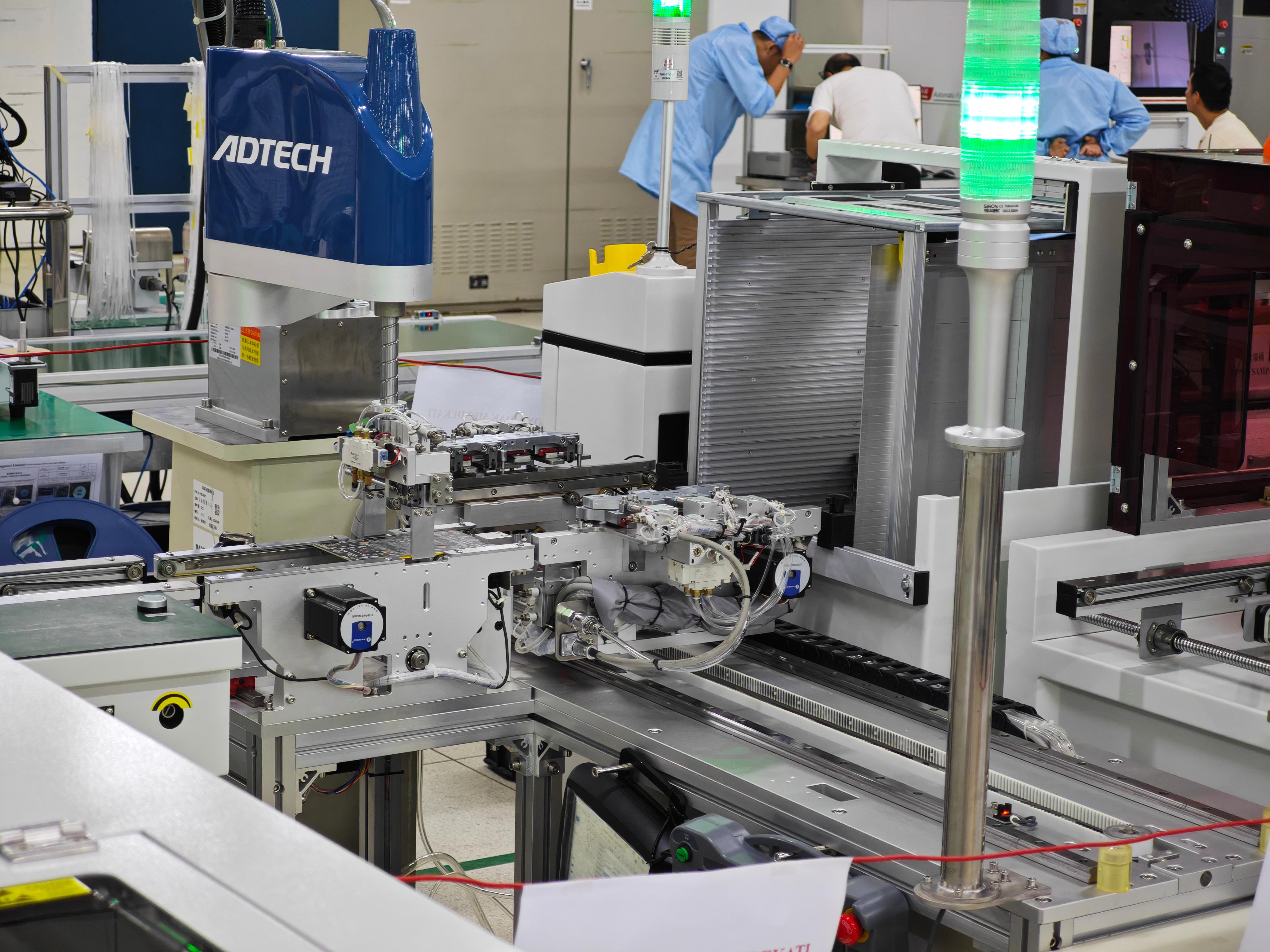 |
 |
 |
© Copyright PC Partner Group Limited. All Rights Reserved.
Choose Languages
Choose Languages 繁體中文 简体中文 English
Prompts
Click prompts to add them under the company line, click again to take one out, then copy the result into your AI chat. Shared by Asian Century Stocks and Uncovered Thai Stocks. Thank you.
PC Partner Group Limited (ticker PCT), listed in Singapore.
Copied
ETFs Holding PC Partner Group Limited
Exchange-traded funds whose newest published daily portfolio holds one of the company's listings, largest weight first.
| ETF | Weight in ETF | Shares | Market value | As of |
|---|---|---|---|---|
| AVSD | 0.00% | 9,500 | $ 13.345K | Nov 16, 2026 |