Business Update for 3Q2026 - Briefing Transcript
Bull 3
Bear 0
Results
|
Nanofilm Technologies International Limited is a nanotechnology materials company that produces advanced materials coatings and nanofabricated products using proprietary vacuum coating and nanofabrication technologies. The company operates through business units focused on industrial coatings, nanofabrication, and hydrogen energy solutions. Key products include TAC-ON, MiCC, and SydroDIAMOND coatings, as well as PVD and PECVD inline coating systems. The group serves customers in the semiconductor, optics, automotive, energy, and consumer electronics industries. Its operations span China, Vietnam, India, Japan, and Europe, with subsidiaries including Nanofilm Advanced Materials India, AxynTeC Dünnschichttechnik GmbH, EuropCoating GmbH, and Sydrogen. The company provides solutions for applications such as ESD coatings, copper seed layer deposition, AR coatings, and coated bipolar plates for hydrogen fuel cells. Summarised from the company's own disclosures, fiscal year ended Jun 2026 |
Industry Specialty Chemicals | Homepage nti-nanofilm.com |
| Sector Basic Materials | IR page nti-nanofilm.com/company/investor | |
|
Tags
vacuum coating, nanofabrication, thin film coatings, hydrogen energy, semiconductor packaging, optical coatings, pvd systems, pecvd systems, bipolar plates, wear-resistant coatings, TAC-ON, MiCC, Sydrogen, SydroDIAMOND, Nanofilm Advanced Materials India, AxynTeC Dünnschichttechnik GmbH, EuropCoating GmbH, Nanofilm Vacuum Coating, Nanofilm Technologies Japan, Mango (Nanofab), NTI Rainbow-TAC
|
Press page — |
Metrics
| Valuation | |
|---|---|
| Market cap | S$ 446.302M |
| Market cap (USD) | $ 346.086M |
| P/E | 30.83 |
| PEG | — |
| P/BV | 0.93 |
| P/S | 1.78 |
| P/OCF | 6.08 |
| P/FCF | — |
| Dividend yield | — |
| Turnover / mcap | — |
| Returns | |
|---|---|
| ROE | 2.6% |
| ROI | 2.1% |
| ROIC | 2.1% |
| Profit margin | 4.8% |
| Growth | |
|---|---|
| Revenue growing | Yes |
| Profits growing | Yes |
| Revenue up 3y | No |
| Revenue up 5y | No |
| Earnings growth 3y (net profit CAGR) | -35.4% |
| Quality | |
|---|---|
| Profitable | Yes |
| Margin expanding | No |
| Buying back stock | No |
| Diluting (TTM) | No |
| Debt/Equity | 18.6% |
| Podcast bulls (TTM) | Sign up |
| Podcast bears (TTM) | Sign up |
| Podcast sentiment (TTM) | Sign up |
| Podcast sentiment % (TTM) | Sign up |
| News sentiment (TTM) | 0 |
| Quality score | -6.3% |
| Insiders | |
|---|---|
| Buys, 1w | Sign up |
| Buys, 1m | Sign up |
| Buys, 1y | Sign up |
| Sells, 1w | Sign up |
| Sells, 1m | Sign up |
| Sells, 1y | Sign up |
Sign up to see this company's insider trades
Sign up to see institutional holdings
Sign UpPodcast Mentions
Sign up to see podcast mentions and sentiment
Sign UpAnnouncements made on SGXNet, newest first, routine notices (disclosures of interest, daily buy-backs, listing confirmations, coupons) included. The link opens the announcement on SGX. Press releases from the company's own website, newest first.
Business Update for 3Q2026
Bull 3
Bear 0
Results
Home /
News /
Marine Piston Rings: Types, Functions, and Coating Solutions

Marine engines depend heavily on piston rings to ensure sealing, heat transfer, and oil control. In this article, we explore the purpose of marine piston rings, the different types used in marine engine applications, and how material composition and coating solutions enhance their performance.
What is a Marine Piston Ring and Why is it Important?
A marine piston ring is a critical component located on the piston of an internal combustion engine. Its primary role is to seal the combustion chamber, preventing high-temperature gases from leaking into the crankcase. This ensures maximum compression and efficient power generation, especially in large 2-stroke marine engines.
Beyond sealing, piston rings also transfer heat from the piston to the cylinder liner, allowing excess thermal energy to dissipate into the engine’s cooling system. Finally, they regulate lubricating oil by scraping excess oil from the liner surface, preventing it from entering the combustion chamber and contributing to harmful exhaust emissions. Without well-functioning marine engine piston rings, a vessel’s performance would rapidly deteriorate due to blow-by, frictional power loss, and increased oil consumption.
Types of Marine Piston Rings and Their Roles
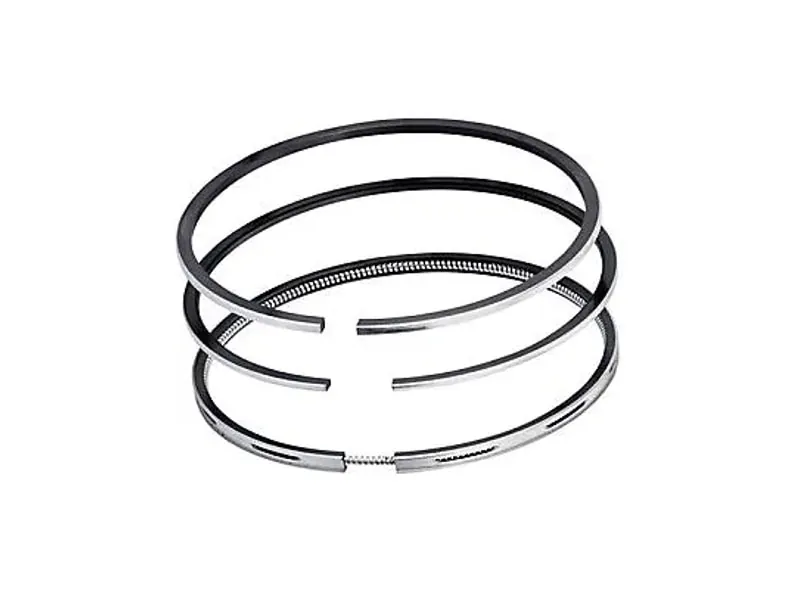
Marine engines typically use a combination of three piston ring types, each designed to serve a specific purpose.
Compression Rings
The compression ring, also known as the pressure ring, is located at the top groove of the piston. It is responsible for sealing the combustion chamber and transferring heat from the piston to the cylinder liner. In both 2-stroke and 4-stroke marine engines, these rings form the first line of defence against gas leakage and thermal damage.
Wiper Rings (Napier Rings)
Below the compression ring sits the wiper ring, often referred to as the Napier ring. Its tapered face scrapes excess oil from the liner surface and acts as a backup to trap any gases that manage to bypass the compression ring.
Oil Control Rings
The third type is the oil control ring, also called the oil scraper ring. This ring regulates the oil film on the liner by evenly distributing and removing excess oil. It often features holes or slots to channel oil back to the crankcase. Oil control rings are especially vital in 4-stroke engines, where crankcase oil comes into direct contact with the cylinder liner.
Common Materials and Coatings for Marine Piston Rings
Marine piston rings are commonly manufactured from cast iron due to its natural lubricating properties and durability. Alloying elements like chromium, molybdenum, vanadium, and nickel are frequently added to enhance wear resistance, strength, and thermal stability.
To further boost efficiency and longevity, surface treatments are commonly applied to reduce friction, minimise wear, and extend service life. Conventional methods include electroplated ceramic chrome, hard chrome, nickel plating, thermal spray cermet coatings, and Chemical Vapor Deposition CVD with amorphous hydrogenated carbon (a-C:H) films.
NTI Nanofilm’s i-TAC® Coating Solution
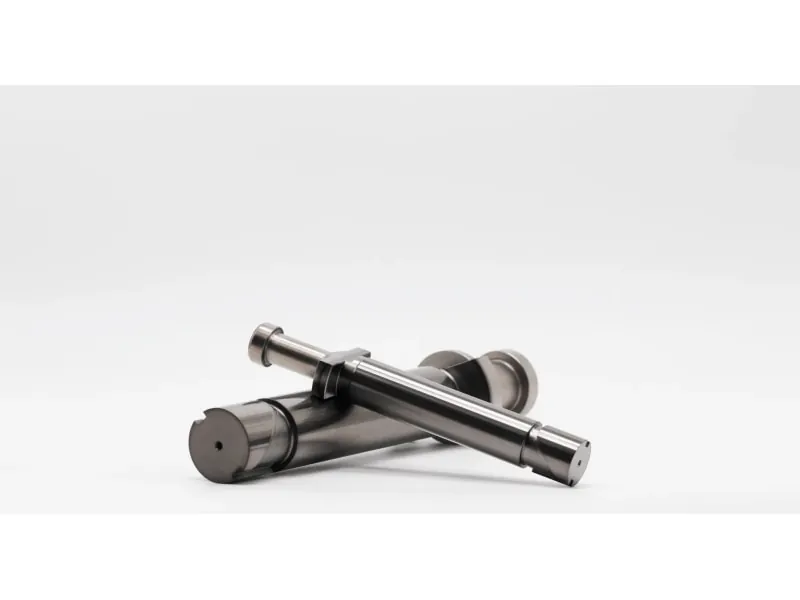
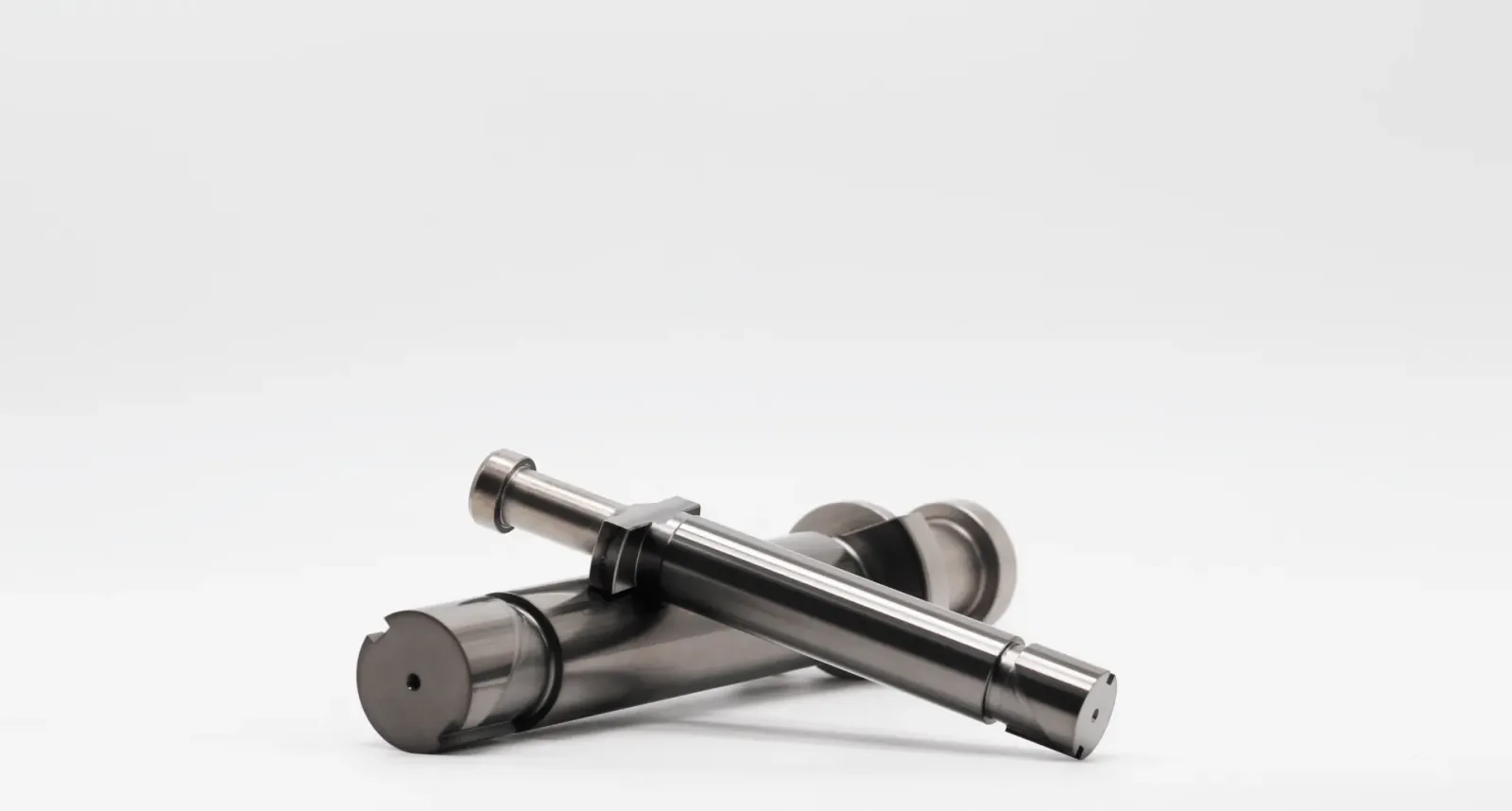
Applied via Filtered Cathodic Vacuum Arc (FCVA) technology, NTI Nanofilm’s proprietary i-TAC® coating offers a next-generation solution that outperforms traditional treatments. Engineered for superior hardness, reduced friction, and exceptional adhesion, i-TAC® significantly improves sealing performance, oil control, and durability. It is suitable for marine engines of various bore sizes and is compatible with both 2-stroke and 4-stroke marine engine applications.
| Property | i-TAC® |
| Coating Material | Ti + ta-C |
| Hardness (HV) | 1,500 ~ 3,500 |
| Friction Coefficient | < 0.1 |
| Deposition Temperature | < 150℃ |
| Coating Thickness (μm) | 5 ~ 20 |
Interested in getting your piston rings better protection?























Prompts
Click prompts to add them under the company line, click again to take one out, then copy the result into your AI chat. Shared by Asian Century Stocks and Uncovered Thai Stocks. Thank you.
Nanofilm Technologies International Limited (ticker MZH), listed in Singapore.
Copied
ETFs Holding Nanofilm Technologies International Limited
Exchange-traded funds whose newest published daily portfolio holds one of the company's listings, largest weight first.
| ETF | Weight in ETF | Shares | Market value | As of |
|---|---|---|---|---|
| AVDS | 0.01% | 66,800 | $ 36.161K | Nov 16, 2026 |
| DFIS | 0.00% | 140,500 | $ 81.876K | Nov 12, 2026 |
| DXIV | 0.00% | 5,200 | $ 3,030.30 | Nov 12, 2026 |
| DFIC | 0.00% | 273,200 | $ 159.207K | Nov 12, 2026 |
| DISV | 0.00% | 61,500 | $ 35.839K | Nov 12, 2026 |
| DFAX | 0.00% | 136,400 | $ 79.487K | Nov 12, 2026 |
| DFAI | 0.00% | 107,100 | $ 62.413K | Nov 12, 2026 |
| AVDE | 0.00% | 353,400 | $ 191.309K | Nov 16, 2026 |
| AVDV | 0.00% | 503,700 | $ 272.672K | Nov 16, 2026 |