Securitas is a security services provider offering intelligent security solutions to small and large customers across various industries. The company delivers customized security solutions combining stationary, mobile, and remote surveillance, technology, fire protection, and risk management services. Its service portfolio includes advisory and intelligence services, safety and security services, technology security services, and operation management services. Securitas operates globally, serving customers in sectors such as data centers and critical infrastructure. The company was founded in 1934. It has recently exited the Argentine market and divested its airport security business in France. Securitas focuses on digital transformation and innovation in the security industry, leveraging technology and AI-driven digital capabilities. The company emphasizes long-term customer relationships and partnership models.

Summarised from the company's own disclosures, fiscal year ended Dec 2025

Industry Security & Protection Services Homepage securitas.com
Sector Industrials IR page securitas.com
Tags
security services, risk intelligence, surveillance, fire protection, technology security, operation management, advisory services, data center security, critical infrastructure, digital transformation
Press page securitas.com/en/newsroom

Metrics

Valuation  
Market cap kr 85.78B
Market cap (USD) $ 8.443B
P/E 16.75
PEG 2.85
P/BV 2.20
P/S 0.55
P/OCF 10.63
P/FCF —
Dividend yield 3.0%
Turnover / mcap —
Returns  
ROE 12.6%
ROI 7.1%
ROIC 8.8%
Profit margin 3.3%
Growth  
Revenue growing No
Profits growing No
Revenue up 3y No
Revenue up 5y No
Earnings growth 3y (net profit CAGR) 5.9%
Quality  
Profitable Yes
Margin expanding Yes
Buying back stock No
Diluting (TTM) No
Debt/Equity 85.9%
Podcast bulls (TTM) Sign up
Podcast bears (TTM) Sign up
Podcast sentiment (TTM) Sign up
Podcast sentiment % (TTM) Sign up
News sentiment (TTM) 28
Quality score 16.7%
Insiders  
Buys, 1w Sign up
Buys, 1m Sign up
Buys, 1y Sign up
Sells, 1w Sign up
Sells, 1m Sign up
Sells, 1y Sign up

Sign up to see this company's insider trades

Figure FY 2025 FY 2024 FY 2023 FY 2022 FY 2021 FY 2020 FY 2019 FY 2018 FY 2017 FY 2016 FY 2015 FY 2014 FY 2013 FY 2012 FY 2011 FY 2010 FY 2009 FY 2008
Revenue 155.113B 161.921B 157.249B 133.237B 107.7B 106.642B 109.56B 99.707B 91.479B 85.026B 80.59B 69.864B 65.018B 64.04B 58.996B 59.098B 61.217B —
Net profit 5.144B 5.172B 1.297B 4.316B 3.134B 2.419B 3.357B 3.016B 2.736B 2.642B 2.437B 2.068B 1.853B 1.212B 1.736B 2.083B 2.116B —

Figure FY 2025 FY 2024 FY 2023 FY 2022 FY 2021 FY 2020 FY 2019 FY 2018 FY 2017 FY 2016 FY 2015 FY 2014 FY 2013 FY 2012 FY 2011 FY 2010 FY 2009 FY 2008
Share price 142.65 123.48 53.9 47.5 117.45 — 136.75 134.7 125.3 — — — — — — — — —
Price performance 12m 0.16 1.29 0.13 -0.6 0.28 — 0.02 0.08 — — — — — — — — — —

Filed figures

Figure Dec 2019 Dec 2020 Dec 2021 Dec 2022 Dec 2023 Dec 2024 Dec 2025
Balance sheet detail
Trade receivables (SEK) — 14.7B 15.2B 20.9B 20.7B 23B 20.9B
↳ YoY growth +3.7% +37.0% -0.7% +11.1% -9.2%
↳ 5y CAGR +7.3%
Other receivables (SEK) — 4.63B 5.55B 10.1B 10.6B 11B 9.4B
Borrowings, current (SEK) — — — 1.48B 10.9B 5.29B 1.61B
Borrowings, non-current (SEK) — — — 41.8B 31.7B 36.8B 33.7B
Lease liabilities (SEK) — 3.43B 3.47B 5.05B 4.67B 4.72B 4.26B
Cash and deposits (SEK) 3.95B 4.72B 4.81B 6.32B 7.94B 7.43B 7.05B
Intangible assets (SEK) — 1.42B 1.73B — — — —
Right-of-use assets (SEK) — 3.33B 3.35B 4.9B 4.5B 4.43B 3.92B
Net debt (borrowings + leases - cash) (SEK) — — — 42B 39.4B 39.4B 32.5B
Cash flow detail
Operating cash flow (SEK) — 8.07B 5.98B 5.62B 7.46B 7.97B 9.47B
Purchases of property, plant and equipment (SEK) — -1.76B -1.79B -2.28B -2.56B -2.31B -2.28B
Change in receivables (cash effect) (SEK) — 123M 117M -1.94B -1.92B -837M -806M
Change in payables (cash effect) (SEK) — — — — 1.48B 181M -466M
Dividends paid (cash effect) (SEK) — -1.75B -1.46B -1.6B -1.98B -2.18B -2.58B
Interest paid (cash effect) (SEK) — — — — -2.24B -2.68B -2.18B
Income taxes paid (cash effect) (SEK) — -862M -1.27B -1.64B -1.35B -2.16B -1.55B
Operating cash flow before change in receivables (SEK) — 7.95B 5.86B 7.56B 9.38B 8.81B 10.3B
Free cash flow (OCF - PPE - intangibles) (SEK) — 6.32B 4.2B 3.34B 4.9B 5.66B 7.19B
Income detail
Total comprehensive income (SEK) — -187M 4.54B 7.84B 2.24B 8.14B -1.01B
Comprehensive income to owners (SEK) — -180M 4.54B 7.83B 2.23B 8.13B -1.03B
Reported — — — — — — —

Sign up to see institutional holdings

Sign Up

Podcast Mentions

Sign up to see podcast mentions and sentiment

Sign Up

Published

23 October 2026 08:00

July–September 2026

  • Total sales MSEK 38 566 (38 521)
  • Organic sales growth 0 percent (3)
  • Adjusted organic sales growth, 3 percent (4)*
  • Real sales growth within technology and solutions 6 percent (4)
  • Operating income before amortization MSEK 3 161 (3 107)
  • Operating margin 8.2 percent (8.1)
  • Adjusted operating margin, 8.2 percent (8.3)*
  • Items affecting comparability (IAC) MSEK –36 (–1 527) 
  • Earnings per share, SEK 3.68 (1.09)
  • Earnings per share before IAC, SEK 3.28 (3.34)
  • Cash flow from operating activities 82 percent (106)

January–September 2026

  • Total sales MSEK 112 620 (116 691)
  • Organic sales growth 0 percent (4)
  • Adjusted organic sales growth, 3 ­percent (4)*
  • Real sales growth within technology and solutions 5 percent (5)
  • Operating income before ­amortization MSEK 8 444 (8 430)
  • Operating margin 7.5 percent (7.2)
  • Adjusted operating margin, 7.6 ­percent (7.5)*
  • Items affecting comparability (IAC) MSEK 102 (–1 770) whereof MSEK 223 (–5) related to divestitures 
  • Earnings per share, SEK 9.36 (5.95)
  • Earnings per share before IAC, SEK 8.69 (8.48)
  • Cash flow from operating activities 71 ­percent (74)
  • Net debt/EBITDA ratio 2.1 (2.2) 

*A new key ratio, operating margin adjusted for the government business within SCIS in the process of being closed down, was added as of the second quarter 2025. A new key ratio, organic sales growth adjusted for the same business, was added as of the third quarter 2025. Refer to note 5 for further information.

Comments from the President and CEO

“Solid performance supported by technology momentum”

Organic sales growth in the third quarter was 3 percent, adjusted for the close-down of the SCIS govern­ment business. The Technology and Guarding business units in North America delivered solid growth, while lower activity in the airport business weighed on organic sales growth in Europe. 

Real sales growth in technology and solutions was 6 percent in the third quarter. The commercial momentum in our global technology business remained healthy, as installation order intake and backlog continued to grow, with record-high installation order intake in North America and Ibero-America. The share of technology and solutions increased to 35 percent (33), reflecting the execution of our strategic direction. This devel­op­ment is supported by our differ­enti­ated technology-led offering, and we continue to expand the commercialization of the capabilities we have built across the Group. 

Our security services offering continues to be well received in client segments such as data centers, defense and pharmaceuticals, where long-term partnerships and high-quality security services offerings are increasingly valued. In certain markets and client segments, however, demand trends remain somewhat cautious, resulting in more selective purchasing behavior and longer decision cycles. We are managing this dynamic effectively in North America, while market conditions in certain countries in Europe and Ibero-America remain more frag­mented, which impacted topline growth in the third quarter.

The adjusted operating margin in the third quarter was 8.2 percent (8.3), supported by continued good performance in North America. Operating margins in Europe and Ibero-America were below the strong levels achieved in the third quarter of last year. This was primarily due to the airport security business in Europe which had an impact in the third quarter of –0.2 percent on Group adjusted operating margin. Operating income was in line with last year. For the first nine months of the year, earnings per share increased by 6 percent.

Cash generation remained good, corresponding to 82 percent (106) of operating income in the quarter, and 71 percent (74) for the first nine months of the year. We remain well positioned to achieve our full-year cash flow target of 80–90 percent of operating income before amortization. The net debt to EBITDA ratio was 2.1 (2.2).

THE TRUSTED PARTNER IN INTELLIGENCE-LED SECURITY

Since launching our strategy this summer, I have met with clients across three continents. The response has been very positive, with both existing and prospective clients recognizing the value of our ambition to become the trusted partner in intelligence-led security. They see compelling value in our emphasis on quality and in a more dynamic, intelligence-led approach that combines high-quality security services with technology, data, analytics and Security Risk Management capabilities. While this represents a shift from established industry practices, there is strong support for the direction. Clients increasingly recognize Securitas’ ability to leverage AI, automa­tion and actionable risk intelligence to deliver greater value, and we are already beginning to see early signs of a shift in buying behavior towards intelligence-led security.

As part of the final stage of our strategic assessment program, we expect to have exited the last remaining contracts within the SCIS govern­ment business by the end of October. 

CREATING LONG-TERM SHAREHOLDER VALUE

In conjunction with the launch of our 2030 strategy, we updated the Group’s financial targets, including our target to deliver average annual earnings per share growth of 10 percent over a business cycle. With a clear focus on quality, innovation, and disciplined execution, we are accelerating our transformation and remain confi­dent in our ability to deliver sustain­able earnings growth and create long-term shareholder value.

Magnus Ahlqvist
President and CEO

PRESENTATION OF THE INTERIM REPORT

Analysts and media are invited to participate in a telephone ­conference on October 23, 2026, at 9.30 a.m. (CEST) where President and CEO Magnus Ahlqvist and CFO Matteo Dall’Ora will present the report and answer questions. The ­telephone conference will also be audio cast live via Securitas’ website www.securitas.com

To follow the audio cast of the telephone conference via the web, please follow the link
www.securitas.com/en/investors/financial-reports-and-presentations/

A recorded version of the audio cast will be available at www.securitas.com/en/investors/financial-reports-and-presentations/ after the ­telephone conference.

In this interview with Security 360 supplement, Yves Berchten discusses how technology and information are becoming essential to anticipating and responding to evolving risks.

External interview with Yves Berchten, CEO of Protectas Group, in Security 360 supplement.
Published September 28, 2026

Below is an English adaptation of an interview originally published in the Security 360 supplement of the Swiss newspapers 24 heures and Tribune de Genève.

Read the full (French) interview in Security 360 supplement→

Yves Berchten, CEO of Protectas Group, Securitas’ business in Switzerland, describes a security sector undergoing rapid change. Here, he examines how risks are evolving and explains how AI, video, data, and robotics can support earlier prevention while keeping people at the center of decision-making.

Yves Berchten, how have security challenges evolved in recent years?

Technological developments have profoundly changed the way we approach security. What seemed unthinkable 20 years ago is now achievable, thanks in particular to artificial intelligence and the integration of different systems.

We are gradually moving from a model based primarily on presence and reaction to one with services capable of detecting, analyzing, and intervening earlier. This means no longer working in silos. Alarms, video, observations from the field, and other useful information must be connected.

Technology is most valuable when it helps operators access the right information, understand it, and act more quickly. But this evolution requires maturity, technical and financial resources, and a real capacity to invest. It also requires the right infrastructure, including a security operations center, or SOC, that can centralize information and turn it into actionable insights.

Not every company will necessarily be able to keep pace. At the current rate, the next five years could bring as much technological development as the last 25.

What are the main risks that people will increasingly face in the future?

We must avoid painting an alarmist picture. What we are seeing above all is that risks are evolving faster and becoming more diffuse and interconnected.

Organizations today must now consider physical safety, business continuity, climate-related events, social tensions, fraud, digital risks, and cybersecurity at the same time. The mass of available information has also increased dramatically. We need to be able to understand what is happening globally, within a particular geographical area or industry, and in an organization’s immediate environment. Information management is becoming central.

We are also seeing more situations in which several risks converge. A cyber incident can have physical consequences. A climate-related event can disrupt an activity. False or misleading information can intensify an already sensitive situation.

Prevention, preparedness, and the ability to maintain essential operations are therefore becoming inseparable.

Are we moving from a mainly reactive approach toward more anticipatory security?

Yes. We are moving from reactivity to proactivity and, in the future, probably more to predictivity. Information plays a decisive role in this shift.

The more data we have from incidents or real-world events, the better we can try to identify conditions that may indicate an emerging risk. This does not mean that everything can be predicted. A mature approach to security combines three capabilities: preventing incidents where possible, detecting deviations early enough, and responding proportionately.

Anticipation is above all about reducing uncertainty and shortening the time between a signal and a decision. The longer that interval becomes, the more difficult it is to respond effectively. Any intervention must then be adapted to the context.

Preparedness therefore also means knowing who to mobilize and how to communicate when an incident occurs.

In concrete terms, what does it mean to anticipate a risk today?

It begins with understanding your environment and its vulnerabilities, then bringing together information that was previously assessed separately. An isolated signal often means very little. Its value comes from contextualization and having it validated by professionals.

Let's take a simple example involving the weather. Heavy rain does not necessarily pose a danger on its own. But if it occurs at a time when large numbers of leaves are falling, and in an area that is particularly exposed, the combination of these different factors can increase the risk of accidents.

Anticipation means cross-referencing several pieces of information, such as weather conditions, the surrounding environment, the season, and the condition of the ground to identify a potentially threatening situation before it develops. You can then decide, for example, to send a team to check certain areas as a preventive measure rather than waiting for an incident to occur.

The same principle applies to a festival. Weather conditions are now an integral part of crisis preparation and management. Organizers need to know in advance whether the necessary teams will be available and what resources may need to be mobilized.

Anticipation therefore depends on the quality of information, professional experience, and the ability to prepare an appropriate response. It does not replace reacting to an incident. It allows decisions to be made earlier.

In your opinion, which new technologies will most profoundly transform security in the coming years?

Video will play a very important role. Cameras have evolved enormously. They are more accessible, can be operated remotely and, above all, can be combined with analytics.

The challenge is no longer simply viewing an image, but identifying relevant events. An unusual gathering outside an entrance, a vehicle somewhere it should not be, or a person crossing a barrier can all become signals requiring attention.

At a large site equipped with hundreds of cameras, no operator can monitor everything continuously. The system must therefore be able to flag situations that really require attention.

Remote monitoring also makes it possible to respond without having someone physically on site. At a location that is closed overnight, an intrusion can be detected, visually verified, followed by the appropriate intervention or deterrent action, rather than being discovered the next morning.

Connected sensors, monitoring platforms, and automation will also play a greater role. Their value does not lie in using each technology in isolation, but in their ability to form a coherent sequence: detect, assess, decide, and respond.

What role will artificial intelligence and data analysis play in this evolution?

They will play an important role, particularly in filtering information and reducing false alarms.

A video system can be affected by rain, snow, or moving foliage. If the operator receives an alert for each movement, their screen quickly becomes overwhelmed with unnecessary notifications.

Machine learning can help the system distinguish normal movement from a truly abnormal event. The aim is to better prioritize alerts more effectively, focusing human attention where it is most needed.

We also have access to a lot of information, including digitized reports, observations from agents, photos, incident histories, and sector-specific data. Analytical tools will make it possible to cross-reference these sources and identify essential information more quickly.

In Switzerland, these applications must remain transparent, proportionate, and complaint with data protection requirements. Technology must support decision-making, not systematically replace human judgement when a situation could have significant consequences.

Will these new technologies also transform the role of people?

Yes, but they will not make people secondary. Above all, they will change where people add the greatest value.

Some repetitive, arduous, or complex tasks can be automated or carried out by drones and, increasingly, robots. People will be able to focus more on analyzing situations, interacting with the public, de-escalating incidents, making decisions, and responding when necessary.

This requires continuous skill development and training so that professionals can use these tools effectively while retaining their capacity for judgment.

People will remain responsible for understanding the context and making decisions. Their experience and ability to intervene will remain essential. We should therefore not think in terms of "people or technology", but "people and technology".

If we look ahead ten years, what could an effective security system look like?

It will be more integrated, connected, mobile, and adaptive. We will need to think cross-functionally instead of creating separate solutions that operate independently.

Information from the field, technical systems, video, and historical records will need to be brought together to provide a clearer picture of risk. The challenge will be to contextualize this information more quickly to help professionals understand a situation and determine their response.

An effective system will detect risks early enough, mobilize the right resources and, when possible, prevent a weak signal becoming a crisis.

However, this evolution must be understood, accepted, and appropriately governed. Trust will be decisive. Technological performance cannot be separated from the way these tools are used and perceived. 

September 28, 2026

About the interviewee

Learn more about Yves

Yves Berchten

Yves Berchten

CEO, Protectas Group

Yves Berchten is the CEO of Protectas Group, Securitas’ business in Switzerland. Yves has over 40 years of experience in the security industry, having joined Protectas as a security officer at age 22. He was appointed CEO of Protectas Group in 2005.

1/1

Related content

Discover similar topics from other Securitas' leaders

Securitas analysts having a work meeting at a large table.

Interview with Ralph Brümmer

A conversation about intelligence-led security

Read the translated interview

Interview with Mike Evans

Two Securitas risk intelligence analysts working at their computers.

Read the full interview ->

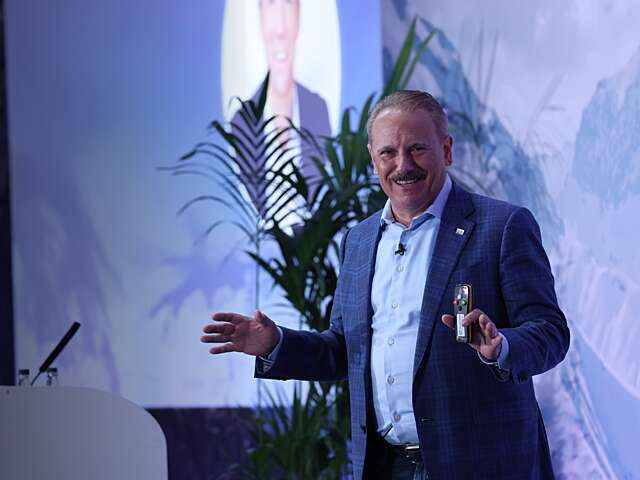
Tony Byerly talking on stage.

Blog

The new role of security technology in a more complex world

Read the blog

Securitas Logotype

Back to top

Select your country and language

Tony Byerly, Global President and CEO, Securitas Technology, shares how electronic security technology is becoming intelligence-led in a new era of risk.

October 15, 2026

4 min read

Over the past decade, security has undergone a fundamental transformation. Not because of a single technology breakthrough, but because the world around us has changed.

Organizations today face a growing range of interconnected challenges: geopolitical uncertainty, evolving cyber threats, risks to critical infrastructure, regulatory pressures, and increasing expectations around operational resilience and business continuity. As a result, security is no longer confined to the perimeter of an organization. It has moved to the boardroom.

To mark the release of the 2027 Global Technology Outlook Report , we sat down with Tony Byerly , Global President and CEO, Securitas Technology, to explore the innovations that have transformed security, how they laid the foundation for today’s emerging technologies, and what they can tell us about where the security industry is heading.

Tony, how has the role of security changed over the past decade?

“Today, security plays a far broader role than simply protecting people, property, and assets. It has become a strategic capability that helps organizations manage risk, strengthen resiliency, support operational performance, and build trust with employees, clients, and communities.

For me, that shift is one of the most significant changes I’ve seen in my career in the security industry. A decade ago, many security discussions focused on individual systems and technologies. Today, business leaders are asking very different questions: How do we protect critical operations? How do we maintain continuity during disruption? How do we anticipate emerging risks? How do we create secure environments that enable growth? And where should our investments go?

Those are not just security questions. They’re business questions.”

What role has technology played in this transformation?

“Technology has undoubtedly played a major role in driving this transformation. Greater connectivity, interoperability of systems, and improved integration capabilities have paved the way for artificial intelligence (AI), cloud platforms, and drones and robotics to reshape what’s possible. Together, these technologies offer organizations greater visibility, faster insights, and more effective ways to respond to evolving risks.

But technology is not the story. The real story is what technology enables.

The organizations that are most successful are the ones using technology to improve decision-making, strengthen resilience, and empower people. They understand that innovation delivers the greatest value when it’s clearly connected to a business outcome.”

AI is a major theme in the 2027 Global Technology Outlook Report. How do you see its impact on security?

“As artificial intelligence continues to move from experimentation to adoption, security leaders are starting to see its potential to help them identify patterns, prioritize risks, make faster decisions, and create a more proactive approach to security. It’s also the top product development priority for our strategic tech partners, all of whom are actively embedding AI into their products and solutions. At the same time, the growth of AI reinforces the importance of transparency, governance, and trust.

But AI is just one example of how clients are carefully adopting new innovations. I think we’ll see the same measured approach with drones and robotics, which are already becoming a bigger part of the industry conversation and potential solutions to certain industry challenges.

Looking ahead, I don’t believe the organizations that succeed will necessarily be those with the most technology. It will be those that combine technology with expertise, sound judgment, and a clear understanding of risk. It’s the businesses that see the full potential of this new connected ecosystem.”

You’ve mentioned a connected ecosystem as a defining trend. What does that mean in practice?

“The new connected ecosystem is redefining how businesses approach risk management. Systems and technology are becoming increasingly interconnected, and organizations can no longer manage them in isolation. This interconnectedness also creates new risks as we look to protect the new ecosystem from emerging threats.

Resilience requires a holistic approach that brings together people, data, technology, and intelligence. That evolution aligns very closely with how we see the future of security.”

Looking ahead to 2030, how do you expect the role of security leaders to evolve?

“I expect the role of security to continue to expand. It will become more predictive, more intelligence-led, and more closely connected to business strategy, making it a key part of a business’ investments. Security leaders will increasingly be part of conversations about growth, operational excellence, continuity, and long-term organizational resilience.

In other words, security will continue its journey from a protective function to a strategic enabler.”

Where does Securitas fit into this future, and what will remain constant?

“At Securitas, we believe the future of security lies in the combination of technology, intelligence, and human expertise. While technologies will continue to evolve, one thing will remain constant: people will remain at the center of creating safer, more secure environments.

The next decade will undoubtedly bring new challenges and new opportunities. But organizations that treat security as a strategic capability rather than a standalone function will be better positioned to navigate uncertainty, build resilience, and create long-term value.

That’s why security has moved from the perimeter to the boardroom. And that is why its importance will only continue to grow in the years ahead as a business enabler.”

Finally, how should security leaders use the 2027 Global Technology Outlook Report?

“The report is designed to help security leaders make sense of the ever-changing security technology landscape. It brings together independent market research, perspectives from the industry’s leading technologists and innovators, insights from global subject matter experts, and findings from the world’s largest global security end-user client survey, with over 16,000 respondents from 19 countries.

As a trusted advisor to our clients, we bring these insights together so organizations can benchmark where they are today, proactively plan their security roadmaps, and make the best investment decisions for their security program.

My advice is to use the report as a starting point for strategic conversations: between security leaders and the broader business, between physical and cyber teams, and between internal stakeholders and trusted partners. The goal is not just to understand the technology trends, but to connect them to your risks, your operations, and your long-term objectives.”

Read the 2027 Global Technology Outlook Report

Explore the most comprehensive outlook on the technologies and trends shaping the future of the commercial electronic security industry. Developed by Securitas Technology , the 2027 Global Technology Outlook Report provides valuable insights for security leaders planning for tomorrow's challenges.

Get the report

GGQY5yqGbYQ

Play

Allow targeting cookies to enable embedded video.

This video is unavailable

We're sorry but to be able to view this video, you need to allow targeting cookies. Please click here to change your settings: Cookies Settings

  • Frequently asked questions

    • How has the role of security technology changed in modern organizations?

      The role of security technology has evolved from standalone systems that merely protect physical perimeters into a strategic capability that drives organizational resilience, risk management, and operational performance.

      A decade ago, security discussions typically centered on procuring individual hardware devices - such as isolated cameras, alarms, or access panels - to guard people, property, and physical assets. Today, organizations face a complex web of interconnected challenges, including geopolitical volatility, critical infrastructure vulnerabilities, and strict regulatory pressures.

      This means business leaders no longer view security as a reactive cost center. Instead, as Tony Byerly, Global President and CEO of Securitas Technology, highlights, executives ask fundamental business questions:

      • How do we protect critical operations and maintain continuity during unexpected disruptions?
      • How do we anticipate emerging physical and digital risks before they escalate?
      • How do we create secure environments that build trust with employees, clients, and communities while enabling growth?
    • What technologies are driving the transformation of modern security?

      AI, cloud platforms, drones and robotics - built on a foundation of greater connectivity, system interoperability, and deep integration - are the primary technologies transforming modern security. Rather than a single isolated breakthrough, the convergence of these capabilities is reshaping how organizations detect and respond to risk.

      For example, improved connectivity and open integration standards allow previously siloed electronic security systems to share data seamlessly across enterprise networks. Once connected, cloud platforms provide centralized visibility across multi-site operations, while AI analyzes vast data streams to surface real-time insights. Simultaneously, drones and robotics are expanding physical coverage and automating routine patrol or inspection tasks across complex sites.

      Together, these innovations give security teams:

      • Greater visibility: Unified situational awareness across physical and digital environments.
      • Faster insights: Automated pattern recognition that cuts through alarm noise.
      • Effective response: Coordinated tools to mitigate evolving threats rapidly.
    • How is artificial intelligence AI impacting physical and electronic security?

      AI is shifting physical and electronic security from a reactive posture to a proactive, predictive model by helping leaders identify patterns, prioritize risks, and make faster operational decisions. Across the commercial electronic security industry, AI has moved decisively from early experimentation into core daily adoption.

      Securitas Technology's 2027 Global Technology Outlook Report states that AI is currently the top product development priority for leading security technology manufacturers, all of whom are actively embedding AI capabilities directly into their hardware and software solutions. In practice, this allows security operations teams to automatically filter false alarms, correlate threat indicators across multiple sensors, and focus human attention on high-priority incidents.

      However, the rapid expansion of AI also introduces new responsibilities. As organizations embed AI into threat detection and decision support, maintaining strict standards around:

      • Transparency in how AI models generate alerts,
      • Governance over data usage and compliance, and
      • Trust among employees, clients, and stakeholders

      becomes essential.

    • What does a connected security ecosystem mean in practice?

      A connected security ecosystem means integrating people, data, technology, and intelligence into a unified risk management framework rather than managing physical and digital security systems in isolation. Historically, organizations operated separate silos for video surveillance, access control, intrusion alarms, and IT cybersecurity.

      Today, as modern electronic security devices become increasingly IP-connected and cloud-enabled, managing them as standalone systems creates operational blind spots and introduces new vulnerabilities. Because every connected sensor or access point is part of a broader network, a vulnerability in one system can expose the entire enterprise to emerging cyber-physical threats.

      Building resilience within a connected ecosystem requires a holistic approach that:

      • Connects disparate data sources: Unifies physical access, video analytics, and threat intelligence into a single operational picture.
      • Protects the ecosystem itself: Applies rigorous cyber hygiene and data protection across all connected security endpoints.
      • Aligns cross-functional teams: Bridges collaboration between physical security, IT/cyber teams, and business leadership.
    • Why has security moved from the physical perimeter to the boardroom?

      Security has moved from the physical perimeter to the boardroom because modern threats directly impact enterprise-wide operational resilience, regulatory compliance, business continuity, and stakeholder trust. In the past, security was largely treated as a facility-level concern focused on keeping unauthorized individuals outside a fence line or building entrance.

      Today, organizations operate in a highly volatile global environment shaped by interconnected risks. Geopolitical uncertainty, supply chain disruptions, evolving cyber threats, and heightened risks to critical infrastructure mean that a single security failure can halt core operations, trigger regulatory penalties, or damage brand reputation. For example, when executives evaluate expanding into a new market or upgrading critical facilities, security is now a prerequisite for enabling safe, uninterrupted business growth.

      Consequently, board members and C-suite leaders recognize that treating security as an isolated protective function leaves the organization exposed. By elevating security to a strategic boardroom capability, companies can proactively navigate uncertainty and build long-term enterprise value.

    • How can organizations connect security technology investments to business outcomes?

      Organizations can connect security technology investments to business outcomes by anchoring every technology decision in specific operational risks, decision-making improvements, and enterprise continuity goals rather than adopting innovation for its own sake. As Tony Byerly, Global President and CEO, Securitas Technology, emphasizes, technology itself is not the story - the real story is what technology enables for the organization.

      The most successful enterprises do not simply accumulate the largest stack of security tools. Instead, they evaluate how emerging technologies empower their people, strengthen organizational resilience, and improve real-time decision-making. In practice, before investing in new systems, leadership teams should align around five core business questions:

      • How do we protect our most critical operations?
      • How do we maintain operational continuity during a major disruption?
      • How do we anticipate and model emerging risks early?
      • How do we create secure environments that actively enable business growth?
      • Where should our capital investments go to deliver the highest risk-reduction value?
    • What role do drones and robotics play in emerging security strategies?

      Drones and robotics play an increasingly important role in emerging security strategies by expanding site visibility, automating routine surveillance across complex environments, and complementing human security teams. Alongside AI and cloud platforms, autonomous aerial and ground systems have become a central part of the modern security industry conversation.

      Rather than deploying autonomous hardware indiscriminately, forward-thinking organizations are taking a measured, outcome-driven approach to adoption. For example, across large industrial campuses, critical infrastructure sites, or high-risk perimeters, drones and robotics help solve specific operational challenges

      • such as covering vast outdoor areas rapidly, inspecting hazardous zones without putting personnel in harm's way, and providing immediate visual verification when an alarm is triggered.

      Just as with AI, the value of drones and robotics depends on how well they are integrated into the broader connected security ecosystem. When combined with human judgment and real-time risk intelligence, they extend reach and speed up incident response.

    • Will AI and automation replace human security professionals?

      No, AI and automation will not replace human security professionals; instead, people remain at the center of creating safer environments while technology empowers them with faster insights and better decision support. Even as AI, cloud platforms, and robotics advance rapidly, technology alone cannot replicate human judgment, contextual expertise, and ethical leadership .

      At Securitas, the future of security is defined by the combination of three essential pillars: technology, intelligence, and human expertise. In practice, automation excels at processing massive volumes of sensor data, spotting anomalous patterns, and reducing routine alarm fatigue. However, interpreting complex real-world situations, exercising sound judgment under pressure, and building trust with employees, clients, and local communities require skilled security professionals.

      Organizations that rely solely on having the most technology often fall short if they lack the human expertise and risk understanding needed to act on the data those systems generate.

    • How will the role of security leaders evolve by 2030?

      By 2030, the role of security leaders will expand from managing a protective function to serving as strategic business enablers who lead predictive, intelligence-led risk management across the enterprise. Over the next decade, security will become even more closely tied to core corporate strategy and capital investment planning.

      Rather than being brought in only after facilities are built or incidents occur, security leaders will increasingly sit at the table during executive discussions on:

      • Business growth: Ensuring new markets, facilities, and digital initiatives are secure by design.
      • Operational excellence: Using connected security data to improve workplace efficiency and safety.
      • Business continuity: Building adaptive capacity to keep operations running through geopolitical, environmental, or cyber disruptions.
      • Long-term resilience: Anticipating threats proactively through predictive analytics and risk intelligence.
    • How should security leaders benchmark and plan their security technology roadmap?

      Security leaders should benchmark and plan their technology roadmap by combining global peer data, independent market research, and cross-functional stakeholder conversations to align technology trends with their organization's specific risks and long-term objectives. Navigating a rapidly changing technology landscape requires reliable external benchmarks rather than guesswork.

      For example, the 2027 Global Technology Outlook Report developed by Securitas Technology synthesizes independent market research, insights from leading technologists and manufacturers, subject matter expert perspectives, and findings from the world's largest global security end-user client survey - comprising over 16,000 respondents across 19 countries. Security leaders can use these benchmarks to evaluate where their current program stands compared to industry peers and prioritize investments with confidence.

      In practice, Tony Byerly recommends using industry outlook data as a catalyst for three strategic conversations:

      • Between security leaders and the broader business to align on enterprise priorities,
      • Between physical and cyber security teams to close ecosystem gaps, and
      • Between internal stakeholders and trusted partners to build an actionable multi-year roadmap.

Related content

You might also be interested in

Smoke over a forest.

Inside Spain’s tech-led fight against forest fires

Read the blog

Securitas officer outside an office building.

3 ways we're augmenting officers with training and tech

Read the blog

Two Securitas analysts looking at information on wall-mounted screens.

Clarity in a noisy world: Annual Intelligence Estimate Mid-Year Review

Read the blog

Securitas AB - Back to top of homepage.

Back to top

Select your country and language

Prompts

Securitas (ticker SECU-B), listed in Sweden.

ETFs Holding Securitas

ETF Weight in ETF Shares Market value As of
DTAN 0.46% 6,310 $ 100.258K Nov 17, 2026
DWMF 0.25% 5,127 $ 84.336K Jun 30, 2026
DFIV 0.15% 2,122,129 $ 34.555M Nov 12, 2026
NBIE 0.13% 21,296 $ 337.974K Aug 31, 2026
DFAI 0.05% 517,539 $ 8.427M Nov 12, 2026
DFSI 0.04% 29,269 $ 476.589K Nov 12, 2026
DXIV 0.04% 5,393 $ 87.815K Nov 12, 2026
DFIC 0.03% 277,739 $ 4.522M Nov 12, 2026
AVDE 0.02% 184,281 $ 3M Nov 16, 2026
AVSD 0.02% 3,712 $ 60.431K Nov 16, 2026
DFAX 0.02% 121,721 $ 1.982M Nov 12, 2026
FENI 0.01% 76,533 $ 1.257M Jun 30, 2026