Textile technology is advancing rapidly. Brands announce exciting developments regularly, making it a challenge to narrow it down to a select few technologies. However, ultimately, our team settled on 20 core technology trends transforming the…
Textile technology is advancing rapidly. Brands announce exciting developments regularly, making it a challenge to narrow it down to a select few technologies. However, ultimately, our team settled on 20 core technology trends transforming the textile industry.
Antimicrobial additives are changing how brands think about textile design by ensuring fabrics stay fresher for longer and require less frequent washing. As many of the unpleasant odors on our clothes result from bacterial growth, antimicrobial additives stop smells at the source, so consumers can wear items more and wash them less regularly. In turn, this extends products’ expected lifespans.
Our industry-leading Polygiene StayFresh
solution is an excellent example. Based on silver ion technology, the solution’s active ingredient is silver chloride, a salt that occurs naturally in soil and water. Skin-safe and capable of providing antibacterial protection for a product’s entire lifespan, Polygiene StayFresh prevents bacterial growth, keeping textiles odor-free in the process. Capable of reducing a garment’s overall environmental impact by a third
.
- Thermo-regulatory technologies
Arguably, the most exciting recent technological development in the textile sector is the emergence of thermo-regulatory technologies that keep the wearer cool and comfortable. Whereas previous textile products designed to cool the body have typically focused on mesh ventilation panels and moisture-wicking capabilities, Polygiene® StayCool
is a new type of thermo-regulatory technology that works to actively cool the fabric itself.
At this moment in time, Polygiene StayCool is breaking fresh ground and leads the industry in terms of efficacy and ease of application. An additive technology that’s integrated into fabrics during manufacturing, it features a cutting-edge thermo-reactive polymer matrix that activates on contact with sweat, cooling the fabric between 2 – 3°C (4.3 – 5.4°F). The result is a long-lasting cooling effect that kicks into action as soon as things start to heat up. In addition, Polygiene StayCool enhances moisture-wicking performance, ensuring sweat is moved away from the skin quickly and efficiently, allowing for easier evaporation and further enhancing the cooling effect.
With the textile sector increasingly focused on performance apparel and fabrics, the emergence of a highly effective additive cooling technology is extremely exciting. A valuable addition to almost any type of textile – whether it’s gym gear, office apparel, or everyday, casual clothing – Polygiene StayCool is set to make its mark on the textile and apparel sectors in 2026.
- Plant-based additive solutions
For environmentally-minded companies, plant-based textile technologies are particularly interesting. They tend to be kinder on the environment, easier to integrate into circular economies, and more appealing to consumers and manufacturers. Consequently, we anticipate significant investment and growth in developing plant-based textile additive technologies over the next five to ten years.
At Polygiene, we’re already committed to developing plant-based additive solutions and recently launched our Polygiene® StayFreshBIO
technology. A 100% plant-based antimicrobial textile additive, the solution inhibits the growth of odor-causing bacteria, just like our traditional Polygiene StayFresh solution. Except, in this case, the active ingredient is based on a natural organic acid widely used in the food, pharmaceutical, and cosmetics industries. It’s just as effective and has been put through rigorous independent testing to ensure it meets relevant ISO, AATCC, IBRG, and JIS-L standards.
In many instances, developing plant-based additive solutions is about giving consumers and manufacturers more choice. It’s not necessarily intended to replace existing technologies. For instance, Polygiene StayFresh and Polygiene StayFreshBIO stand side by side, as two equally important, safe, and effective solutions in our Freshness portfolio.
Additive technologies aren’t the only part of the textile sector experiencing a little plant-based disruption. Though natural fibers have always been popular, it’s fair to say that synthetic fibers now dominate large parts of the textile industry, particularly when it comes to low-cost or performance wear. In 2026, we expect things to shift back towards natural textiles. But not necessarily those that brands relied on in the past. While cotton, silk, wool, and linen will all continue to play a prominent role in textile manufacturing, a new generation of plant-based natural fibers will also emerge.
Broadly, we can divide these new textile technologies into two categories – those made from plants grown for the express purpose of producing textiles and those derived from plant-based waste products created in other manufacturing processes. Cactus, jute, and seaweed are good examples of plants that fit into the first category, and bananas, olives, and hemp fall into the second. As these are natural fibers, they tend to be better for the environment. The fact that some are manufactured from by-products further enhances their sustainability. While it is unlikely that any of these new plant-based textiles will be manufactured in sufficient quantities to replace or overtake any of the current top crops, we expect to see their market share grow.
![]()
- Integrated shedding protection
Transitioning away from short-life consumables to long-life durables is crucial for the textile industry. Many clothing manufacturers are looking to respond to concerns that fiber shedding during washing is causing significant plastic contamination in water.
With this in mind, it makes sense that one of the biggest textile technologies of 2026 will be an anti-shed solution. A Polygiene Innovation Project that’s still being refined, Polygiene® ShedGuard
illustrates just how effective a well-designed anti-shedding solution could be. Easily applied via padding, the technology forms a sheath around fiber bundles to prevent micro-fibrils from separating during wear and the subsequent washing and drying cycles. It has been shown to reduce shedding by up to 80%, drastically improving material longevity. It’s particularly effective when used on recycled polyester and polyester knits, poly-cottons, nylons, suede microfibers, and plush fabrics, though it can also be used on other fabrics.
Interestingly, Polygiene ShedGuard has also been shown to work incredibly well in tandem with other Freshness technologies, including Polygiene StayFresh, StayFresh BIO, and OdorCrunch, and will extend their already lengthy protection windows. This suggests technologies like Polygiene ShedGuard may also play a role in strengthening and fortifying other textile additives.
- Greater customization and personalization
New manufacturing technologies (some of which we will explore in greater detail later in this article) are allowing textile manufacturers and fashion brands much greater flexibility in their manufacturing processes. When combined with digital design solutions that enable consumers to quickly and easily propose personalized design features, these technologies should facilitate greater customization in the textile industry and make unique, highly personal textile products more affordable and accessible.
While the cost of facilitating greater customization means the trend will predominantly influence the upper end of the textile industry – those brands producing higher-value items – we should see it trickle down to more affordable brands, too. The growth of e-commerce platforms that cater to customizable textile printing has demonstrated that the demand is there, and it is only a matter of time before more prestigious brands begin incorporating personalization technologies into their product offerings.
- Technology for business versatility
So, this one may be considered cheating, as it’s not actually a single technology or technology trend. However, it’s a significant enough concern to warrant an entry of its own. In 2026, we will see a series of new conditions and constraints impact businesses in the textile sector. While each on its own may not constitute a serious obstacle, they may compound one another and, together, cause considerable problems for businesses working with textiles.
For example, 2026 will see extensive regulatory change in the EU, as it seeks to place a greater emphasis on sustainability. Navigating the new regulations will require flexibility and an ability to move quickly. At the same time, forecasters are predicting that supply chain volatility is set to continue and most likely increase as we head into 2026. This necessitates more resilient supply chains, which can only be achieved via the adoption of new business technologies.
One of the main challenges associated with these potential obstacles is that the solution will look different for every business. For instance, Polygiene partner, Bunker Mentality
, has implemented new made-to-order manufacturing technology that eliminates waste, allows it to constantly reinvigorate its product offering, and move quickly with trends. This versatility has proven invaluable. However, for other businesses, becoming more versatile might require investment in data forecasting technologies to enable smarter inventory management. Or it might mean prioritizing interoperability to ensure your entire organization can communicate and collaborate effectively, and respond to challenges and market shifts with speed and precision. Whichever approach you take, the key here is to ensure your business is agile and prepared to respond to rapid changes in conditions.
- Digital printing capabilities
Digital printing is a technology that has already had a significant impact on the textile industry, changing the way brands apply patterns and designs to fabrics. However, new developments in printing technology are drastically improving print quality, efficiency, and cost, allowing for more intricate designs without compromising the overall finish.
Many of these changes are being driven by improved inks that are more vibrant and durable but less harmful to the environment. Innovative print heads are also allowing for more precise and quicker printing. Finally, AI technology is being incorporated into print systems, facilitating automated maintenance and print error prediction – both of which reduce overall printing costs.
- Brand protection and authenticity technologies
Despite their best efforts, many high-end brands are struggling to combat a flourishing fashion black market. Fake designer goods are still being produced in astounding quantities, affecting these brands’ bottom lines, intellectual property, and reputations. While many consumers purchase illegitimate goods knowing that they are not authentic, many buy believing them to be real. When they inevitably fail to meet expectations, the brand suffers and its image is tarnished.
To counter this, more textile brands are investing in authenticity technologies, such as Addmaster’s Verimaster solution
. More effective than traditional verification technologies like holograms and watermarks, which are easy to forge, Verimaster is an anti-counterfeit additive that manufacturers can use to identify authentic consumer goods. It cannot be replicated or reproduced by illicit groups. It can also be used for batch traceability, enabling manufacturers to easily determine the age and origins of a particular product.
![woman upcycling fabric]()
- Dyeing technologies reduce consumption and waste
Digital technologies are also entering the textile-dyeing sector, where they support new approaches to process control and production efficiency. This promises to revolutionize traditional dyeing techniques and address an aspect of the textile manufacturing process that has struggled with sustainability concerns.
In other areas, dye manufacturers are also incorporating additive technologies into their products and producing recycled dyes with the aim of improving environmental performance.
Biodegradable textiles are gaining ground as fashion brands become increasingly interested in sustainability and want to ensure products are environmentally friendly across their entire lifecycle, including end-of-life disposal. An innovative textile technology that’s desperately necessary, biodegradable textiles enable consumers to dispose of their clothes safely and sustainably, making them an excellent alternative to recyclable fabrics already in use.
Textiles that do not degrade naturally are usually consigned to landfills, where they remain for a long time. Polyester clothing can take up to 200 years to decompose, depending on fabric quality and thickness (U of W
). By developing and utilizing biodegradable textiles, brands address one of the most pressing sustainability issues in the fashion industry.
From FitBits to Apple Watches, we are all familiar with wearables. These ubiquitous accessories monitor our heart rate, temperature, sleep quality, and other biometrics. Until recently, they were typically incorporated into watches, bracelets, or similar accessories. Now, smart textiles are taking their place.
Featuring an array of tiny sensors, smart textiles can monitor the wearer’s health metrics or external conditions, providing consumers with important information and feedback. We could soon see a t-shirt that alerts the wearer when they need to apply sunscreen or records their daily exercise. This textile technology is already widely used in medical and military applications. Over the next few years, we expect it to become more common in everyday consumer clothing, becoming one of the fastest-growing textile technology trends.
![Woman wearing anti-odor clothing]()
When we sweat, the damp, dark folds in our clothes make for the perfect breeding ground for odor-producing bacteria. Fabrics also soak up environmental odors, like body odor, smoke, and cooking smells. That’s why our fitness clothing or workwear gets smelly pretty quickly. Clothes that smell bad affect our comfort and self-confidence, often preventing us from fully focusing and fulfilling our potential.
Fortunately, new anti-odor additives offer a solution. While antibacterial solutions, like Polygiene StayFresh, tackle those odors caused by bacteria, Polygiene OdorCrunch
attacks environmental smells. It does so using natural silica particles. These silica particles attract the molecules responsible for environmental smells (most notably sulfur, oxygen, and nitrogen), absorb them, and crunch them, breaking them down and releasing them.
Nanotechnology concerns itself with the tiny. It refers to technologies that are 1 to 100 nanometres in size, and we are only just starting to exploit its potential in textiles. Broadly speaking, brands use nanotechnology to improve textile performance. For instance, designers can integrate specific nanoparticles into textiles to enhance certain characteristics. They could make them more water-resistant or better at providing UV protection.
Combined with existing antimicrobial solutions, nanotechnology could usher in a new age of self-cleaning fabrics, reducing the amount of washing required and extending a product’s expected lifespan.
The concept of the circular economy is everywhere, pervading all industries and influencing all manufacturing organizations. The textile industry is no exception. In a closed-loop circular economy, businesses limit the amount of material, energy, and other components entering or leaving the manufacturing cycle. This places greater emphasis on recycling, reusing, and renewable energy sources.
In textiles, several technologies are improving brands’ abilities to implement closed-loop systems. Chemical recycling techniques are a good example. They enable manufacturers to break textiles down into raw components, which can then be used to produce new fibers, reducing their reliance on new, virgin resources.
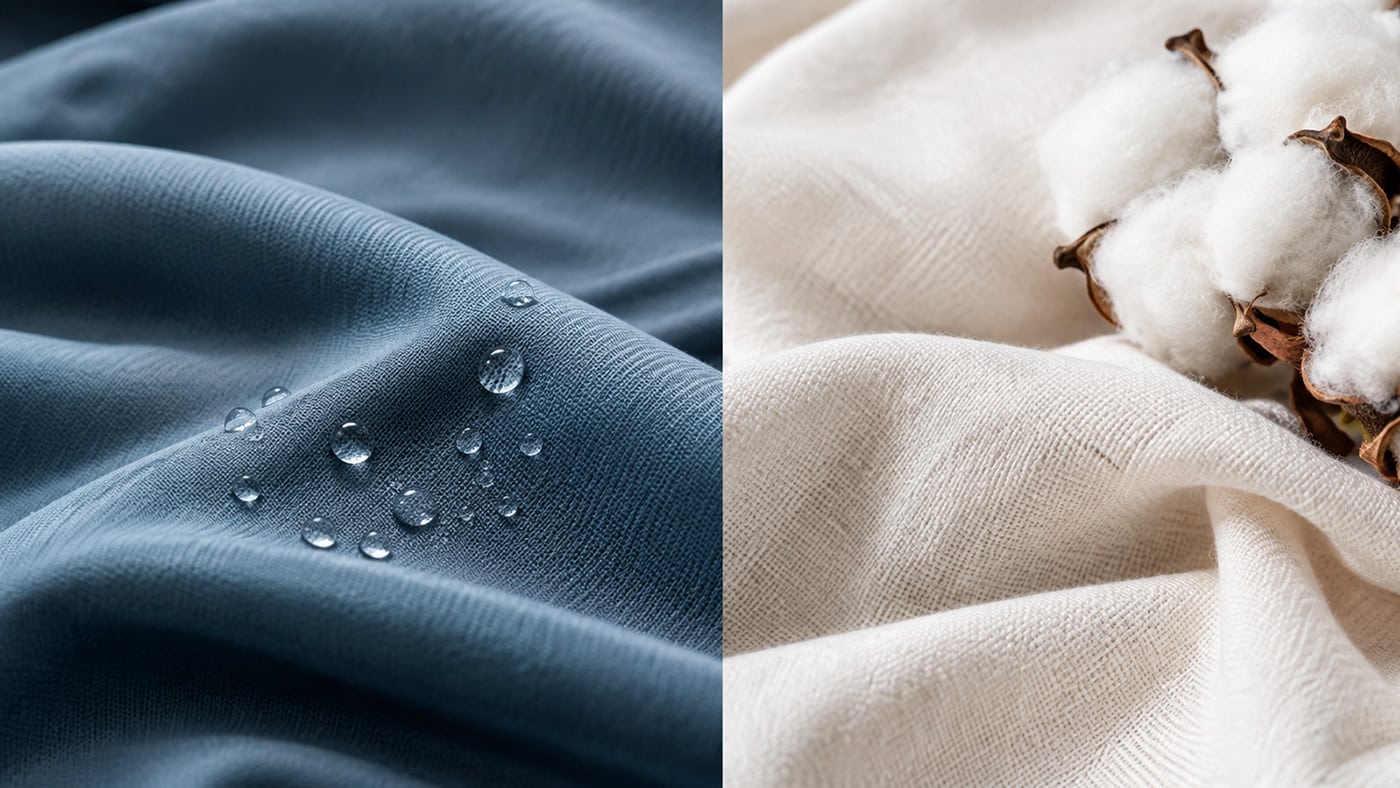
We are also seeing advancements in hydrophobic textile technology. This kind of solution improves fabric water repellency and prevents textiles from absorbing moisture. As you might expect, the sports and outdoor industries are particularly interested in this technology.
However, we can also use hydrophobic technology to equip products with self-cleaning properties. Hydrophobic coatings cause water droplets to roll off surfaces. As they do, the drops carry away accumulated dirt and debris, keeping the item clean and reducing the amount of washing required.
- VR, AR, and virtual try-on
While brick-and-mortar stores still play a critical role in the clothing, fashion, and textile industries, digital technologies and sales tools are revolutionizing how consumers approach shopping. Augmented reality apps enable customers to see how clothes will look and fit before making a purchasing decision, so they don’t even have to leave their homes to try on outfits.
At the same time, body-scanning technologies ensure customers get the right size every time, reducing returns, making for a more streamlined experience, and improving customer satisfaction. As this new textile technology develops, we can expect to see it used to facilitate bespoke tailoring and personalized designs, too.
- Artificial Intelligence (AI) in Design and Manufacturing
AI is everywhere right now – including the textile industry. We anticipate it will affect the sector in two main ways. First, AI will play a role in analyzing consumer behavior, trends, and preferences, helping brands identify market movements and opportunities. They can use this information to inform textile design and development, limiting costly design failures and better meeting consumer demand.
Second, AI will help textile businesses optimize manufacturing processes and improve efficiency. Again, this will reduce overall operating costs by reducing resource use and minimizing manufacturing errors. Savings made via innovative AI textile technology can then be invested in other areas.
![synthetic fabric]()
- Synthetic biology and lab-grown materials
Synthetic and lab-grown materials are also changing how we think about natural resources and our relationship to traditional textile crops, such as cotton. The ability to synthesize new materials and produce them at scale in a controlled environment means that we do not require the harmful pesticides and chemicals used to grow natural fibers and can better manage our resource use.
Lab-grown materials also enable us to create fibers with desirable qualities and performance characteristics. For instance, we can bioengineer synthetic spider silk that is stronger, lighter, and more durable than traditional fibers. We can create textiles that perform better in extreme heat or cold or respond to specific environmental conditions, such as high humidity.
Finally, synthetic, lab-grown materials give us greater control over how a textile looks, feels, and interacts with other fibers. It allows brands to create entirely new designs that break the rules associated with traditional fibers and gives them much more creative freedom.
- Advanced robotics in manufacturing
With the emergence of a truly global economy and the promotion of a fast fashion philosophy, much of the Global North’s traditional textile manufacturing emigrated to countries in the Global South, where it was cheaper to produce. However, this has resulted in concerns over ethical labor practices and sustainability.
In recent years, advanced robotics seems to have overcome one of the main obstacles preventing textile manufacturing from returning to the Global North – cost. Though the initial investment required is significant, robotics in manufacturing is a textile industry technology that allows for low-cost, ethically responsible textile production. As a result, we are seeing some innovative brands set up new manufacturing facilities in countries that lost their textile sector decades ago.
Polygiene technology is at the cutting edge
Emphasizing performance and comfort, Polygiene solutions are a fantastic example of how you can leverage innovative textile technology to improve products, offer consumers better value, and distinguish your brand. Whether you want to integrate Polygiene StayFresh, Polygiene OdorCrunch, or both into your textiles, the process is relatively simple and easy to implement.
Both solutions are added to textiles at the point of manufacture, so the additive permeates the material and is IN the fabric rather than on it. This prevents leaching and ensures the product benefits from 24/7 anti-odor protection for its entire lifespan. Our technologies are entirely skin-safe, compliant with the EU’s REACH legislation, and certified by both bluesign® and OEKO-TEX.
By tackling odors at the source, Polygiene solutions reduce the washing required to keep products fresh and smell-free. The solutions also save end-users valuable time and money while helping them stay comfortable and confident throughout the day.
Reach out to the Polygiene team
if you have any questions or want to discuss incorporating Polygiene into your products.
![]()
![Andreas Grevlind]()
Andreas Grevlind
Head of Digital Marketing & Brand