Koninklijke Philips N.V. is a health technology company primarily involved in diagnostic imaging, image-guided therapy, patient monitoring, and health informatics, as well as consumer health and home care. The company operates through two main segments: Health Systems, which provides professional medical technologies for hospitals and clinics, and Personal Health, which offers consumer products for personal care and home use. Key product areas include ultrasound systems, patient monitoring devices, and diagnostic imaging equipment. Philips serves healthcare providers, hospitals, and consumers globally. The company partners with healthcare providers, startups, universities, and other enterprises to develop health solutions. Philips has a heritage of innovation stretching back over a century.

Summarised from the company's own disclosures, fiscal year ended Dec 2025

Industry Medical Devices Homepage philips.co.th
Sector Healthcare IR page philips.com/c-e/investor-relations.html
Tags
diagnostic imaging, image-guided therapy, patient monitoring, health informatics, consumer health, ultrasound, home care, Health Systems, Personal Health
Press page —

Metrics

Valuation  
Market cap € 21.715B
Market cap (USD) $ 23.862B
P/E 24.01
PEG —
P/BV 1.98
P/S 1.22
P/OCF 10.69
P/FCF 14.35
Dividend yield 3.7%
Turnover / mcap —
Returns  
ROE 7.8%
ROI 5.0%
ROIC 6.0%
Profit margin 5.0%
Growth  
Revenue growing No
Profits growing Yes
Revenue up 3y No
Revenue up 5y No
Earnings growth 3y (net profit CAGR) —
Quality  
Profitable Yes
Margin expanding Yes
Buying back stock No
Diluting (TTM) —
Debt/Equity 63.1%
Podcast bulls (TTM) Sign up
Podcast bears (TTM) Sign up
Podcast sentiment (TTM) Sign up
Podcast sentiment % (TTM) Sign up
News sentiment (TTM) 0
Quality score 5.6%
Insiders  
Buys, 1w Sign up
Buys, 1m Sign up
Buys, 1y Sign up
Sells, 1w Sign up
Sells, 1m Sign up
Sells, 1y Sign up

Sign up to see this company's insider trades

Figure FY 2025 FY 2024 FY 2023 FY 2022 FY 2021 FY 2020 FY 2019 FY 2018 FY 2017 FY 2016 FY 2015 FY 2014 FY 2013 FY 2012 FY 2011 FY 2010 FY 2009 FY 2008
Revenue 17.834B 18.021B 18.169B 17.827B 17.156B 19.535B 19.482B 18.121B 17.78B 24.516B 24.244B 21.391B 23.329B 24.788B 22.579B 25.419B 23.189B 26.385B
Net profit 897M -698M -463M -1.605B 3.323B 1.195B 1.173B 1.097B 1.87B 1.491B 659M 411M 1.172B 231M -1.291B 1.452B 424M -92M
Free cash flow — — — — — — 1.513B — — — — — — — — — — —

Figure FY 2025 FY 2024 FY 2023 FY 2022 FY 2021 FY 2020 FY 2019 FY 2018 FY 2017 FY 2016 FY 2015 FY 2014 FY 2013 FY 2012 FY 2011 FY 2010 FY 2009 FY 2008
Share price 23.2 — 19.41 24.76 29 46.66 42.96 33.37 — — — — — — — — — —
Price performance 12m — — -0.22 -0.15 -0.38 0.09 0.29 — — — — — — — — — — —

Filed figures

Figure Dec 2017 Dec 2018 Dec 2019 Dec 2020 Dec 2021 Dec 2022 Dec 2023 Dec 2024 Dec 2025
Balance sheet detail
Trade receivables (EUR) — — 4.55B 4.16B 3.79B 4.12B 3.73B 3.67B 3.53B
↳ YoY growth -8.7% -8.9% +8.7% -9.3% -1.6% -3.9%
↳ 5y CAGR -4.2% -3.2%
Borrowings, current (EUR) — — 508M 1.23B 506M 931M 654M 526M 1.15B
Borrowings, non-current (EUR) — — 4.94B 5.71B 6.47B 7.27B 7.04B 7.11B 6.93B
Cash and deposits (EUR) 1.94B 1.69B 1.43B 3.23B 2.3B 1.17B 1.87B 2.4B 2.79B
Intangible assets (EUR) — — 3.47B 3B 3.65B 3.53B 3.19B 2.98B 2.57B
Net debt (borrowings + leases - cash) (EUR) — — 4.02B 3.71B 4.68B 7.03B 5.82B 5.24B 5.29B
Cash flow detail
Purchases of property, plant and equipment (EUR) — -422M -518M -513M -397M -444M -345M -317M -269M
Purchases of intangible assets (EUR) — -123M -156M -127M -107M -105M -96M -118M -136M
Change in inventories (cash effect) (EUR) — -394M -175M -584M -581M -572M 257M 230M -115M
Dividends paid (cash effect) (EUR) — -401M -453M -1M -482M -412M -2M -1M -328M
Share buybacks (cash effect) (EUR) — -1.04B -1.38B -343M -1.64B -187M -662M -411M 0.00
Interest paid (cash effect) (EUR) — -170M -172M -148M -151M -205M -250M -261M -253M
Income taxes paid (cash effect) (EUR) — -301M -363M -394M -249M -333M -152M -173M -213M
Share-based compensation (EUR) — 97M 98M 115M 108M 95M 88M 96M 141M
Income detail
Research and development expense (EUR) — 1.76B 1.88B 1.92B 1.81B 2.1B 1.89B 1.75B 1.7B
↳ 5y CAGR +1.4% -1.5% -2.4%
Total comprehensive income (EUR) — 1.23B 1.51B 242M 4.53B -782M -1.1B 33M -757M
Comprehensive income to owners (EUR) — 1.23B 1.51B 235M 4.52B -786M -1.1B 27M -754M
Reported May 20, 2021 May 20, 2021 May 20, 2021 May 20, 2021 Mar 16, 2022 Feb 28, 2023 Feb 27, 2024 Mar 4, 2025 Mar 4, 2026

Sign up to see institutional holdings

Sign Up

Podcast Mentions

Sign up to see podcast mentions and sentiment

Sign Up

Turning Europe’s Safe Hearts Plan into action Bull 1 Bear 0 Other

EU Member States are called to design national cardiovascular plans by 2027. An analysis by Philips of six European countries shows how to connect care.

Oct 30, 2026 | 3 minute read

Cardiology Access to care News article

The European Union (EU) has called on Member States to design and implement national cardiovascular health plans by 2027.[1] This call to action comes from the Safe Hearts Plan, the first EU-wide approach to tackling cardiovascular disease, which remains Europe’s leading cause of mortality and disability.[2] The plan sets a goal of reducing mortality from heart disease by 25%.[3]

Employees sat at a table, collaborating together

Across the EU there are considerable differences in health systems. European countries take various approaches to heart health, but many treat prevention, diagnosis, treatment and follow-up as separate.[4] The result? Patient outcomes differ and critical opportunities for improvement are missed.[4]

What the Safe Hearts Plan asks of EU countries

The Safe Hearts Plan responds to this challenge by addressing gaps in research and innovation, supporting Member States to develop their national plans, and promoting the opportunities of digital and AI.[2] Its overarching ambition is to reduce the impact of cardiovascular diseases on societies, health systems and economies across the EU by improving prevention, detection, treatment, care and outcomes.[2]

To understand how European countries can effectively prepare and implement a robust national cardiovascular plan, Philips examined plans from six European countries: Czech Republic, Latvia, Luxembourg, Poland, Romania and Spain. Through our research, we identified approaches that countries can learn from to help strengthen their national plans and benefit their health systems and patients.[4]

A framework for national cardiovascular plans

Policy documents differ in legal status, scope, duration and operational detail. Our analysis therefore examined what each plan specifies, using a common framework covering the patient pathway — prevention, detection, treatment and follow-up — and five health system enablers: data and digital infrastructure, financing and reimbursement, workforce, equity, governance and adoption. The analysis is not a ranking: countries have different approaches and opportunities to learn from one another.[4]

Different strengths, shared opportunities

All six plans address major elements of cardiovascular care. Each brings strengths and offers lessons that can help governments improve their policies. Poland and Latvia have developed robust frameworks for financing and implementing cardiovascular programs. The Czech Republic and Luxembourg offer strong examples of connected digital systems that allow hospitals and clinics to share patient information. Poland and the Czech Republic use effective governance structures to help translate policy into care.[4]

Across the six countries, the analysis identifies opportunities to reinforce the connections between stages of care. Plans could more effectively demonstrate how patients move between prevention and treatment, how long-term follow-up is paid for and who is responsible for implementation. Measurable access targets can also be strengthened.[4]

National plans and cardiovascular health policies could be improved by connecting policy ambitions across the full patient pathway. Supporting coordinated strategies with clear financing, interoperable data, workforce capacity, equity measures and accountable implementation is also a critical success factor.

  • Jan-Willem Scheijgrond, Head of Government and Public Affairs

For example, tracking how many people are screened is only part of the picture. National plans could also consider whether people identified as “at risk” are referred for appropriate follow-up, receive the right diagnosis and then get suitable support or treatment. Someone whose blood pressure is measured, for instance, may need further assessment for a cardiovascular condition. Clear pathways can help connect that initial check to follow-up tests — such as an ultrasound or CT scan — and also to coaching, monitoring or treatment. The aim is to make sure that at-risk people are not only identified but can move through the next steps of care.[4]

Turning insights into action

These lessons from Europe illustrate how well-designed policies and end-to-end solutions can help health systems improve access, clinical efficiency and continuity, ultimately delivering better cardiovascular care, including for conditions such as stroke, for people everywhere. At Philips we continue to work with policymakers and healthcare systems to translate these insights into improved heart health for people across Europe.

Shaping cardiovascular policy, leading a health system or delivering care? Download the Safe Hearts, Connected Care whitepaper for practical guidance, recommendations and case studies to help turn Europe’s Safe Hearts Plan into national action ahead of the 2027 deadline.

Sources

[1] European Society of Cardiology (ESC). National Cardiovascular Health Plans: Supporting the EU 'Safe Hearts Plan'. ESC website. 2026. Available at: https://www.escardio.org/public-health/eu-cardiovascular-health-plan/national-cardiovascular-health-plans/. Last accessed: October 2026. [2] European Commission (EC). Non-communicable diseases: Cardiovascular health. EC website. 2026. Available at: https://health.ec.europa.eu/non-communicable-diseases/cardiovascular-health_en. Last accessed: October 2026. [3] European Commission (EC). Press corner: Questions and answers on the EU Safe Hearts Plan EC website. 2025. Available at: https://ec.europa.eu/commission/presscorner/detail/en/qanda_25_3080. Last accessed: October 2026 [4] Philips. Safe Hearts, Connected Care: A Roadmap for Europe’s Cardiovascular National Plans. Philips website. 2026. Available at: Safe Hearts, Connected Care: A Roadmap for Europe’s Cardiovascular National Plans. Last accessed: October 2026.

Media contacts

Ellen Silveira--Director, Brand and Content Strategy, Global Brand Team

Ellen Silveira

Director, Brand and Content Strategy, Global Brand Team

Turning the global stroke commitment into action Bull 0 Bear 0 Routine

Oct 29, 2026 | 5 minute read

Image-guided therapy Access to care Blog

Carla Goulart Peron, MD-Chief Medical Officer-Philips

Carla Goulart Peron, MD

Chief Medical Officer

Philips

About the author   About the author

Carla Goulart Peron, MD, is the Chief Medical Officer of Royal Philips and leads a global team of medical and scientific experts working across Philips’ businesses. Carla and her team design and implement the company’s medical strategy and provide medical oversight and thought leadership across the company. Their collective role is to help drive meaningful innovation through excellence in medical safety, medical affairs, health economics, and clinical research. A physician with over 15 years of experience in medical device and pharmaceutical industry leadership positions, Carla combines her strong clinical background with executive experience, and a hands-on approach to lead highly engaged teams with a reputation for complex problem solving, critical thinking, and collaboration. She is passionate about innovating to improve access to care.

Hide Show

Compare now

Select to compare

Selected products (0/3)

Cancel Compare products

  • Add product

  • Add product

  • Add product

  • Add product

  • Remove

You are about to visit a Philips global content page

Continue

Earlier this year, the World Health Assembly adopted its first comprehensive resolution on stroke [1]. The resolution aims to reduce the burden of stroke globally, covering prevention, acute care, rehabilitation and health-system readiness [2].

A woman with an oxygen tube lies on a stretcher in an ambulance as a paramedic attends to a monitor beside her.

As a clinician and the Chief Medical Officer at Philips, I welcomed this decision. Stroke remains a major global health challenge. It is the world’s second-leading cause of death worldwide and the third-leading cause of disability [3].

The WHO resolution is significant because it recognizes that reducing the devastating impact of stroke requires coordinated action across the entire care pathway.

However, as we mark the first World Stroke Day since this landmark resolution, the key question is whether this commitment will ultimately improve stroke care for people around the world.

The unmet burden of stroke

Stroke is distinctive among noncommunicable diseases, as many stroke cases can be prevented, and timely treatment and rehabilitation can improve outcomes.

Many strokes are linked to risk factors, such as high blood pressure, that can be identified and managed, while treatments like intravenous thrombolysis and mechanical thrombectomy can reduce the risk of death or disability when delivered in time [2].

And yet, despite these advances, most people with stroke cannot access the care they need. The median global access rate for thrombectomy is below 3%, while approximately 87% of stroke deaths occur in low- and middle-income countries (LMICs) [2,3].

This is especially worrying when considering that almost 94 million people are living with the effects of stroke today, and that one in four survivors will have another stroke within five years [4].

The evidence is clear, but what’s missing is the system around it, which is the gap the WHO resolution aims to close [2].

National plans are the bridge

A global resolution sets the agenda, but national action is what delivers on its promise.

That is why countries must adopt the global commitment into their national plans. The resolution urges WHO Member States to include stroke in their national cardiovascular disease plans, neurological disorder strategies and universal health coverage planning, with dedicated objectives across prevention, acute care and rehabilitation. Where appropriate, a dedicated national stroke plan can do the same job.

A good plan translates the global commitment into local priorities. It names who is responsible, directs investment and gives governments and healthcare authorities a means to track progress.

Without a clear and effective national plan, even the strongest resolution risks staying on paper.

What action looks like along the care pathway

"Action" can sound abstract, so it helps to be specific about what it means at each stage of care:

  • Preventing stroke: Strengthen primary care so teams can identify and manage risk factors including high blood pressure, diabetes and atrial fibrillation.

  • Responding quickly: Build emergency pathways to help people recognize stroke signs, reach hospitals quickly, and receive timely imaging and treatment when appropriate. Timely care can significantly improve outcomes.

  • Enabling recovery: Invest in stroke units, rehabilitation and long-term community support so people recovering from stroke and those who support them can access ongoing care.

  • Learning and improving: Use registries, surveillance and quality measures to identify gaps and monitor progress.

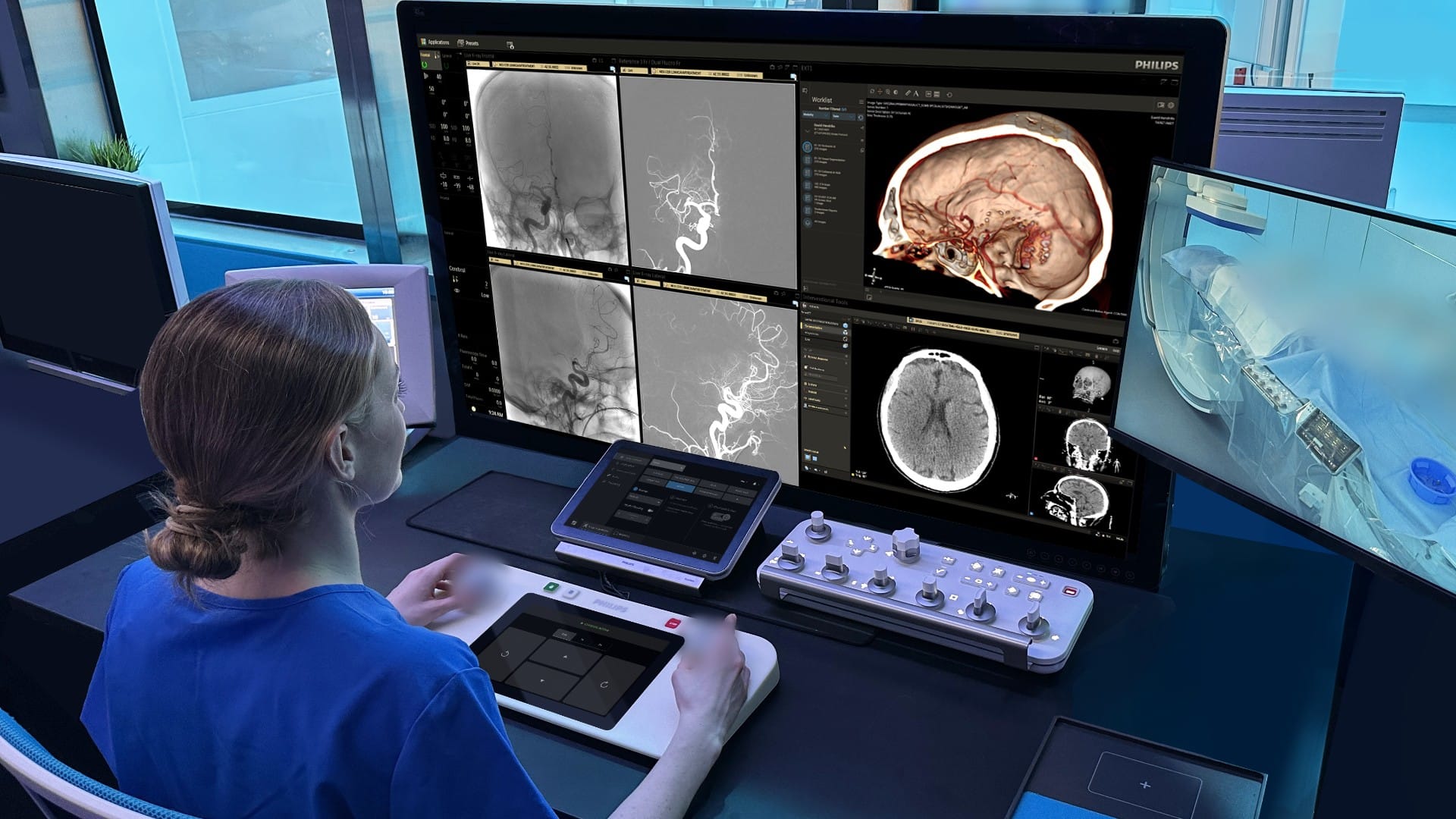
Surgeons in masks and caps study a 3D image of blood vessels on a screen during a procedure.

A plan must be practical and accountable

The WHO resolution is clear about what makes implementation work: trained health workers, affordable access to medicines and services, sustainable financing, data to guide decisions, and attention to underserved populations [2].

I encourage every policymaker to turn these into three simple questions:

  • What are our country's biggest gaps along the stroke pathway?

  • Who is responsible for closing them?

  • How will we measure progress?

If a national plan can answer those questions, it is ready to deliver. If it cannot, it is not yet an effective plan.

The estimated direct and indirect costs of stroke globally are over USD 891 billion annually [3]. Investing in prevention and treatment may improve health outcomes and reduce the impact on health systems.

An urgent need to improve health equity

The impact of stroke is growing, and people in low- and middle-income countries (LMICs) are disproportionately affected. Access to prevention, treatment and rehabilitation vary widely [3].

So, national plans should not assume every country starts from the same place. They need to reflect local needs and reduce geographic and financial barriers. For some countries, the priority will be improving blood pressure control in primary care settings. For others, it will be building stroke units or extending access to thrombectomy beyond major cities.

Where someone lives should not decide whether they have a fair chance at recovery, and national plans must have this principle at their core.

Innovation is an enabler, not the whole answer

Timely care matters in stroke. Diagnostic imaging, image-guided therapy, and connected data can support care teams in making informed decisions and reducing delays.

However, technology only delivers as part of a connected ecosystem. Imaging and interventional systems are most useful when teams have the training, pathways, infrastructure, and resources to use them, so people can access the care.

That is also why workforce training matters as much as equipment. Building skills, from emergency teams to interventional specialists, is what turns capability into access.

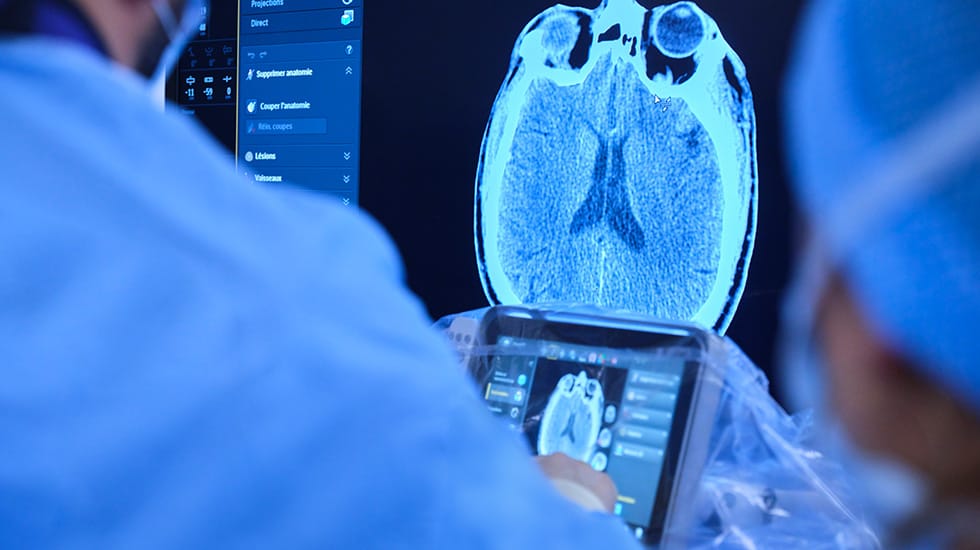
Two clinicians in surgical gowns review brain scans on a large monitor in a dimly-lit interventional suite.

From commitment to collaboration

The WHO resolution gives countries a framework, but implementing it will take leadership and collaboration among governments, healthcare professionals, stroke survivors, civil society and the private sector. No single organization can do this alone.

Philips is committed to doing our part. As a founding member of the Global Stroke Action Coalition, and through our work with the World Stroke Organization and other partners, we will keep supporting countries as they move from commitment to delivery. This includes sharing evidence, helping build the case for investment, and working alongside health systems on the pathways, skills and technologies that make timely stroke care possible.

We measure success by whether more people can access the right care at the right time to prevent, treat or recover from stroke.

To help achieve this, in honour of World Stroke Day, I call on governments to put stroke into their national health plans. Stroke is a challenge we can address together. Let’s turn commitment into action so more people can access timely care.

Sources

[1] World Health Organization. Seventy-ninth World Health Assembly – Daily update: 22 May 2026. Available at: https://www.who.int/news/item/22-05-2026-seventy-ninth-world-health-assembly-daily-update-22-may-2026. Last accessed: October 2026. [2] World Health Organization. Reducing the burden of stroke: strengthening prevention, acute care, rehabilitation and health-system readiness. 3 February 2026. Available at: https://apps.who.int/gb/ebwha/pdf_files/EB158/B158_R4-en.pdf. Last accessed: October 2026. [3] Feigin V, Owolabi M, Feigin V et al. Pragmatic solutions to reduce the global burden of stroke: a World Stroke Organization–Lancet Neurology Commission. The Lancet Neurology, 2023; 22, 1160-1206.> [4] Feigin V, Abate M, Abate Y et al. Global, regional, and national burden of stroke and its risk factors, 1990–2021: a systematic analysis for the Global Burden of Disease Study 2021. The Lancet Neurology, 23, 973-1003.

Share this page with your network

Related news

  • [Philips launches UniGuide 3D Live Guidance, bringing CT planning into live procedures and extending the capabilities of its Azurion image-guided therapy platform

Press release | October 29, 2026

Philips launches UniGuide 3D Live Guidance, bringing CT planning into live procedures and extending the capabilities of its Azurion image-guided therapy platform

Image-guided therapy](https://www.philips.com/a-w/about/news/archive/standard/news/press/2026/philips-launches-uniguide-3d-live-guidance-bringing-ct-planning-into-live-procedures-and-extending-the-capabilities-of-its-azurion-image-guided-therapy-platform.html)

  • [EXIT-CVD research consortium launches clinical studies to transform cardiovascular care across Europe

Press release | October 15, 2026

EXIT-CVD research consortium launches clinical studies to transform cardiovascular care across Europe

Image-guided therapy](https://www.philips.com/a-w/about/news/archive/standard/news/press/2026/exit-cvd-research-consortium-launches-clinical-studies-to-transform-cardiovascular-care-across-europe.html)

  • [European COMBINE-CT project advances from technology development to clinical validation

Press release | August 28, 2026

European COMBINE-CT project advances from technology development to clinical validation

Image-guided therapy](https://www.philips.com/a-w/about/news/archive/standard/news/press/2026/european-combine-ct-project-advances-from-technology-development-to-clinical-validation.html)

  • [Philips selected for ARPA-H program to advance AI-enabled robotic stroke care

Press release | August 26, 2026

Philips selected for ARPA-H program to advance AI-enabled robotic stroke care

Image-guided therapy](https://www.philips.com/a-w/about/news/archive/standard/news/press/2026/philips-selected-for-arpa-h-program-to-advance-ai-enabled-robotic-stroke-care.html)

  • [Philips highlights advances in imaging and physiology to support complex PCI at EuroPCR 2026

Press release | May 18, 2026

Philips highlights advances in imaging and physiology to support complex PCI at EuroPCR 2026

Image-guided therapy](https://www.philips.com/a-w/about/news/archive/standard/news/press/2026/philips-highlights-advances-in-imaging-and-physiology-to-support-complex-pci-at-europcr-2026.html)

  • [Philips launches new Bridge Plus Occlusion Balloon to help manage rare but life-threatening SVC tears during lead extraction

Press release | April 23, 2026

Philips launches new Bridge Plus Occlusion Balloon to help manage rare but life-threatening SVC tears during lead extraction

Image-guided therapy](https://www.philips.com/a-w/about/news/archive/standard/news/press/2026/philips-launches-new-bridge-plus-occlusion-balloon-to-help-manage-rare-but-life-threatening-svc-tears-during-lead-extraction.html)

New CE-marked solution leverages the industry-leading Philips Azurion platform to integrate CT-derived insights and treatment planning directly into the procedural workflow, helping physicians make informed decisions during treatment.

Oct 29, 2026 | 4 minute read

Image-guided therapy Cardiology Press release

Amsterdam, the Netherlands – Royal Philips (NYSE: PHG, AEX: PHIA), a global leader in health technology, and a pioneer in image-guided therapy, today announced the launch of Philips UniGuide 3D Live Guidance in Europe and other CE-marked markets.

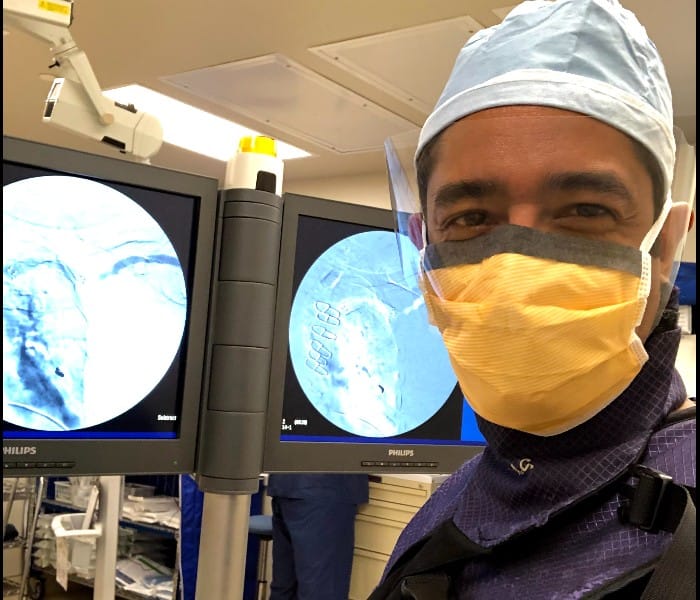
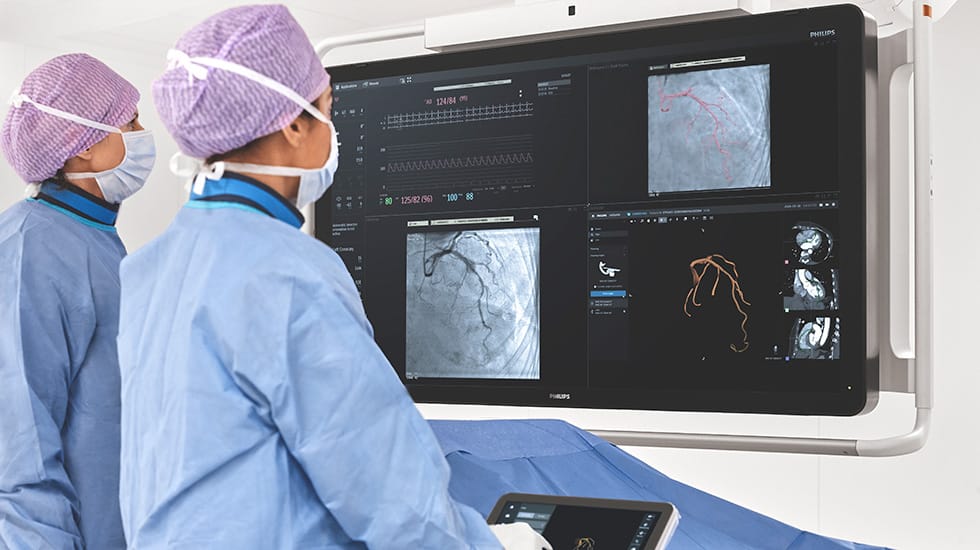
Physicians using Philips UniGuide

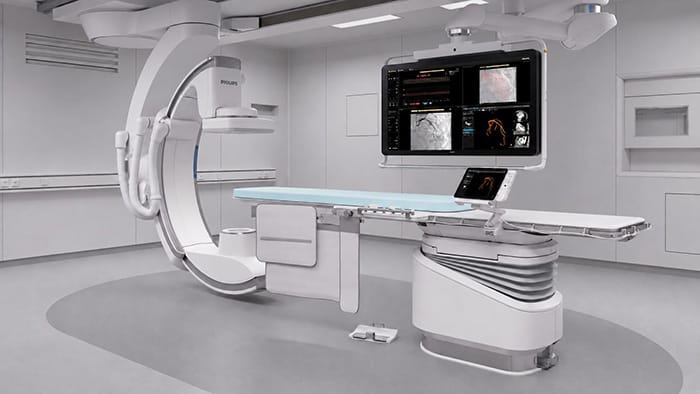
Interventional care increasingly depends on combining information from multiple imaging sources. Philips is advancing its vision of a more connected interventional ecosystem. UniGuide represents the next step in that journey by enabling physicians to access relevant planning information within the same workflow they use to guide treatment. Built on the foundation of the Philips Azurion platform, a widely adopted image-guided therapy system known for its workflow efficiency and user experience, UniGuide helps physicians bring pre-procedural planning insights directly into the live procedure, allowing physicians to access planning information where treatment decisions are made.

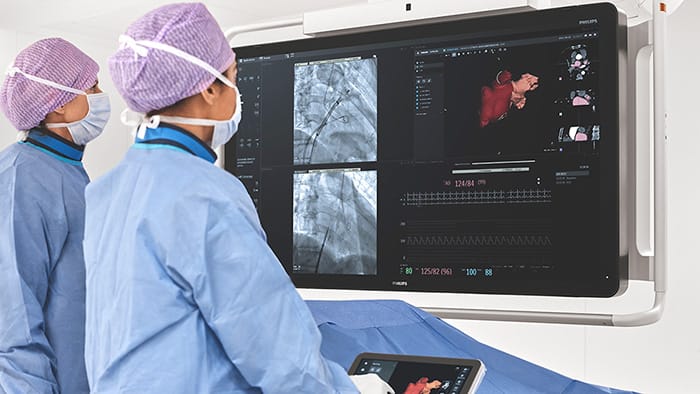
The first release of UniGuide connects preprocedural CT insights to the live Azurion workflow, supporting more informed, patient-specific treatment decisions in PCI, structural heart and complex vascular procedures.

Built on the strength of Azurion

For more than a decade, Philips has been at the forefront of innovation in interventional cardiology. Its industry-leading Azurion platform has helped cath labs worldwide simplify workflows, improve staff efficiency and support better patient care by combining advanced imaging, intuitive user interaction and seamless workflow integration.

The next frontier is making better use of the wealth of information available before treatment even begins.

Bringing insights from CT scans into the procedure

CT imaging provides detailed 3D insights before an intervention, helping physicians assess vessel characteristics, understand disease presentation, and plan treatment strategies. However, those insights are often reviewed separately from the systems used during the procedure, requiring physicians to switch between platforms and mentally correlate planning information with live image guidance.

Integrated directly into the Azurion environment, UniGuide is designed to address this challenge by making relevant CT-derived information available within the workflow physicians already use every day.

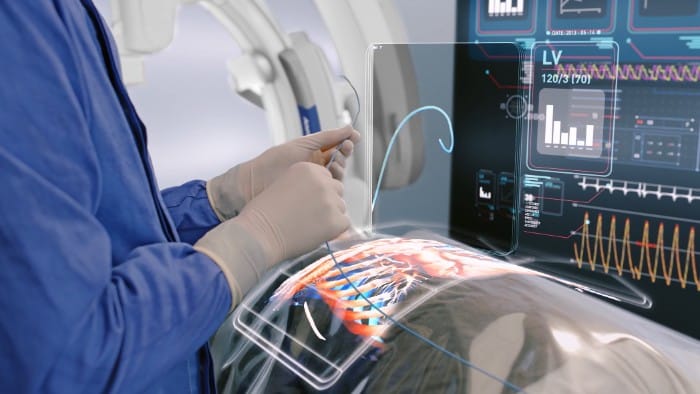
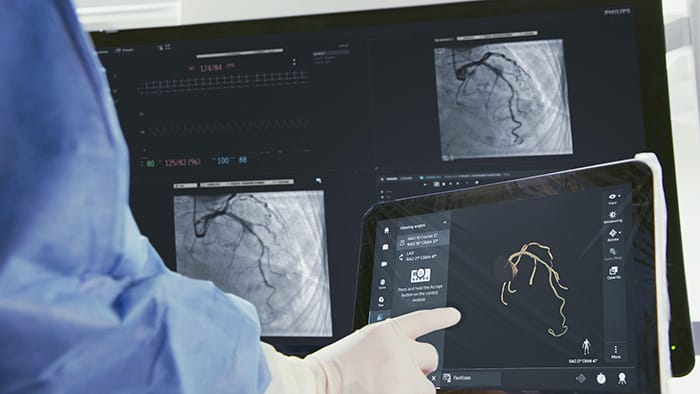
For coronary interventions (CT-guided PCI), insights derived from a coronary CT angiography (CCTA) scan performed before PCI can be combined with live image guidance through 3D overlay visualization or synchronized side-by-side display. This enables physicians to access vessel information and additional CT-derived insights, including plaque characteristics and other disease-related information, during the procedure.

Access to the CT angiogram allows us to assess relevant aspects of the vessels we are going to treat, improve procedural planning, and improve the precision of the intervention.

  • Prof. Javier Escaned, MD, PhD, Head of the Interventional Cardiology Section, Hospital Clínico San Carlos and Complutense University, Madrid

“Bringing CT into the cathlab creates a huge opportunity for those patients who have already undergone CT imaging,” said Prof. Javier Escaned, MD, PhD, Head of the Interventional Cardiology Section, Hospital Clínico San Carlos and Complutense University, Madrid. “Access to the CT angiogram allows us to assess relevant aspects of the vessels we are going to treat, improve procedural planning, and improve the precision of the intervention. We can also review specific aspects of the CT inside the cathlab using the table-side touchscreen (TSM) and synchronize the movement of the 3D CT rendering with the C-arm. Together, these capabilities contribute to better guidance and higher precision of the interventions.”

Open ecosystem for Philips and compatible third-party planning sources

UniGuide supports an open planning ecosystem, allowing healthcare providers to use planning insights from Philips Advanced Visualization Workspace and compatible third-party solutions within the live Azurion workflow [1]. This flexibility helps protect existing investments while giving healthcare providers greater choice in how they plan and guide interventions.

Designed for usability and workflow efficiency

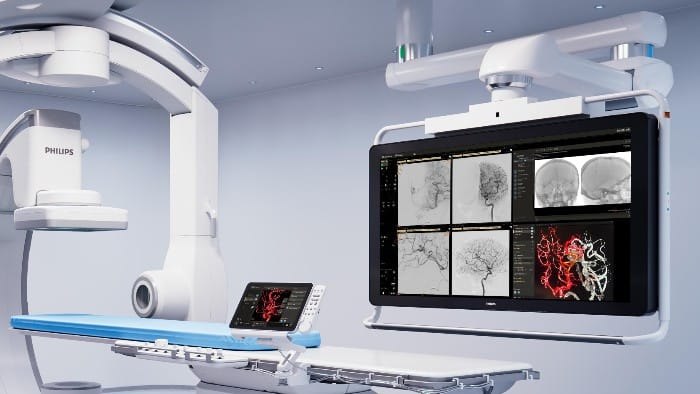
UniGuide is fully integrated into the Azurion workflow, allowing physicians to access CT and planning information on the large FlexVision display and interact with 3D guidance through the tableside Touch Screen Module. By minimizing the need to move between systems and workstations, UniGuide helps keep the focus on the patient and procedure.

In a Philips usability study, 93% of participating clinicians believed that bringing planning information directly into the procedural workflow could help improve cath lab efficiency and performance, while 80% indicated that UniGuide's automation and intuitive user experience could help physicians maintain focus during procedures. [2]

“We are increasingly able to understand a patient’s anatomy and plan complex procedures well before the patient enters the interventional suite. With UniGuide, we’re putting that knowledge to work during treatment, connecting CT planning with live guidance to help physicians make more informed, patient-specific decisions,” said Darshan Doshi, Interventional Cardiologist and Chief Medical Officer for Image Guided Therapy Devices at Philips.

A foundation for the future of image-guided therapy

UniGuide marks Philips' broader strategy to build on the capabilities of the Azurion platform and create a more connected environment for image-guided therapy. By bringing planning, diagnostic, and procedural information together within a single workflow, Philips aims to support clinical decision-making during complex interventions while enabling access to increasingly comprehensive clinical information.

Over time, Philips intends to expand this foundation across multiple imaging modalities, clinical applications, and procedure types, making relevant information available when and where treatment decisions are made.

Philips UniGuide 3D Live Guidance is CE marked and is available for sale in CE-marked markets from October 23, 2026. UniGuide 3D Live Guidance is currently not available for sale in the United States.

Sources

[1] The preprocedural planning solution should meet the DICOM conformance statement issued by Philips. [2] Results obtained during a Philips claims substantiation study performed in March 2026. Responses are based on 15 clinicians from the United States who completed a questionnaire following a usability study and additional hands-on time with Philips Azurion and UniGuide.

Media assets

  • Physicians using Philips UniGuide -

Physicians using Philips UniGuide

3.3 MB -

  • Philips UniGuide showing preprocedural CT insights -

Philips UniGuide showing preprocedural CT insights

1.1 MB -

  • Philips Azurion image-guided therapy platform with UniGuide -

Philips Azurion image-guided therapy platform with UniGuide

0.1 MB -

  • Philips UniGuide 3D Live Guidance - Structural Heart Disease -

Philips UniGuide 3D Live Guidance - Structural Heart Disease

3.1 MB -

Media contacts

Joost Maltha--Philips Global External Relations

Joost Maltha

Philips Global External Relations

Prompts

Koninklijke Philips N.V. (ticker PHIA), listed in Netherlands.

ETFs Holding Koninklijke Philips N.V.

ETF Weight in ETF Shares Market value As of
DTAN 1.11% 8,057 $ 240.865K Nov 17, 2026
RCGE 0.58% 19,143 $ 570K Nov 18, 2026
BRIE 0.49% 89,472 $ 2.381M Aug 31, 2026
SEIE 0.37% 156,964 $ 4.264M Jun 30, 2026
DFIV 0.36% 2,669,869 $ 80.543M Nov 12, 2026
TOUS 0.34% 207,148 $ 5.458M Jul 31, 2026
RINT 0.28% 14,239 $ 386.563K Jun 30, 2026
FENI 0.15% 570,823 $ 15.497M Jun 30, 2026
NTSI 0.12% 21,243 $ 577.062K Jun 30, 2026
RGLO 0.08% 10,440 $ 283.427K Jun 30, 2026
IQSZ 0.06% 4,271 $ 112.278K Jul 31, 2026
DFAI 0.06% 376,508 $ 11.358M Nov 12, 2026
DXIV 0.04% 2,801 $ 84.498K Nov 12, 2026
DFSI 0.03% 13,207 $ 398.418K Nov 12, 2026
DFIC 0.01% 34,915 $ 1.053M Nov 12, 2026
DFAX 0.00% 9,013 $ 271.897K Nov 12, 2026

Securities

Ticker Type Class Market Exchange Last price Price date
INPHI Common share — NL euronext — —
PHIA canonical Common share — NL euronext 22.81 EUR 2026-05-27