Grant of LTIP awards; Director/PDMR Notification
Bull 0
Bear 0
Routine
|
Oxford Nanopore Technologies plc is a biotechnology company that researches, develops, manufactures, and commercialises nanopore-based sequencing platforms for the real-time analysis of DNA and RNA. The company offers a range of devices, including the portable MinION, the benchtop GridION, and the high-throughput PromethION and PromethION 2, which support applications from single-sample analysis to population-scale genomics. Its technology enables long-read sequencing, epigenomic profiling, and transcriptomic analysis, serving customers in scientific research, healthcare, education, and industrial sectors such as food safety and environmental monitoring. Founded in 2005 as a spin-out from the University of Oxford, the company sells its products globally and maintains a commercial presence in multiple regions. Oxford Nanopore collaborates with global partners and supports diagnostic assay development, infectious disease characterisation, and rare disease genomic testing through networks like RISE. Summarised from the company's own disclosures, fiscal year ended Dec 2022 |
Industry Biotechnology | Homepage nanoporetech.com |
| Sector Healthcare | IR page nanoporetech.com/about/investors | |
|
Tags
nanopore sequencing, dna sequencing, rna sequencing, genomics, long-read sequencing, real-time sequencing, diagnostic assays, epigenomics, transcriptomics, portable sequencers, high-throughput sequencing, MinION, GridION, PromethION, PromethION 2, MinION Flow Cells, RISE
|
Press page nanoporetech.com/news |
Metrics
| Valuation | |
|---|---|
| Market cap | £ 1.955B |
| Market cap (USD) | $ 2.575B |
| P/E | -13.35 |
| PEG | — |
| P/BV | 19.24 |
| P/S | 8.32 |
| P/OCF | -27.70 |
| P/FCF | -26.39 |
| Dividend yield | — |
| Turnover / mcap | — |
| Returns | |
|---|---|
| ROE | -27.7% |
| ROI | -31.3% |
| ROIC | -25.1% |
| Profit margin | -64.9% |
| Growth | |
|---|---|
| Revenue growing | Yes |
| Profits growing | Yes |
| Revenue up 3y | No |
| Revenue up 5y | — |
| Earnings growth 3y (net profit CAGR) | — |
| Quality | |
|---|---|
| Profitable | No |
| Margin expanding | Yes |
| Buying back stock | No |
| Diluting (TTM) | Yes |
| Debt/Equity | — |
| Podcast bulls (TTM) | Sign up |
| Podcast bears (TTM) | Sign up |
| Podcast sentiment (TTM) | Sign up |
| Podcast sentiment % (TTM) | Sign up |
| News sentiment (TTM) | 46 |
| Quality score | -35.3% |
| Insiders | |
|---|---|
| Buys, 1w | Sign up |
| Buys, 1m | Sign up |
| Buys, 1y | Sign up |
| Sells, 1w | Sign up |
| Sells, 1m | Sign up |
| Sells, 1y | Sign up |
Sign up to see this company's insider trades
Filed figures
Lines the statements and their notes report beside the headline figures, read from the filings' XBRL as filed (no restatement applied), with figures computed from one filing's own lines. Cash-flow lines carry their cash direction: an outflow is negative. Each period links to its filing; a figure's period, report date and tag are in its tooltip.
| Figure | Dec 2020 | Dec 2021 | Dec 2022 | Dec 2023 | Dec 2024 | Dec 2025 |
|---|---|---|---|---|---|---|
| Balance sheet detail | ||||||
| Trade receivables (GBP) | — | 54.8M | 62.9M | 61.5M | 62.7M | 72.4M |
| ↳ YoY growth | +14.8% | -2.3% | +2.0% | +15.5% | ||
| Borrowings, non-current (GBP) | — | 9.5M | 0.00 | — | — | — |
| Lease liabilities (GBP) | — | 15.3M | 34.1M | 37.3M | 40.6M | 41.5M |
| Cash and deposits (GBP) | 80.9M | 488M | 357M | 221M | 200M | 181M |
| Intangible assets (GBP) | — | 23M | 30M | 32.9M | 43.8M | 55.8M |
| Right-of-use assets (GBP) | — | 14.7M | 25.9M | 32.5M | 34.9M | 30.9M |
| Net debt (borrowings + leases - cash) (GBP) | — | -463M | -323M | — | — | — |
| Cash flow detail | ||||||
| Operating cash flow (GBP) | — | -53.2M | -49.4M | -137M | -110M | -70.6M |
| Purchases of property, plant and equipment (GBP) | — | -21.5M | -23.1M | -5.91M | -13.9M | -3.5M |
| Purchases of intangible assets (GBP) | — | — | -130M | -150M | 0.00 | -49.9M |
| Interest paid (cash effect) (GBP) | — | — | -221,000 | -1,000 | -3,000 | — |
| Free cash flow (OCF - PPE - intangibles) (GBP) | — | -74.7M | -72.5M | -293M | -124M | -124M |
| Income detail | ||||||
| Research and development expense (GBP) | — | 76M | 64.8M | 104M | 98.9M | 97.7M |
| Total comprehensive income (GBP) | — | -167M | -86.1M | -156M | -145M | -149M |
| Provision for credit losses (GBP) | — | — | 2.19M | -144,000 | 724,000 | — |
| Credit cost ratio (credit losses / average receivables) (%) | — | — | 3.7% | 0.2% | 1.2% | — |
| Reported | Apr 26, 2023 | Apr 26, 2023 | Jun 7, 2024 | Jun 7, 2024 | Apr 30, 2025 | May 1, 2026 |
Sign up to see institutional holdings
Sign UpPodcast Mentions
Sign up to see podcast mentions and sentiment
Sign UpResults, director/PDMR dealings and voting-rights totals announced to the FCA's National Storage Mechanism, newest first. The link opens the announcement on the NSM. Press releases from the company's own website, newest first.
Share Incentive Plan - Director/PDMR Shareholding
Bull 0
Bear 0
Routine
Adaptive Sampling: reimagining targeted sequencing
Bull 1
Bear 0
Product/operations
Search
Search
Targeted sequencing — the selective sequencing of specific regions of interest rather than entire genomes — is a critical technique across numerous applications, including clinical research, pathogen surveillance, and species identification. Traditionally, the methods used to achieve targeted sequencing require enrichment or depletion via library prep before the sample reaches the sequencer. These library prep techniques, whilst effective, are often prone to PCR bias, complex, costly, and time consuming.
What if targeted sequencing could truly mean targeted sequencing — the enrichment of targets of interest, or depletion of off-target regions, during sequencing itself, with no need for special library prep steps? In this Nanopore Know-How blog, we introduce Adaptive Sampling: a method unique to Oxford Nanopore sequencers that enables just that.
Why use targeted sequencing?
If you only require data from a fraction of a genome, or one genome from a mixed microbial community, sequencing the entire sample may provide insufficient data for characterising these targets. Additionally, extra sequencing runs would increase costs, extend turnaround times, and lead to more complex data management.
This is where targeted sequencing shines. Instead, by focusing sequencing on targets of interest, you achieve high depth of coverage of targeted regions via a faster and more efficient workflow than whole-genome sequencing.
How is targeted sequencing typically performed?
Traditional targeted methods utilise library prep techniques to enrich specific regions before sequencing. A commonly used approach is targeted PCR, also known as amplicon sequencing, which can offer a simple and cost-effective workflow. However, the trade-offs are that PCR leaves behind regions that cannot be amplified, such as GC-rich and repetitive sequences, restricts analysis to fragment lengths that can be processed by the polymerase, introduces bias, and erases epigenetic modifications . When combined with legacy short-read sequencing technology, read lengths are further reduced, hindering the analysis of large regions of interest such as structural variants (SVs) .
Hybridisation capture is another method of targeted sequencing, typically used for the enrichment of wider target panels. This technique also relies on PCR, and requires a complex, lengthy workflow. Depletion techniques can also be performed to remove unwanted DNA, such as host material in microbial samples, but these again require additional sample prep steps.
Why is Adaptive Sampling different?
Adaptive Sampling changes the game. With this innovative method developed by the Nanopore Community1–4, you can perform target enrichment or depletion entirely during sequencing, on the device itself. The software-based method makes it possible to perform targeted sequencing without sacrificing long reads or native DNA. This means you can target sequencing to previously inaccessible regions, including complex SVs, long repeats , and GC-rich sequences — and detect native DNA modifications alongside genomic variants, in one go .
Adaptive Sampling is a fast, simple technique that requires no PCR, no time spent designing and ordering probes or waiting for them to be synthesised, and no extra wet-lab steps.

How does Adaptive Sampling work?
Your Oxford Nanopore sequencing device is controlled by the easy-to-use software MinKNOW, and this is what you use to set up your sequencing run, including Adaptive Sampling. After specifying whether you wish to enrich for or deplete your specified target sequences, all you need to provide is a BED file containing the coordinates for these targets — more on this later — and a reference for alignment. Then, your targeted sequencing run is ready to start.
The targeting itself is made possible by the real-time nature of Oxford Nanopore sequencing and data analysis , which allows a DNA strand to be basecalled whilst it is still passing through a nanopore. During Adaptive Sampling, the sequence at the beginning of each DNA strand is compared against your list of targets. If the sequence matches a target of interest or is not a region to be depleted, the strand is ‘allowed’ by the software to continue sequencing. If it is not a target of interest or is listed for depletion, the DNA molecule is ejected from the nanopore so that it can begin sequencing another molecule.
This process significantly increases the depth of coverage for your targets of interest across a sequencing run. Adaptive Sampling can be used with any Oxford Nanopore sequencer — either on MinION Flow Cells on a MinION or GridION , or PromethION Flow Cells on a PromethION .
You can use Adaptive Sampling to enrich for large, complex sets of targets. You can target huge regions with ease — even entire chromosomes2. Meanwhile, with ‘depletion’ mode, you can perform host depletion, such as of human DNA from microbial samples, or deplete abundant microorganisms from a metagenomic sample to capture rarer or understudied microbes of interest2,3.
With this technology, you can enrich panels of targets across a genome, such as disease-associated genes, simply by specifying their coordinates in a BED file. We call these 'digital panels'. You can use one of our ready-to-use BED-file-defined digital panels or construct your own panel of targets using our intuitive browser-based tool.
What ready-to-use digital panels do Oxford Nanopore offer?
We offer a range of ready-to-use research-use-only (RUO) digital panels , spanning multiple research applications. Our current portfolio includes:
-
Hereditary Cancer Panel *: targets 258 genes associated with hereditary cancer risk
-
Pharmacogenomics Panel *: targets 375 genes associated with pharmacogenetic effects, including full resolution of the CYP2D6 gene
-
Pan-Cancer Panel*: targets 723 genes associated with cancers. This RUO digital panel is used in our targeted tumour methylation profiling workflows
-
Pan-Haematological Cancer Panel*: targets 144 genes associated with haematological cancers
How do I create a custom digital panel?
Using our online Digital Panel Designer , you can create, modify, and update your own digital panels to target any regions of interest for your research. Generating your own panel is as simple as providing the gene names or genomic coordinates of the regions you want to enrich. We recommend targeting 0.1–5% of your reference genome.
With no need for the lengthy process of probe synthesis or complex probe panel optimisation, you can easily update digital panels by editing your BED file of coordinates in a matter of minutes as your research evolves. You can also use the Digital Panel Designer to edit our ready-to-use digital panels to suit your research goals — for example, by adding or deleting target genes.
What about library prep?
No special library prep is required for Adaptive Sampling. Your whole DNA sample is prepared for Oxford Nanopore sequencing in the same way as for a whole-genome experiment. The PCR-free Ligation Sequencing Kit only takes around one hour to prep native DNA for sequencing, preserving long fragments and base modifications. You can also prepare samples for multiplexed sequencing on a high-output PromethION Flow Cell using the Native Barcoding Kit .
The Adaptive Sampling workflow utilises more input library than a standard Oxford Nanopore workflow, ensuring that plenty of on-target DNA molecules are available for sequencing. Light fragmentation of high molecular-weight DNA helps to further improve data outputs and can also help to increase enrichment.
How are the Nanopore Community using Adaptive Sampling?
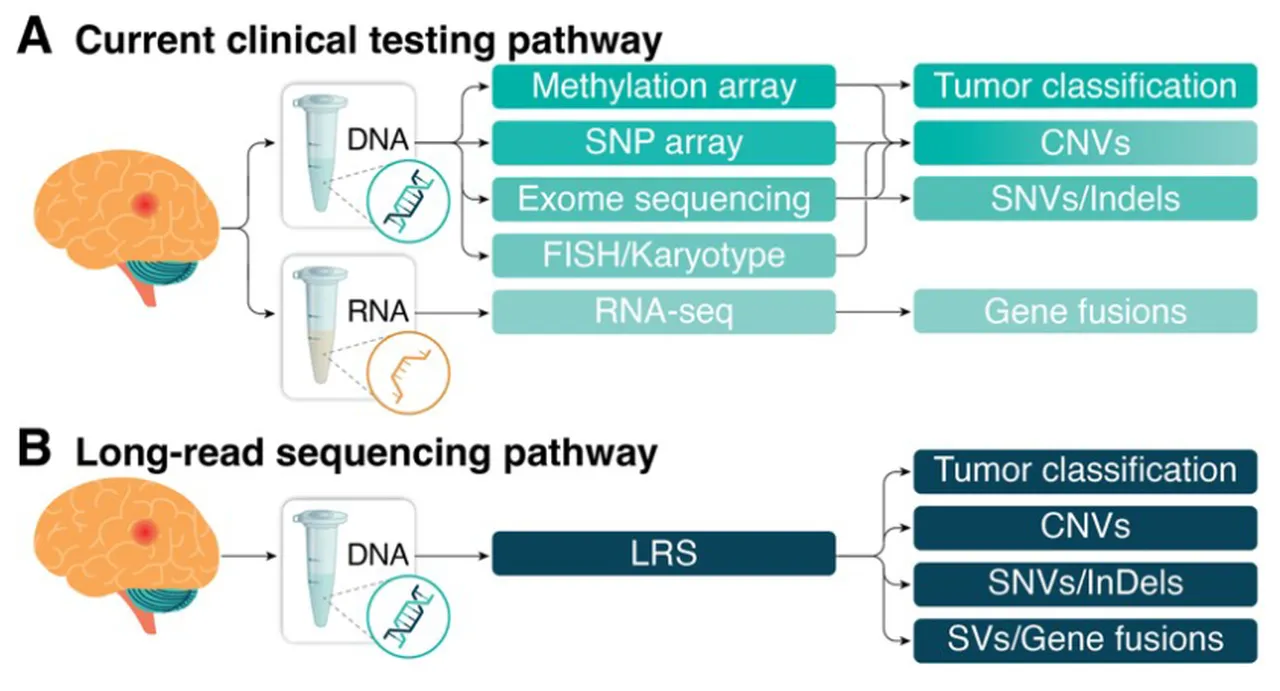
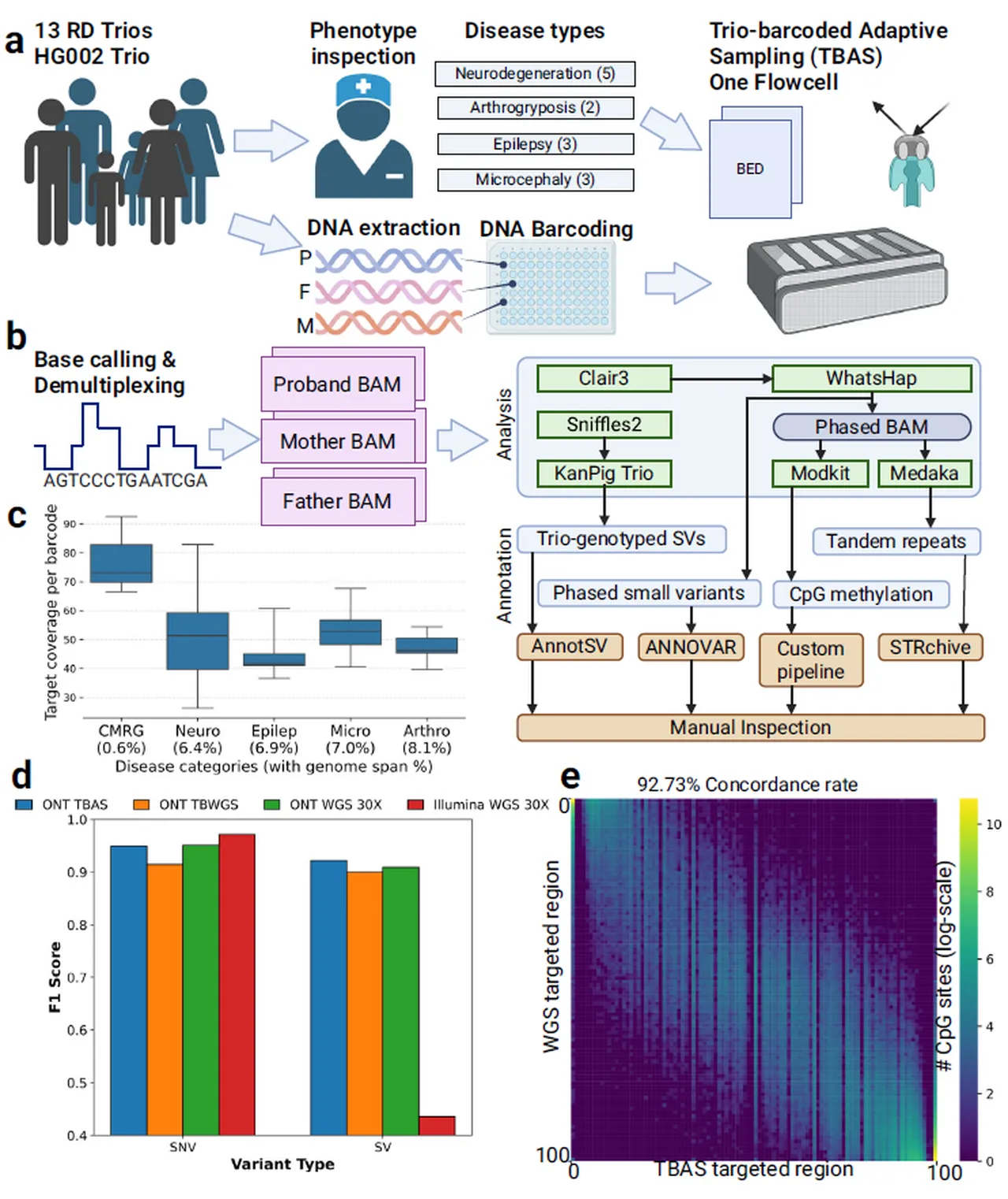
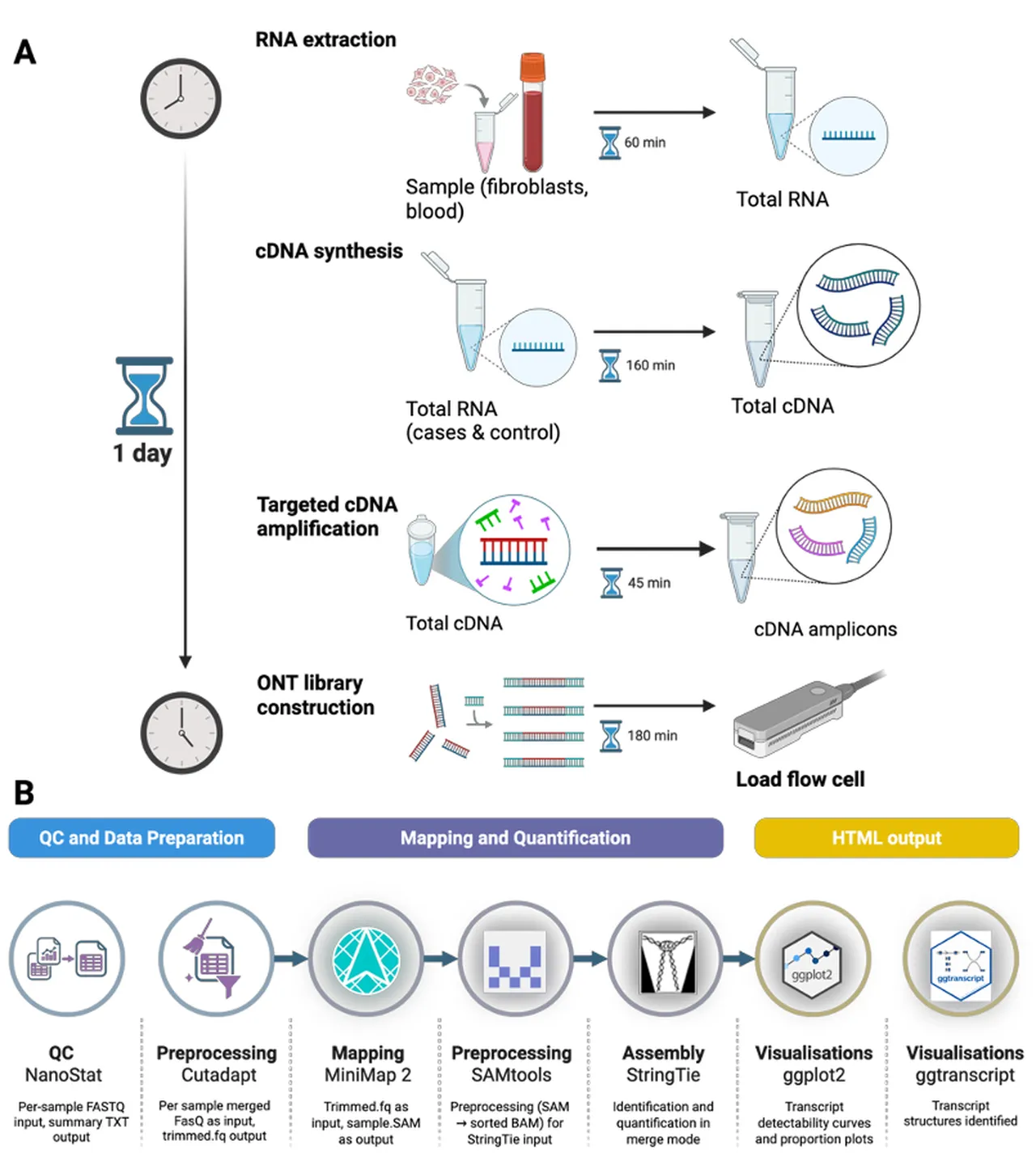
Scientists are harnessing the unique benefits of Adaptive Sampling to enhance their research across a wide range of applications. Researchers have shown future potential of the technique to enable intraoperative classification of central nervous system tumours5 and cancer-associated pathogenic variants across the complete MSK-IMPACT6 panel without the need for lengthy hybridisation capture7. Adaptive Sampling has also been used to genotype all known neuropathogenic short tandem repeat expansions, plus pharmacogenomic targets, in a single sequencing run8, showing its potential to tackle the ‘diagnostic odyssey’ faced by many families. Going beyond the human genome, the method has been used to target DNA from the foodborne pathogen Staphylococcus aureus without the need for culturing9, and Plasmodium falciparum parasite DNA from blood research samples10.
With this unique technology, the Nanopore Community continues to push the boundaries of what is possible with targeted sequencing.
How will you use Adaptive Sampling?
Learn more in our Adaptive Sampling getting started guide
View Adaptive Sampling documentation
*Research-use only. Not for use in diagnostic procedures.
Oxford Nanopore Technologies products are RUO. Products labelled/branded as OND may be RUO or may be regulated as in-vitro diagnostic devices in some jurisdictions.
-
Loose, M., Malla, S., and Stout, M. Real-time selective sequencing using nanopore technology. Nat. Methods 13(9):751–754 (2016). DOI: https://doi.org/10.1038/nmeth.3930
-
Payne, A. et al. Readfish enables targeted nanopore sequencing of gigabase-sized genomes. Nat. Biotechnol. 39, 442–450 (2021). DOI: https://doi.org/10.1038/s41587-020-00746-x
-
Kovaka, S., Fan, Y., Ni, B., Timp, W. and Schatz, M. Targeted nanopore sequencing by real-time mapping of raw electrical signal with UNCALLED. Nat. Biotechnol. 39(4):431–441 (2021). DOI: https://doi.org/10.1038/s41587-020-0731-9
-
Weilguny, L. et al. Dynamic, adaptive sampling during nanopore sequencing using Bayesian experimental design. Nat. Biotechnol. 41(7):1018–1025 (2023). DOI: https://doi.org/10.1038/s41587-022-01580-z
-
Deacon, S. et al. ROBIN: A unified nanopore-based assay integrating intraoperative methylome classification and next-day comprehensive profiling for ultra-rapid tumor diagnosis. Neuro Oncol. noaf103 (2025). DOI: https://doi.org/10.1093/neuonc/noaf103
-
Memorial Sloan Kettering Cancer Center. MSK-IMPACT. https://www.mskcc.org/departments/division-solid-tumor-oncology/early-drug-development-service-phase-clinical-trials/precision-medicine-approach/msk-impact [Accessed 27 May 2025]
-
Stephanie Chrysanthou. Presentation. Available at: https://www.youtube.com/watch?v=3OiirA6xZEA [Accessed 27 May 2025]
-
Stevanovski, I. et al. Comprehensive genetic diagnosis of tandem repeat expansion disorders with programmable targeted nanopore sequencing. Sci. Adv. 8,eabm5386 (2022). DOI: https://doi.org/10.1126/sciadv.abm5386
-
Buytaers, F.E. et al. Strain-level characterization of foodborne pathogens without culture enrichment for outbreak investigation using shotgun metagenomics facilitated with nanopore adaptive sampling. Front. Microbiol. 1;15:1330814 (2024). DOI: https://doi.org/10.3389/fmicb.2024.1330814
-
De Meulenaere, K. et al. Selective whole-genome sequencing of Plasmodium parasites directly from blood samples by nanopore adaptive sampling. mBio 15:e01967-23 (2023). DOI: https://doi.org/10.1128/mbio.01967-23
Share
-
Published on: October 21 2026
Getting started
Buy a MinION starter pack Nanopore store Sequencing Service providers Channel Partners
Quick links
Intellectual property Cookie policy Corporate reporting Privacy policy Terms, conditions and policies Modern slavery policy Accessibility
About Oxford Nanopore
Contact us
News
Media resources & contacts
Investor centre
Careers 

© 2008 - 2026 Oxford Nanopore Technologies plc. All rights reserved. Registered Office: Gosling Building, Edmund Halley Road, Oxford Science Park, OX4 4DQ, UK | Registered No. 05386273 | VAT No 336942382. Oxford Nanopore Technologies, the Wheel icon, AmPORE-TB, EPI2ME, GridION, MinION, MinKNOW, PromethION, P2 Solo, and P2 are registered trademarks or the subject of trademark applications of Oxford Nanopore Technologies plc in various countries. Information contained herein may be protected by copyright, patents or patents pending of Oxford Nanopore Technologies plc. All other brands and names contained are the property of their respective owners. Oxford Nanopore Technologies products are RUO. Products labelled/branded as Oxford Nanopore Diagnostics may be RUO or may be regulated as in‐vitro diagnostic devices in some jurisdictions, please check individual product labelling.
Select Language

Select options from the list below
English English

Español Español

中文 中文

日本語 日本語
0 result available.











Prompts
Click prompts to add them under the company line, click again to take one out, then copy the result into your AI chat. Shared by Asian Century Stocks and Uncovered Thai Stocks. Thank you.
Oxford Nanopore Technologies plc (ticker ONT), listed in United Kingdom.
Copied
ETFs Holding Oxford Nanopore Technologies plc
Exchange-traded funds whose newest published daily portfolio holds one of the company's listings, largest weight first.
| ETF | Weight in ETF | Shares | Market value | As of |
|---|---|---|---|---|
| DFIS | 0.01% | 299,745 | $ 799.13K | Nov 12, 2026 |