Mondi Plc - Director/PDMR Shareholding
Bull 0
Bear 0
Routine
MNDI
|
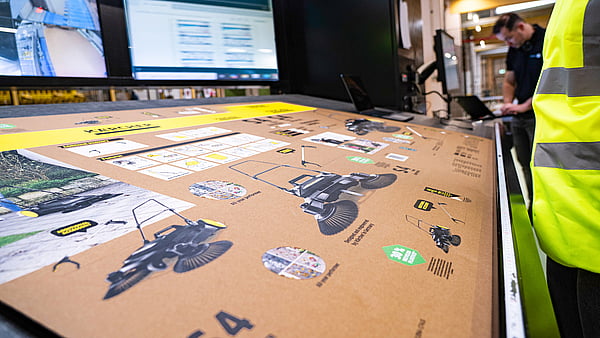
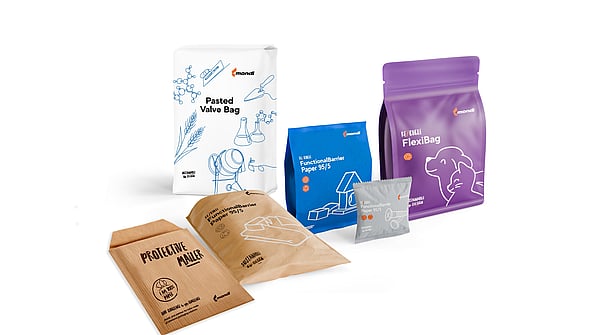
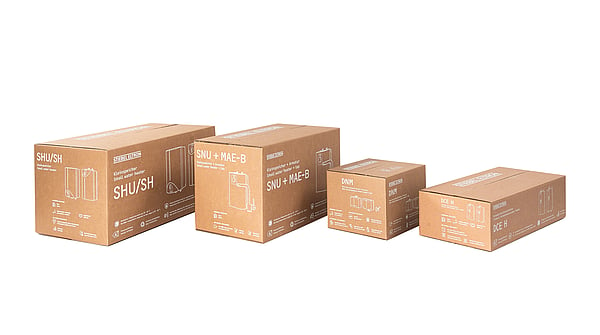
Mondi plc is a packaging and paper manufacturer operating across the entire value chain, from raw material sourcing to end-of-life recycling. The company is organized into two main business units: Corrugated Packaging and Flexible Packaging. Its product portfolio includes containerboard, corrugated packaging, kraft paper, flexible plastic and hybrid packaging solutions, printing papers, and market pulp. Mondi serves customers in retail, consumer, industrial, and chemical sectors, with key operations in Europe, North America, and Africa. The company produces specialized products such as PERGRAPHICA uncoated design paper, Color Copy high-speed inkjet paper, and the BikeBox universal packaging system. It also offers barrier papers and eCommerce packaging solutions. Mondi sources wood from forests in Europe and South Africa, where its pulp and paper mills are located, and operates over 100 production sites globally. Summarised from the company's own disclosures, fiscal year ended Dec 2025 |
Industry Paper & Paper Products | Homepage mondigroup.com |
| Sector Basic Materials | IR page mondigroup.com/investors | |
|
Tags
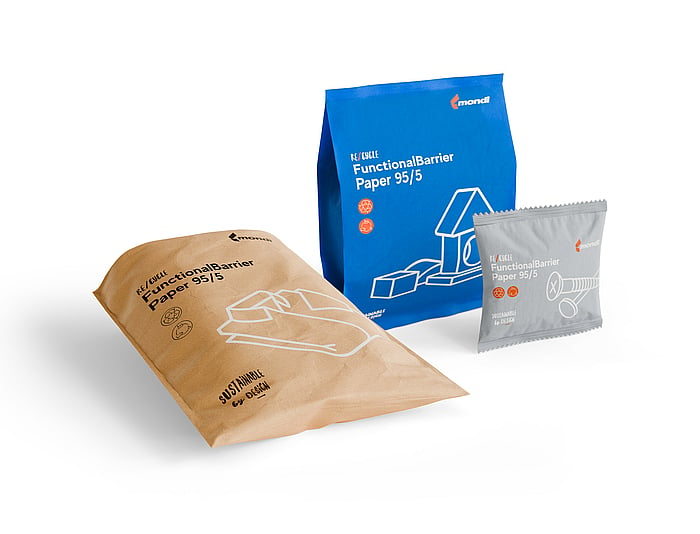
corrugated packaging, flexible packaging, containerboard, kraft paper, printing paper, market pulp, ecommerce packaging, barrier paper, food packaging, industrial packaging, PERGRAPHICA, Color Copy, BikeBox, ProVantage SmartKraft Brown, eGrocery, re/cycle FunctionalBarrier Paper
|
Press page — |
Metrics
| Valuation | |
|---|---|
| Market cap | £ 3.604B |
| Market cap (USD) | $ 4.838B |
| P/E | 25.40 |
| PEG | — |
| P/BV | 0.84 |
| P/S | 0.55 |
| P/OCF | 4.25 |
| P/FCF | — |
| Dividend yield | — |
| Turnover / mcap | — |
| Returns | |
|---|---|
| ROE | 3.7% |
| ROI | 2.5% |
| ROIC | 3.7% |
| Profit margin | 2.6% |
| Growth | |
|---|---|
| Revenue growing | Yes |
| Profits growing | No |
| Revenue up 3y | No |
| Revenue up 5y | No |
| Earnings growth 3y (net profit CAGR) | -51.6% |
| Quality | |
|---|---|
| Profitable | Yes |
| Margin expanding | No |
| Buying back stock | Yes |
| Diluting (TTM) | — |
| Debt/Equity | 48.8% |
| Podcast bulls (TTM) | Sign up |
| Podcast bears (TTM) | Sign up |
| Podcast sentiment (TTM) | Sign up |
| Podcast sentiment % (TTM) | Sign up |
| News sentiment (TTM) | 0 |
| Quality score | 0% |
| Insiders | |
|---|---|
| Buys, 1w | Sign up |
| Buys, 1m | Sign up |
| Buys, 1y | Sign up |
| Sells, 1w | Sign up |
| Sells, 1m | Sign up |
| Sells, 1y | Sign up |
Sign up to see this company's insider trades
Filed figures
Lines the statements and their notes report beside the headline figures, read from the filings' XBRL as filed (no restatement applied), with figures computed from one filing's own lines. Cash-flow lines carry their cash direction: an outflow is negative. Each period links to its filing; a figure's period, report date and tag are in its tooltip.
| Figure | Dec 2020 | Dec 2021 | Dec 2022 | Dec 2023 | Dec 2024 | Dec 2025 |
|---|---|---|---|---|---|---|
| Balance sheet detail | ||||||
| Trade receivables (EUR) | 1.01B | 1.33B | 1.45B | 1.25B | 1.28B | 1.29B |
| ↳ YoY growth | +32.5% | +8.6% | -13.4% | +1.7% | +1.2% | |
| ↳ 5y CAGR | +5.1% | |||||
| Borrowings, current (EUR) | 128M | 124M | 102M | 559M | 63M | 344M |
| Borrowings, non-current (EUR) | 2.05B | 2.1B | 1.97B | 1.46B | 1.95B | 2.54B |
| Cash and deposits (EUR) | 382M | 473M | 1.07B | 1.59B | 278M | 292M |
| Intangible assets (EUR) | 70M | 76M | 64M | 68M | 70M | 110M |
| Net debt (borrowings + leases - cash) (EUR) | 1.8B | 1.76B | 1.01B | 427M | 1.74B | 2.59B |
| Cash flow detail | ||||||
| Operating cash flow (EUR) | 1.32B | 1.15B | 1.45B | 1.36B | 851M | 986M |
| Purchases of property, plant and equipment (EUR) | -630M | -573M | -508M | -830M | -933M | -673M |
| Purchases of intangible assets (EUR) | -18M | -17M | -12M | -16M | -13M | -17M |
| Dividends paid (cash effect) (EUR) | -237M | -298M | -321M | -345M | -1.08B | -305M |
| Share buybacks (cash effect) (EUR) | -6M | -7M | -7M | -8M | -12M | -8M |
| Interest paid (cash effect) (EUR) | -82M | -78M | -60M | -50M | -44M | -56M |
| Income taxes paid (cash effect) (EUR) | -168M | -190M | -196M | -178M | -120M | -87M |
| Free cash flow (OCF - PPE - intangibles) (EUR) | 670M | 560M | 928M | 513M | -95M | 296M |
| Income detail | ||||||
| Total comprehensive income (EUR) | 234M | 807M | 1.64B | 186M | 334M | 199M |
| Comprehensive income to owners (EUR) | 223M | 794M | 1.56B | 170M | 279M | 172M |
| Reported | Mar 25, 2022 | Mar 25, 2022 | Mar 20, 2023 | Mar 19, 2024 | Mar 4, 2025 | Mar 5, 2026 |
Sign up to see institutional holdings
Sign UpPodcast Mentions
Sign up to see podcast mentions and sentiment
Sign UpResults, director/PDMR dealings and voting-rights totals announced to the FCA's National Storage Mechanism, newest first. The link opens the announcement on the NSM. Press releases from the company's own website, newest first.
Q3 Trading Update 2026
Bull 3
Bear 0
Results
Press release Group news Market updates
15 October, 2026
2 minute read

Mondi plc (“Mondi”), a global leader in sustainable packaging and paper, today provides an update on trading for the three months to 30 September 2026 (“third quarter” or “Q3 2026”).
Underlying EBITDA in the quarter was €196 million, including nil forestry fair value gain (Q2 2026: €167 million, including a €43 million forestry fair value loss). Excluding forestry fair value, underlying EBITDA was lower sequentially, primarily reflecting the impact of planned maintenance shuts. Good order books supported positive price momentum in the quarter, with higher average selling prices offsetting input cost inflation.
Input costs were higher than expected as energy-related costs continued to increase through the quarter, in addition to the anticipated increase in wood costs in Central and Eastern Europe. In response to these recent increases in energy-related costs and supported by good order books, further price increases for a number of paper grades were announced during the quarter, with the benefit expected towards the end of this year and into 2027.
Corrugated Packaging saw positive pricing momentum in Containerboard offsetting higher input costs, while competitive pressure and the lag in passing on paper price increases continued to affect Corrugated Solutions margins. Uncoated Fine Paper experienced seasonally weaker demand and higher input costs. In Flexible Packaging, Kraft Paper and Paper Bags delivered positive pricing momentum offsetting higher input costs. Consumer Solutions delivered a good performance, supported by resilient order books and pricing actions.
Forestry fair value gain was nil in the third quarter, significantly impacted by the recent increase in energy prices. Energy prices remain highly volatile and hard to predict. However, if current prices prevail, and in particular, South African diesel prices, we expect nil forestry fair value gain in the fourth quarter.
We remain focused on operational excellence, cost optimisation and improving the efficiency of our plant network to help mitigate fixed-cost inflation and strengthen the competitiveness of the business. We continue to make good progress transferring customer volumes from the converting plants scheduled to close later this year. As a further step to optimise our converting plant network, at the end of September, we sold one solid board converting plant and agreed the sale of a second. We continue to evaluate opportunities to optimise our asset portfolio and production footprint to enhance competitiveness and returns.
Andrew King, CEO of Mondi Group, commented:
“We delivered a resilient performance in the third quarter against a backdrop of rising input costs, with good order books supporting positive price momentum. We continued to make progress on operational excellence, cost optimisation and improving the efficiency of our plant network to enhance competitiveness. As we enter the fourth quarter, higher packaging paper prices are expected to support performance, notwithstanding ongoing input cost pressures.
“We remain confident in the structural growth drivers underpinning our sustainable packaging businesses. Supported by our cost-advantaged integrated asset base, broad portfolio of innovative and sustainable packaging and paper solutions and commitment to continuous improvement, we remain well positioned to deliver long-term value for our shareholders.”
How are generational differences reshaping eCommerce? | Mondi
Bull 0
Bear 0
Other
LSE 765.60 GBP Last update: 29 October 2026 17:35 (GMT+01:00)
JSE 169.58 ZAR Last update: 29 October 2026 16:00 (GMT+01:00)
-
Websites
-
English
-
About Mondi
We are a global leader in packaging and paper, contributing to a better world through innovative solutions that are sustainable by design.
-
Products and solutions
We offer a uniquely broad range of innovative products and tailored solutions that help our customers to make more sustainable packaging and paper choices.
Popular categories
Industry solutions
-
Sustainability
We continue taking action to achieve our sustainability commitments.
Explore sustainability at Mondi

Navigating the new PPWR requirements? Our products can help you adapt -
Investors
We have a long-term focus on delivering value accretive growth, sustainably.
-
News and insights
Find all the latest news, trends and insights from Mondi
Popular topics
Type
-
Back
About Mondi
We are a global leader in packaging and paper, contributing to a better world through innovative solutions that are sustainable by design.
-
Back
Products and solutions
We offer a uniquely broad range of innovative products and tailored solutions that help our customers to make more sustainable packaging and paper choices.
Popular categories
Industry solutions
-
Back
Sustainability
We continue taking action to achieve our sustainability commitments.
Explore sustainability at Mondi
-
Back
Investors
We have a long-term focus on delivering value accretive growth, sustainably.
-
Back
News and insights
Find all the latest news, trends and insights from Mondi
Popular topics
Type
-
Back
-
Back



-
How are generational differences reshaping eCommerce?
How are generational differences reshaping eCommerce?
Insights Products & Solutions eCommerce
14 October, 2026
4 minute read
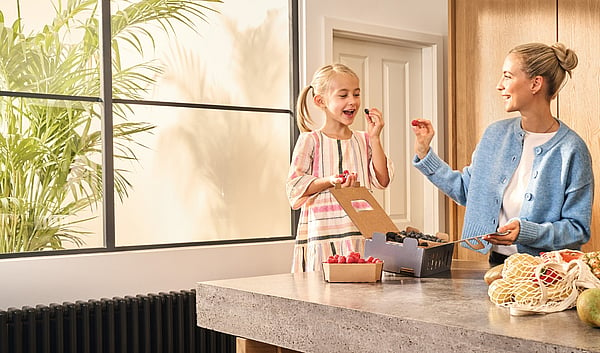
What drives a Gen Z shopper and what drives a Boomer has always been different — and the gap only seems to be widening. From how consumers discover and research products to how they experience unboxing and dispose of packaging, generational differences are influencing every stage of the online shopping journey.
For retailers, understanding these distinctions can make a meaningful difference and help them remain competitive in a rapidly evolving market. Insights from the Mondi Group eCommerce Trend Report 2026, based on 6,000 consumers across France, Germany, Poland, Sweden, Türkiye and the UK, reveal how changing expectations are reshaping eCommerce and why a one-size-fits-all approach might no longer be enough.
How do different generations research products online?
The generation divergence begins before a single item is added to a basket. Across three key staged of the research process — identifying suitable products and brands, comparing features and prices, and summarising customer feedback — Gen Z (ages 14–29) and Boomers (ages 62–80) behave very differently1 .
The Mondi Group eCommerce Trend Report 2026 shows that:
- Three-quarters (75%) of Gen Z use AI tools to identify products and brands when they are unsure where to start, compared to just 39% of Boomers.
- The same pattern appears when comparing prices across retailers: 75% of Gen Z use AI for this purpose, versus 47% of Boomers.
- When it comes to summarising reviews to avoid reading dozens of individual opinions, 71% of Gen Z rely on AI tools, compared to 40% of Boomers.
The one-fits-all approach fails most visibly here, in the research phase. These findings suggest that retailers need to:
- Consider how their products and brand information are surfaced by AI-powered tools and assistants, not just traditional search engines.
- At the same time, maintaining transparency and easy access to detailed product information remains important for Boomers, who prefer to research and verify information independently, e.g. on a brand’s homepage.

How comfortable are consumers with AI-assisted shopping?
The generational gap becomes more apparent when it comes to handing decisions over to AI to make purchasing decision.
- More than half (53%) of Gen Z shoppers would be comfortable allowing AI to complete a purchase on their behalf without checking all the details, compared to just 24% of Boomers.
- Similarly, 68% of Gen Z would be comfortable with AI adding items to their basket for final approval, versus 35% of Boomers.
However, trust remains a critical factor across all age groups. The vast majority still verify AI recommendations before purchasing, including 79% of Gen Z and 72% of Boomers.
- In addition, six in ten shoppers say they would only allow AI to act on their behalf if it is managed by a brand they already know and trust.
The implication for retailers is clear: AI-powered experiences must be introduced alongside transparency, credibility and consumer control.
How do packaging expectations differ between generations when shopping online?
When it comes to eCommerce packaging, the generational divide becomes even more visible — and commercially significant.
Gen Z places far more value on the emotional dimension of the unboxing experience.
- Nearly eight in ten (79%) say that packaging features such as shape, material, appearance or personalisation contribute to a positive unboxing experience and influence them to buy again — with 27% rating this as very important, up from 17% in 2025.
- They are also more than three times as likely as Boomers to be influenced by personalised messages on packaging (23% vs. 7%).
Boomers (ages 62–80), by contrast, consistently prioritise functionality.
- They are the generation most influenced by the top three practical unboxing factors: appropriately sized packaging (70%), ease of opening (61%), and sustainable external packaging such as paper or cardboard (50%).
These findings highlight the need for retailers to balance functionality and experience.
-
While personalised packaging and premium unboxing experience may strengthen customer loyalty among younger consumers
-
Practical, well-sized, easy-to-open packaging remains a priority for older shoppers
Do generations approach sustainability differently?
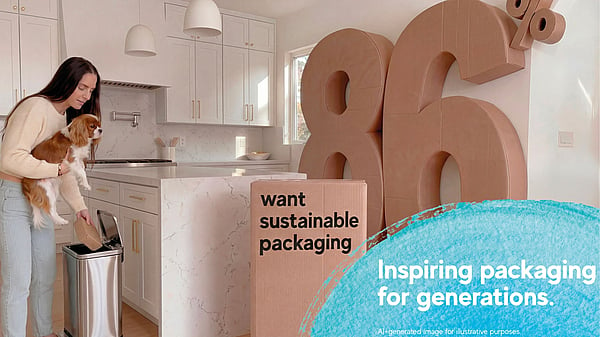
Sustainability is important across all age groups. The report found that approximately 86% of consumers consider sustainable packaging important, regardless of generation. However, consumer behaviour tells a more complex story.
- Six in ten Boomers (59%) place their eCommerce packaging directly into a recycling bin, compared to just 42% of Gen Z consumers.
- Meanwhile, one in five Gen Z shoppers (19%) admit to disposing of packaging they know to is recyclable in general waste — nearly four times the proportion of Boomers (5%).
- A lack of time is one of the key reasons cited, with one in five Gen Z consumers (21%) identifying this as a barrier, a figure seven times higher than among Boomers (3%).
This contradiction is yet another relevant finding in the report. Younger consumers are vocal advocates for sustainability, yet structural and behavioural barriers — complexity, time pressure, unclear labelling — are preventing them from acting on those values.
For retailers and packaging providers, this highlights an important opportunity. Packaging that includes clear disposal instructions, intuitive labelling and easy-to-understand recycling guidance can help bridge the gap between sustainability ambitions and actual consumer behaviour.
What do these insights mean for retailers?
Retailers looking to remain competitive across generational groups could address three implications from the research:
- Design for the AI-assisted shopping journey: With most younger shoppers beginning product discovery through AI tools, retailers need to consider how their products and brand information are surfaced and interpreted by those platforms — not just by traditional search engines.
- Balance functional and emotional packaging needs: eCommerce Packaging must simultaneously deliver practical performance (protective, right-sized, easy to open, easy to return) and experiential value (personalisation, visual appeal, sustainability messaging). The weighting of these priorities should reflect the target audience.
- Make sustainable choices easier to act on: Using recyclable materials is not only part of the solution. Clear, intuitive disposal instructions — perhaps even printed directly on packaging — can help consumers translate sustainability intentions into sustainable actions.
Ultimately, the retailers most likely to succeed will be the those that treat generational insight not simply as a segmentation exercise, but as a design principle that shapes customer journeys, product experiences and packaging strategies.
What insights are included in the Mondi Group eCommerce trend report 2026?
Generational behaviour is just one of the trends reshaping the future of eCommerce.
The Mondi Group eCommerce Trend Report 2026 explores how AI-driven shopping, sustainability expectations customer experience and innovation are converging to redefine the industry.
Based on insights from 6,000 consumers across six European markets, the report provides practical guidance for retailers looking to understand changing shopper behaviours and prepare for future market shifts.
- RetailX 2026, Mondi Group eCommerce Trend Report 2026, "AI's role in product research decisions," pp. 6–8

eCommerce Trend Report
Transforming market insights into better solutions
Stay ahead of packaging trends in 2026 with our latest eCommerce trend report.
Built on deep, continuous market research, we explore how digital convenience and physical experience are becoming increasingly connected, and how packaging innovation plays a vital role in bringing the two together.
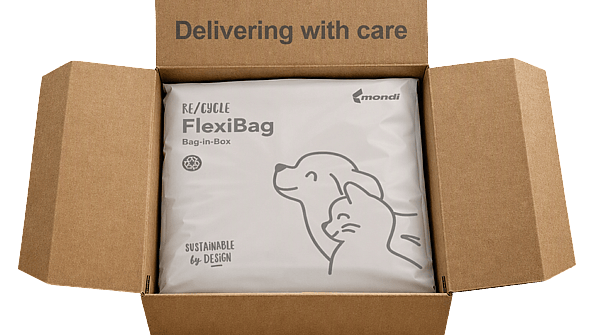
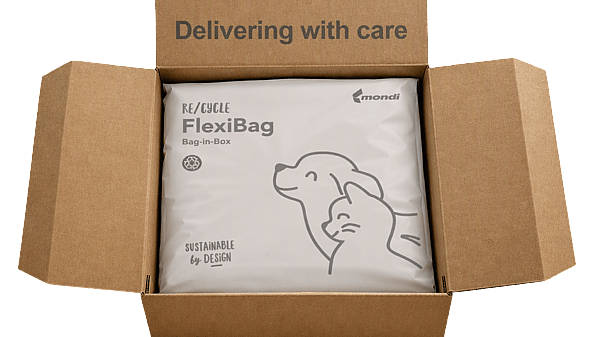
Looking for eCommerce packaging?
Integrated solutions across industries and applications




Navigation
Site tools
Find a product
Select a product by category
Select a product by industry
© 2026 Mondi. All rights reserved. Back to top




















Prompts
Click prompts to add them under the company line, click again to take one out, then copy the result into your AI chat. Shared by Asian Century Stocks and Uncovered Thai Stocks. Thank you.
Mondi plc (ticker MNDI), listed in United Kingdom.
Copied
ETFs Holding Mondi plc
Exchange-traded funds whose newest published daily portfolio holds one of the company's listings, largest weight first.
| ETF | Weight in ETF | Shares | Market value | As of |
|---|---|---|---|---|
| KNO | 0.48% | 23,770 | $ 215.856K | Jun 30, 2026 |
| DISV | 0.27% | 1,310,935 | $ 13.709M | Nov 12, 2026 |
| RFDI | 0.19% | 26,190 | $ 314.924K | Jul 31, 2026 |
| AVDS | 0.16% | 58,148 | $ 598.809K | Nov 16, 2026 |
| DFIS | 0.09% | 505,722 | $ 5.289M | Nov 12, 2026 |
| DFSI | 0.04% | 49,803 | $ 520.821K | Nov 12, 2026 |
| DFIC | 0.04% | 586,865 | $ 6.137M | Nov 12, 2026 |
| DXIV | 0.03% | 6,991 | $ 73.109K | Nov 12, 2026 |
| AVDE | 0.03% | 554,416 | $ 5.709M | Nov 16, 2026 |
| AVSD | 0.03% | 11,389 | $ 117.284K | Nov 16, 2026 |
| DFAX | 0.03% | 345,247 | $ 3.61M | Nov 12, 2026 |
| RGLO | 0.03% | 11,062 | $ 100.394K | Jun 30, 2026 |
| NTSI | 0.01% | 6,977 | $ 63.358K | Jun 30, 2026 |
| DFAI | 0.01% | 173,821 | $ 1.818M | Nov 12, 2026 |