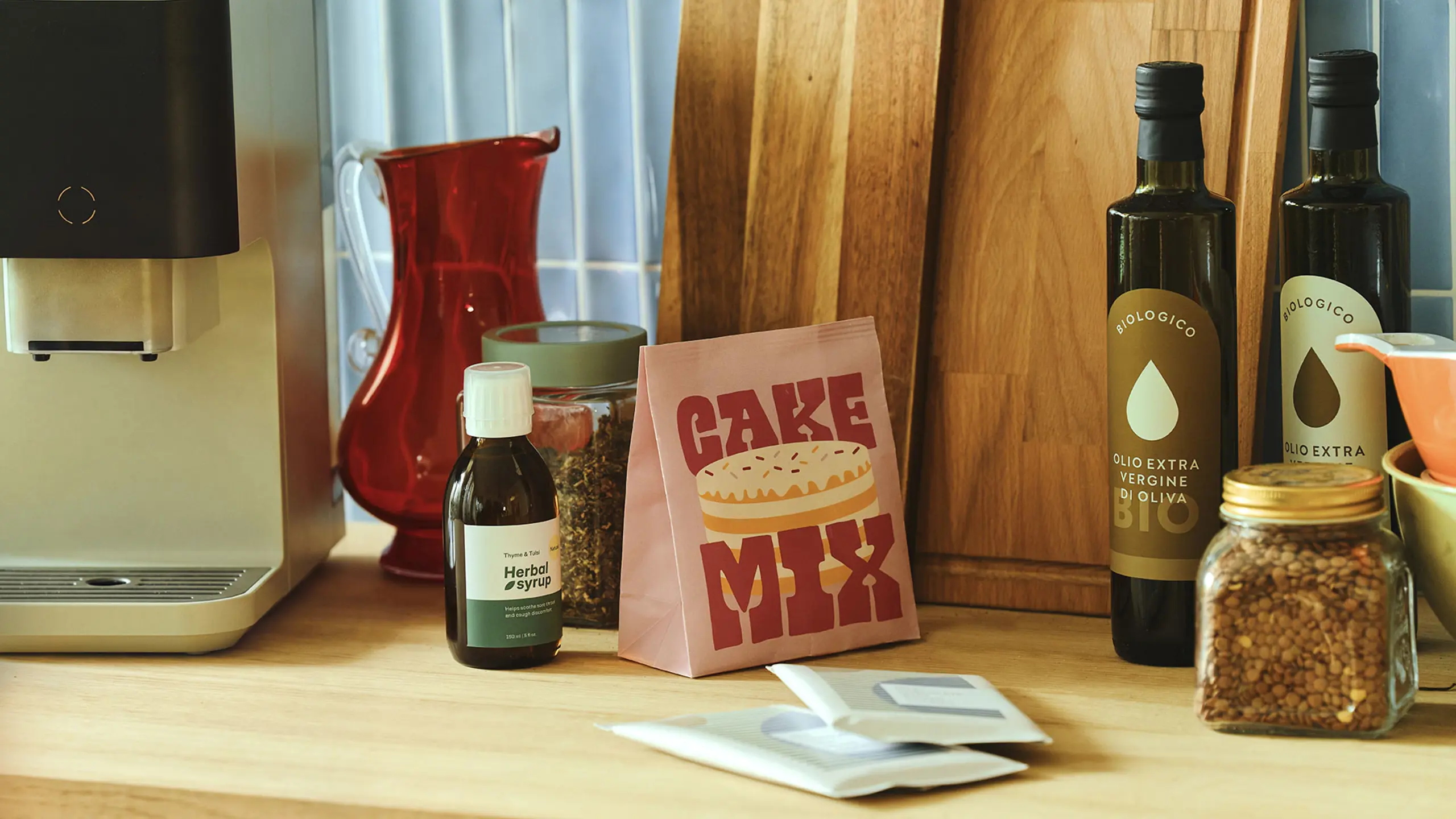
UPM-Kymmene Oyj is a material solutions company that creates value through renewable fibres, advanced materials, decarbonization solutions, and communication papers. The company operates across multiple business segments, serving industries such as packaging and labeling, tissue and hygiene, automotive and transport, graphics solutions, printing and publishing, construction, and apparel and textiles. Its portfolio includes barrier paper technology for packaging and labels, wood-based chemicals, and black pigments designed for circularity. UPM collaborates with industries and brands worldwide, leveraging its roots in the paper and forest industries while expanding high-value, material science-driven operations. Notable partnerships include a planned graphic paper Joint Venture with Sappi. The company is involved in the demerger and listing of WISA Group Plc. UPM operates production plants in multiple countries and is recognized for sustainability by third parties including EcoVadis and the Dow Jones Sustainability Indices.

Summarised from the company's own disclosures, fiscal year ended Oct 2026

Industry Specialty Chemicals Homepage upm.com
Sector Basic Materials IR page upm.com/investors
Tags
biorefinery, wood-based chemicals, barrier paper, communication papers, renewable fibres, advanced materials, packaging solutions, tissue products, circular economy, forest industry, UPM, UPM-Kymmene, UPM Metsä, UPM Specialty Materials, UPM Asendo, WISA Group Plc, Sappi, Leuna biorefinery, Circular Renewable Black
Press page —

Metrics

Valuation  
Market cap —
Market cap (USD) —
P/E —
PEG —
P/BV —
P/S —
P/OCF —
P/FCF —
Dividend yield —
Turnover / mcap —
Returns  
ROE 4.5%
ROI 3.7%
ROIC 5.9%
Profit margin 5.0%
Growth  
Revenue growing No
Profits growing Yes
Revenue up 3y No
Revenue up 5y No
Earnings growth 3y (net profit CAGR) -32.0%
Quality  
Profitable Yes
Margin expanding Yes
Buying back stock No
Diluting (TTM) No
Debt/Equity 28.4%
Podcast bulls (TTM) Sign up
Podcast bears (TTM) Sign up
Podcast sentiment (TTM) Sign up
Podcast sentiment % (TTM) Sign up
News sentiment (TTM) 2
Quality score —
Insiders  
Buys, 1w Sign up
Buys, 1m Sign up
Buys, 1y Sign up
Sells, 1w Sign up
Sells, 1m Sign up
Sells, 1y Sign up

Sign up to see this company's insider trades

Figure FY 2025 FY 2024 FY 2023 FY 2022 FY 2021 FY 2020
Revenue 9.656B 10.339B 10.46B 11.72B 9.814B 8.58B
Net profit 480M 436M 388M 1.526B 1.286B 560M

Sign up to see institutional holdings

Sign Up

Podcast Mentions

Sign up to see podcast mentions and sentiment

Sign Up

The bar for packaging that balances sustainability with performance is only getting higher. Trying to meet this balance raises some hard questions.

Can recycled fibers go into food packaging without compromising safety? Are there PFAS-free paper coatings that deliver the barrier protection we need? Is a bio-based glycol any different from a fossil one?

Attendees of a recent Packaging Europe webinar put questions like these directly to material and sustainability experts.

Hosted by Packaging Europe’s Tim Skyes, the panel brought together UPM’s Janne Varvemaa, Ashley Drew and Marinela Crisan to explore how material choices can balance circularity, renewable content and performance.

The Q&A toward the end of the webinar proved extremely popular with attendees. The panel fielded questions on topics ranging from the PPWR’s impact on businesses to the performance of specific types of renewable materials.

Unfortunately, the webinar’s clock ran out before everyone got answers. Below, you’ll find a transcript (edited for length and clarity) of some of the questions Janne, Ashley, and Marinela got to during the session, as well as a few extras that they didn’t have time to address.

How can we incorporate recycled paper content into our food packaging?

Janne: A great question. Thanks for it. I would say it's also kind of... I wouldn't call it a misunderstanding, but in many cases, that's not very easy. The main concern is related to the food safety. The vast majority of today's recycled fibres are not food compatible. The circulation is not clean from mineral oils and other such components that we do not want in direct contact with the food. Therefore, it's very difficult to find a decent recycled fibre for the application.

Janne Varvemaa Director, Products and Technology UPM Specialty Materials

More importantly it’s necessary to understand that this kind of requirement for the recycled materials is stemming from the plastic side where it's actually necessary to create a kind of a market for the recycled plastics. And there hasn't been, traditionally, enough outlets for recycled plastics.

The same is not true for the fibre market or paper-based materials. There's a huge secondary market for recycled fibre, container board being by far the biggest component of that. But there are other grades as well, like tissue or newsprint or some other industrial grades. So actually, incorporating recycled fibres into materials requiring food safety, in my opinion, is not the best way to proceed. There might be some, let's say, exceptions to this rule, especially in the areas where the food contact regulation is perhaps not so tight. Or that you have a very, very special niche recycled fibre that can be used. But as a mainstream, I don't think that would be the right way to go.

How do you see converters and brands starting to prepare their packaging for PPWR?

Ashley: Good question. Now that PPWR is applicable as of last month, we are really seeing our customers and brands preparing their DOCs, (declarations of conformity), which we, as the label supplier, would provide technical documentation for supporting that process.

And then of course this PPWR Article 5, which focuses on substances of concern, including PFAS, which is a big topic, especially for food contact applications.

We're also seeing many questions around the design for recycling criteria. There is a lot of education that's happening around the fact that these DFR criteria have not yet been established and integrated into the legislation. We will see that, of course, come in later, in 2028 with the delegated acts for Article 6. I would say there’s quite a lot of activities ongoing at the moment. But from my point of view, this DOC is the most critical, and these Article 5 points. So that's what we're seeing, at least in our markets.

What is the difference between fossil and bio-glycols?

Marinela: Chemically and functionally there is no difference. The BioMEG from our Leuna biorefinery is designed as a 1-to-1 drop-in replacement for its fossil-based equivalent. The only difference is the origin of the carbon, the production pathway, the associated certification, and the carbon footprint. Once converted into PET, the material can use the same manufacturing and recycling infrastructure. And this doesn't stand only for PET production but everywhere where glycols are used. We will produce two types of glycols in Leuna and both are stand-in replacements for the fossil versions.

Do you see any interest in compostable solutions?

Janne: To some extent, yes, although the recyclability seems to be kind of a global trend and I guess in many areas outside of the EU, EU regulation is followed up pretty closely for potential imports to this area, and also seen as kind of the highest standard that there currently is. But of course, recycling is not always the only solution or a perfect solution from that perspective. Even if the material as such is recyclable, it doesn't mean anything if it's not recycled. The recycled-at-scale targets for Europe are valid. But this would also be needed for other parts of the world where the recycling infrastructure is not in such good condition. And therefore, littering-related issues, or mismanaged or overflowing landfills, plays a role in packaging design. Here I would say compostable, or at least biodegradable, solutions come into play. Brand owners don't typically want to market on the packaging based on biodegradability, because they don't want to have it as a kind of a licence to litter or anything like that. But I would consider it an insurance against leakage into nature. So, to some extent yes, there is a need for these solutions as well.

Which kind of renewable bio-based content are you using in your new materials/mediums (for example, flexible packaging and PSA)?

Ashley: From the perspective of label materials, of course, one is wood-based biomaterials. And then the other notable form is from used cooking oil. And then both of those, of course, would also have ISCC plus chain of custody certification for the traceability.

Janne: And if I just continue briefly on that, of course, the renewability with the paper-based packaging is already there. So, the big majority of our material is of renewable origin and bio-origin. But of course, we do have an R&D pipeline where we are looking into these bio-based opportunities and solutions with our co-creation partners. You just need to follow our launches and innovation news to see that these products are there. Perhaps not yet as a huge mainstream because they often start small from startups and evolve into scale-ups and ultimately then into more regular businesses. But I would say we are on the way. But in many cases, of course, many of these let's say incumbent coatings tend to be fossil-based to start with.

PFAS free paper coatings. Are there good solutions available?

Janne: Matching the performance of PFAS-based concepts is not always easy, as applying the grease resistance mainly via coating solutions is not exactly the same as having the body of the paper made greaseproof through the use of PFAS chemistry. Finding cost-effective, recyclable solutions with adequate performance is doable, although in some cases modifications to packaging design may be helpful to ease the task.

Do you see a market shift coming for either papers or films as a direct result of regulatory changes such as PPWR?

Ashley: If we think about what the overall goal of PPWR is, it's really, to enable recyclability at scale and then improve the market harmonization throughout the EU. Of course, a big piece of this is encouraging the design of packaging that can be effectively recycled. And, that means some of these packaging formats need to be shifted to improve their compatibility.

Ashely Drew Manager, Sustainability, EMEIA UPM Adhesive Materials

Maybe one example of this would be fibre-loss paper-based components that are used on plastic substrates. At least from what we can start to see with the CEN standards that were released earlier this year, the trend is moving toward of course, set in stone, but that may be a look toward the direction that at least the plastics side of things is taking on that.

What are the main regulatory drivers you see at the moment for paper-based packaging?

Janne: Development of and adaptation to PPWR secondary legislation for packaging recyclability continues to be the key topic. Also, dual end of life (recyclability AND compostability/biodegradability) development from a global perspective is gaining momentum.

Circular Renewable Black: Are there differences in processability when replacing carbon black with CRB?

Marinela: UPM Circular Renewable Black is designed to be compatible with the existing manufacturing process, so no fundamental process change is expected. But as with any pigment or master batch change, the exact dosage or dispersion or colour targets, mechanical properties, and application-specific compliance should be still validated. The Sesotec results that we have demonstrate the sortability but it should not be proof of every other processing or end-user property. We don't have any indication that changes in process need to be made. But the final product still needs to be validated.

Marinela Crisan Technical Sales Manager UPM Next Generation Renewables

Can you please share your thoughts about creating a circular and sustainable packaging value chain without compromising food safety?

Janne: There is undoubtedly tension between food safety requirements and use of recycled materials in primary packaging. It’s difficult to guarantee that there are no harmful substances in recycled material collection, and complete elimination of these in sorting and recycling processes is not realistic and economically viable with current technologies.

Also, there is already a huge volume of paper/board products made solely or primarily from recycled fibres, so regulatory actions to create demand for recycled fibre through closed loop recycling for food contact sensitive, high-quality products are not needed. Virgin fibres are also always needed in paper/board recycling to maintain the quality of recycled fibres and products made from these. Compared to e.g. plastics, paper and board recycling is already well-established with the cascaded recycling as the primary means to reduce the use of virgin raw materials.

Related articles

[Story | 9 October 2026 | 6 min

The future of chemicals starts with a new source of carbon

Modern life runs on chemicals. They are in packaging, textiles, tires, cosmetics, electronics, construction materials, and thousands of other...](https://www.upm.com/articles/biochemicals/26/the-future-of-chemicals-starts-with-a-new-source-of-carbon/)

[Story | 7 July 2026 | 6 min

PPWR checklist for manufacturers

Application of the EU Packaging and Packaging Waste Regulation begins in August 2026. Companies will now face distinct, time-sensitive obligations. Meeting those obligations can seem daunting, which is...](https://www.upm.com/articles/circular-economy/26/ppwr-checklist-for-manufacturers/)

[Story | 2 July 2026 | 8 min

DIVERSA: Designing a Premium Performance tequila label through collective creativity

This series explores how leading designers bring their creative vision to life using UPM Raflatac™ Premium...](https://www.upm.com/articles/adhesive-materials/26/diversa-designing-a-premium-performance-tequila-label-through-collective-creativity/)
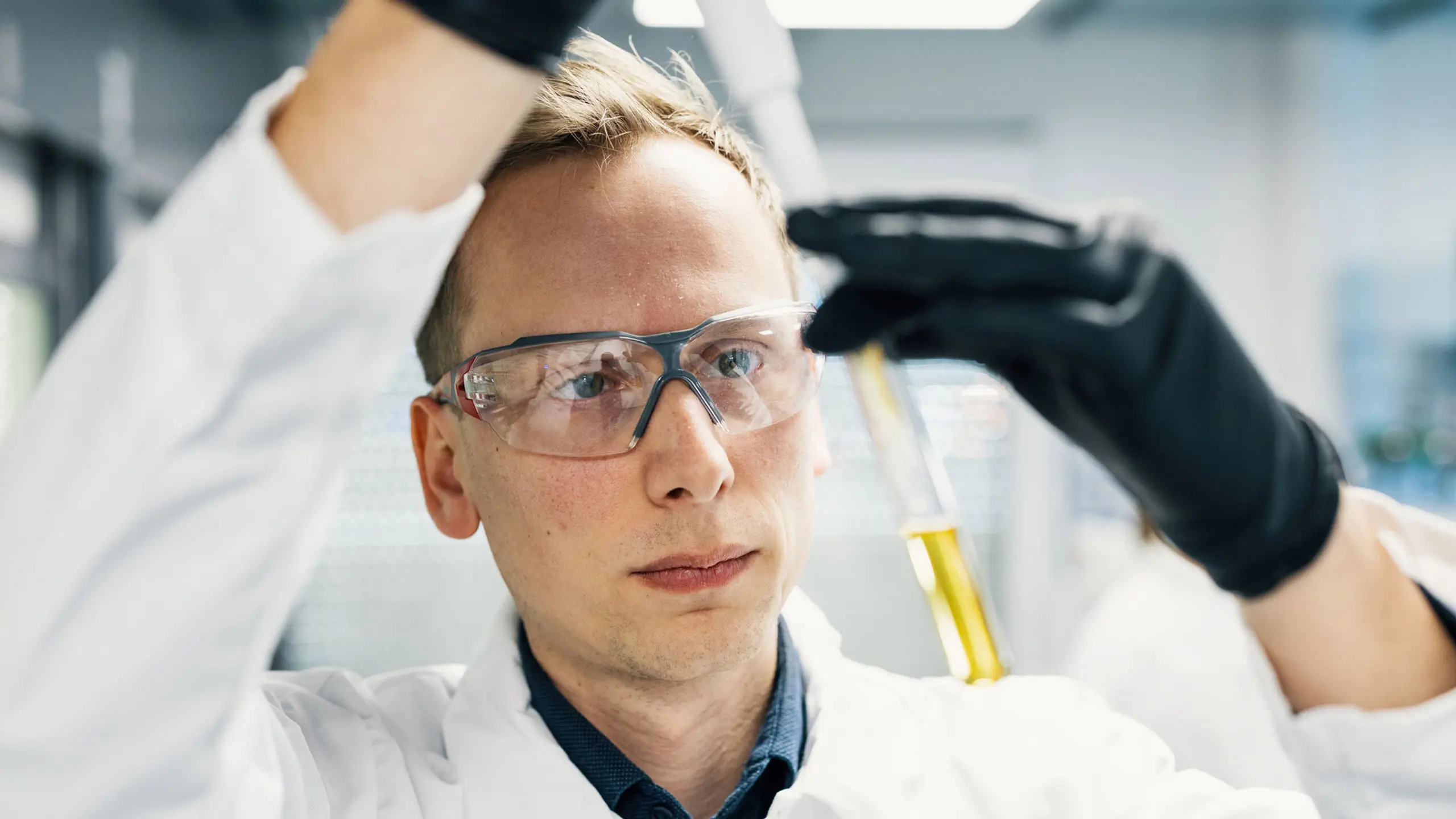

Modern life runs on chemicals. They are in packaging, textiles, tires, cosmetics, electronics, construction materials, and thousands of other products that most people rarely think about. Behind almost every chemical value chain sits the same foundation: carbon.

Carbon is everywhere

For the past two centuries, most of that carbon has come from fossil sources. Oil, gas and coal became the building blocks of modern chemistry, helping create the materials and products that shape everyday life. Today, that foundation is being reconsidered. Consumer demand for sustainable products, shifting supply chains, industrial competitiveness, climate targets and technological advances are prompting a broader discussion about where the next generation of chemical feedstocks will come from.

Like other industries, the chemical sector is working to decarbonize. Its challenge is different, though: carbon is not just an emission to cut, but the basic material its products are made from. The task is replacing the oil and gas that have long provided that carbon.

From wood to chemicals

Future chemistry will increasingly rely on a broader range of carbon sources, including renewable and circular feedstocks, such as lignocellulosic biomass. This includes wood, sawmill residues, thinnings, industrial roundwood, and other fibrous plant matter.

Advances in biorefining make it possible to break this biomass into molecular building blocks for chemicals, materials and fuels that have traditionally come from fossil feedstocks. It can be separated into streams such as sugars and lignin, which are converted into glycols, industrial sugars, functional fillers and other chemical intermediates.

These materials increasingly find their way into textiles, packaging, tires, batteries, construction materials and a growing range of consumer and industrial applications. Other residue streams can be converted into renewable fuels, creating alternatives to fossil equivalents.

Why renewable carbon is gaining momentum

Interest in renewable carbon is growing due to a combination of sustainability, regulatory, economic and technological factors. Together, these factors are moving renewable carbon from a niche topic to a strategic consideration for the future of chemical production.

Companies across industries are looking for ways to reduce dependence on fossil resources, while regulations increasingly encourage the use of renewable and circular materials. At the same time, rising material demand highlights the need for additional carbon sources alongside recycling. Renewable feedstocks can help meet those needs while supporting more sustainable value chains.

At a time when parts of the European chemical sector face significant pressure, renewable and circular carbon sources are also discussed in the context of competitiveness, resource security and long-term resilience. Manufacturers are looking for ways to strengthen supply chains, a question that goes beyond individual companies to where Europe’s industrial materials will come from in the future.

What’s at stake does not stop at research and development. As biorefining technologies mature and reach commercial scale, they create products and markets that did not exist under the fossil model: new applications for sugars and lignin, new suppliers, and industrial jobs tied to specific regions and their biomass. Researchers and companies are turning technological progress into economic activity, giving the chemical sector a path to grow while lowering its fossil footprint.

Beyond green: proven performance

While sustainability is helping drive demand for renewable chemicals, long-term adoption depends on performance.

Renewable chemicals do not enter empty markets. They are being adopted in industries with well-established performance requirements and decades of industrial experience behind them. Textile inputs must work in existing production processes. Materials used in tires, batteries or construction products must meet demanding technical specifications.

In a growing number of applications, renewable chemicals meet the demanding performance specifications long set by fossil alternatives, and in many cases exceed them. As commercial adoption grows, discussions focus as much on product performance as on sustainability credentials.

From lab to market

Outside laboratories and pilot projects, renewable carbon is already moving through commercial value chains. Industrial facilities are producing renewable fuels, chemicals and materials for customers around the world.

In Lappeenranta, Finland, UPM has produced renewable fuels and renewable naphtha from forestry residues for over a decade. The biorefinery has become part of everyday industrial reality, supplying products into established markets while accumulating years of operational experience.

In Leuna, Germany, UPM has built the world's first industrial-scale biorefinery dedicated to producing chemicals from biomass sourced from sustainably managed forests. Sugars, lignin and other components of biomass are converted into products destined for applications ranging from packaging and textiles to rubber, batteries and construction. The biorefinery is an example of a broader industrial shift in which alternative carbon sources are increasingly being integrated into commercial-scale chemical production.

Together, Lappeenranta and Leuna show how renewable carbon is entering established industrial value chains. Products derived from renewable carbon are moving from biorefineries into markets that have historically relied on fossil feedstocks.

What’s next for biochemicals

Taken together, these developments are creating a tailwind for industrial biochemistry and the wider bioeconomy.

In the upcoming articles of this series, we will explore the technologies, markets and applications that are helping biochemicals move from promising innovation to mainstream industry solutions.

Related articles

[Story | 16 March 2026 | 5 min

Renewable materials: driving the bioeconomy forward

As expectations around sustainability rise, industries are transforming the way they source, produce, and innovate. Against this backdrop, UPM is taking a central...](https://www.upm.com/articles/biochemicals/26/renewable-materials-driving-the-bioeconomy-forward/)

[Story | 23 January 2025 | 10 min

Companies can truly achieve their sustainability goals only if their products’ journey to consumer is transparent

There is significant demand from consumers and brand owners for more products made with...](https://www.upm.com/articles/biofuels/25/companies-can-truly-achieve-their-sustainability-goals-only-if-their-products-journey-to-consumer-is-transparent/)

[Story | 16 October 2026 | 10 min

Materials matter: Experts answer your questions on PPWR, PFAS and food safety

The bar for packaging that balances sustainability with performance is only getting higher. Trying to meet this balance raises some hard...](https://www.upm.com/articles/circular-economy/26/materials-matter-experts-answer-your-questions-on-ppwr-pfas-and-food-safety/)

Finland is marking Motiva's Energy Saving Week for the 30th time. It's a good moment to share how UPM Forest has worked, and continues to work, on improving the energy efficiency of transporting wood by rail.

At the end of 2025, UPM announced an investment in domestic logistics (news in Finnish), replacing the foreign wagon capacity used for its wood transport with domestically manufactured roundwood wagons from VR Fleet Care. The new wagons enter service at the end of 2026. They will be built and maintained in Pieksämäki, Finland, and carry around a third of the roundwood UPM Forest transports by rail.

“Thanks to the new wagons' design, a train can carry more wood at the same total mass than the current Estonian OSJD/GOST wagons. As a result, energy consumption per cubic meter of transported wood drops by up to 20%. The new wagons also have no end walls, which reduces air resistance, especially when the wagons are empty,” explains Markus Rantavaara, Project Manager at UPM Fibres.

Other measures have also improved transport energy efficiency. One of the most significant developments in recent years has been lengthening roundwood trains in cooperation with rail operators. When a single train can carry more wood, the same transport volume needs fewer train trips. This improves the energy efficiency of the entire transportation chain.

Beyond energy efficiency, domestic manufacturing and maintenance also strengthen employment and the strength of Finland’s supply chain in uncertain times.

Motiva's Energy Saving Week

Related articles

[Blog | 20 October 2026 | 4 min

Can positive biodiversity impact of forest certification be verified?

Forests are home to much of the world's terrestrial biodiversity and play a vital role in ecosystem health, human wellbeing and in climate regulation.](https://www.upm.com/articles/sustainability/26/can-positive-biodiversity-impact-of-forest-certification-be-verified/)

[Blog | 20 March 2026 | 4 min

Fisheries fees and voluntary projects support the return of eels

The European eel is a remarkable migratory fish: it spends most of its life in fresh inland waters but migrates to the Sargasso Sea in the Atlantic to spawn. Mature eels leave...](https://www.upm.com/articles/sustainability/26/fisheries-fees-and-voluntary-projects-support-the-return-of-eels/)

[Story | 7 July 2026 | 6 min

PPWR checklist for manufacturers

Application of the EU Packaging and Packaging Waste Regulation begins in August 2026. Companies will now face distinct, time-sensitive obligations. Meeting those obligations can seem daunting, which is...](https://www.upm.com/articles/circular-economy/26/ppwr-checklist-for-manufacturers/)

Prompts

UPM-Kymmene Oyj (ticker UPM), listed in Finland.

ETFs Holding UPM-Kymmene Oyj

ETF Weight in ETF Shares Market value As of
TURF 1.67% 98,786 $ 2.619M Jun 30, 2026
DWMF 0.36% 4,577 $ 121.403K Jun 30, 2026
TOUS 0.33% 190,102 $ 5.172M Jul 31, 2026
TIER 0.13% 1,728 $ 47.012K Jul 31, 2026
AVIV 0.10% 86,568 $ 2.12M Nov 16, 2026
AVDE 0.07% 531,953 $ 13.03M Nov 16, 2026
IQSZ 0.06% 3,972 $ 107.818K Jul 31, 2026
AVSD 0.06% 9,238 $ 226.279K Nov 16, 2026
NTSI 0.05% 8,779 $ 232.859K Jun 30, 2026
FENI 0.01% 55,111 $ 1.461M Jun 30, 2026