CALL: FY2026 Full Year Results Briefing DATE: Thursday, 27 August 2026 REPRESENTATIVES: Mal Bundey, Non Executive Independent Chair Chris Ellison, Managing Director Darren Killeen, Chief Operating Officer Mark Wilson, Chief Financial Officer Chris…
CALL:
FY2026 Full Year Results Briefing
DATE:
Thursday, 27 August 2026
REPRESENTATIVES:
Mal Bundey, Non Executive Independent Chair
Chris Ellison, Managing Director
Darren Killeen, Chief Operating Officer
Mark Wilson, Chief Financial Officer
Chris Ellison, Managing Director:
Good morning everyone and thanks for joining us. This is the MinRes FY26 full year results. I’m Chris Ellison, I’m
the founder and Managing Director. I’m joined today by our Chair, Mal Bundey; Chief Operating Officer,
Darren Killeen; and our Chief Financial Officer, Mark Wilson. Darren will share his reflections on what makes
this company special, and Mark will speak to the financials shortly.
I encourage you to read the annual report we’ve released today. It looks back on many of our
achievements in the past 20 years since we listed on the ASX. When we listed back in 2006 we were a
$100 million crushing contractor with a small manganese export operation. We had a couple of hundred
employees, and a lot of ambition to grow into something much bigger.
20 years on that $100 million business has just delivered record revenue of $6.5 billion and record underlying
EBITDA of $2.6 billion. We’re now one of Australia’s largest diversified resource companies, and one of the
best mining services businesses in the world. We employ more than 7,200 people, and alongside tier one
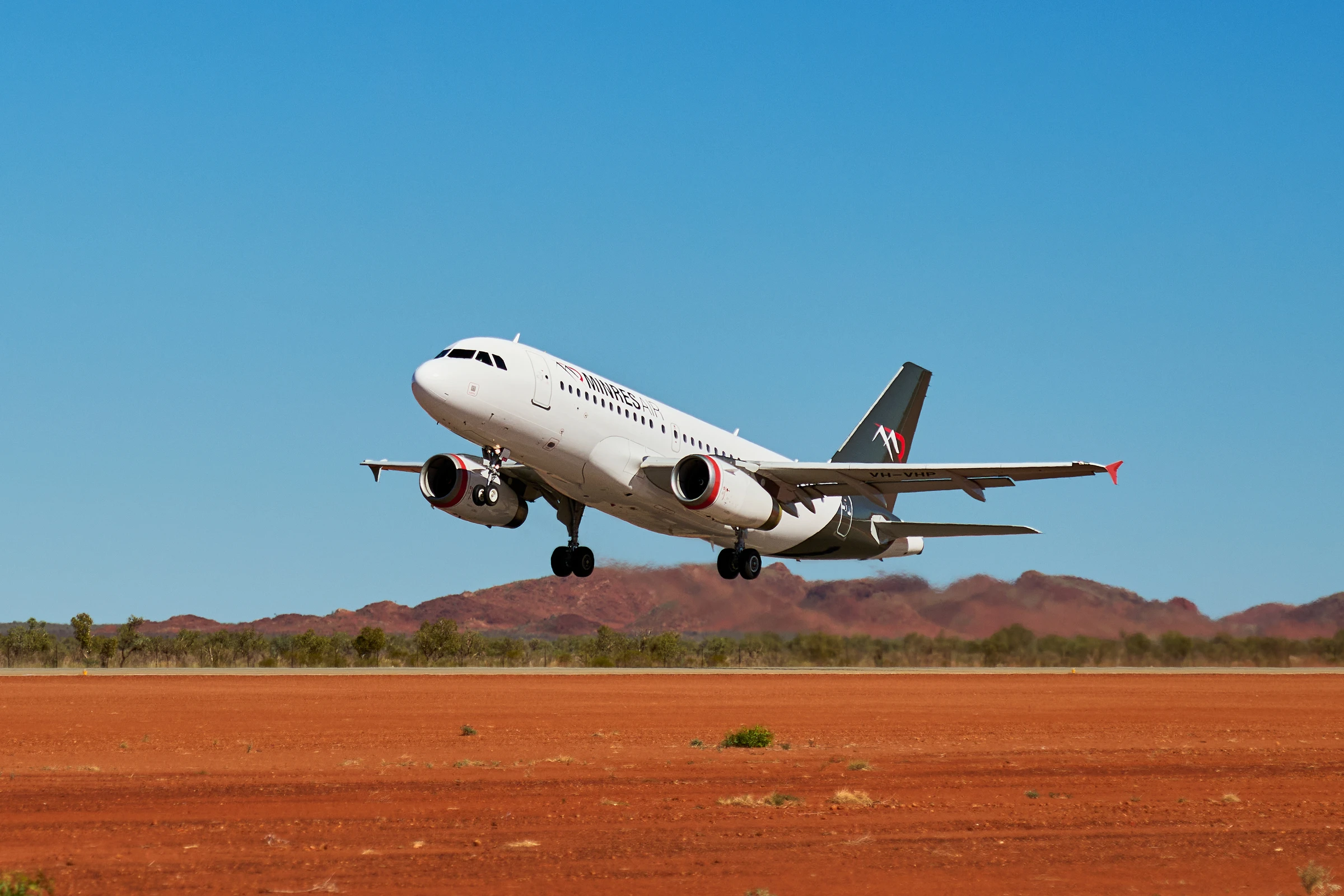
partners we run iron ore and lithium operations and an energy exploration program. We have our own airline
and a childcare centre which is something I would never have imagined 20 years ago. One thing that’s
never changed is that the Mining Services remains the heartbeat of MinRes.
Over two decades it’s built a reputation of outstanding performance both for clients and our own projects.
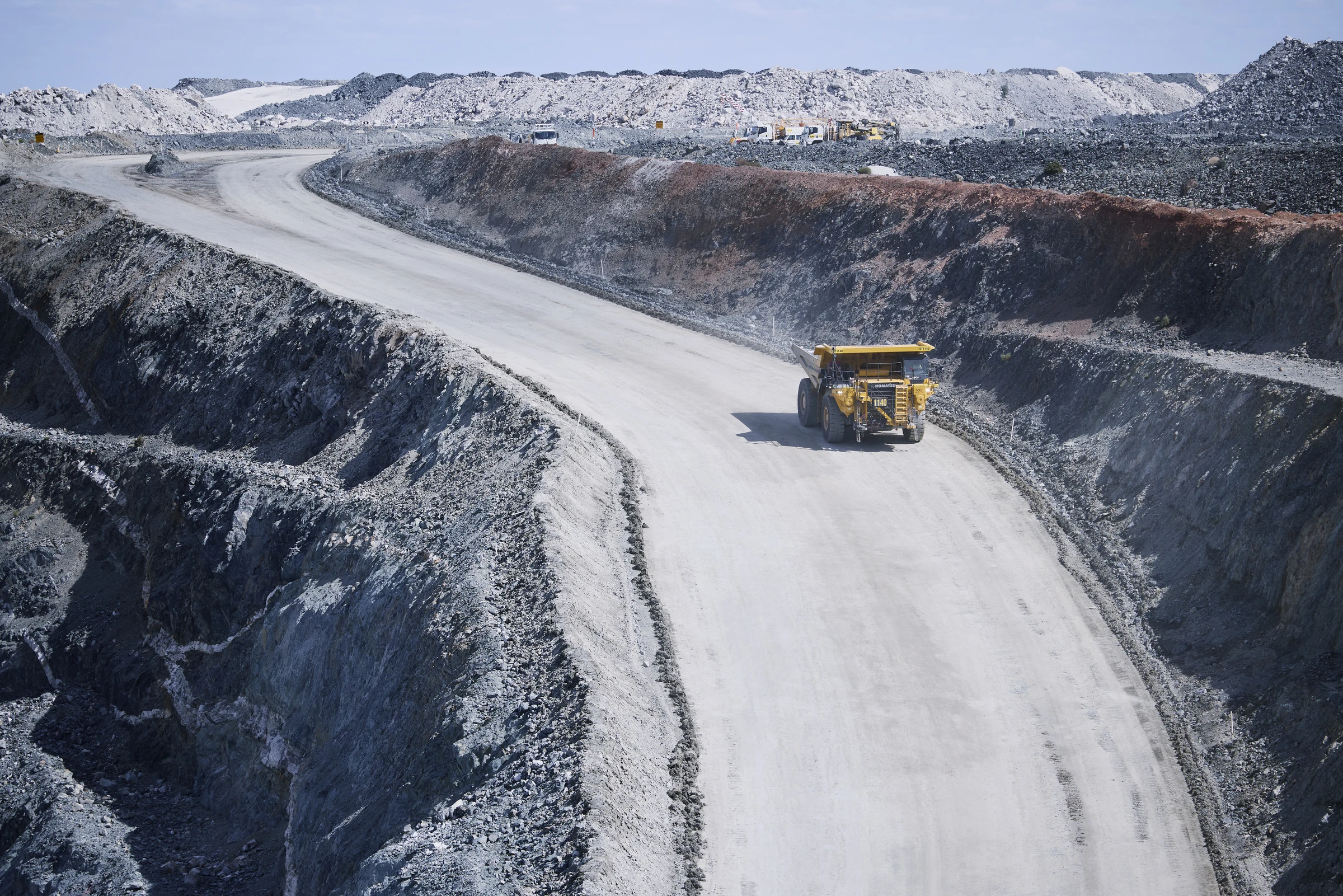
Onslow Iron is the proof of that. We took it from investment decision to full production in three years. The
project could not support heavy haul rail or a deepwater port. It was designed and built on MinRes
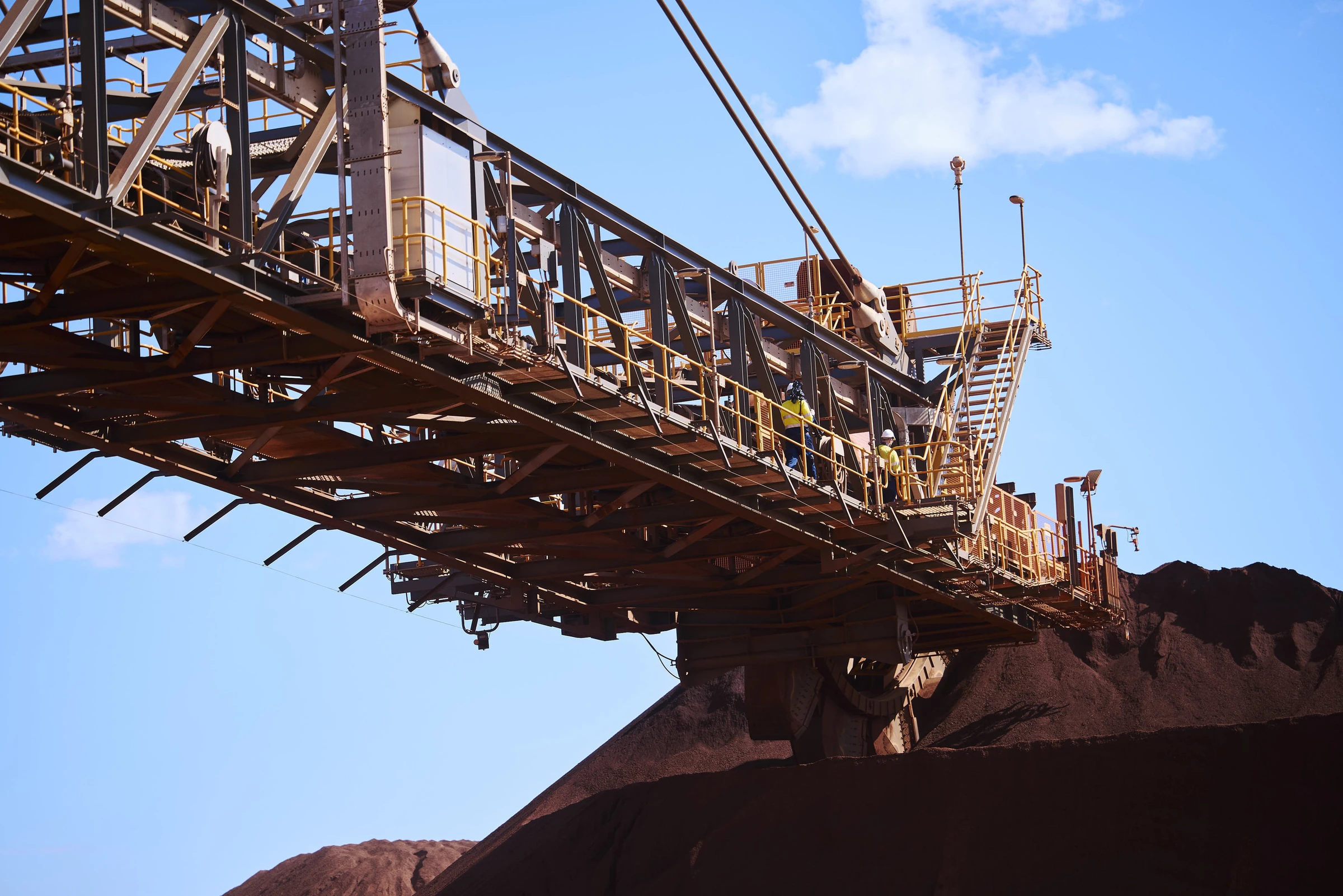
innovation. The NextGen crushers, the mine-to-port haulage system, the transhippers, all unique to MinRes.
It’s that in-house expertise that’s made us a partner of choice for some of the world’s great mining
companies.
Of course no business achieves what MinRes has without an exceptional workforce. Many of our people
have worked side by side for over a decade moving from one project to the next. That continuity is a
genuine competitive advantage, and it’s very hard for others to replicate. On our 20th anniversary as a
public company and 34 years since inception I want to thank the thousands of people who have worn the
MinRes logo and helped build this company.
Now to this year’s results. The past 12 months were among the most significant in MinRes’ history. We
achieved record financial and operational results. Every division met or exceeded guidance with some
operations beating multiple upgrades. Revenue was a record $6.5 billion, up 44%. Underlying EBITDA was a
record $2.6 billion, up 183%.
Mining Services delivered record volumes of 341 million tonnes, and record EBITDA of $976 million. Onslow
Iron reached its full capacity of 35 million tonne run rate back in August of last year, and then it finished off
the financial year at a 38 million tonne run rate. The project sustained no major damage from the two
cyclones that passed through earlier this year.
Lithium bounced back on higher prices and improved operational performance. At Wodgina our investment
in mine development has repositioned the operation on the cost curve and extended its production outlook
significantly. The work was done when conditions were difficult and the benefit is now flowing through with
more to come.
PAGE | 1
Importantly strong cash flow has now returned our balance sheet to a healthy position, following a period of
significant investment. Net debt come down by $1.1 billion to $4.3 billion, and our liquidity has more than
doubled to $2.4 billion.
Today the Board has declared a fully franked dividend of 83 cents per share, representing a 20% payout on
underlying profit. This decision reflects the Board’s confidence in the balance sheet and that MinRes is in
great shape. It also reflects a simple principle; when the company generates surplus cash our shareholders
should share in it.
Looking ahead we enter FY27 with strong operational momentum after a record breaking finish to FY26.
We’re guiding FY27 Mining Services production volumes to 370 to 390 million tonnes, which is 9 to 14%
increase on last year’s record. This growth will be driven by running Onslow Iron beyond nameplate; the
restart of Bald Hill; increased mining at Mount Marion; and our growing external order book.
And I want to be clear about the quality of these earnings, because I don’t think the market fully
appreciates it. Around 70% of our Mining Services order book runs on more than 15 years. These are long
term build-own-operate contracts with rates indexed every year and very low sustaining capital. It’s an
infrastructure earning stream that sits inside a resource company and it doesn’t move with the commodity
cycle.
Onslow Iron has transformed our Iron Ore portfolio, adding a low-cost long-life asset that unlocks the West
Pilbara. The arrival of transhippers 6 and 7 lifts installed capacity towards 40 million tonnes run rate, and gives
us redundancy to rotate the fleet through maintenance. At the Pilbara Hub the transition from Wonmunna to
the nearby Lamb Creek deposits almost complete, and that extends our mine life out by about another five
years.
Following years of investment to improve plant recoveries and reduce costs, our three lithium mines are well
placed to capitalise on improved prices. At Wodgina after several years of increased stripping we expect
clean ore to feed all three process trains from around December this year. Wodgina’s FY27 sales volume
guidance is 360 to 390 [thousand]1 tonnes of SC6, and that’s an increase of 14 to 23%. FOB cost guidance is
around 640 to 710 dollars a tonne, and it’s a decrease of 4 to 13%. In short, more tonnes and lower cost.
It will be a transitional year at Mt Marion as we construct a float plant and develop underground mining.
Taken together these investments will add about 100,000 tonnes of product, and it will allow us to produce a
single SC5 product for the whole of the mine.
We restarted Bald Hill back in May, and it remains on track to reach nameplate capacity of 140,000 tonnes
SC6 equivalent in the December quarter. Alongside additional drilling to define a maiden reserve for Bald
Hill, we’ve commenced the pre-feasibility study for a plant expansion. The transaction with POSCO is
expected to complete later this year, and that will deliver us about US$765 million in gross proceeds that will
further go towards reducing our debt and providing options for disciplined growth.
In Energy we’ll continue advancing the gas exploration program across the highly prospective onshore Perth
and Carnarvon basins. We anticipate two gas exploration wells in the Perth basin where we’re 100% owner,
and two exploration wells in the Carnarvon basin where we’re in 50-50 partnership with Hancock. In addition,
a well flow testing program will appraise the elevated gas readings encountered at Aubisque-1 at the end
of FY26.
In terms of capex spend at FY27 the focus is on low risk, high return brownfield opportunities. The capex
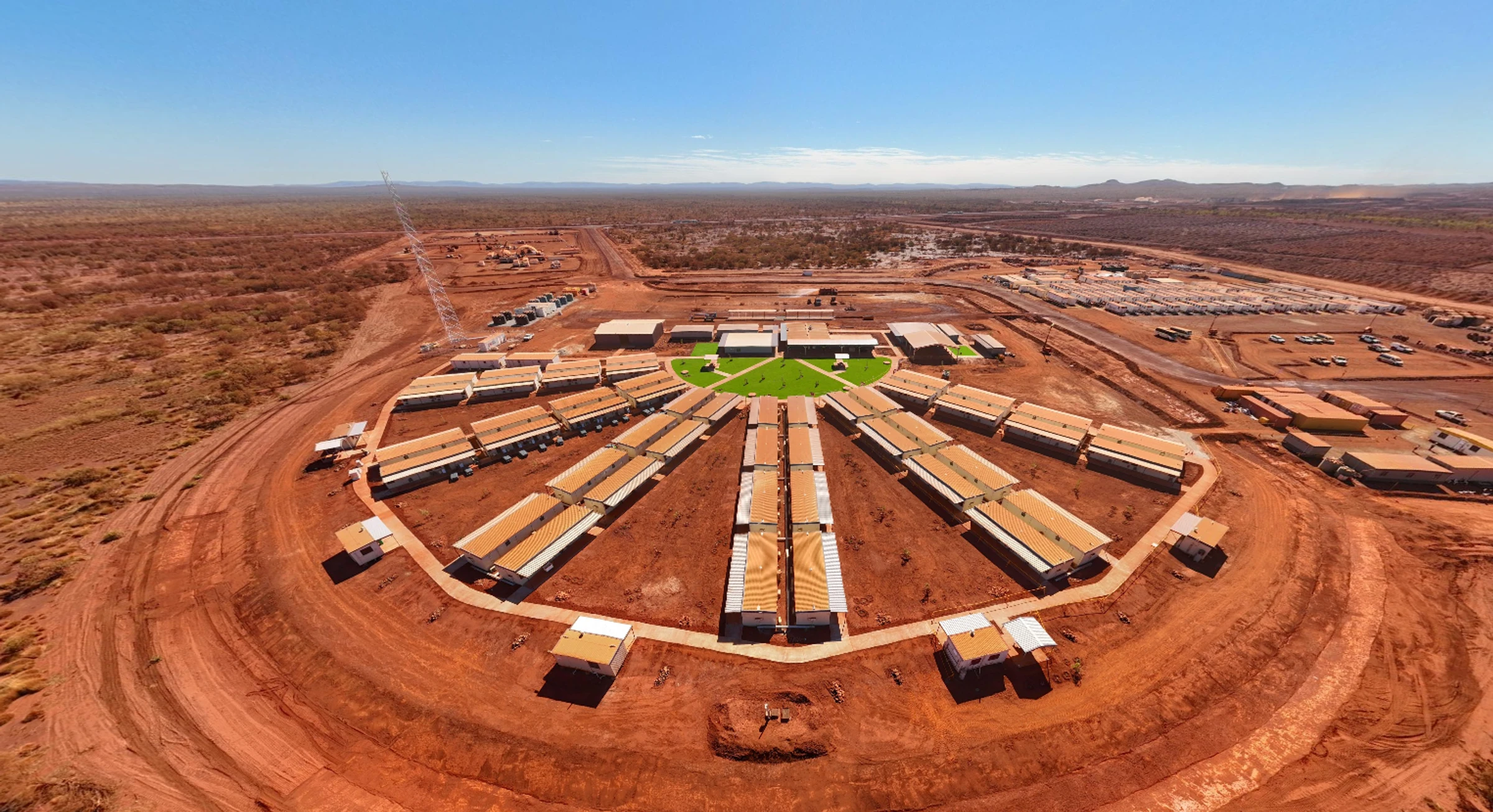
includes the Mt Marion developments, completion of Lamb Creek, and construction of the 270 room
accommodation camp at Onslow. That accommodation project is an example of how we invest in the
wellbeing of our people, and improve productivity and retention.
1 Editor’s note: figure corrected from “million” as misspoken during the call.
PAGE | 2
So if you step back, our priorities for FY27 are clear. First, safely deliver guidance across every division.
Second, keep investing in low risk, high return expansion around the assets we already know well. This
includes studying expansion opportunities at Bald Hill, Wodgina and Onslow Iron. Third, keep strengthening
the balance sheet so that we have the flexibility to grow and return capital to shareholders through the
cycle.
Earlier this year the Board and management completed a strategy review which is reflected in some of the
near term priorities I just mentioned. The first is to optimise our existing operations through brownfield growth.
The second is disciplined domestic growth where our integrated model can unlock value others cannot. And
the third is to carefully assess international opportunities in the right commodities, the right jurisdictions and
with the right partners.
I want to acknowledge the work of our Chair, Mal Bundey and the Board. MinRes is a stronger, better
governed company because of the Board’s work over the past 12 months. Governance improvements are
now embedded across the business. Just as importantly, they’ve strengthened the company without taking
away the entrepreneurial speed that has always made MinRes different. And the appointment of Darren
Killeen as Chief Operating Officer reflects the quality of our leadership team. Darren’s appointment gives
me, the Board and our shareholders confidence in the succession process that’s underway.
When I think back over the past 20 years what I’m most proud of is not just what we’ve achieved, it’s that
we’ve developed the people, the innovation and the culture to drive even more success in the decades to
come. Thanks everyone, and I’ll hand over to Darren.
Darren Killeen, Chief Operating Officer:
Thank you Chris, and good morning everyone. This is my first time speaking to you as Chief Operating Officer
at MinRes. I want to start by briefly introducing myself.
I’ve spent nearly four decades delivering major resource projects in Australia and the Middle East, including
the past 17 years at MinRes. Most recently as Chief Executive of Engineering and Construction, I led the
design, construction and commissioning of Onslow Iron. That project is a perfect demonstration of what
makes MinRes different. We have long tenured teams, deep in-house capability, and one line of
accountability from design through to construction and operations. We do not just plan projects, we build
them, we operate them and then we improve them.
That allows us to move faster, control costs more tightly, and deliver at lower capital intensity than others in
the sector. I have a high level of confidence in the people we have across Mining Services and at our
operations. As COO, my job is to help the teams apply that model consistently across the business. That
means safe performance, reliable delivery, strong operational discipline and careful use of capital.
Chris has already covered the strength of the FY26 result and the momentum across our operations. What I
would add is those outcomes did not happen by accident. They came from experienced teams working
together over long periods of time, with a clear operating model and a strong focus on problem solving and
execution. That is especially important for a business like MinRes, where the same capabilities that build
projects are also responsible for operating and improving them over time. It creates continuity,
accountability and speed, and it helps us keep lifting performance as assets mature.
I also want to address safety directly, because strong operational results mean nothing if people are not
going home healthy. Transparent and verified safety reporting is fundamental to how MinRes operates, and
to maintain the trust of our workforce, regulators and investors. During FY26 we completed a comprehensive
review of our injury and illness classification procedure, aligning it with ICMM standards. The adoption reflects
broader classification of recordable injuries. It is a deliberate decision to hold ourselves to a higher reporting
standard as our business grows. For me, that’s the right approach. Safety systems, reporting discipline and
operational standards all need to keep strengthening as the company grows larger.
PAGE | 3
As we enter our third decade as a listed company, my commitment as COO is to deliver growth projects
safely, on time and at a lower capital intensity. That is what MinRes does best, and it’s what we will keep
doing. We have a rare combination of people, capability and culture at MinRes, and I’m confident in what
the team can achieve from here.
I’ll now hand over to Mark.
Mark Wilson, Chief Financial Officer:
Thank you Darren, and good morning everyone. I’m pleased to present MinRes’ financial performance for
FY26. This was the strongest financial year in MinRes’ history. As Chris has outlined, what makes this result
significant is not simply the headline numbers, it’s the quality of the earnings.
We delivered record revenue of $6.5 billion, and underlying EBITDA of $2.6 billion. Underlying NPAT was
$822 million compared with a loss in FY25. This was driven by record operating performance resulting in
volume growth across the business, and we can now see the benefits of prior years’ investment coming
through in earnings and cash flow.
Iron ore was the largest contributor with EBITDA of $1 billion. We used long-dated debt to invest in Onslow
Iron to strengthen the earnings and life of our asset portfolio, and this result is the first return on that
investment.
Mining Services delivered record underlying EBITDA of $976 million, up 32% on FY25. This is a high quality
earning stream that is less exposed to commodity prices than many investors appreciate. It is underpinned
by long term contracted revenue, including life-of-mine contracts and toll road earnings from Onslow Iron. It
also generates high free cash flow with sustaining capital low relative to depreciation, given that a large
proportion of its assets are infrastructure-like and designed to support a specific mine life.
Lithium added EBITDA of $771 million, reflecting improved operating performance, record volumes, and
stronger lithium prices in the second half. The strength of these results has translated directly into balance
sheet improvement. The deleveraging we committed to is now evident. FY26 operating cash flow, excluding
the Onslow Iron carry loan and iron ore prepayment, was $2.6 billion, representing 102% cash conversion on
underlying EBITDA. Free cash flow was $849 million after capital expenditure of $1.1 billion, and Morgan
Stanley Infrastructure Partners distribution for the Onslow Iron Road Trust. This is a business converting earnings
into cash reliably and at scale.
Net debt reduced by around $1.1 billion to $4.3 billion, with net debt to underlying EBITDA falling sharply from
5.9 times to 1.7 times at year end. That deleveraging has been driven by organic cash flow generation, not
asset sales. Our liquidity position more than doubled to $2.4 billion, comprising $1.6 billion in cash, and a fully
undrawn $800 million revolving credit facility. This is well above the $1 billion minimum we maintain at all
times, and provides genuine resilience across the cycle.
On completion the planned sale of a 30% interest of our share in Wodgina and Mount Marion to POSCO will
deliver US$765 million, bolstering an already healthy position. The POSCO proceeds would take net debt to
approximately $3.2 billion, and leverage to around 1.2 times on a pro forma basis. Completion of that
transaction remains subject to conditions precedent, including regulatory approvals, and we expect those
to be satisfied in this half.
On debt capital markets I want to take a moment to acknowledge what has been a very active 12 months.
In October we refinanced our nearest term US$700 million bond to April 2031. That was done at 7%, which
was our lowest ever coupon at issuance. In April we issued US$1.3 billion of new senior unsecured notes;
US$650 million at 6% due May 2032; and US$650 million at 6.25% due May 2034. We used those proceeds to
repay our iron ore prepayment facility and redeem US$975 million of higher coupon bonds.
Together these transactions lowered our weighted average cost of debt from 8.6% to 7.4%, and will reduce
annual finance costs by more than $60 million and extend our weighted average debt maturity to nearly five
years. That is a materially better debt profile with lower cost, longer tenor, and no near term refinancing
pressure, and reflects the strong support we’ve had from the debt market for our investment strategy.
PAGE | 4
On capital allocation the refreshed framework we outlined at the AGM is clear. First, we protect the balance
sheet. That means maintaining at least $1 billion of liquidity and keeping leverage below two times through
the cycle. Second, we invest in growth, but only where it meets our return hurdles and sits within areas we
know well operationally. That is why FY27 capex remains focused on brownfield opportunities. Guidance is
$1.425 billion pre-financing, or $1.27 billion on a net financing basis. Please note our Mt Marion and Wodgina
capex are shown on a 50% basis in line with our current ownership interests.
Our growth investment program includes the Mount Marion development, the Onslow camp, and autonomy
spend on jumbo road trains. Sustaining capex of $815 million for FY27 reflects the increased scale of our
business and a few one-offs, like elevated stripping at Mt Marion and the final Lamb Creek development. It
also reflects a full year of operations at Bald Hill since restarting, and mobile fleet replacements across the
portfolio, some of which have been deferred. We anticipate sustaining capex going forward to range
between $700 and $750 million depending on mine plans and fleet replacements.
And third, when those balance sheet and investment requirements are met surplus cash can be returned to
shareholders, and that is the context for today’s dividend. As Chris mentioned, the Board has declared a fully
franked final dividend of 83 cents per share, representing a 20% payout of underlying NPAT for the whole of
FY26.
So the message is straightforward; balance sheet first, discipline growth second, and shareholder returns from
excess cash once those conditions are met. This marks our return to dividends, and reflects the Board’s
confidence that the balance sheet is healthy, the business is generating the cash to sustain it, and the
company’s outlook is positive. Thank you.
We’re now happy to take your questions.
Moderator:
Thank you Mark. If you have not yet submitted your text question or joined the live audio queue, please do
so now. I will introduce each caller by name and ask you to go ahead. You will then hear a beep indicating
your microphone is live. Our first question comes from Paul Young from Goldman Sachs. Paul, please go
ahead.
Paul Young, Goldman Sachs:
Yeah, thanks. Morning Mal, Chris, Mark and Darren. First question is on Mining Services and just the outlook
there which is pretty upbeat just on volumes, and you actually beat your guidance for FY26 volume. So just
want to step into the volume uplift, and how much baked into that just roughly is the external volumes in that
opportunity?
Mark Wilson:
Morning Paul, it’s Mark. Nice to talk to you. I think we’ve been saying for a while that we see significant
opportunity for Mining Services going forward. I think the results in FY26 are just the start of what we can
expect to see going forward. We see a good pipeline of opportunity; a lot of that’s external. Some of that’s
going to be driven by higher strip at Mt Marion through FY27, but also the other third-party contracts remain
very real as opportunities.
Paul Young:
OK, thanks Mark. And then just secondly, just further to that, just an opportunity, you went through three
different buckets there, one being an existing opportunity, second, new opportunities in Australia, and third,
overseas. Just on the second one, which is really been the story of MinRes over the past decade or so, is
finding new opportunities, owning an equity stake in the mining operation, and banking the Mining Services
volumes which has been very successful. How many opportunities do you see on the horizon there?
PAGE | 5
Because the balance sheet is now in a position where to your point, you’re returning capital to shareholders
now. It’s very strong, and now you can actually pursue more external new opportunities probably the first
time in a couple of years now, particularly that Onslow is bedded down and still improving actually. So just
curious around that second bucket, and is there anything you could share as far as how aggressive you’re
chasing those opportunities?
Chris Ellison:
Yeah thanks Paul, it’s Chris. We’re always on the lookout, those opportunities are always around. We’ve
obviously, the last couple of years we’ve had to pause with Onslow Iron. I mean it was a bigger undertaking
than what we would normally do, but I mean it’s sort of a company changer for us for the next 40 or 50
years. But we’re looking offshore and we’re looking around Australia, and we have got some opportunities
sitting in front of us. So at the same time we’ve got Mining Services opportunities sitting in front of us. We’ve
always grown them at about 10 or 15% a year. We’ve got some of them in front of us now; they always get
priority. But look, we hope over the next period of time we’ll be able to announce a few new things coming
to fruition.
Moderator:
Our next question comes from Rahul Anand from Morgan Stanley. Rahul, please go ahead.
Rahul Anand, Morgan Stanley:
Oh, hi everyone, thanks for the call, appreciate your time. Look, the first one perhaps for Mark, I just wanted
to touch upon the dividend. Obviously congratulations everyone for the strong result, and obviously the
dividend is a big tick in the box to solidify that result. Mark, just looking forward, in terms of the policy and
obviously you guys have paid a dividend after a while, so just to remind us how should we think about excess
cash so to speak being available to pay out?
Obviously up to 50% of underlying NPAT is what you’re going for, and from memory I remember that there
used to be another, a second caveat that a third of the dividend used to be paid for the first half and then
the rest in the second half. Can you just remind us of some of the levers you’re going to look at in terms of
your payments first half, second half timing, and then also how do you view the balance sheet? Just is it net
debt to underlying EBITDA below two times, or are there other things you’re looking at as well? And then I’ll
come back with a second, thanks.
Mark Wilson:
Hi Rahul, thanks for the question. So basically the dividend policy is grounded in the capital allocation
framework, which basically points to balance sheet strength first, and then once we get through the
sustaining capex and obviously servicing of interest, we then look at growth opportunities and the
opportunity to return surplus cash to shareholders.
The dividend that we’ve declared in respect of last financial year is a dividend in respect to the full year, not
just the half, and just to point out in the financials you’ll see today that we’re reporting a franking credit
balance of $913 million. So we think the dividend that’s being sized this time around, which is about 20% of
underlying NPAT, is an appropriate balance for where the company is today. I think it’s a prudent distribution,
as we weigh up the growth opportunities for the future.
In terms of the split between the third, the two thirds, you’re going back a little while, that’s how we used to
think about it. I think the way going forward will be every period the Board will have regard to the
opportunities in front of it, and the position of the balance sheet.
The final point is the dividend policy basically says that we’ll contemplate dividends when we have line of
sight to the balance sheet metrics being in line with our financial policies, effectively less than two times
leverage within a 12 to 18 month window.
PAGE | 6
Rahul Anand:
Got it, OK, that’s clear, thanks. And look, the second one’s just on Pilbara iron ore, perhaps a question then
to Darren2 and Chris, both of who are on the call. Look, the Pilbara iron ore production obviously has been
performing much better given Lamb Creek and getting, working on the costs, moving them lower. But it still
remains fairly marginal in terms of its cash generation, given the iron ore price has been coming off.
So what I’m trying to understand is, what are some of the levers you can pull in terms of perhaps sustaining
capex or otherwise to make sure that if the iron ore price were to move lower, or get to a level where the
cash generation becomes fairly break-even, that you can squeeze a bit more out of this asset? And I guess
the follow-on from that would be when would you consider shutting it, given the contribution to Mining
Services?
Darren Killeen:
So look, thanks for the question. Mining Services has always been part of the Central Pilbara, so the
contribution Mining Services makes to the overall Central Pilbara tonne story is it’s not at the headline
number in terms of our FOB costs. So we’ve looked at it year-on-year, it’s always high on our priorities to say
well, is this part of our forward plan? We’ve got a line of sight for the next five years at Lamb Creek, and that
sort of remains our focus. So look, it’s line of sight, it’s front of mind. I hope that answers your question.
Moderator:
Our next question comes from Lachlan Shaw from UBS. Lachlan, please go ahead.
Lachlan Shaw, UBS:
Good morning Chris, Mal, Mark, Darren and team. Thanks for the opportunity. Just two questions today from
me. So just to start on I guess Mining Services. Obviously a nice handy uplift implied in guidance for next year,
and some good additional colour on the contracts in the deck, so thank you.
But I just wanted to go to the order book, and I suppose outside of iron ore and lithium, I’m just interested to
understand what you’re seeing coming forward potentially in terms of gold and copper, given there’s a lot
of activity obviously in gold, and there’s a couple of projects starting to emerge in copper here in Australia?
And I’ll come back with my second.
Chris Ellison:
Yeah, copper is high on the agenda for everyone, and it’s something that we’re paying attention to. We’re
more interested in partnering with an owner that’s got say a copper project somewhere in the world, and it
would be probably near shovel-ready, and they would probably be looking for the sort of skill set that we
have along with our design engineering build capability. So that’s a lens we’re sort of looking at copper.
Mining Services we’ve sort of got that covered. We’re sort of all over that in Western Australia. The one thing
we are looking at trying to do is seeing if we can replicate our model in another geographical part of the
world. That’s something we’ve been looking at for the last 12 or 18 months, and we think we’re going to
make some progress over that over the next 12 to 18 months.
And then around lithium, I think we’re fairly settled where we are. We’re just basically focused on brownfields
projects. That’s the low hanging fruit, low capex, and we’re going to get a lot more product to market fairly
quick.
Lachlan Shaw:
Great, thank you. And then my second question is just on the FY27 capex guidance, hopefully just a couple
of quick clarifications here. So firstly just to remind, what have you assumed in the guidance in terms of
Wodgina and Mt Marion ownership? And what would the implied guidance for FY25 do pro forma for the
POSCO sell down? And then a second follow up just on pre-strip at lithium, can you just indicate how much
of that will be capitalised versus put through the P&L? Thanks very much.
2 Editor’s note: name corrected from “Darryl” as misspoken during the call
PAGE | 7
Mark Wilson:
Hi Lachlan, Mark. In terms of the capex, what we’re trying to do is transition from showing historically a net
number to a gross number, and this year we’re showing both, trying to make sure that the market
understands how we’re thinking about the numbers. So net is 1,270, gross is 1,425. Those numbers are
underpinned by an assumption of lithium at 50%, and I understand that some in the market might be thinking
of the 40% number post POSCO and so on.
So the effect of that is within those numbers Mt Marion and Wodgina are set at 475, and if you adjust from
50 to 40% that’s a $95 million delta, so the 1,270 would come down by $95 million to under 1,200. So hopefully
that answers the first question.
In terms of the second question in terms of the strip, the strip at Mt Marion this year is going to be possibly as
much as 50% higher than life-of-mine average, so there’s a fair bit of strip that’s being capitalised at Mt
Marion this year. The numbers are sitting there in the guidance, I’m not really sure what else I could add to
those.
Moderator:
Our next question comes from Kate McCutcheon from Bank of America. Kate, please go ahead.
Kate McCutcheon, Bank of America:
Hi, good morning. If I think about the POSCO transaction, there’s been quite a lag between agreeing that
and the cash coming through the door, and in that time we’ve had positive news of both assets and
consensus has moved up materially on those valuations, which has been great to have that news come
through. But now in retrospect the deal is a discount to street NAV. What levers do you think you have to
unlock some of that delta for MIN shareholders there?
Chris Ellison:
Look we’re pretty happy with the deal that we’ve done with POSCO. I mean, they’re a great partner. We’re
hoping to settle that out later this year and bank the cash. The cash will predominantly be used for paying
down debt. We’ve got a bond due in ’28 for US$750. We think that puts us in a pretty good position, and it
gives us a lot of flexibility for opportunities we’re looking at going forward.
And I think the important thing too with the sell-down is that if you have a look at the brownfield projects
we’re doing around Mt Marion and Wodgina, and then later around Bald Hill, we’re not really backing off
tonnes within about 12 to 18 months. I mean the MinRes share of tonnes coming out of those mines would be
pretty much what it is today, so we think that gives us a very good balance between Mining Services
commodities. And it gives us the horsepower to go and look at - obviously copper is high in our preference,
and as I said earlier being able to replicate the MinRes business in another continent of the world, where we
use our engineering and design build skills to be able to earn into a commodity project, and at the same
time be able to get Mining Services. So it’s a really great opportunity we’re looking at now over the next one
to two years, where we can do what we’ve done somewhere else.
Kate McCutcheon:
OK, thanks Chris. Just on ’27 guidance at Onslow, you’ve given us the diesel price assumptions assumed, you
gave us some sensitivities last quarter. Everyone’s stopped asking about diesel now, but can you just remind
us of those sensitivities and what you’re seeing now?
Chris Ellison:
Yeah, I mean just to remind you going back last calendar year we were probably running at about net 80
cents a litre on diesel. The last quarter of last financial year we probably got up around $1.70 or $1.80. It
peaked at about $2.20 for a month. What we’ve allowed this whole of financial year is about $1.25 a litre,
and we feel we might be a little bit over-conservative on that. It might be a little on the high side.
Moderator:
Our next question comes from Lyndon Fagan from JP Morgan. Lyndon, please go ahead.
PAGE | 8
Lyndon Fagan, JP Morgan:
Good morning everyone. The first question I had was just on the Bald Hill outlook. So a decent amount of
money being spent on the third strip there. Just wondering how to think about that over the next say three
years, and what the current mine life is, given what you’re spending?
Darren Killeen:
Thanks for the question there. Look we’ve got visibility on the current 140 kt run rate at the moment at SC6. To
answer your question, what we’ve got to do is further drilling. We need further drilling to improve the resource
confidence, improve up the reserve. That’s a work in progress, so before we can give any guidance we
need to get that work done. But in front of us, 140 kt at SC6.
Lyndon Fagan:
OK thanks. And then maybe one for Mark, not the most exciting question, but just in terms of the accounting
treatment post the lithium sell-down are we still going to be consolidating this same amount of EBITDA from
the assets, and then backing out a minority, or will it be some sort of other arrangement?
Mark Wilson:
For some people that’s a very exciting question. The answer is yes, we will still consolidate, because we’ll
continue to control our interests in those assets. What we will be going to do is make the split and effectively
our attributable earnings at MinRes level front and centre of the way that we think about underlying going
forward. So that’s something we’ll be transitioning to this half, and of course that would also take into
account the Morgan Stanley Road Trust earnings as well. So all of those, whilst technically non-controlled
interests, will be shown in our management reporting to the market as underlying on a net basis.
Moderator:
Our next question comes from James Redfern from RBC. James, please go ahead.
James Redfern, RBC Capital:
Good morning everybody, Chris and team. Just two questions please. The first one, I might be jumping the
gun a bit, but just wanted to ask if you could please make some comments about the potential Train 4
expansion at Wodgina, just in terms of your thoughts around that, and if there is a potential target FID for the
train for expansion? Thank you.
Darren Killeen:
Thanks for the question. Look, it’s early stage at Wodgina. We’re progressing the design through FY27.
Obviously once done we’ve got JV approval, market conditions and all those sort of things, we’re about
18 months to production once we’ve finished the study and made FID. We spoke about two paths. We’ve
got a comminution upgrade for about $230 to $260 million, and then we’ve got Train 4 – sorry, $180 to
$220 million for the first upgrade, Train 4; $230 to $260. Then we’ve got some MPI that we do need to
upgrade in that same process.
James Redfern:
OK great, thank you. And the second question which is in relation to the slightly higher FID cost at Onslow.
They’re increasing to $56 a tonne in FY27 from $52 last year. Is that mainly diesel cost that Chris talked about
before, or are there some other factors that we should know about? Thanks.
Mark Wilson:
Yeah, so what we’re seeing there is the impact of escalation year-on-year. We’re saying that we’ve got a
$54, $58. We’re seeing escalation. Most of that cost comes through Mining Services, which has obviously the
life-of-mine contract, and that’s just par for the course for us.
Moderator:
Our next question comes from Glyn Lawcock from Barrenjoey. Glyn, please go ahead.
PAGE | 9
Glyn Lawcock, Barrenjoey:
Morning Chris, and well done on the div. Drinks on you. Two questions from me. Firstly just on Onslow. How are
you thinking about that? I know you’ve seven transhippers almost in place now, and it gives you the flexibility
to run at 40. Do you think about going beyond that now, or does the iron ore market etc just make you
pause and just try and optimise what you’ve got? That’s the first one, thanks.
Chris Ellison:
Yeah good morning. Good to talk to you. Look, based around Onslow, I mean we’re really focused there on
just sweating the assets really. I mean we’ve got plenty of capacity inland, plenty of capacity on the haul
road. We kind of start pulling up when we get around the port around the load out. Seven transhippers are
good to have. It allows us to be running six at any time and doing maintenance, and then later when the
windows come. But if we want to go beyond sort of 40, 41, looking at the capital we have to spend, we’ve
really got to let that compete with the other opportunities.
So Mining Services out there always get a high priority. But we are fairly keen on moving down the path of
doing a copper project next. I mean, if something really attractive come along, we’d look at it. But we are
really focused on copper as our next commodity, and we really don’t want to grow too much more in the
lithium and the iron ore.
Glyn Lawcock:
All right that’s great. And then Chris, just looking at Mining Services obviously being a great business and as
you say the engine room. If we look at the last 12 months though, and before that your margin has been
going up progressively, but it was $2.10 in the first half, $2 for the year, which suggests the second half margin
was less than $2 a tonne. Can you just help me understand what’s caused it to drop 10% year-on-year?
Thanks.
Chris Ellison:
It really hasn’t done that. If you go back five or six years ago and have a look at what we were doing then,
and traditionally, I mean, I don’t know anyone else that’s been able to grow the volume and grow the
margin at the same time. It normally happens the other way around. And I’ve got to say, I mean, it’s getting
tougher to be able to keep holding that sort of margin. We’re out there remember competing in the industry.
I mean, we’ve got some fairly rare offerings we have in MinRes that others don’t have with the innovation
that we have, and the way that we’re able to build and get really good value for our clients on the ground.
But it’s tough to keep maintaining that margin, but we’ve done it for the last four or five years. I mean it’s
bounced up a little bit.
I think if you have a look when we were commissioning Onslow Iron we had some fairly generous rates in
there. So when we’re on small tonnes we’re obviously on much higher rates, but that’s all sort of washed out.
So that’s a little part of that. That was just an abnormality last year. I’d love to be able to keep those rates
going, but I can’t.
Moderator:
A reminder of the instructions before we move to the next question. To ask a text question select the
messaging icon, type your question in the box towards the top of the screen, and press the send button. To
ask a live audio question press the request to speak button at the top of the broadcast window. If you have
any issues using the platform dial-in details can also be found on the homepage under asking audio
questions.
Our next question comes from Mitch Ryan from Jefferies. Mitch, please go ahead.
Mitch Ryan, Jefferies:
Morning all. Thanks for taking my question. I just wanted to clarify one of your answers before Mark, when
you’re answering Lachie’s question talking around the capex spend at Wodgina and Mt Marion, which
you’ve given at a 50% basis. You said that some in the street may have that at 40%. However, my
understanding of the POSCO deal is that you would take it to 35%. Was that just a miscommunication, or is
there something else that I’m missing here?
PAGE | 10
Mark Wilson:
Yeah it’s a timing thing, Mitch. So because it’s not a full year people are assuming obviously we end up in
35%, but consensus is at 40%. Because of the mix at the time.
Mitch Ryan:
OK thank you for clarifying. Appreciate it. That’s it for me.
Moderator:
Thank you. Our next question comes from Lachlan Shaw from UBS. Lachlan, please go ahead.
Lachlan Shaw:
Oh, thanks team for taking my follow-up. Just on capital management, just to revisit. So great to see the
dividend back, but I just wanted to unpack a little further. So very healthy Mining Services outlook order
book. Recovering capacity to fund growth with balance sheet to gearing versus frank dividends and that
large franking balance. Can you give us any more colour on how the Board approaches, or how they might
be inclined on accretive growth opportunities versus returns? Thank you.
Mal Bundey, Non Executive Independent Chair
Do you want me to take that?
Chris Ellison:
Go for it Mal.
Mal Bundey:
Thanks Lachlan. It’s Mal. Look I think what we’ve said all along is first up getting the balance sheet in good
shape, getting Onslow up and running. We’re confident now where the balance sheet sits, we’ve re-upped
the bonds. We’ve got a much cheaper cost of debt, and the business has been historically nimble to be
able to take advantage of opportunities. And we think we’ve got ourselves in a strong financial position now
to be able to do that and to this year reward our shareholders.
And it’s hard to predict because the opportunities come along. They’re relatively medium to long tail, so the
spend doesn’t happen all in one hit. It might happen over 12, 18, 24 months, and we’ll just monitor that as we
go on an opportunistic basis as Chris touched on before. We’ve got opportunities out there across the
business in Mining Services and to vend in our services potentially into equity positions. That’s a different cash
position again, so we weigh that all up. We’ve done modelling, and we do like to reward our shareholders.
Lachlan Shaw:
Great thank you.
Moderator:
Thank you. Our next question is a written question which comes from Indy at Bell Potter. Indy asks,
“Congratulations on a solid FY26 result. Can you comment on the current status of the autonomous road
train project? When do you expect actual deployment in Onslow? What will the FOB cost impact be once
the project is fully commissioned?”
Chris Ellison:
Yeah thanks Indy. Good question. We’ve been on this journey with the autonomy for a couple of years now,
progressing pretty well. We’re reasonably happy on where it’s at. Can’t give a timeline on exactly when
they’ll be completely driverless. I mean the part we’re up to at the moment, we’ve got a number of trucks
that can get from the mine site to the port. They’ve all got drivers in them as caretakers, and they just sit
there and monitor them.
We’ve got a new set of software that’s going into them shortly that gives us a fairly major upgrade. But we’re
kind of hoping that by the time we get into sort of the first quarter of next year that we’ve got the trucks in a
condition where they’ve still got caretaker drivers, but we’ll probably have them all running from one end to
the other. Getting them to the loading stations and unloading is going to take a little more time.
PAGE | 11
The cost savings on taking the drivers out of the truck, we’re looking at around about $60 to $70 million a
year. The big achievement that we’re after is to be able to get people off that haul road. So we want to
have just machinery on the haul road, no humans, and that means that we’ve got zero risk of anyone
getting hurt in the future. But look it’s fairly hard. There’s not a lot of – this is kind of a first in the world. This is
the first time we’ve had more than one semi-trailer. So these are three trailer configurations, and it’s the first
time in the world that anyone’s tried to do that. So slow and careful is the measure to make sure that the
place is safe.
Moderator:
Thank you. Our next question comes from Paul Young from Goldman Sachs. Paul, please go ahead.
Paul Young:
Hi gents, thanks for the follow-up question. A question on Mining Services’ margins. I know you just said, Chris,
that it’s hard to hold at $2 a tonne, 25 is probably a high point. But just looking at the Onslow unit costs which
are increasing 10% year-on-year, and Mark you point out rightly so that that’s mostly because of Mining
Services’ margins or cost push coming through.
I just want to dig into one of the footnotes on slide 26, which is just around the assumption on $2 a tonne for
next year. It assumes $8.50 a tonne on the haul road stays for calendar year ’26, but obviously that resets on
1st of January. So that 10% increase in Onslow unit costs, should we assume that the tolling charge might
actually increase by that as well on 1st of January?
Mark Wilson:
No Paul. It’s Mark. You shouldn’t assume that the tolling charge is going to increase by 10%. It’s effectively an
index-based increase. What we’re trying to do with the guidance is at 54 to 58 we’re acknowledging that
some of the costs are going up as we’re just stretching a little bit further in terms of the source of the feed.
Some of the activity that we’ve got happening there with the haulage and so on.
So I come back to the core of your question though; that $2 a tonne, we’ve generally been able to hold
that for a while, and that’s our long term target. That’s what we expect to see going forward. We don’t
expect that to be it, in a way. Chris did mention that we had some higher ramp up rates in the first half last
year through the transition of Mining Services contract with ramp up, but $2 is what we expected to deliver,
and I think that Mining Services margin is solid.
Paul Young:
That’s very clear. Then I want to explore this offshore copper opportunity a little bit. Mal, you mentioned that
a few of the options you’re looking at might involve an equity stake. Can you maybe just talk through this
copper opportunity? Could it involve an equity stake?
Chris Ellison:
Listen, we’ve got a couple of them on the horizon that we’re looking at, and its early days, but I mean the
way that we like to be able to do the partnership thing has worked out extremely well for us. I can’t tell you
too much more about them at the moment. I mean I want to kind of keep that confidential, because there’s
a fair bit of competition out there in the market. But the skill set we have that’s really, really unique that very
few others, in fact no one else that I know has, is that we can design and we can construct and we can
operate, and we can do the design/construct at a fixed price and we can do it with a guaranteed certainty
of a timeframe. That’s a fairly attractive piece of currency that we bring to the table.
There’s a number of other clients out there that we’ve worked with in the past that are very keen to be able
to work with us on that basis. They don’t want to take the risk on the build and the construct. We’re very
good at that, because we’ve got a team of people that we’ve had, well, we’ve been building for over 30
years, and we can control our costs fairly accurately, as you’ve seen over the last 15 or 20 years. I mean, it’s
very seldom we run over on a project, and I’m trying to remember if there’s one we have. But that’s sort of
the currency we bring, but I just don’t really want to talk about the opportunities. But once we’ve nailed one
down we’ll be out to the market and let you know fairly quickly.
PAGE | 12
Moderator:
Thank you very much. There are no further questions and that concludes today’s call. Please reach out to
the MinRes team if you have any follow-up questions. You may now disconnect.
END OF RECORDING
PAGE | 13